
Equipment Lease Agreements: Key Terms to Review Before You Sign

Key takeaways
An equipment lease agreement sets the term, payments, end-of-term options, maintenance, insurance, and default rules for equipment your business uses but may not own. Read the end-of-term clause first.
- Two documents can both say “lease” and be different deals.
- Once you accept the equipment, the payments generally keep running whatever happens to the machine.
- The end-of-term price and the notice window are the two lines owners miss.
- Ask what the UCC-1 filing describes.
Twenty pages. Small type. A signature line on the last one. Most owners skim it, and the skim is where the trouble starts.
Here’s what sits in an equipment lease agreement, and which parts deserve a second read. Still deciding whether to lease at all? Start with our overview of equipment leasing. This one is about the paper.
What an Equipment Lease Agreement Covers
An equipment lease agreement is a contract between the lessor, who owns the equipment, and the lessee, the business that uses it. It names the equipment by make, model and serial number, sets the term and the payment schedule, and covers what happens at the end, who maintains and insures it, and what counts as a default.
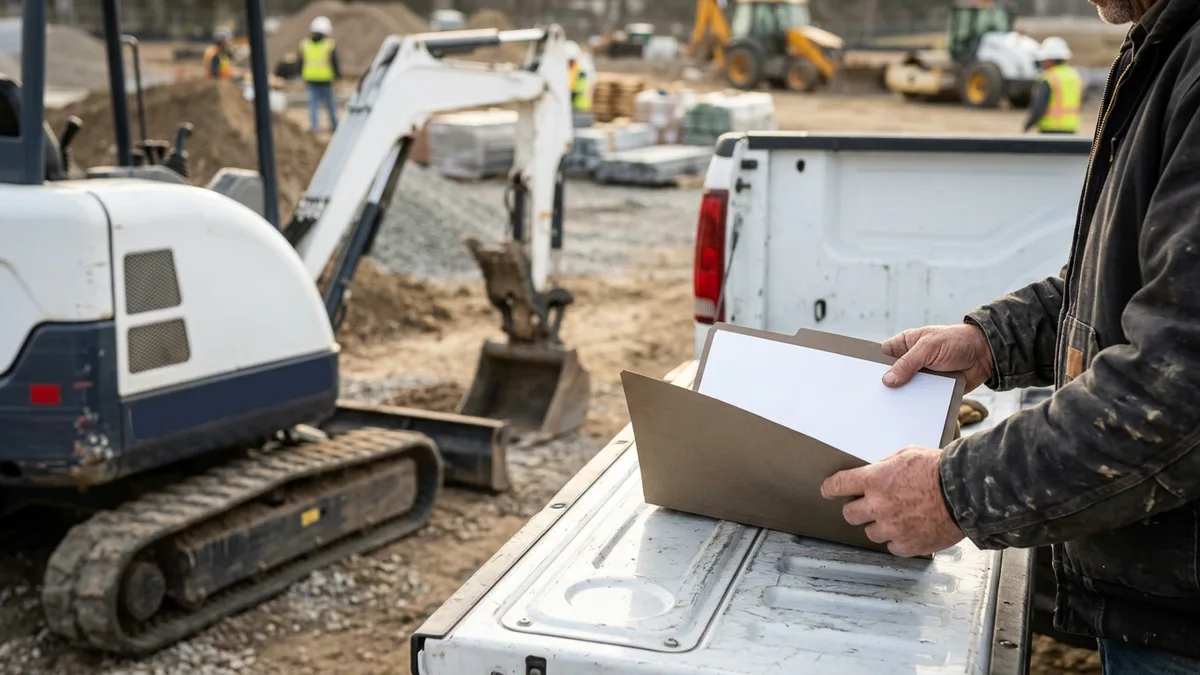
Find the equipment schedule first. A mini excavator and each of its attachments should be listed there with serial numbers. If the schedule says “one excavator” and nothing else, ask for the serial numbers in writing. Serial numbers matter. A machine nobody can match to the paper can turn into an argument at the end of the term.
You’ll find sample equipment lease agreements online, and they’re fine for seeing the layout. Treat their terms as one side’s opening position. Yours may read differently.
True Lease or Secured Loan in Disguise
Not every document called a lease is one. Same word, different deal. Under UCC §1-203, a deal written as a lease is treated as a security interest, which is a loan with collateral, when the lessee can’t terminate it and one more thing is true: the term runs for the equipment’s remaining economic life, or the lessee must renew for that life or become the owner, or the lessee can renew for that life or buy the equipment for no extra payment or a nominal one. Then it’s a loan.
“Nominal” has a meaning too. An extra payment is nominal when it’s less than what it would cost the lessee to keep performing under the lease if it skipped the option. A purchase price set at fair market value when you exercise the option isn’t nominal.
| Equipment finance agreement | $1 buyout lease | True lease | |
|---|---|---|---|
| Owner during the term | The business, with the financer holding a lien | The business, in substance | The lessor |
| End of the term | You own it once it’s paid | You keep it for a nominal amount | Return, renew, or buy, as written |
| Who depreciates it | Ask your tax advisor | Ask your tax advisor | Ask your tax advisor |
On taxes, the IRS keeps it short. Publication 946, in its 2025 edition for 2025 returns, says you can depreciate leased property “only if you retain the incidents of ownership in the property.” Which party that is depends on the agreement. The 2026 figures are on irs.gov, and because the answer turns on the exact wording of your agreement, consult your tax advisor before you do anything else with it. For the accounting side of the same question, see operating lease versus finance lease.
Term, Payments, and Hell or High Water
Start with the term. Many equipment leases can’t be cancelled early without cost, so check the length against how long you’ll really use the machine, because a term that outlasts the machine’s useful life in your business is a bill for equipment you’ve stopped using.
Then add up every charge. The payment on page one is rarely the only one. Look for delivery and installation, documentation, taxes, and late charges, and ask for each one in writing.
Now find the sentence that calls your payments “absolute and unconditional.” That’s net-lease language, nicknamed hell or high water. Under UCC §2A-407, in a finance lease that isn’t a consumer lease, the lessee’s promises become irrevocable and independent once it accepts the goods, which is why the acceptance step carries more weight than almost any other signature in the stack. Payments generally keep running even when the machine doesn’t. Plan for that.
So inspect first. The acceptance certificate is the trigger. Run the machine. Match the serial numbers to the schedule. Write down anything that’s off before you sign it, and take your time.
End-of-Term Options in an Equipment Lease Agreement
This clause tells you what you bought. Return it. Renew it. Buy it. The agreement should say which, and at what price.
Price is where the wording gets slippery. A purchase option fixed in the agreement is one thing. “Fair market value,” worked out when the term ends, is another, and the agreement should say who determines it, by what method, and whether you get to challenge the number before you’re bound to pay it. A $1 buyout is its own animal, and the table above shows where it sits.
Then look for automatic renewal. Some agreements continue for another term unless you give written notice inside a set window before the term ends. Miss it and you’ve renewed. Put the date on your calendar the day you sign.
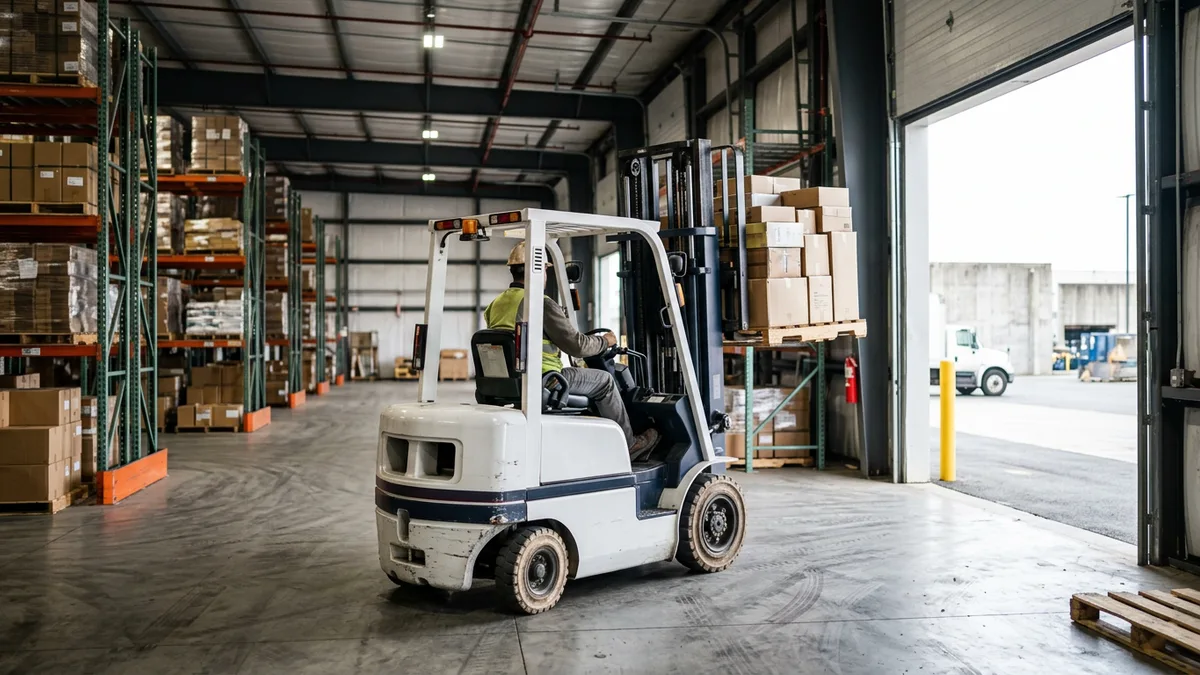
Check the return conditions as well. Wear, hours of use, and the place the equipment has to be delivered are spelled out in some agreements and missing from others, and a forklift handed back with worn tires can start a fight if the lease never defined normal wear.
Maintenance, Insurance, and Risk of Loss
Under many leases you keep the equipment working and insured, even though you don’t own it. Surprised? Most owners are.
- Maintenance: who services the equipment, how often, and whether it has to be a particular shop.
- Insurance. The lessor often wants to be named on your policy.
- Who pays when it’s stolen, flooded, or totaled? Read the risk-of-loss paragraph twice, because the lease payments often continue.
In a heavy equipment lease agreement these three paragraphs deserve the most time, because a mini excavator spends its life on uneven ground and a repair bill or a loss lands on whoever the lease says it lands on. For the equipment side of that, see our page on heavy equipment financing.
Default, Remedies, and the UCC-1
Default is broader. Read the whole list, which can run from lapsed insurance and moving the equipment without telling the lessor to a change in who owns your business and a default on some other agreement. Then read what the lessor may do about it, which can include taking the equipment back, demanding the remaining payments, and charging you for the cost of doing both.
Somewhere in the paperwork, or right behind it, you’ll meet a UCC-1. That’s the financing statement a lessor or lender files with the state to give public notice of its interest. What it describes matters. Under UCC §9-504, a filing can list the collateral item by item, or it can say “all assets.” One covers the machine on your schedule. The other reaches a good deal further. Big difference. Our guide to how a UCC filing works goes through the record itself.
Under UCC §9-515, a filing is effective for five years. Then it lapses, unless a continuation is filed in the six months before that date. Miss the window and the public notice is gone.
So ask one plain question: what will the filing describe? Compare the answer with your equipment schedule, and get it in writing.
How to Read the Agreement Before You Sign
Read in this order. It puts the clauses that cost money ahead of the ones that don’t.
- Gather every piece: the master agreement, the equipment schedule, the acceptance certificate, and any addenda.
- Read the end-of-term clause before anything else.
- Find the acceptance language and note what it triggers.
- Price the purchase option: fixed, fair market value or nominal.
- List every charge that sits outside the payment.
- Check insurance, maintenance and risk of loss against what your insurer and your crew can actually do.
- Read default last, then ask what the UCC-1 will describe.
Hand it to two people. Your attorney reads it as a contract and your tax advisor reads it for tax treatment, and because they ask different questions about the same pages, you want both answers in hand before you sign anything. We’re a finance company, not a law firm, so treat all of this as general information and nothing more.
What Owners Ask Before Signing a Lease
So who actually owns the equipment in a lease?
In a true lease, the lessor owns the equipment for the whole term, and you own nothing at the end unless you buy it under the purchase option. A lease with a $1 buyout works more like a purchase. Which one you have depends on the end-of-term wording, not the cover page.
Can you get out of an equipment lease early?
Usually not cheaply. Sometimes not at all. Whether you can terminate, and what it costs, is written into your agreement, so read the early-termination and default sections before you count on an exit.
What happens when the term ends and nobody sends a notice?
That depends on the renewal clause: some agreements simply expire, and some renew on their own unless you gave written notice inside a set window. Find the clause before you need it. If yours renews, the notice date is the whole game. Put it on a calendar the day you sign, with a reminder a month ahead.
Is an equipment lease agreement the same as an equipment finance agreement?
No. A true lease leaves ownership with the lessor, while an equipment finance agreement treats the business as the owner and gives the financer a security interest. The paper can look alike, so read the end-of-term clause.
Who pays if leased equipment is stolen or wrecked?
Short answer: under many agreements, you do. The risk of loss often sits with the business from delivery, so the lease payments keep running and your insurance has to cover the equipment. Read the risk-of-loss clause, then confirm with your insurer that the coverage matches it.
What does a UCC-1 on leased equipment actually say?
A UCC-1 is a public notice that the filer claims an interest in the collateral it describes, and it stays effective for five years under UCC §9-515 unless it’s continued. The part to read is the description: the specific equipment, or all of a business’s assets.
Do you need a lawyer to read a lease?
It’s a good idea, especially for an agreement that runs for years. A lawyer reads it as a contract and your tax advisor reads it for tax treatment, and neither is something we can do for you.
Next Steps
Comparing structures before you sign anything? See how equipment leases are structured, look at how Paramount Financial finances equipment, or talk to our team. We finance equipment, so weigh what we say with that in mind.