
Operating Lease vs Finance Lease for Equipment: What Business Owners Should Know

Key takeaways
An operating lease vs finance lease decision is really a question about ownership. An operating lease is a rental you return; a finance lease is a purchase paid over time, and the end-of-term terms decide which one you signed.
- Read the end-of-term clause before anything else.
- The law, accounting rules, and the IRS each test a lease their own way, so one agreement can carry three labels.
- Your accountant and tax advisor should see the draft before you sign it.
You’re holding two quotes for the same excavator. One says “operating lease.” The other says “finance lease.” Nobody has told you what the words change.
Plenty. Who owns the machine, what you can do on the last day, how your accountant records it, how the IRS treats it. We finance equipment, so keep that bias in mind while you read. What follows is the answer we’d give across a desk, starting with the basics of equipment leasing.
Operating Lease vs Finance Lease in Plain Terms
An operating lease is a rental with paperwork: the lessor owns the equipment, you use it for a set term, and the agreement says what happens next. A finance lease is a purchase on an installment plan, built so title passes to you or a purchase option is priced at a nominal amount. Same machine, different ownership story.
Think rental car versus car loan. Both get you to the job site. Only one is yours at the end.
87%
of U.S. companies use some form of financing, such as loans, leases, or lines of credit, when they acquire equipment.
Source: Equipment Leasing and Finance Association, Industry Horizon Report: A Market Sizing Study 2026-2027
How an Operating Lease Works
Under an operating lease the lessor holds title from the first payment to the last. You pay to use the machine and keep it running, then choose from whatever the lease offers at the end: return it, renew it, or buy it. Buying usually means paying fair market value, which is what the machine would sell for that day. That’s a fair market value lease, or FMV lease, and lessors often call the whole structure a true lease.
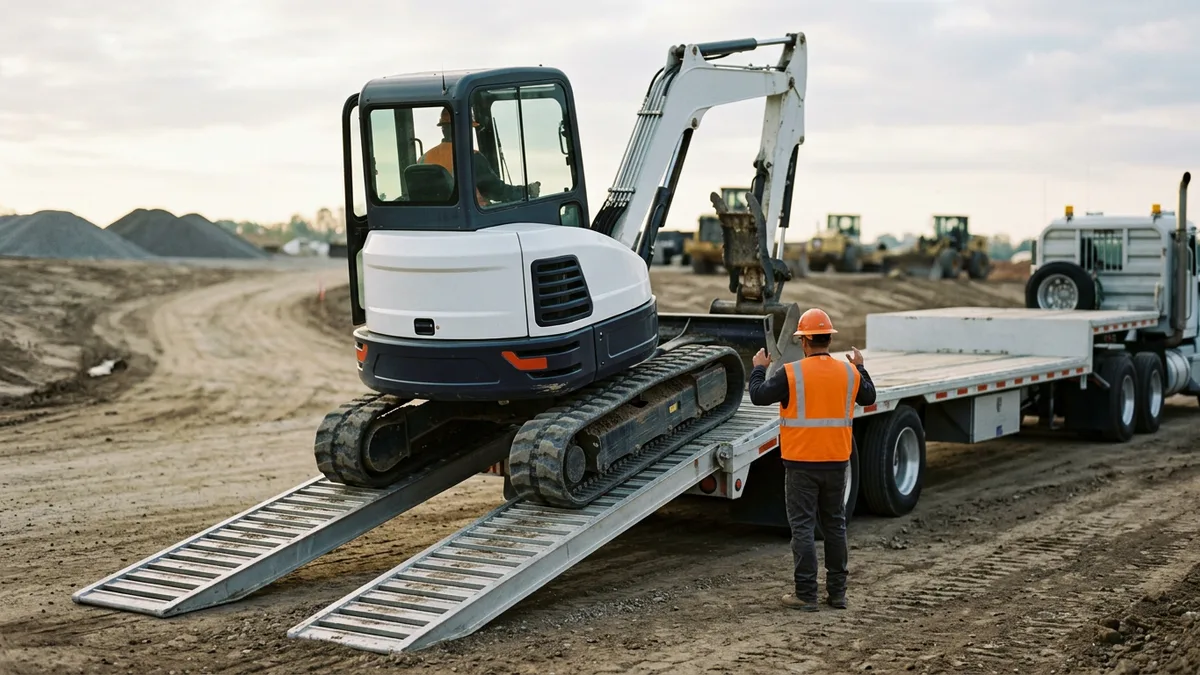
Good fit: equipment you want for a stretch, not for life. A compact excavator for one phase of a project. A pneumatic-tire forklift for a seasonal peak. Anything that goes stale before it wears out.
The catch sits at the end. Hand the machine back and you own nothing, but keep it and you pay a price nobody fixed when you signed, which is why the return-condition and purchase-option clauses deserve a slower read than the payment schedule does. Twice, if you can stand it.
How a Finance Lease Works
Think of a finance lease as buying the machine in installments. You carry the upkeep and the insurance, and every term in the agreement leans toward you keeping it. The classic example is the $1 buyout lease: pay through the term, then take title for a nominal amount.
Accountants sort a lease into the finance column under ASC 842, the lease accounting standard, when any one of five things is true: ownership transfers to the lessee by the end of the term, the lessee holds a purchase option it’s reasonably certain to use, the term covers a major part of the machine’s remaining economic life, the present value of the payments equals or exceeds substantially all of the machine’s fair value, or the asset is so specialized that it has no alternative use to the lessor afterward, all of which the Financial Accounting Standards Board lists in ASU 2016-02, paragraph 842-10-25-2.
Sounds technical. It isn’t, much. If the deal is built for you to own the machine, it’s a finance lease.
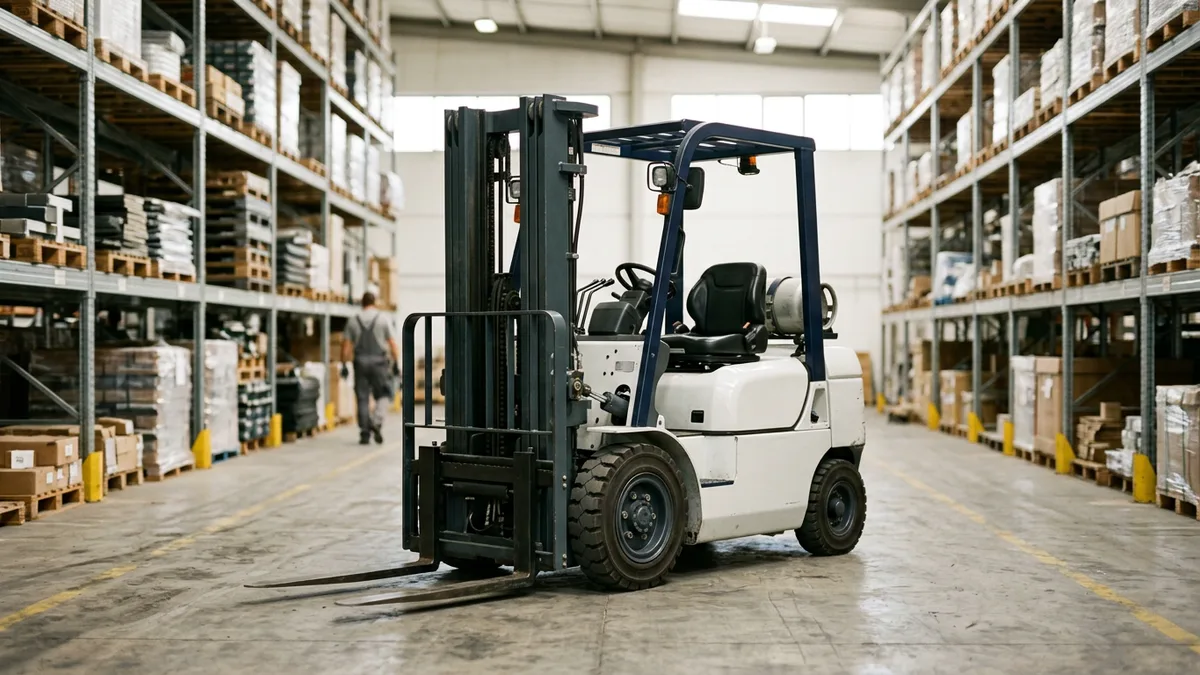
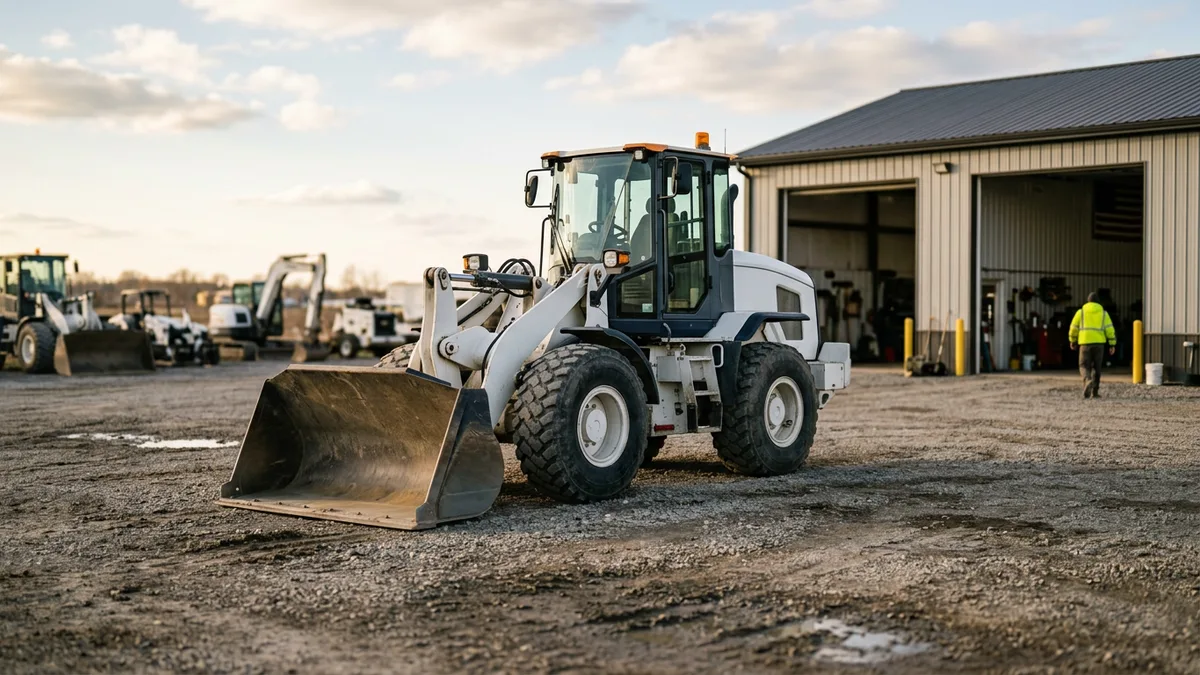
A wheel loader that will work the same yard for a decade lands here, and so does a long-haul truck. For equipment in that class, see our page on heavy equipment financing.
Three Rule Sets, One Vocabulary
Here’s where owners trip. Three different rule sets use these words, and each one asks its own question.
- The law asks whether it’s a lease at all. Under section 1-203 of the Uniform Commercial Code (UCC), a deal in lease form is really a sale with a security interest when the payments can’t be canceled and the term equals or exceeds the machine’s remaining economic life, or the lessee is bound to become the owner, or can renew or buy for no more than nominal consideration. The statute adds that the answer “is determined by the facts of each case.”
- Accounting wants to know where the deal lands on the books. ASC 842 sorts every lease into operating or finance.
- The IRS cares who the owner is. Publication 946 says you can depreciate leased property only if you retain the incidents of ownership, and legal title is the first incident it names.
One more wrinkle. The UCC also defines something it calls a finance lease, in section 2A-103, and it means something else entirely: a lease where the lessor doesn’t select, make, or supply the goods and acquires them for the lessee. That label is about whose promises the lessee relies on, the supplier’s or the lessor’s, not about who ends up owning the machine.
So one contract can be a UCC finance lease, an ASC 842 operating lease, and a true lease for tax purposes, all at once. Three labels. One piece of paper.
Operating Lease vs Finance Lease Side by Side
| Operating lease | Finance lease | |
|---|---|---|
| Who owns it during the term | The lessor | You, in substance |
| At the end of the term | Return, renew, or buy as the lease allows | Keep it, often for a nominal price |
| Upkeep and insurance | Set by the agreement | Usually you |
| How accounting sorts it | Operating, under ASC 842 | Finance, under ASC 842 |
| How the IRS tends to see it | Often as rent | Often as a purchase |
| Where it tends to fit | Equipment you won’t keep | Equipment you will |
Skim it. Then read the clause.
What the IRS Looks At
Substance wins over labels. That’s the same instinct behind the UCC test, and for tax year 2026 the useful question is who gets treated as the owner, because that party generally takes the depreciation.
If you’re treated as the owner, Section 179 may be on the table. For tax year 2026, IRS Publication 946 puts the maximum Section 179 deduction at $2,560,000, reduced once the year’s qualifying purchases pass $4,090,000. Those limits move every year, so check Publication 946 and the instructions for Form 4562 for the year you file. Consult your tax advisor before you choose a structure, because what you can claim depends on your facts.
A Decision Rule for Choosing
Stuck between an operating lease and a finance lease? Take these in order.
- How long will the machine earn its keep in your business? If the answer is longer than the term, ownership usually fits the plan.
- Price the end-of-term option before you compare payments, because a fixed buyout and an FMV buyout are different bets.
- Who covers repairs, insurance, and loss? Get it in writing.
- Show both drafts to your accountant and your tax advisor. Then decide.
You may not need financing at all. Paying cash? Have a credit line open? Compare against that first, then against the quotes.
What Owners Ask About Lease Structures
Is a true lease the same thing as an operating lease?
Mostly, with a catch. Lessors use the two terms for one arrangement, but “true lease” is a legal and tax idea while “operating lease” is an accounting label, and a contract can pass one test and miss the other. Ask which one the quote means.
So is a finance lease just the old capital lease?
A finance lease is what ASC 840 called a capital lease. ASC 842 renamed it and kept the core idea, that the lessee is in substance buying the equipment over the term, so a quote that says “capital lease” is in the same family.
Does an operating lease still stay off the balance sheet?
Short answer: not for most leases anymore. Under ASC 842 a lessee records a right-of-use asset and a lease liability for operating leases too, with an election to skip leases of 12 months or less. Your accountant will know how it lands.
On the last day of the lease, what are my options?
They’re in the end-of-term clause. An operating lease generally lets you return the machine, renew, or buy it at fair market value, while a finance structure points toward ownership, often at a nominal price. Get them in writing. Then ask whether renewal is automatic.
Does leasing still make sense if I’ll keep the machine for ten years?
Wrong question, slightly. The better one is what you want on the last day of the term. If the answer is to own the machine, a finance structure usually matches the plan, while an operating lease with an FMV buyout leaves the price open until the end.
Who handles repairs and insurance on leased equipment?
The agreement decides, not the label. Under many equipment leases the lessee keeps the machine running and insured, though some operating leases shift service to the lessor. Read the maintenance, insurance, and risk-of-loss sections line by line.
Next Steps
Still comparing quotes? Bring both agreements to your accountant and your tax advisor first. Then read our guide to equipment leasing structures and the equipment financing FAQs. If you’d like to talk it through, see how Paramount Financial finances equipment or talk to our team.