
Last updated: October 27, 2026
Commercial Vehicle Financing for Work Trucks, Vans and Small Fleets
Spread the cost of the work trucks and vans your crews depend on over a set term.
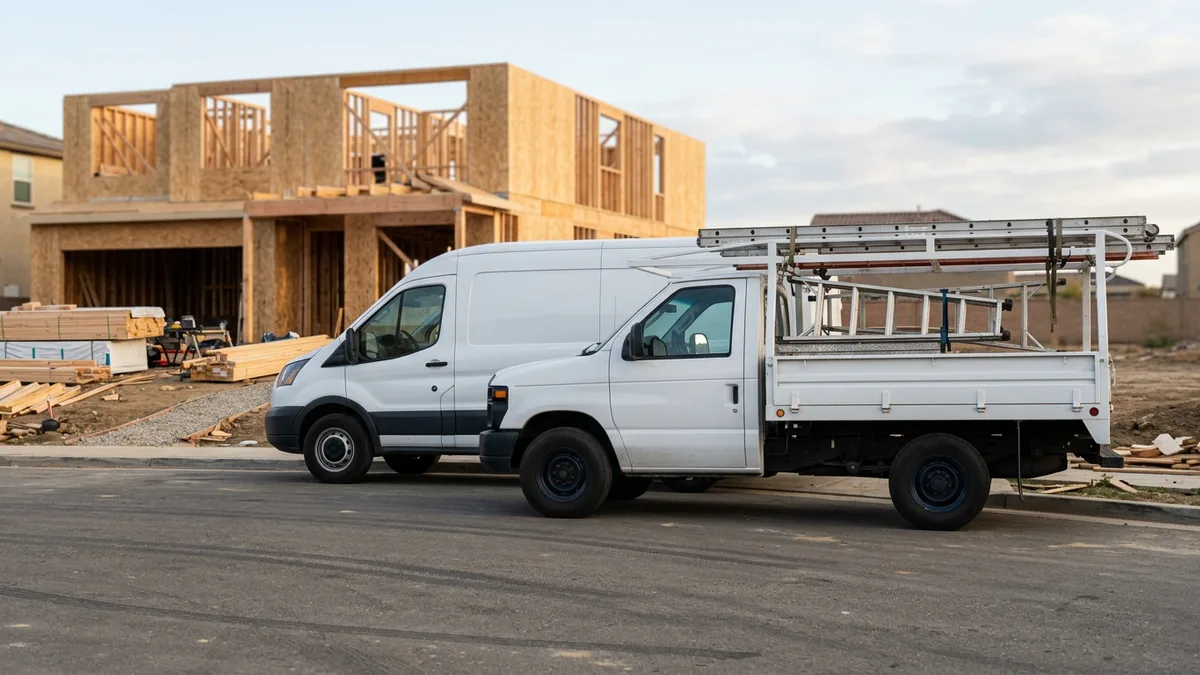
Commercial vehicle financing lets a business pay for work trucks, cargo vans and fleet vehicles over a set term, with the titled vehicle usually serving as collateral, so cash stays free for payroll, materials and the next job.
Say you’re adding a third crew. You need a third truck, and it won’t wait for next quarter’s budget. Sound familiar? Buy it outright, lease it or finance it, and the right answer depends on how long the vehicle will earn its keep, whose name sits on the title and what the business wants to own when the dust settles.
Our commercial equipment financing page is the big picture, and this one is the vehicle chapter. Starting a new business? The startup equipment financing page covers that side.
What counts as a commercial vehicle
Lenders sort vehicles by how they’re used, then by weight. Use comes first. A pickup with a utility body, a cargo van with a ladder rack, a flatbed, a dump body or a bucket truck all read as business vehicles, because a business titles them and needs them to earn. A family SUV that drives to the occasional job site and spends the rest of its week on school runs is a different conversation, and not the one this page is about.
Weight matters too. Most work vans and half-ton pickups sit in the lighter federal classes, and vocational trucks climb into the medium-duty range, and the exact weight lines, which also decide who needs a commercial driver’s license, are laid out further down the page. Tractors, box trucks and other freight haulers sit in a different conversation, covered on our commercial truck financing page.
Upfits and small fleets
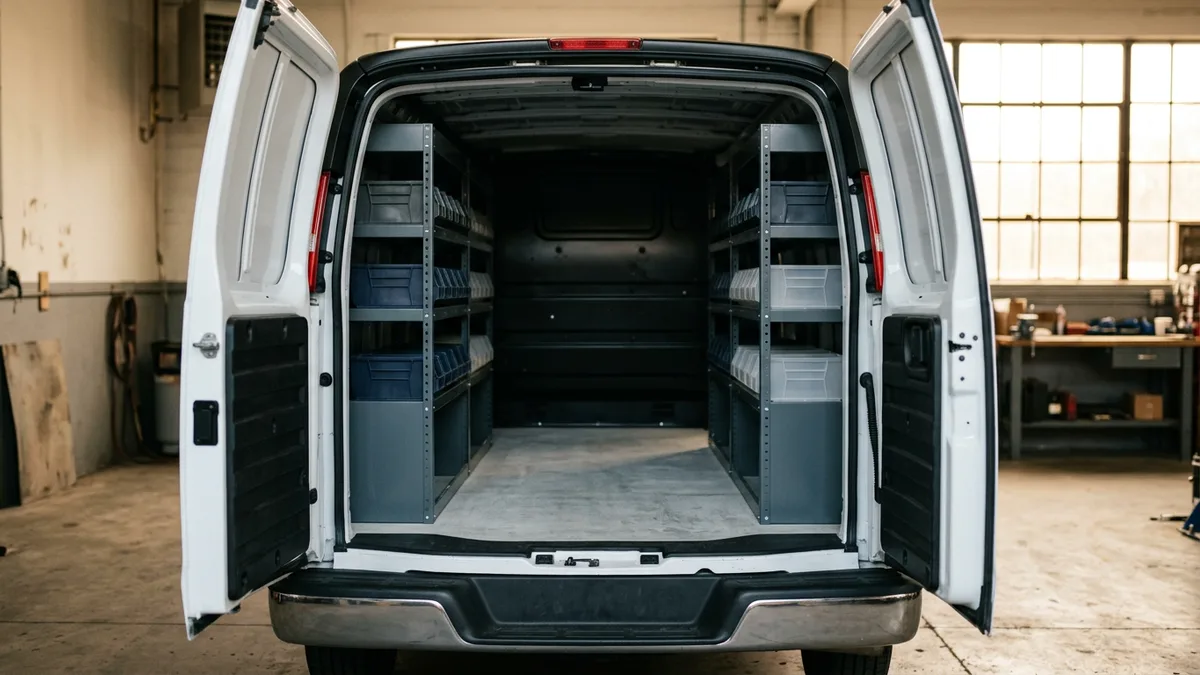
Shelving, ladder racks, liftgates and service bodies can cost real money on top of the chassis. Ask early. Find out whether they can ride in the same request.
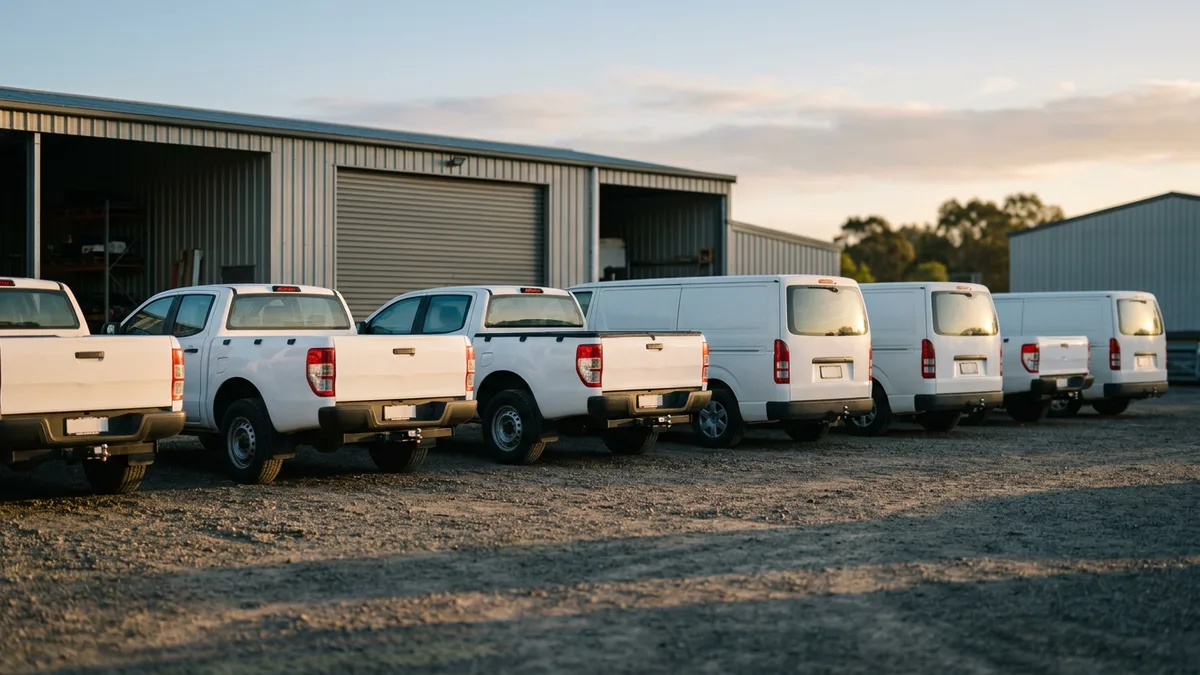
Running more than one vehicle? A small fleet can sometimes be requested together, though how a lender handles that varies, so settle your list of units before you ask for a number.
How commercial vehicle financing works on a titled vehicle
Commercial vehicle financing is an arrangement where a lender pays the seller for a titled work vehicle and the business repays it over a set term. The vehicle secures the deal, and the lender’s interest is recorded on the vehicle’s certificate of title until the balance is paid or the lease ends.
Here’s where vehicles part ways with other equipment. A machine tracked by serial number usually gets a UCC-1 financing statement. A titled vehicle doesn’t, because the Uniform Commercial Code’s section 9-311 says filing a financing statement isn’t necessary or effective for goods covered by a certificate-of-title statute. The title does that job.
What a private-party sale puts on your desk
A dealer sale bundles most of that. A private sale doesn’t. Start the paperwork before you shake hands.
Commercial vehicle financing: loan, lease or TRAC lease
Three structures cover most work vehicles, and they differ mostly in who holds the title and what happens at the end. A contractor keeping a truck for ten years and one rotating vans every three are asking different questions. Neither wins every time.
| Loan or finance agreement | Standard lease | TRAC lease | |
|---|---|---|---|
| Who holds title | The business, with the lender listed as lienholder | The lessor, until a purchase option is used | The lessor, until a purchase option is used |
| When the term ends | The lien is released once the balance is paid | Return it, renew or buy at the price the lease sets | Return or sell it, with the final rental adjusted by the sale result |
| Often considered when | The vehicle will stay in service for years | The business wants a newer vehicle on a regular cycle | A truck or van fleet is replaced on a schedule |
A TRAC lease is a motor-vehicle lease with a terminal rental adjustment clause, which federal law at 26 U.S.C. section 7701(h) defines as a provision that lets the rental price move up or down by what the lessor gets when the vehicle is sold. Read the lease for its mileage terms and its end-of-term formula. Don’t skim it.
Then consult your tax advisor, because the tax treatment of a loan and a lease isn’t the same. Our equipment leasing page goes deeper.
Where work vehicles sit on the weight scale
10,000 lb
the top of Class 2, the light-duty ceiling
Source: U.S. Department of Energy, Alternative Fuels Data Center, vehicle weight classes, 2026
26,000 lb
the top of Class 6, the medium-duty ceiling
Source: U.S. Department of Energy, Alternative Fuels Data Center, vehicle weight classes, 2026
26,001 lb
where a single heavy vehicle needs a Group B commercial driver’s license
Source: 49 CFR section 383.91, Legal Information Institute, 2026
Where to go from here
What contractors ask before they finance a truck or van
So what counts as a commercial vehicle?
A commercial vehicle is a titled vehicle a business buys to do business, anything from a cargo van to a vocational truck.
Use comes first, weight second. Your insurer and your state registration may draw the line somewhere else, and the license class changes once a single vehicle reaches 26,001 pounds, so settle those before you shop.
Whose name goes on the title?
With a loan or finance agreement the title goes in the business’s name with the lender listed as lienholder, while in a lease the lessor holds it.
Two owners, one van. One finances it and sees the lender’s name on the title until the last payment. The other leases it, so the lessor stays the owner on paper and the business holds the right to use it.
Should a business lease or buy a work van?
The better question is how long the van will stay in service and what you want to happen at the end.
A van that runs daily routes for ten years points toward owning it. One you’d swap every three or four years points toward a lease, where the mileage and wear terms matter more than the monthly figure. Both are fair answers.
What is a TRAC lease on a truck?
Short answer: a TRAC lease is a vehicle lease whose final rental adjusts up or down by what the lessor gets when the vehicle is sold.
Federal law defines a terminal rental adjustment clause that way. The lease sets an expected value at the start, and the sale at the end decides whether the last rental moves. That’s the whole trick.
Can the upfit be financed with the truck?
Sometimes the upfit rides along in the same request, depending on the lender and on how the invoices are written.
Ask before you order. It’s cheaper than a rework. An invoice that lists each piece separately gives a lender something to work with, and a lump sum doesn’t. A body welded to the frame is part of the vehicle, while shelving can come out later, and a lender may treat those two differently.
Can you finance a used truck from a private seller?
Three things decide it: the vehicle’s age and mileage, a clean title and the paperwork the seller can produce.
With a dealer, most of that comes bundled. With a private seller you’re the one chasing the signed title, the bill of sale and any lien payoff. Start early. Ask about age and mileage limits before you put down a deposit.
What should I have ready before I apply?
Bring the dealer quote or purchase order, the VIN, and the business’s legal name and entity type.
A private purchase adds the seller’s title and a bill of sale. Lenders also commonly ask for proof of commercial auto insurance. Call your agent early. And jot down how long you plan to keep the vehicle, because that note helps weigh a loan against a lease.
Ready to put the next truck on the job?
Tell us what the vehicle and the crew need and start your application, or leave your details below and a member of our team will follow up once they’ve looked at what you sent.