

How Much Does a Box Truck Cost? New vs Used by Size

Key takeaways
How much does a box truck cost? On the dealer listings we read in October 2026, new trucks ran from $54,967 for a 12-foot body to $139,980 for a 26-footer, and used ones asked less.
- Body length and weight rating set the tier, and the weight rating is the number to read first.
- An older used 26-footer can ask less than a new 16-footer, though a late-model one can ask more.
- Every new truck we found with both an MSRP and a price listed below the MSRP, and “price” meant something different on each site.
- Federal rules draw a commercial driver’s license line at 26,001 pounds.
Two trucks, both called box trucks. A 12-foot GMC Savana 3500 listed at $54,967 on October 28, 2026, and a 26-foot Freightliner M2 106 listed at $139,980 on that date as well. That’s an $85,013 gap between two ways of hauling freight in a cube. Same label, very different truck. So how much does a box truck cost? It depends on length, weight rating, age, and miles, and most guides skip the dates and the counts behind their ranges.
We read dealer listing pages instead of repeating a range. Every figure below names its page and the day we read it, asking prices are called asking prices, and thin samples are called thin. If you’re lining up the money for the truck, our page on box truck financing covers that side. Here, only the truck.
What a Box Truck Costs by Size
A box truck is a straight truck with a cargo box mounted behind the cab, so the price covers two things: the chassis from a truck maker and the body from a body builder, usually sold together by a dealer. Its gross vehicle weight rating, or GVWR, is the loaded weight the maker rates the chassis to carry.
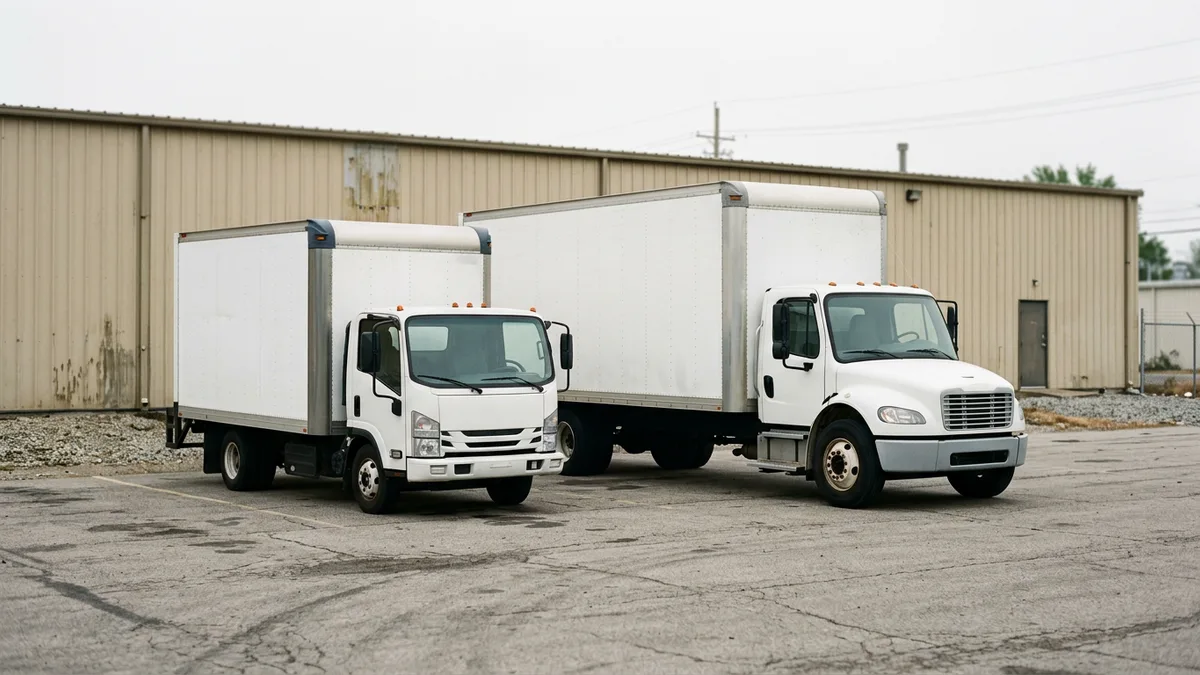
| Body length | New, listed price | Used, asking price |
|---|---|---|
| 12 ft | One listing, $54,967 | Too few listings |
| 14 to 16 ft | $59,900 to $104,360 | $17,950 to $43,997 |
| 18 to 20 ft | $66,970 to $93,806 | Too few listings |
| 22 to 24 ft | One 22-ft listing, $94,999 | $26,995 to $55,000 |
| 26 ft | $112,895 to $139,980 | $35,980 to $85,980 |
Behind the new prices sit 13 listings for 14 to 16 feet, 4 for 18 to 20 feet, and 5 for 26 feet. Behind the used prices sit 22 listings for 16 feet, 5 for 24 feet, and 14 for 26 feet. We read them on October 28, 2026, from Comvoy’s new cargo and straight box truck list, its Isuzu FTR page, three of its used lists for the Freightliner M2 106, the Isuzu NPR-HD, and Ford box trucks, and Morgan’s dealer-inventory pages, new and used.
The 12-foot and 22-foot rows are single trucks, so don’t lean on them. Nobody should price a purchase off one listing. We also looked for a maker’s price list for a finished box truck and found none, since the body is a second purchase, which leaves dealers’ pages as the place the numbers live.
New Trucks: MSRP Versus the Listed Price
New trucks come with two numbers on the page: the manufacturer’s suggested retail price, or MSRP, and the dealer’s own price. Of the new trucks we read, 25 showed both an MSRP or list price and a price, and the price sat below the MSRP on every one, by $1,351 to $28,005. Every single one.
$15,000
the median amount a new box truck’s listed price sat below its MSRP or list price, across 25 new listings read on Comvoy, Morgan, and Wabash dealer pages on October 28, 2026
Source: Comvoy, Cargo / Straight Box Trucks, October 28, 2026
Read that as a spread of listings, not a discount you’re owed. A 14-foot Isuzu NPR-HD box showed an MSRP of $86,478 and a price of $70,855. A 20-foot Chevrolet LCF 5500XG showed $99,818 and $73,447. An Isuzu NPR-HD crew cab showed $95,200 and $93,849, almost no gap at all.
Then there’s what “price” means. One Isuzu dealer’s footnote says its internet price includes manufacturer incentives, dealer discounts, destination and freight, plus a dealer processing fee, and that tax, title, and registration are extra. That’s one 14-foot NPR-HD box listing, and it carries the full definition. The other pages we read carried none.
Another dealer network shows an “Additional Upfit Cost” label with nothing beside it, on its Isuzu NPR-HD list. A blank there is a question, not a zero.
Used Box Trucks and Their Miles
Used is where the listings spread out the most. The 22 used 16-foot trucks asked $17,950 to $43,997, and the middle one asked $32,402, on trucks carrying roughly 86,000 to 198,000 miles. The five 24-footers asked $26,995 to $55,000. The 14 used 26-footers asked $35,980 to $85,980.
Miles explain some of that. Not all.
- A 2018 Freightliner M2 106 26-footer with 95,717 miles asked $55,000.
- A 2019 one with 115,183 miles asked $58,000, while a 2020 truck with 107,080 miles asked $74,153. Similar miles, a $16,153 difference.
- At the other end, a 2019 truck with 233,206 miles asked $36,495.
Those are asking prices, so nobody promised the seller gets them. Asking isn’t selling. Buyers of older trucks also inherit whatever the odometer doesn’t show, which is why a pre-purchase look at the frame, the brakes, the box, and any liftgate is worth the hour.

A private seller adds a step. Search for a UCC filing against the truck, because a lender with a UCC-1 on file may still hold a claim on it, whatever the seller says. On a titled truck the lien is usually noted on the title too, so ask to see it.
The Weight Line: 26,001 Pounds
Length gets the attention. Weight sets the rules. Every box truck carries a GVWR on the manufacturer’s label, and that number decides its place on the federal weight table and whether the driver lands in a commercial driver’s license (CDL) group.
| 26,000 pounds or less | 26,001 pounds or more | |
|---|---|---|
| Federal weight class | Class 6 or lighter | Class 7 and up |
| CDL group, by weight alone | Below the Group B line | Group B, heavy straight vehicle |
The classes come from the federal weight table on the Department of Energy’s Alternative Fuels Data Center. Under 49 CFR 383.91, Group B is any single vehicle with a GVWR of 26,001 pounds or more. One number. Know it before you shop.
A separate line sits lower. 49 CFR 390.5 defines a commercial motor vehicle in interstate commerce as one with a GVWR of 10,001 pounds or more, and that brings the federal motor carrier safety rules with it. Your state can add its own, and a hazardous-materials load changes the answer, so check with your state’s motor vehicle agency for the size you have in mind.
Labels slip, too. The Isuzu listing above gives its 14,500-pound GVWR as Class 3, while the federal table puts 14,500 pounds in Class 4. Trust the GVWR, not the label. Lenders read weight class as well, and our commercial vehicle financing page shows where work trucks sit on that scale.
What a Listed Price Leaves Out
A listed price is a number someone typed into a form, and the form decides what’s in it. Before you compare two trucks, find out which of these each total covers. Ask about every one.
- The chassis and the body, priced together or apart?
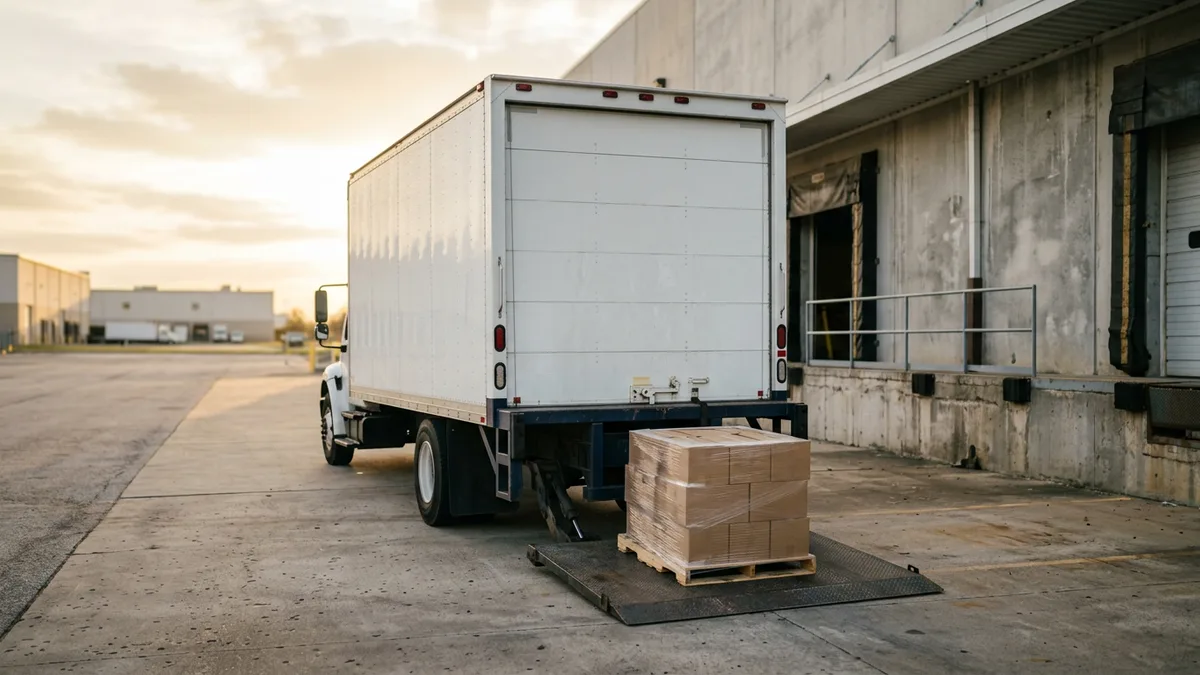
- A liftgate. Some listings name it in the title and some don’t.
- Freight and dealer processing.
- Tax, title, and registration.
- Insurance and the first service, because the first bill isn’t the last.
Ask two dealers to itemize it, then lay the sheets next to each other. We took the same approach to a smaller machine in our skid steer cost guide, and the habit carries over, since an attachment is to a skid steer what a liftgate is to a truck.
Buy, Lease or Rent a Box Truck
Not every truck needs buying. Rent one for a rush. Pay cash if the money is sitting there and the truck will stay in service for years. If you’d rather hand it back at the end, equipment leasing is a separate contract with its own end-of-term rules, and commercial truck financing is a third thing again, where the weight class and the job the truck will do both matter.
A word on bias. Ours. We sell financing, so an answer that includes financing suits us, and a rental or a cash purchase might suit you better. We’ve left payments out of this guide on purpose: a payment depends on the lender, the term, and the truck, and a worked example belongs with a lender’s own paperwork.
Box Truck Price Questions Owners Ask
Is a used box truck the smarter buy for a first truck?
Not automatically. Used 16-foot trucks on the pages we read asked a median of $32,402 against $78,365 for new trucks of 14 to 16 feet, but miles and condition can win that gap back. Price the inspection and the first repairs into the used number before you compare it with a new one.
Do you need a CDL to drive a box truck?
26,001 pounds. That’s the GVWR at which federal rules put a single vehicle in CDL Group B. Below it, Group B doesn’t apply on weight alone, though a state can add rules and a hazardous-materials load changes the answer. Read the GVWR on the truck’s label first, then ask your state motor vehicle agency.
How many miles is too many on a used box truck?
No single mileage works as a cutoff, because price and condition move together only loosely. The used 26-footers we read ran from 58,259 to 233,206 miles, and a 233,206-mile truck asked $36,495 while a 95,717-mile one asked $55,000. A truck with fewer miles can still have a tired box or a worn liftgate, so look at those, not only the odometer. Check them in person.
Why would two listings for the same box truck show different prices?
MSRP is the manufacturer’s suggested number, and the listed price is whatever the dealer put on its form, which each site defines differently. On the 25 new listings that showed both, the gap ran from $1,351 to $28,005.
Can a lender finance a used box truck bought from a private seller?
Short answer: some lenders will and some won’t, so ask before you pay a deposit. A lender will want the truck’s VIN, its title, and a clean history, and a title check or a UCC search can show whether someone else already holds a claim. Terms vary by lender.
What does a liftgate do to the price of a box truck?
It adds a line to the quote, and the listings we read don’t price it the same way. On the new-truck list, some entries are labeled “with Liftgate” and others aren’t, and the two groups overlap in price, so a liftgate’s share can’t be read off a listing. Get it priced on its own line.
Next Steps
Numbers in hand? Good. If financing is on the table, start with how box truck financing works, then see what equipment financing at Paramount Financial looks like for other kinds of equipment.