
Last updated: October 28, 2026
Used Equipment Financing From Dealers and Private Sellers
Learn how age, condition, appraisal and the seller shape a deal on used equipment before you commit.
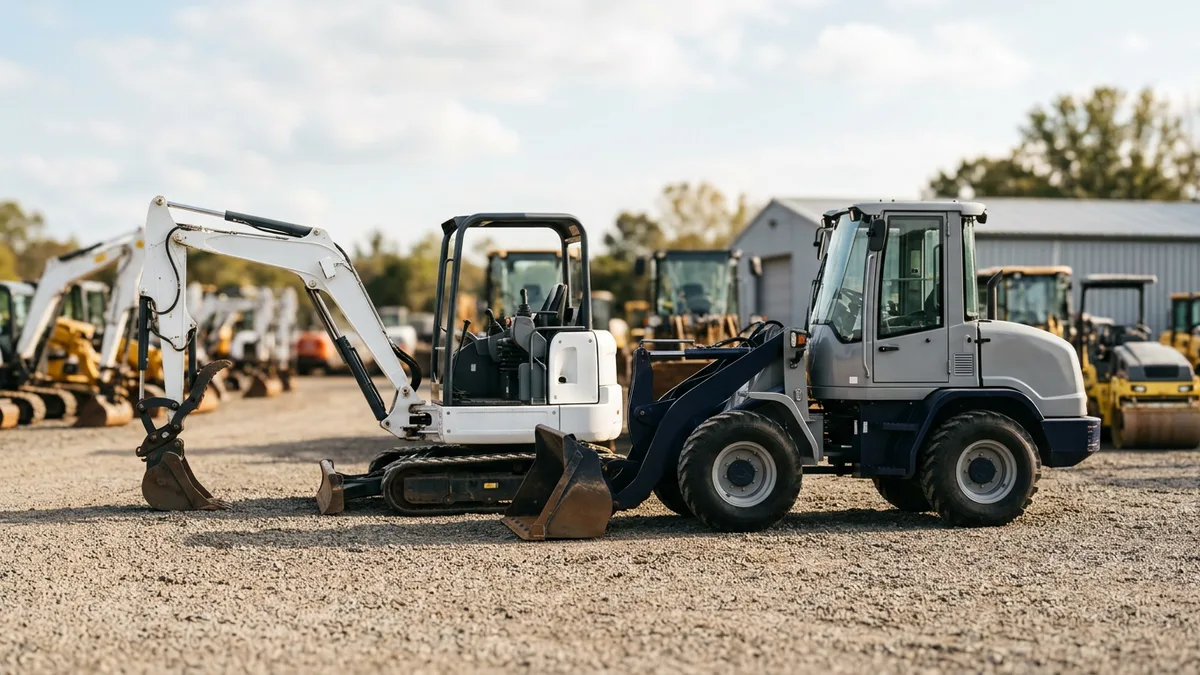
Used equipment financing lets a business pay for a pre-owned machine over a set term, with the machine itself usually serving as collateral, and the lender weighs its age, condition and value alongside the seller’s paperwork.
A used machine comes with a history. Hours on the meter. A hydraulic system that has seen real work. A seller who may or may not be the first owner, and a lender who asks more about all of it than about something new off the truck.
This page covers how those deals are structured, what changes between a dealer, an auction and a private seller, and what to line up before you sign. It sits under our guide to equipment financing for your business, which shows the wider picture.
How used equipment financing works
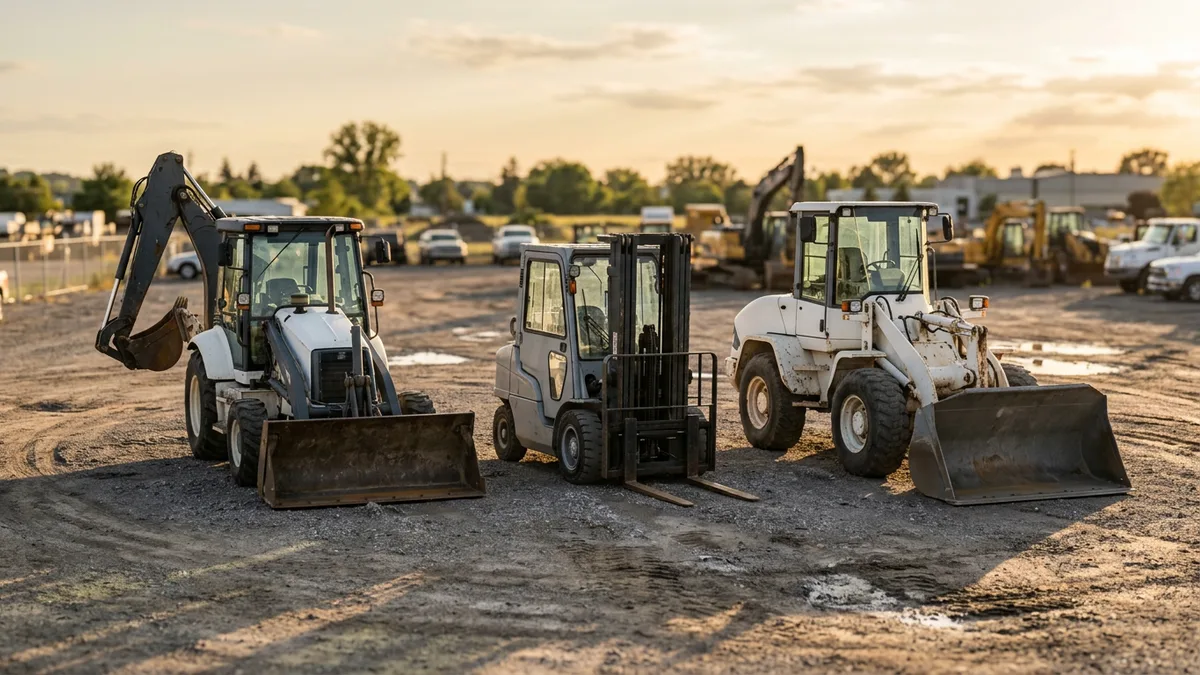
Used equipment financing is a way to pay for a pre-owned machine over a set term, usually with the machine itself as collateral, through a loan, an equipment finance agreement or a lease. What changes from new is the lender’s homework. Wear and value matter more. So does the seller.
Loan or equipment finance agreement? The business owns the machine, and the lender holds a security interest in it. Lease? The lessor owns it until the term ends, and our guide to equipment leasing covers the lease types.
Dealer, auction or private seller: what changes
Where the machine comes from decides how much checking falls on you. Dealers usually have the paperwork. Auctions sell fast. A private seller can be a fine source, but the file is only as complete as the seller makes it, so the checking falls on you. Shopping for a lift truck? Our forklift price guide shows what used trucks ask by hours and capacity, and what a listing can leave out. Looking at a used press for a decoration shop? Our screen printing equipment financing page covers what a lender reads on one. Eyeing a used embroidery machine? Our embroidery machine financing page covers the stitch count, the heads and the control a lender reads. Buying a used vehicle lift? Our auto repair equipment financing page covers the certification label and the inspection record to ask for. Buying used racking or conveyors for a warehouse? Our warehouse equipment financing page covers the load data and records to ask for.
| Dealer | Auction | Private seller | |
|---|---|---|---|
| What you usually get | An invoice with the serial number, often a service history, sometimes a limited warranty | A catalog listing and a bill of sale, with the machine sold as it sits | A bill of sale if you ask for one, and whatever records the owner kept |
| Where lien risk sits | Lower, because a buyer in the ordinary course often takes free of the dealer’s lender | Depends on the auction’s terms, so read them before you bid | Higher, because a prior lender’s lien generally follows the machine through the sale |
| What to ask for | The invoice, any warranty in writing and the hours at sale | The terms of sale, the title and lien policy and the pickup deadline | A signed bill of sale, a payoff letter if a loan exists and proof the seller can sell it |
| Where deals stall | A serial number that doesn’t match the invoice | Buyer’s fees that weren’t in the financed amount | A lien nobody found until the lender searched |
Buying from a private seller
Some lenders finance private-party purchases, and they’ll want proof that the seller owns the machine free and clear. Here’s why. Under section 9-315 of the Uniform Commercial Code, a lender’s security interest generally continues in the collateral after a sale, unless the lender authorized the sale free of its claim. The papers a private sale usually needs, from the bill of sale to a lien check, are in equipment loan documents. A used still, tank or filler has its own checklist in beverage equipment financing.
A dealer’s customer often has more protection. Section 9-320 lets a buyer in the ordinary course of business take free of a security interest created by the buyer’s seller, and that phrase usually means buying from someone who sells that kind of goods for a living. A private sale is different. Our guide to what a UCC filing is shows what a lender’s notice records.
Titled equipment such as trucks and trailers adds a certificate of title, which shows any lienholder. Many other machines aren’t titled, so the serial number plate and the bill of sale carry the weight. Ask an attorney. Farm tractors and combines often fall in that group, and our guide to farm equipment financing walks through the check for them, and how much does a tractor cost shows what used tractors asked at one dealer, hours included. Our combine price guide does the same for used combines, with engine and separator hours. Our commercial truck financing page covers titled trucks in more depth, semi-truck financing walks through used tractors, and business trailer financing does the same for trailers, and food truck financing walks a used step van from cab to back door. Our food truck cost guide lists what to check before you pay, and our guide to starting a food truck business covers the fire and health paperwork to ask a seller for, and how to buy a food truck covers the title and lien checks. Our semi truck cost guide sorts used tractor asks by miles, and our guide to buying a used semi truck covers the paperwork. For a used service van, read HVAC equipment financing and its checklist.
Taxes on used equipment
Taxes are a separate question. For the 2026 tax year, IRS Publication 946, the guide where the 2026 limits appear, says section 179 property has to be acquired by purchase, so a gift or an inheritance doesn’t qualify, and neither does property bought from a related person. The same publication says the special depreciation allowance covers new property and certain used property. Our Section 179 deduction guide walks through the limits, and you should consult your tax advisor before you rely on any of it.
What a lender looks at on a pre-owned machine
A new machine has a price list. Used ones have stories. A lender reads the story before deciding anything, and each one sets its own comfort zone, so ask first. For excavators, loaders and other heavy machines, our heavy and construction equipment financing overview is the next stop. Looking at a used dozer? Bulldozer financing starts at the undercarriage. A used paver or mill? Paving equipment financing starts at the wear parts. A used backhoe gets checked at both ends, and backhoe financing walks through them. A used wheel loader? Wheel loader financing starts at the center pivot. A used telehandler? Telehandler financing starts at the boom. A used crane? Crane financing runs on the inspection records, and our guide shows what used cranes ask by type. Pricing a used vending machine? Our vending machine price guide sets used and reconditioned asking prices next to new ones. Pricing a used CNC mill or lathe? Our CNC machine price guide pairs asking prices with the year and, where listed, the cutting hours. A used concrete pump or mixer truck? Concrete equipment financing starts at the wear. Pricing a used dental chair or operatory? Our dental chair price guide sets refurbished and certified pre-owned listings next to new ones, with the warranty each states. Pricing a used scissor lift? Our scissor lift price guide sets dealer and marketplace asking prices next to new ones, with the hours where listed. Pricing used laundromat washers? Our commercial washing machine cost guide sets refurbished front-loader listings next to new ones, with shipping and power noted.
Machines from familiar makers such as Caterpillar, Komatsu, Deere, Kubota and Bobcat are easier to price against comparable sales. That helps. It isn’t a promise. Rare or heavily modified machines take longer to value.
Hire an independent mechanic for a pre-purchase inspection. Lenders like the report too. Our guide to the top 5 mistakes companies make when buying equipment covers more of what to check. For setting the term and weighing cash against financing, see new and used fleet purchases for contractors. Buying used units for a rental yard? Our guide on how to start an equipment rental business adds a lien search and a per-unit math check. Renting a used machine before deciding? Read how a rental purchase option works first. For a pre-owned forklift, see our checklist for inspecting a used forklift and collecting its paperwork.
Used equipment appraisals, explained
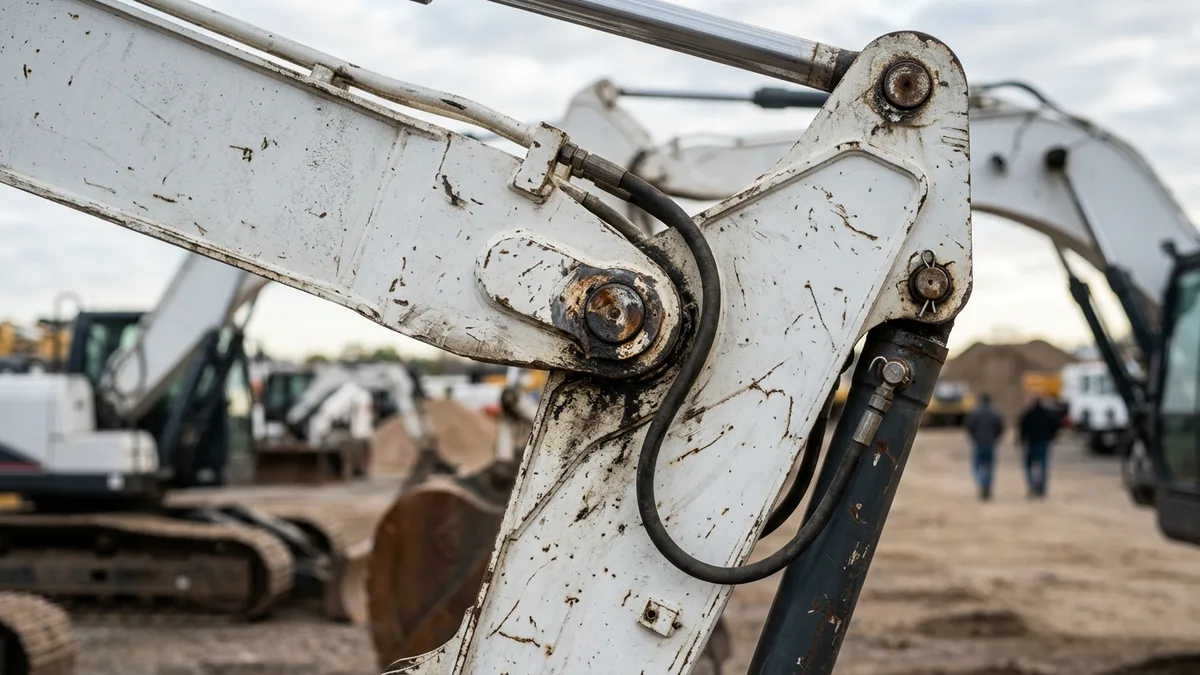
An appraisal is a valuer’s written opinion of what a machine is worth, and the number depends on the question asked. Start with the yardstick. The American Society of Appraisers defines fair market value as the price at which property would change hands between a willing buyer and a willing seller, neither under compulsion and both with reasonable knowledge of the facts.
Orderly liquidation value is different. It assumes a liquidation sale with a reasonable period to find a buyer, so it’s usually lower. A lender protecting its collateral may care more about that figure than about the one on the dealer’s tag. The same valuation questions come up when you refinance equipment you already own, which our equipment refinancing guide covers. On a titled truck, commercial truck refinance follows the same questions through the title.
From the lot to the lender: four steps
1
Find the machine
Get the bill of sale. Note the serial number.
2
Check it and the seller
Inspect the machine. Search for liens.
3
Value it if asked
Some lenders order an appraisal. Ask whether yours will.
4
Structure and file
The lender offers a loan, a finance agreement or a lease. Then it files a UCC-1.
Keep reading before you buy
What buyers ask about used equipment financing
Is financing used equipment different from financing new equipment?
The structures are the same, a loan, an equipment finance agreement or a lease, but the lender has more to check on a used machine.
On a new machine the invoice, the maker and the model settle most questions. On a used one the lender looks at age, hours, wear and the seller, and it may ask for an appraisal. Same destination. More homework on the way.
Does the age of the equipment limit what I can finance?
The better question is how much useful life the machine has left, because lenders generally try to keep the term inside it.
Many lenders set their own age or hours ceilings, and those differ by equipment type. Ask before you buy. A well-kept machine from a familiar maker can be a fair candidate when a rough one of the same age isn’t.
Can I get financing for equipment from a private seller?
Some lenders do finance private-party purchases, but they’ll want proof the seller owns the machine before any money moves.
That proof is a signed bill of sale, the serial number and, where the seller still owes on it, a payoff letter and lien release. Expect a UCC search too. Policies vary. Ask early.
Will a lender ask for an appraisal on a used machine?
Short answer: it depends on the lender and the machine, so ask before you buy.
A lender that wants one is usually trying to learn what the machine would fetch in a sale, which sits closer to orderly liquidation value than to the price on the dealer’s tag. Ask who orders it. Ask who pays. Ask for a copy.
What paperwork do I need for a used equipment purchase?
Start with four items: a bill of sale or invoice with the serial number, the seller’s details, the machine’s hours and, where one applies, a lien release or payoff letter.
Add photos, any service records and the business’s legal name and entity type. For a titled truck or trailer, add the certificate of title. Lenders may ask for more.
Can a used machine be leased instead of financed?
A lease works on used equipment too, because the lessor buys the machine and owns it through the term, so the lessor wants the same checks a lender would.
At the end you return it, renew or buy it. It depends on the lease. A $1 buyout lease is built so the business keeps the machine, while a fair market value lease sets the buyout at what it’s worth then. Our operating and finance lease guide compares the two.
What slows a used equipment deal down?
A lien nobody found until late is the classic stall.
So is a serial number that doesn’t match the bill of sale. A seller who takes a week to answer doesn’t help, and neither does an appraisal ordered after the closing date is set. Sort the paperwork first.
Found a used machine?
Send the machine’s details. Use the form, or start your application, and a member of our team will follow up.