
Last updated: October 28, 2026
Box Truck Financing for New and Used Trucks: Delivery, Moving and Contractor Fleets
See how lenders review a box truck, new or used, and what to have ready before you apply.
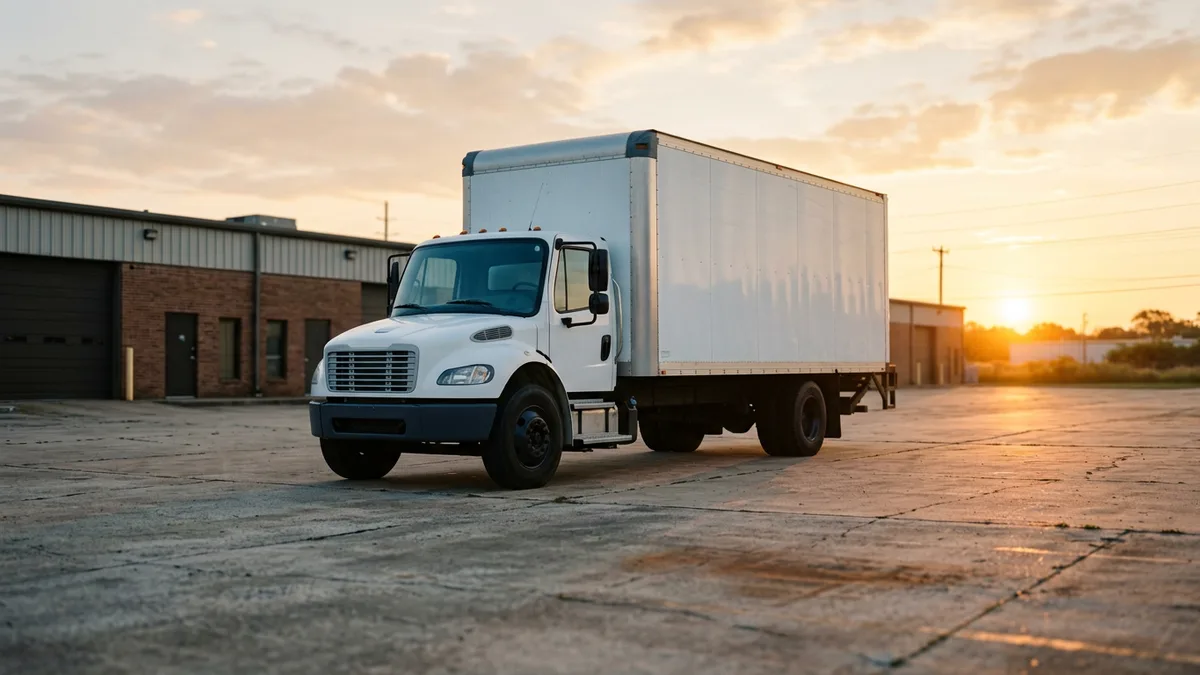
Box truck financing pays for a straight truck with a cargo box through a loan, equipment finance agreement or lease, and the lender reads the chassis, the box, its mileage and the title together.
Delivery companies, movers and contractors hauling tools and materials all lean on the same machine. Cab, frame, box. It’s the truck a small fleet adds when a cargo van stops being enough, and for plenty of businesses it’s the first truck they’d rather spread over a term than pay for in one go.
This page sits inside our guide to commercial equipment financing, and it stays with the box truck itself. For the wider picture, from dump trucks to tractors, read our commercial truck financing guide.
How box truck financing sees the chassis and the box
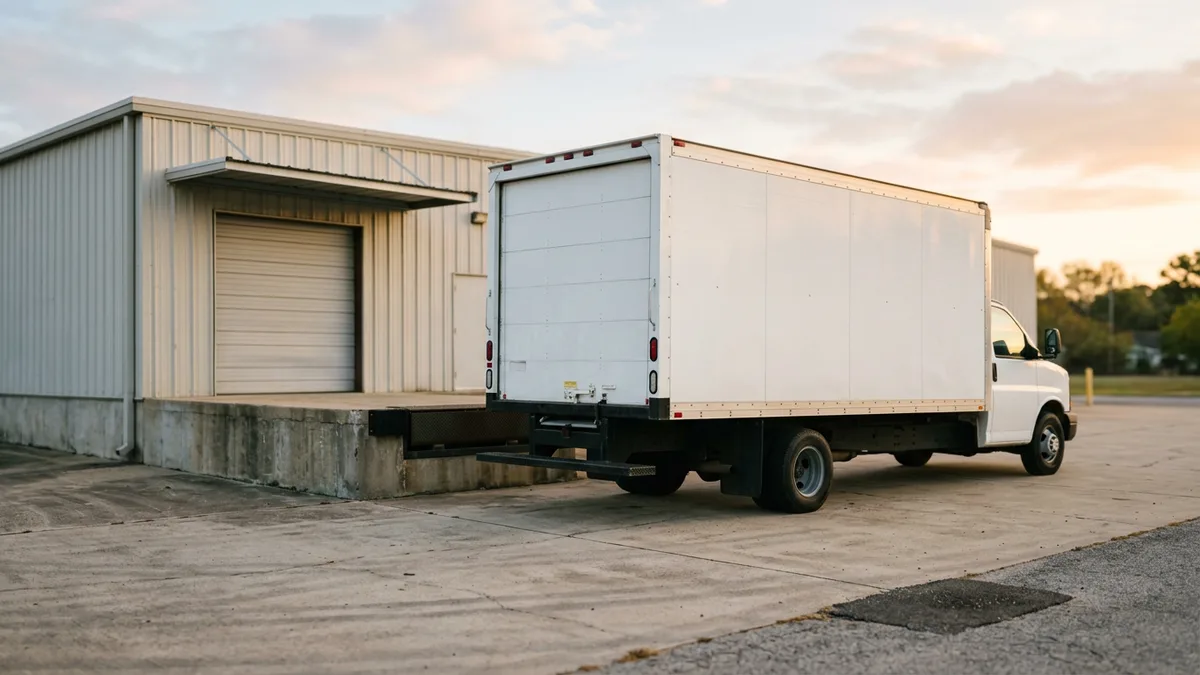
A box truck is a straight truck, one frame with no trailer, with an enclosed cargo body mounted behind the cab. Box truck financing is a loan, equipment finance agreement or lease that pays for that whole unit. The truck itself secures a loan or finance agreement, and a lessor owns it outright during a lease.
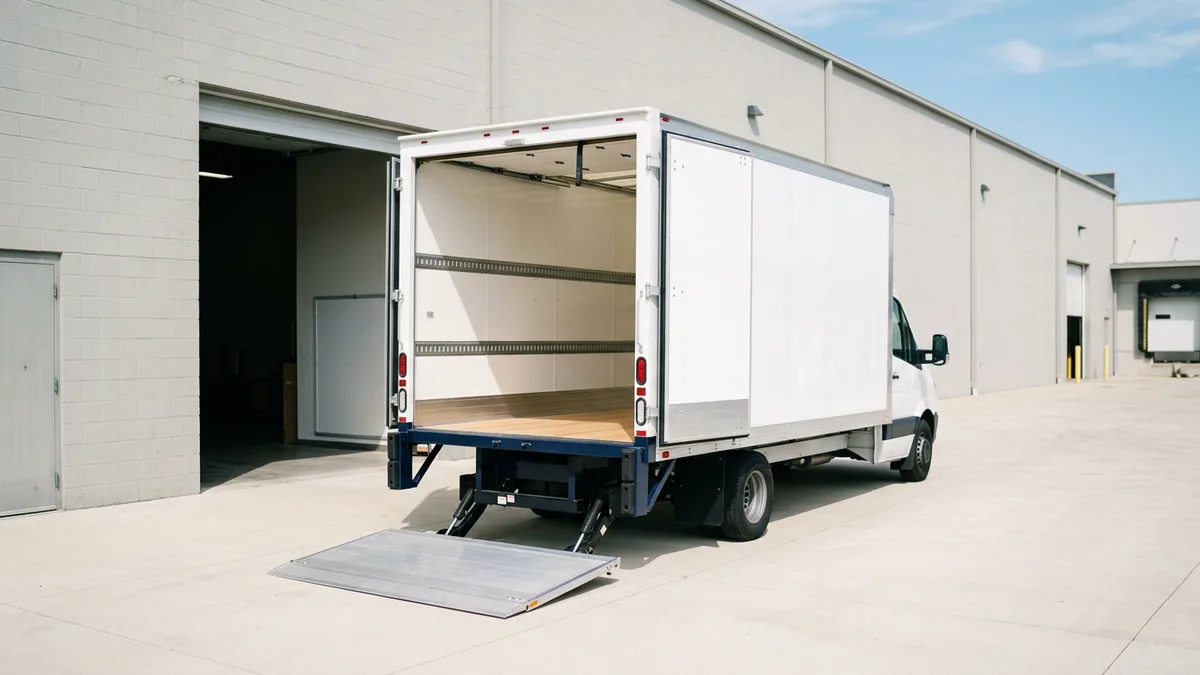
The box is the part buyers forget. Doors that stick. A soft floor. Each one is its own repair bill, and anyone who only reads the engine and the odometer will miss the body, where so much of a delivery truck’s daily wear lands.
Cab and chassis come next. Odometer, service records and tire wear all belong on the same page as the quote, so ask the seller for all three before anyone spends time pricing the truck.
What to know before used box truck financing starts
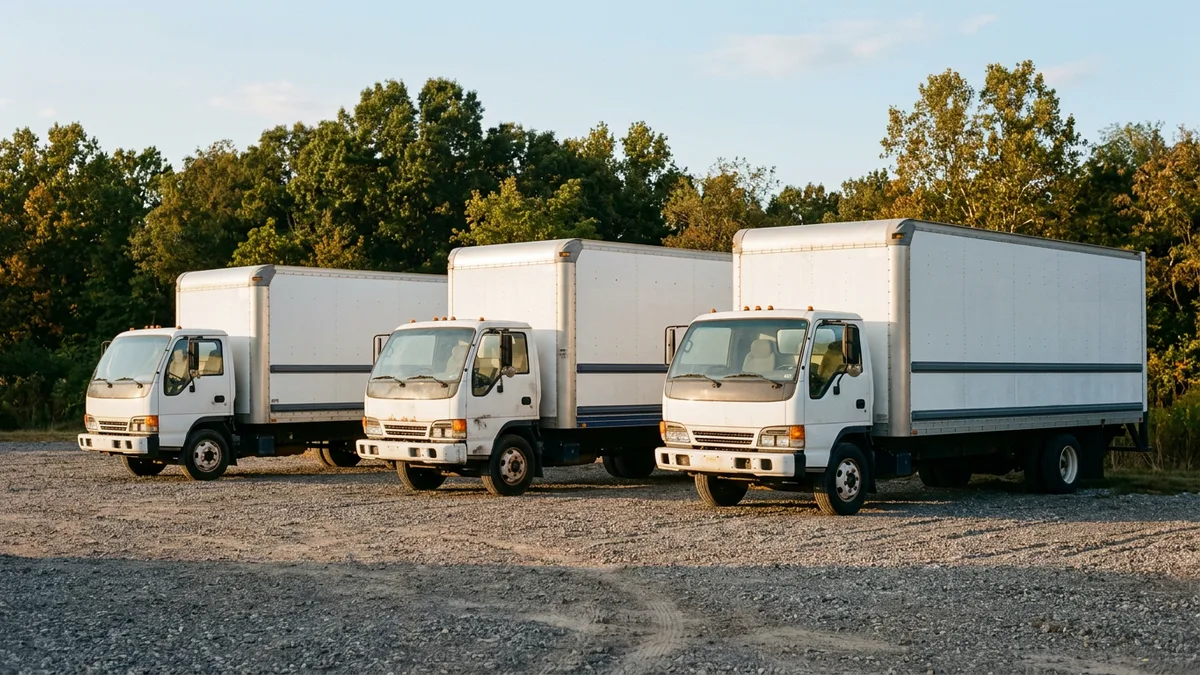
Used box trucks reach buyers four ways, from dealers, rental fleets, auctions and private owners, and each hands over a different file. Dealers recondition trade-ins. U-Haul sells retired rental trucks through its own locations, and Penske lists box trucks on its used-truck site, so a buyer who wants a documented service history has places to look. Auctions move fast.
Whoever the seller is, a lender prices the truck on the same things. Age, miles, condition, resale. An older truck with high miles can still be a sound buy, but a lender will read it more closely than a newer one, and a clean service history is what lets the odometer tell a believable story. Ask for it early, and see our guide to how much a box truck costs for how new and used prices compare by size.
What to ask each seller for
Lenders set their own lists, so treat this one as a starting point. Get the quote first.
| Seller | What they can hand over | What to confirm |
|---|---|---|
| A dealer | A bill of sale, the title or a title application and reconditioning notes | The VIN matches on the title and the bill of sale |
| A rental fleet | Service records kept in one place and an odometer reading | Whether the box, the liftgate and the tires were reconditioned or sold as they are |
| An auction | The title, sometimes only after the sale | The title is in hand, any lien is released and the truck was inspected before bidding |
| A private owner | A signed title and a bill of sale | The seller’s name matches the title, any old lien is paid off and the mileage agrees with the truck |
One digit off in the VIN is enough to send a file back, so read the quote and the title side by side. For a titled truck the lender’s lien is recorded on the certificate of title under UCC section 9-311, which is why a title with an unpaid lien or a missing signature stops a deal cold. Our page on UCC filings covers how that differs from other equipment.
Four weights that sort box trucks
Rental fleets show the range. A 15-foot truck sits in Class 4 and a 26-foot truck in Class 6, the top of the Department of Energy’s medium-duty weight classes.
10,001
Pounds of GVWR where an interstate truck counts as a commercial motor vehicle
Source: Federal Motor Carrier Safety Regulations, 49 CFR 390.5 (checked October 2026)
14,500
Pounds of gross vehicle weight on a 15-foot rental box truck
25,999
Pounds of gross vehicle weight on a 26-foot rental box truck, one under the CDL line
26,001
Pounds of GVWR where a single truck falls into a CDL group
Source: Commercial driver’s license standards, 49 CFR 383.91 (checked October 2026)
Who runs box trucks, and what each asks of the truck
Related equipment financing pages
Box truck financing questions owners ask first
So how does box truck financing actually work?
Three things carry the deal: the truck, the structure and the person who will run it.
With a loan or equipment finance agreement, the business owns the truck and the lender holds a lien on its title. A lease is different. The lessor owns the truck during the term. What it costs each month depends on the lender, the truck and the file, so compare the structure in writing and the total over the whole term, not just the monthly figure.
Can you finance a used box truck?
Short answer: lenders do review used box trucks, and age, mileage and condition are what they read first.
Every lender draws its own lines on age and miles, so one lender’s cutoff isn’t another’s. A service history and a clean title help. Each truck stands alone.
Can a box truck be financed from a private seller?
The seller’s paperwork matters more than the type of sale.
Lenders tend to want a signed title in the seller’s name, a bill of sale and a VIN that matches both. Some ask for photos or a condition report as well. Ask your lender what it needs before you put down a deposit, and walk away from any seller who can’t produce a title in their own name, because a missing title stalls everything that comes after it.
Do I need a CDL to drive a box truck?
Not on weight alone, unless the truck’s gross vehicle weight rating (GVWR) reaches 26,001 pounds.
Under 49 CFR 383.91, a single vehicle at 26,001 pounds of GVWR or more falls in a CDL group. U-Haul lists its 26-foot truck at 25,999 pounds, one pound under the line. Federal safety rules for interstate carriers start lower, at 10,001 pounds, and states add rules of their own. Check yours before you buy.
Is it better to lease a box truck or finance it?
The answer turns on how long the truck stays in service and what you want at the end of the term.
A route that swaps trucks every few years can suit a lease, where the lessor owns the truck during the term and the buyout at the end depends on the lease type. A truck that will run for a decade can suit ownership. Our page on equipment leasing lays out the structures, and operating lease vs finance lease covers how they differ. Consult your tax advisor.
What if the business is new and the truck is the business?
Lenders reviewing a newer business tend to look harder at the truck and at the owner’s experience.
Without years of statements to read, a review leans on what’s in front of it. The truck’s age and condition. The owner’s time behind the wheel or running deliveries. A clean title.
Our startup equipment financing page covers that review in more depth.
Ready to talk through your next box truck?
Share the truck, the seller and a few details about the business, and a Paramount Financial specialist will pick it up from there. You can also start the credit application directly.