
Fair Market Value Lease: True Leases vs a $1 Buyout

Key takeaways
A fair market value lease is usually a true lease that ends with the option to return, renew, or buy the equipment, and the purchase is priced at what it’s worth then, not at a number set up front.
- The buyout price is whatever the market says in the last month of the term.
- A $1 buyout lease is built for keeping the machine. An FMV lease is built for choosing.
- The clause that defines “fair market value” matters more than the payment line.
- Have your tax advisor read the draft before you sign.
Somewhere near the bottom of the quote, where a buyout price would go, it says “fair market value.” No number. That’s a fair market value lease, and the open price is the whole idea.
It’s one of the end-of-term structures in equipment leasing, and it’s the one where the final price follows the market instead of the paper. Below: who sets that price, what the lease controls, and how it compares with a $1 buyout lease.
What a Fair Market Value Lease Is
A fair market value lease, often shortened to FMV lease, is a lease where the lessor owns the equipment for the whole term. At the end, the business can return it, renew the lease, or buy it at its fair market value, which is the price the equipment would bring in an open sale on that date.
The IRS gives the plain version in Publication 561, its guide to valuing donated property. Fair market value is “the price that property would sell for on the open market,” one a willing buyer and a willing seller would agree on, with neither required to act and both aware of the relevant facts. Willing buyer. Willing seller. Nobody desperate.
Nobody fixes that number when you sign the lease. That’s the trade. And because the lessor holds title the entire time, an FMV lease is usually a true lease: you’re paying to use the equipment, not buying it in installments.
55.2%
of U.S. equipment and software investment in 2025, about $1.51 trillion, was financed through loans, leases, and lines of credit.
Source: Equipment Leasing and Finance Association, Industry Horizon Report: A Market Sizing Study 2026-2027
Financing is the norm, then. Which structure you pick is the real decision.

How the Fair Market Value Gets Set
Start with who decides. Some leases name an independent appraiser. Some describe a method both sides have to follow. Some say only that the lessor determines it, and that’s the version to slow down on.
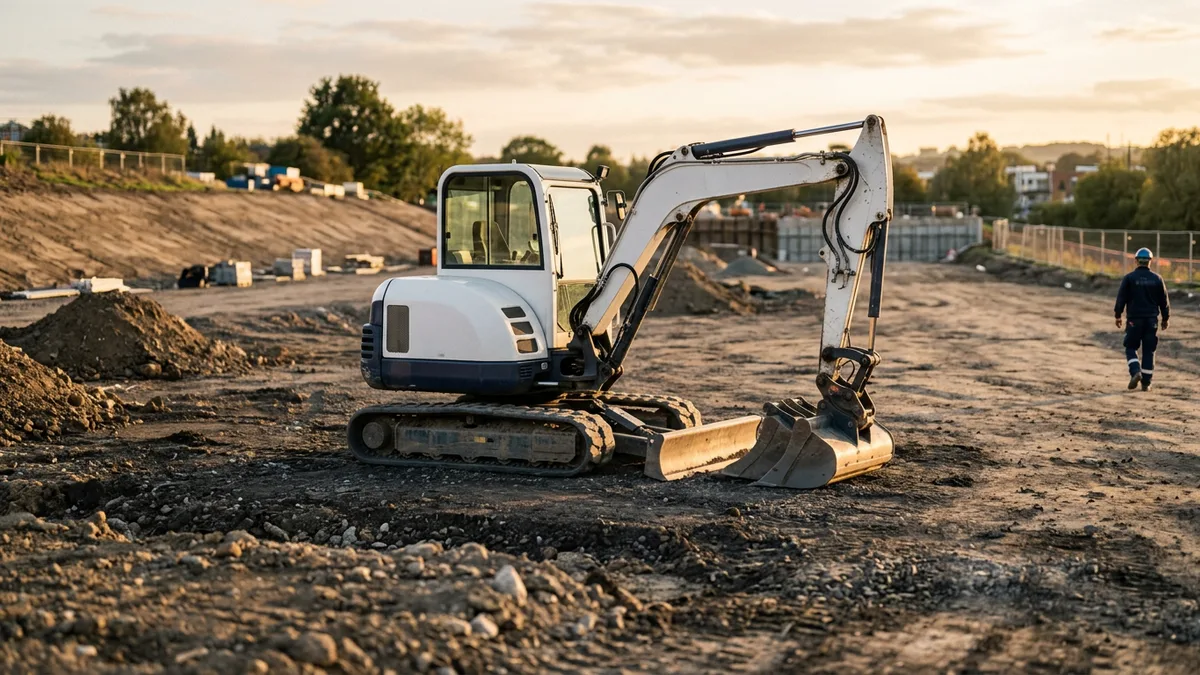
Then the premise. An appraiser can value a 3.5-ton mini excavator as it sits, installed and working, or as it would sell once it’s been hauled out of your yard, or as it would sell at a fast auction. Three premises, three different numbers. The lease should say which one governs.
Condition is next, and it’s where the meter matters. Hours on the machine, the state of the undercarriage on a compact track loader, whether the service records exist at all. A loader run hard on gravel is worth less than one that wasn’t. Wear counts. The lease may value the machine as it actually is, or as it would be under normal wear. Those two readings can land far apart on a vocational truck, and the gap is different for every machine.
Last, the clock. Most leases want written notice, some number of days before the term ends, if you plan to buy. Miss the window and the option may lapse or the lease may renew, depending on how it’s written.
None of this is the residual value. People mix the two up. The residual is the lessor’s estimate, made at signing, of what the machine will be worth at the end, and it helps set your payments. The buyout is the market’s answer later. If the market lands above the estimate, you’re paying more than the lessor assumed.
Five things to find in the lease before you sign:
- The definition of fair market value, word for word.
- Who picks the appraiser, and who pays for the appraisal.
- Whether the machine is valued as it is or as it would be under normal wear.
- The notice window, and what happens if you miss it.
- Whether you can ask for a second appraisal.
Fair Market Value Lease vs $1 Buyout Lease
A $1 buyout lease flips the logic. The price is fixed. It’s tiny, too, so the business is really buying the machine over time, and the paper is just wearing a lease’s clothes.
| $1 buyout lease | Fair market value lease | |
|---|---|---|
| Buyout price | A nominal amount, set at signing | Market value on the last day |
| Price known up front | Yes | No |
| Who absorbs a falling resale value | The business | The lessor, if the machine is returned |
| What the business is choosing | How to pay for a machine it will keep | Whether to keep the machine at all |
| Usual fit | Equipment that runs for its working life | Equipment replaced or upgraded on a cycle |

Here’s the rule. If you’ll keep the machine past the term, price the buyout clause before you compare payments.
The lines between these structures get blurry on paper. Our guide to the operating lease vs finance lease question covers the two labels, and the equipment lease agreement guide shows how a document called a lease can be treated as a secured loan under the Uniform Commercial Code.
The Tax Question, Briefly
Tax is the tricky part. The label and the substance can part ways. For tax year 2026, the IRS’s small-business FAQ on rent and lease expenses says the answer depends on the intent of the parties as shown in the agreement. If it’s a lease, you may deduct the payments as rent. If it’s really a purchase, the payer is treated as the buyer and recovers the cost through depreciation, and an option to buy at a nominal price, measured against the property’s value when the agreement is made, is one of the signs the IRS lists.
Market value isn’t nominal. That’s one reason the two structures can land on opposite sides of the line.
What it means for your return depends on the contract, the equipment, and your year. Consult your tax advisor before you sign, and see our Section 179 guide for how purchases are treated.
When the Buyout Price Matters Most
We finance equipment, so weigh this with that in mind.
- You’ll run the machine for its working life. Price the FMV buyout first, before anything else, or look at a structure built for ownership.
- Imaging equipment, a fleet of laptops, a forklift you swap every few years? The open end is the feature, because you can hand it back.
- Unsure? Ask for the FMV definition in writing, then add every payment to a rough buyout and compare the totals over the same period.
And if you’re paying cash, or sitting on a credit line you already have, you may not need a lease at all.
Questions Owners Ask About FMV Leases
Who actually decides what the machine is worth at the end of an FMV lease?
The lease decides. It may name an independent appraiser, describe a method both sides follow, or leave the call to the lessor. That’s why the definition clause deserves a slow read. Ask who appraises, on what premise, and whether you can request a second opinion.
Is an FMV lease just another name for an operating lease?
Close, but not identical. “FMV” describes how the buyout is priced, while “operating lease” is an accounting label your accountant assigns under ASC 842. In practice many true leases carry an FMV purchase option, so the two overlap. They answer different questions.
Can you negotiate the buyout price on an FMV lease?
Not the price itself. The market sets that. What you can often discuss is how it gets set: the appraiser, the premise of value, the condition assumptions, and the notice window. Those terms move the number more than haggling at the end would.
What if the machine turns out to be worth more than anyone expected?
Then the buyout costs more, if you buy. Return it, and nothing changes. That’s the trade built into the structure. The lessor keeps the upside when the machine holds its value and the risk when it doesn’t.
Does leasing still make sense if you’ll run the machine for ten years?
Short answer: often not. If you already know you’ll keep it, a structure built for ownership lets you plan the cost up front, where an FMV buyout in year ten is whatever the market says that year. A loan or a purchase can fit better, and so can a lease with a fixed purchase option.
How does the IRS treat the payments on an FMV lease?
The IRS looks at the substance of the agreement, not its label. For tax year 2026, its small-business FAQ says payments under a lease may be deducted as rent, while a conditional sale is treated as a purchase and recovered through depreciation. Consult your tax advisor about the lease in front of you.
Next Steps
Want the structures side by side? Our leasing overview lays them out. When you’re ready, you can start an application or talk it through with our team.