
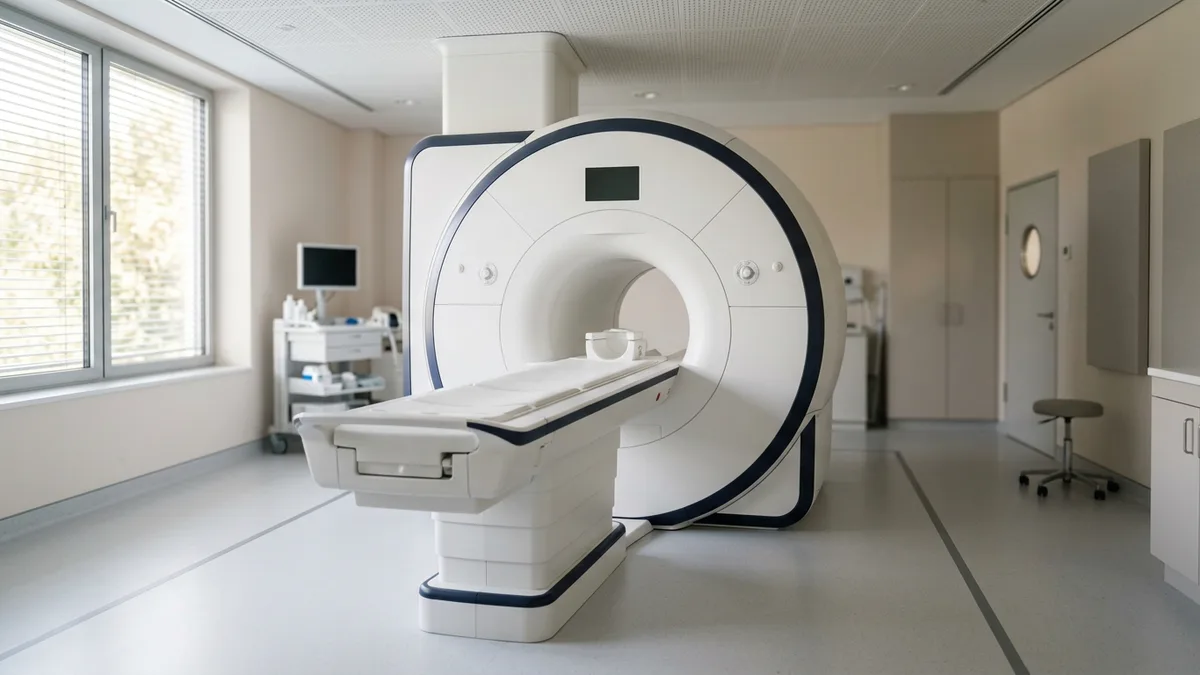
How Much Does an MRI Machine Cost? New, Refurbished and Installation Costs

Key takeaways
How much does an MRI machine cost? Dealer price guides put a refurbished 1.5T scanner at $150,000 to $500,000 and a new wide-bore system above $1 million, before the room, the service contract, and the helium.
- The scanner is one line in the budget, and the room, delivery, service, and helium are the rest.
- Two 1.5T machines on one marketplace asked $129,000 and $590,000 in the same month.
- “Refurbished” isn’t one grade, so find out what the seller means by it.
- Price the whole project, then compare projects instead of magnets.
Read three guides on how much an MRI machine costs and you’ll come away with three different answers. The reason is plain enough: a refurbished magnet that’s been in service for years and a new wide-bore system are both “an MRI machine,” and the guides rarely say which one they mean. Different machines, different prices. So this one puts the machine, the source, and the date beside every figure, and it counts the work around the scanner too.
It’s written for imaging providers weighing a purchase, so a patient’s scan bill isn’t in here. If the next question is how to pay for the equipment, our page on medical equipment financing picks up there. Here, just the price tag.
What Sets the Price of an MRI Machine
An MRI machine’s price starts with its magnet. Field strength, measured in tesla, is the headline spec, and 1.5T and 3T are the two the dealer guides price most. Bore width, the number of RF channels and coils, the machine’s age, and whether it was refurbished to the maker’s standard all move the number, too.
| What changes | What the dealer says |
|---|---|
| 3T instead of 1.5T | About 25% more, in one guide |
| 3T instead of 1.5T, again | Could easily be double, in another |
| 70 cm bore, not 60 cm | At least 25% more |
| 4- to 8-channel coil, new | $12,000 to $80,000 |
| 4- to 8-channel coil, refurbished | $8,000 to $25,000 |
Those two 3T rows come from the same dealer. Block Imaging’s price guide says to expect about 25% more for a 3.0T system, while its 1.5T guide, updated in January 2026, says the price tag could easily be double. Neither is a quote. Settle field strength first, because it decides what you’re comparing.
How Much a New MRI Machine Costs
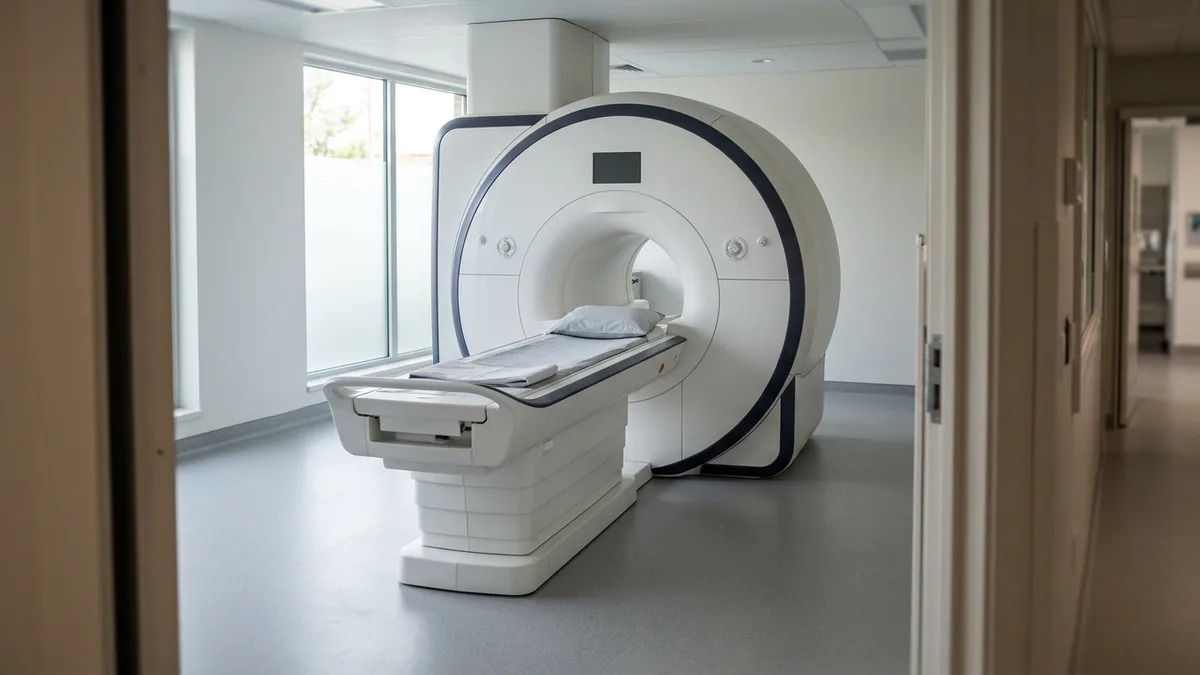
Block Imaging says new wide-bore machines can cost upwards of $1 million.
$1 million
What Block Imaging says a new wide-bore MR machine can cost, as the dealer’s 2026 price guide reads on October 28, 2026
Source: Block Imaging, MRI Machine Cost and Price Guide, 2026
Upwards of. There’s no ceiling in that phrase. We also didn’t find a list price from any manufacturer, so there’s no official number to check that one against, and a new system is something you get quoted, which makes the quote the only price that counts. Two quotes, in writing, with the same coils and the same warranty on both.
New buys you a warranty and current software, and the clock starts at zero. It doesn’t buy a shorter list of other costs. The room and the helium are still on you.
Refurbished and Used MRI Machine Prices
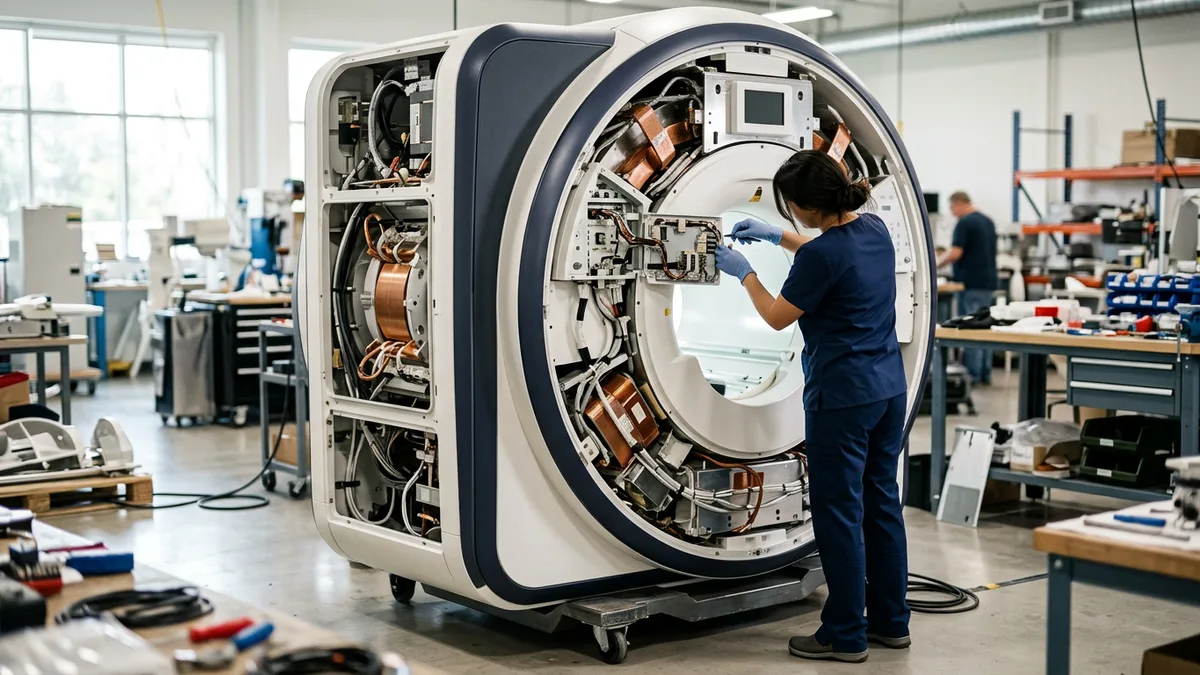
Here the ranges get wide. Block Imaging puts refurbished 1.5T machines at $150,000 to $500,000. Its price guide lists refurbished wide-bore units at $200,000 to $700,000 and pre-owned closed-bore systems at roughly $400,000 to $600,000.
Ranges only tell you so much, so we pulled three 1.5T listings from DOTmed, an equipment marketplace, on October 28, 2026. Here’s what they asked.
| Machine | Year | Asking price | Listing note |
|---|---|---|---|
| Philips Ingenia 1.5T | 2013 | $590,000 | Listed as used, good condition, Oklahoma |
| Siemens MAGNETOM Amira 1.5T | 2015 | $350,000 | Listed as used, good condition, Oklahoma |
| Philips Multiva 1.5T, 16-channel | 2017 | $129,000 | Rated excellent by the seller, 30-day warranty, California |
Same field strength. Asking prices a factor of 4.6 apart. The cheapest one is also the newest, so age doesn’t explain the gap, and the listings don’t say what does, whether that’s configuration, condition, what’s included, or the seller’s patience.
Remember, these are asking prices. Asking isn’t paying.
“Refurbished” is the other thing to pin down. One listing calls the machine complete and fully functional according to OEM standard. Another comes with a 30-day warranty. Both are “used,” and neither phrase tells you what was replaced. Ask the seller:
- How many RF channels it has, and which coils come with it. Coils are priced on their own.
- Which software version it runs.
- Whether the helium level and the cold head are documented.
- How long the warranty runs, and what it leaves out.
- Who takes it out of the old site, who rigs it, and who’s responsible if it’s damaged on the way.
- Whether the seller owns it outright.
That last one matters most with a third-party seller. A search for a UCC filing against the machine shows whether another lender still holds a claim on it. Lenders financing a used system will ask about its age, its condition, and the seller’s paperwork, and some want an appraisal or the seller’s invoice. Terms vary by lender.
Installation and the Room
The scanner arrives. Now you have a very heavy, very magnetic box and no place to run it.
Block Imaging puts setup for a standard 1.5T system at $50,000 to $80,000, with helium and other critical supplies on top, and transport within the country typically runs $5,000 to $10,000. Taking out an existing unit costs about $10,000 to $12,000 and a few days in standard cases, and complex removals cost more.
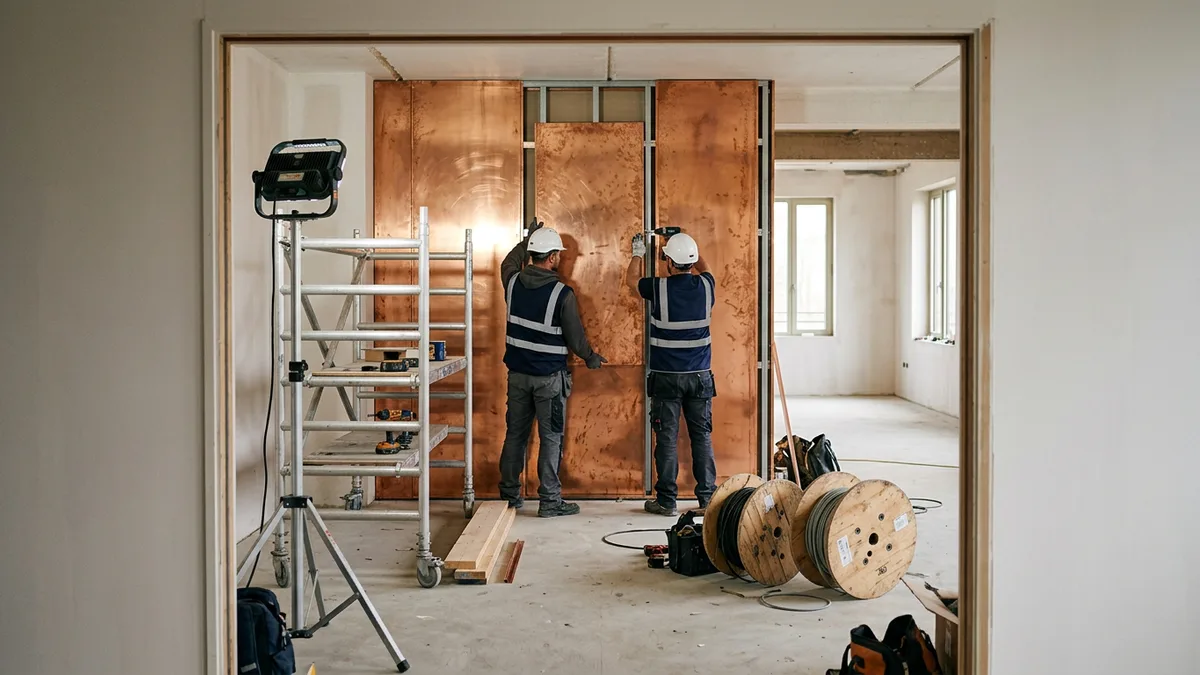
What those figures leave out is the room itself. An MRI room needs shielding against radio-frequency noise. Block’s RF shielding page says a separate shielding vendor, often a different company from the MRI vendor, tests the site for AC and DC interference, RF interference, and vibration before anything gets built. Copper, galvanized steel, and aluminum are the usual materials.
The page gives no price. We won’t give one either. The room figures we found in unsourced guides ran from tens of thousands of dollars to seven figures, and a number with no site survey behind it is a guess.
So the order matters. Site survey first. Shielding bid second. Scanner third.
Helium, Service, and Running Costs
Helium surprises people. It never stops. Block Imaging’s helium article, updated in February 2026, says end users are seeing prices of $30 to $50 per liter or more.
$30 to $50
Per liter of helium or more, what Block Imaging says end users were paying for MRI refills in its article updated February 26, 2026
Source: Block Imaging, How Much Will It Cost to Refill Helium in My MRI Machine, 2026
The same article says a system working correctly can burn through 1 to 4% of its helium in a month, and that a fill can mean a wait of one to four weeks depending on where you are. Magnet design changes the math.
Philips says the average MRI machine requires about 1,700 liters of liquid helium, while the sealed magnet in its BlueSeal line needs only 7.
That’s a manufacturer’s claim from November 2022 about one magnet family, not an audit. Still, it’s why you ask any seller which magnet is in the box.
Then there’s service. Here’s how Block Imaging prices its own annual service contracts by maker:
| Maker | Per year |
|---|---|
| GE | $66,000 to $134,000 |
| Hitachi | $42,000 to $60,000 |
| Philips | $80,000 to $110,000 |
| Siemens | $69,000 to $113,000 |
The guide adds that a one-year term costs more than a five-year term. Read the exclusions, too, because per Block most service contracts won’t cover a magnet quench caused by negligence, and a quench is the expensive kind of surprise.
So here’s the rule we’d use. Price the scanner, the setup, the room, the first year of service, and the helium plan as one project, then compare projects instead of magnets, because a cheaper magnet that needs a helium fill soon and a bigger room can lose to a pricier one that doesn’t.
Buy, Lease, or Finance an MRI Machine
Cash is a legitimate answer. Then none of this section applies to you. If you’d rather keep the cash, a lease is a different contract with its own end-of-term options, such as a fair market value buyout or a $1 buyout. Our overview of equipment leasing and our post on operating lease vs finance lease explain how those differ.
Lenders also differ on what they’ll put in one agreement, and some include delivery and installation with the machine while others don’t, so ask the lender before you shop for the machine, not after you’ve picked one. Disclosure: Paramount Financial makes its living on equipment financing, which gives us a stake in this section. Run the cash numbers too.
What Imaging Providers Ask Before Buying
Why do MRI price guides never agree with each other?
Because they aren’t pricing the same thing. One means a new wide-bore system, another a refurbished 1.5T with its coils, and a third folds in the room.
Even Block Imaging’s own two guides put the 3T premium at about 25% in one and double in the other. Check what each figure includes.
Does a refurbished MRI make sense for a new imaging center?
Short answer: it can, if the seller documents what was replaced and you price the room, service, and helium next to the machine.
The scanner is only one line of the project. A refurbished unit lowers that line and leaves the other four where they were.
Beyond the purchase price, what does an MRI cost to keep running?
Block Imaging prices annual service at $42,000 to $134,000 depending on the maker, and helium at $30 to $50 per liter or more. Both repeat every year. Staffing, insurance, and software licenses are on top, and we couldn’t source those, so ask an operator who runs the same model.
Can an MRI machine go in any spare room?
No. The room needs shielding against radio-frequency noise, and a shielding vendor tests the site for interference and vibration before anyone builds.
The magnet also has to physically get in the door. Have the site surveyed before you sign for a machine.
What happens to the helium if a magnet quenches, and who pays?
A quench is a sudden loss of the magnet’s field, and the helium that cools it is lost with it. Who pays depends on the cause and the contract.
Block Imaging notes that most MRI service contracts won’t cover a quench caused by negligence. Read the exclusions before you sign.
Can an MRI machine be leased instead of bought?
It can, depending on the lessor and on the system. A lease means you pay for use over a term, and the options at the end, return, renew, or buy, are written into the contract. Ask what happens on the last day before you compare payments.
Next Steps
Once you have a realistic project number, the next question is how to pay for it. Read how medical equipment financing works, see how Paramount Financial handles equipment financing across machine types, or start an application.