
Last updated: October 31, 2026
Construction Equipment Leasing for Contractors
How true leases, $1 buyouts and rental purchase contracts differ, and which one fits how a machine works.
Construction equipment leasing puts an excavator, loader or crane on your job for a fixed term while a lessor holds title. What you can do when the term ends decides whether it’s really a lease.
Here’s how it usually goes. A machine comes on rent for one job, the job runs long, and by the third invoice somebody in the office asks why you aren’t just keeping the thing for good.
Good question. Paramount Financial’s equipment leasing guide covers lease types across every industry. This page stays on the job site.
How construction equipment leasing works
In a construction equipment lease, a lessor buys the machine you pick and your business pays to use it for an agreed term. The lessor keeps title. You run it, insure it and, unless the contract says otherwise, maintain it. When the term ends, the lease says what you can do next.
Lessors write these on new and used iron alike, from a Bobcat compact track loader or a Komatsu excavator to a Caterpillar dozer or a crawler crane, and age, hours and what the machine should be worth at the end all shape the deal. Hours count.
A lease isn’t a loan
With a loan or an equipment finance agreement, your business owns the machine from day one and the lender holds a security interest in it, usually recorded in a UCC filing. In a true lease you’re paying for use. Different deal.
Four deals a contractor gets offered
Read it left to right. Each column gets you closer to owning the machine.
| What to compare | Short-term rental | Rental purchase option | True lease | $1 buyout lease |
|---|---|---|---|---|
| Who holds title during the term | The rental company. | The rental company or dealer, until you buy. | The lessor. | The lessor on paper, though the deal often gets treated as a sale. |
| Where your payments go | Use of the machine, nothing toward owning it. | Use, with a set share credited toward the price. | Use, with no equity building. | Toward a machine you plan to keep. |
| How it ends | You call it off rent and it goes back. | Buy it less your credits, or return it and ask what happens to them. | Return it, renew, or buy at the price the lease sets. | Pay the nominal price and keep it. |
| What it suits | A short job, or a task you rarely see. | A machine you might keep, and want to try first. | Iron you’ll swap out while it still holds value. | Iron you’ll run until it’s worn out. |
True lease, or a sale in disguise?
The word on the contract doesn’t settle it. Under UCC 1-203, a lease you can’t cancel creates a security interest when its term runs the machine’s remaining economic life, or when you can take ownership for a nominal payment. Tax has its own test. The IRS lists seven signs of a conditional sale, including these four.
Look at the first one again. Rental credits can read a lot like it, so don’t assume a rental purchase deal is plain rent. The IRS says no single test always applies and that intent decides, and the result matters because lease payments can be deducted as rent, while a conditional sale makes you the buyer, recovering the cost through depreciation.
IRS Publication 946, the edition for 2025 returns, adds that you generally can’t depreciate what you lease, since you don’t keep the incidents of ownership. Figures change yearly. Check the 2026 limits on irs.gov and consult your tax advisor before you sign, and see operating and finance leases for the accounting side and our Section 179 deduction guide for the buying side.
When a rental buyout makes sense
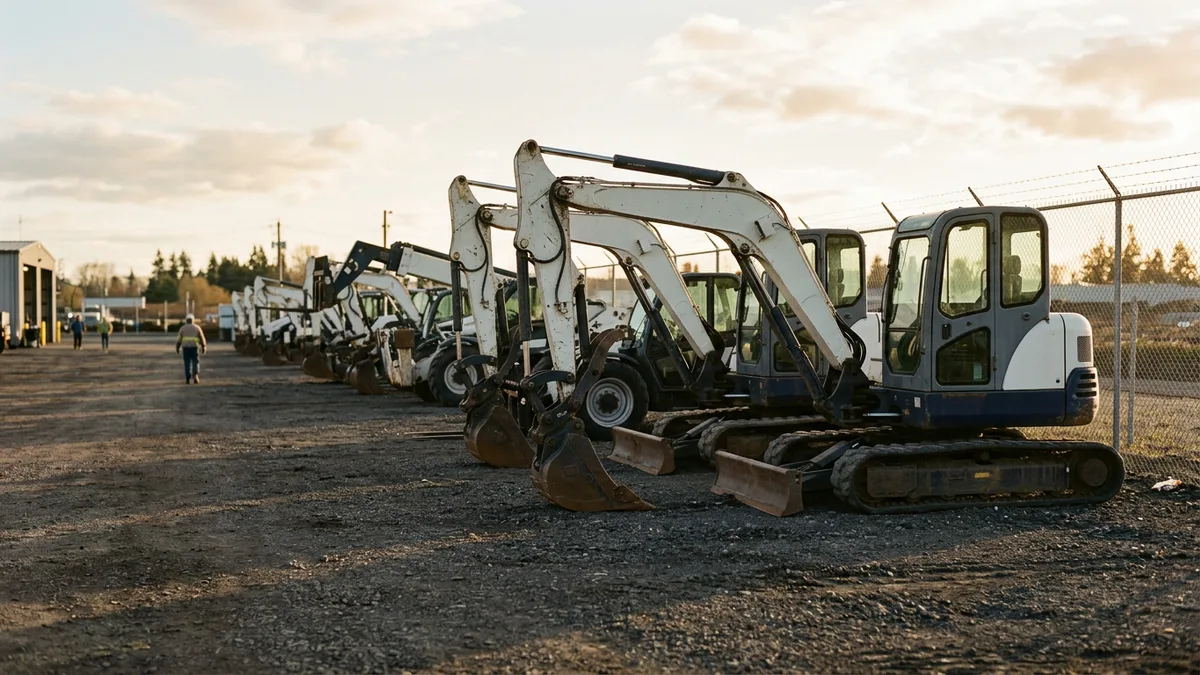
A rental purchase option gives you the right to buy at a price, with credits, set when you sign. A plain rental can turn into a buyout too, if the owner’s willing to sell. Either way you already know how that machine starts on a cold morning and how it runs on your dirt, and a used machine from a stranger can’t offer you that.
Buy when the work has outlasted the rental and the next jobs need the same iron. Don’t when they won’t.
Then decide how you’d pay for it. Cash, a loan and a lease each change the math, and used equipment financing walks through what lenders look at on an older machine.
Seasonal work and construction equipment leasing
Paving stops when the asphalt plants close. Excavation slows when the ground freezes. The lease payment doesn’t, unless the contract says so.
So ask early. Some lessors will shape a payment schedule around a busy season and others won’t, and you want that answer before you’ve picked the machine and long before you’ve promised the work to a general contractor.
Still undecided? Our guide to leasing versus buying runs the same question across all equipment.
Where the lease line sits, in three numbers
7
Signs the IRS lists that an agreement may be a conditional sale
Source: IRS, Income and Expenses FAQ
4
Conditions that turn a lease you can’t cancel into a security interest
26%
Share of 2023 equipment and software acquisitions made through leasing
Source: Equipment Leasing & Finance Foundation, Horizon Report 2024
Four ways a construction lease can end
Which of these your lease allows is written into it, so read what to check in an equipment lease agreement first.
Weighing a loan, or a different machine?
What contractors ask about construction equipment leasing
So how does a construction equipment lease actually work?
Short answer: a lessor buys the machine you choose and your business pays to use it for a set term. You run it and usually carry the insurance. The lease spells out what happens at the end. Read that part first.
What’s the difference between a true lease and a $1 buyout lease?
A $1 buyout lease is built so you keep the machine, while a true lease leaves it with the lessor unless you choose to buy. That gap follows the deal into how it’s treated under the UCC and at tax time, so ask your tax advisor which one you’re signing. Two very different contracts.
Is rent to own construction equipment the same as leasing?
Not quite, because rent to own is a rental with a purchase option attached, and a lease is a contract for a fixed term. You can usually hand a rental purchase machine back, where a lease tends to hold you to its term. Credits vary by dealer. Get the schedule in writing.
When does it make sense to buy out a rented machine?
The better question is what you’ve already paid toward it, and what the same machine sells for used. Add up the rent, subtract the credits and hold that buyout against the market. Then check the hours. If your next two jobs need that machine, run the numbers.
What happens at the end of a construction equipment lease?
Four endings are common: hand it back, renew, buy at fair market value, or pay a nominal price and keep it. Your contract decides which you get, and a notice deadline often sits in the same clause. Mark that date. Some leases renew on their own if you miss it.
Can I lease used construction equipment?
Used machines get leased too, though age, hours and condition weigh more heavily than they do on a new one. A lessor wants to know what the machine will be worth when the term ends, and that’s harder to call on older iron that has spent years on rough ground under more than one operator. Terms differ. Expect questions.
What slows a construction equipment lease down?
Missing machine details are a common holdup: the serial number, the hours, the seller and the condition. Business paperwork matters too, and insurance certificates can take time to gather. Have them ready. No one can promise a timeline before they’ve seen your file.
Got a machine in mind, or one already on rent?
Tell us what the machine is, how long it’ll work and what you want at the end of the term, or start an equipment application if you already know. Questions first? Talk to a Paramount Financial specialist.