
Last updated: October 31, 2026
Equipment Financing and Bad Credit: How Applications Are Reviewed
What a lender looks at when your credit has setbacks, and how to prepare your file.
Equipment financing with bad credit depends on more than a score: lenders weigh the machine as collateral, the business’s cash flow and history, and the paperwork, then decide one file at a time.
Maybe a bank said no. Maybe one slow year left a mark on your report. A score is where the review starts, and it’s rarely where it stops. An excavation contractor with a rough patch and a steady backlog reads differently from a rough patch alone.
Below is what a reviewer reads and what you can have ready. Our guide to startup equipment financing covers the close cousin of this problem, a business with no history at all. Nothing here promises a yes, because every lender sets its own standards.
How equipment financing with bad credit gets reviewed
Equipment financing with bad credit means a loan, equipment finance agreement or lease where the owner’s credit history shows visible setbacks, so the lender leans harder on everything else in the file. That’s the machine, the cash coming in, how long the business has run and whether the paperwork agrees with itself.
Weighting varies. A bank and an equipment finance company can read one file very differently, partly because a specialist knows what a used dozer brings at auction. So one no isn’t the whole market’s answer.
Read your own file before a lender does
Bad credit isn’t one thing. A two-year-old string of late payments and an open tax lien raise different questions, so they need different answers. Find your row.
| What shows up | What a reviewer wants to know | What to bring |
|---|---|---|
| Late payments | One bad stretch or a habit, and how recent? | A short note on what happened, plus statements showing on-time payments since |
| Collections or charge-offs | Is the debt settled, disputed or still open? | Payoff or settlement letters, or your dispute paperwork |
| Bankruptcy | Which chapter, is it discharged, and what has happened since? | The discharge papers and a plain account of the cause |
| Federal tax lien | Is it paid, on a payment plan or still open? | The IRS release or your installment agreement |
| Maxed-out cards | How much monthly cash already goes to debt? | A debt schedule listing every balance and payment |
| Merchant cash advances | How much leaves the account before the business can use it? | Recent bank statements and each advance agreement |
Pull the reports first
Mistakes happen. The FTC’s guide to disputing errors on your credit reports points you to AnnualCreditReport.com for free copies, then has you write to both the bureau and the business that supplied the wrong item. The bureau gets 30 days to investigate. Start early.
Why a tax lien gets its own row
A lien competes for the machine. According to the IRS’s page on understanding a federal tax lien, the claim reaches all business property, receivables included, along with assets acquired while it stands, and the agency releases it within 30 days after the debt is paid in full. Consult your tax advisor about the route that fits your situation.
Why the machine can carry so much of the file
Equipment backs itself. On a loan or equipment finance agreement, the lender takes a security interest in the machine and records it with a UCC-1 financing statement, a public notice of that claim. If payments stop, there’s something to recover, and a Caterpillar or Komatsu excavator with a deep resale market is easier to value than a one-off rig nobody else wants.
One machine, or everything you own?
Read the collateral line. Under UCC section 9-504, a financing statement can describe the collateral or simply say it covers all assets, and those are very different filings.
An all-assets filing, usually called a blanket lien, can get in the way of your bank line or the next lender. Ask before you sign. Our page on UCC filings goes further.
What cash flow and business history add
A score looks backward. Bank statements show this month. Reviewers read the deposits, the low points in the balance, any overdrafts and how much goes out on automatic debits, and a plumbing or HVAC outfit with steady deposits has something concrete to point at.
Signed work helps too. A contract for the next site job, a maintenance agreement or a backlog of installs shows the machine has somewhere to earn. And write the note. Two honest lines on what caused the bad stretch, a customer who never paid or a season that fell apart, and what changed afterward, save a reviewer from guessing.
What a weaker file can change in the deal
Lease or loan when credit has taken a hit
Ownership is the real difference. A loan or equipment finance agreement makes the business the owner, with the lender holding a security interest, while in a lease the lessor owns the equipment during the term. It isn’t a way around the review. Lease applications get read too.
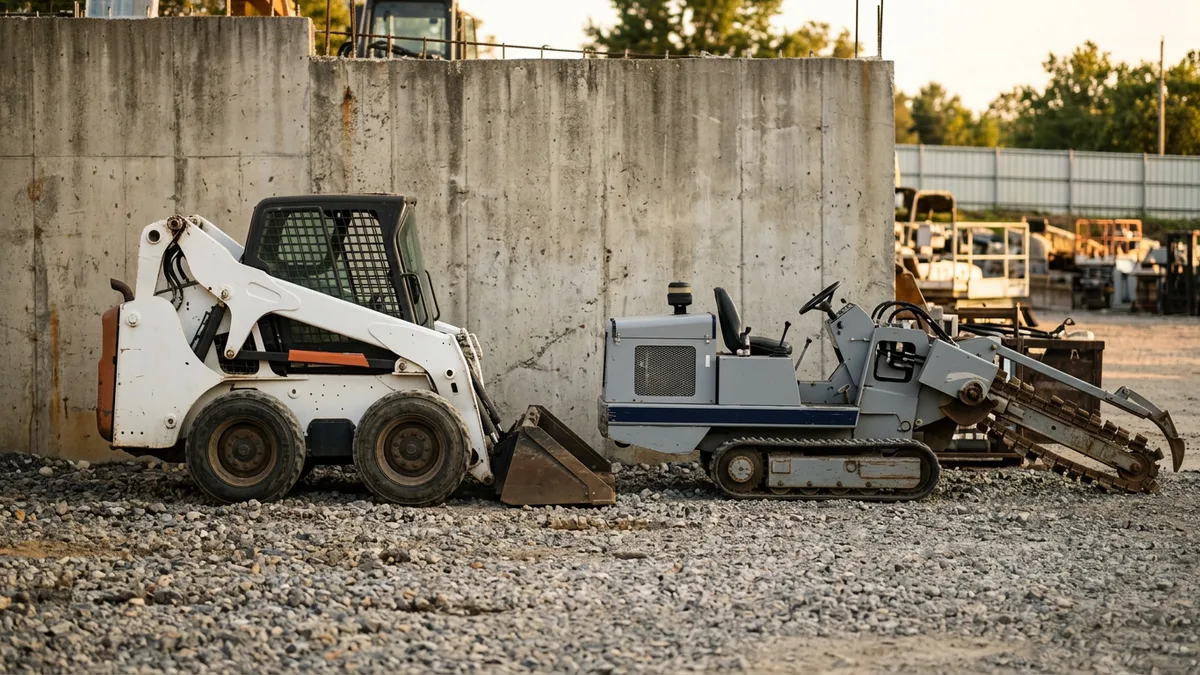
Think about how long the machine stays. Running that dozer for ten years usually points to owning. Need a trencher for a three-year contract? A fair market value lease may fit better, and our page on leasing vs buying equipment walks through the decision.
Paramount Financial offers both equipment financing and true equipment leases.
A low score is one reason among several
The Federal Reserve Banks asked employer firms, in their 2025 Small Business Credit Survey, why they were turned down for at least some of the financing they sought. Firms could give more than one reason.
37%
Named too much debt already
Source: Federal Reserve Banks, 2026 Report on Employer Firms, page 14
29%
Named insufficient collateral
Source: Federal Reserve Banks, 2026 Report on Employer Firms, page 14
Four moves after a lender says no
Related equipment financing pages
What owners ask about equipment financing and bad credit
So can you actually get equipment financing with bad credit?
Short answer: it depends on the lender, the machine and the rest of the file, and no honest lender can promise a yes before reading it. Standards differ widely. A rough report next to steady deposits and a machine that resells well is a very different conversation from a rough report alone.
What credit score do you need to finance equipment?
There isn’t one number. Each lender sets its own cutoffs and can change them, so a figure you read online only describes that lender on that day. Ask early. A straight answer saves you both an application.
Does a past bankruptcy rule out a loan or a lease?
A bankruptcy changes the conversation, and how much depends on the lender, the chapter and how long ago it closed. Expect questions. Have the discharge papers ready, along with a plain account of what caused it and what the business has done in the years since, because a reviewer will want to see the whole timeline rather than a single date on a report.
Will a bigger down payment help my application?
Sometimes, since cash in the deal lowers what a lender has at risk. Some lenders ask for one on a weaker file and others don’t. It’s no cure-all. Weigh it against what you’d have left for fuel, payroll and repairs.
Is a lease easier to get than a loan?
The better question is which structure fits how long you’ll keep the machine, because lease applications go through a credit review as well. Neither is a shortcut. Compare both in writing, including what happens at the end of the term.
Can I find out why a lender turned me down?
Federal rules generally give you a way to ask. Under Regulation B, a business with $1 million or less in revenue gets the reasons or notice of its right to request them, and a larger one can ask in writing within 60 days. Vague doesn’t count. The rule says citing internal standards, or a failure to reach a qualifying score, isn’t specific enough.
What should make me walk away from an offer?
Three signs top the list: a promise of credit no matter your past, a guarantee before you’ve applied and a fee due before you get the money. Those come straight from the FTC’s warning on advance-fee loans, written for consumers but just as useful here. Leave. Then report it.
Ready to walk through your file?
Tell us about the machine and where the business stands, and a Paramount Financial specialist will pick it up from there. You can also start the credit application directly.