
Last updated: October 29, 2026
Forklift Financing for New and Used Forklifts
Loan or lease, new or used, dealer or private seller: see what actually fits your fleet.
Start a Forklift Financing Application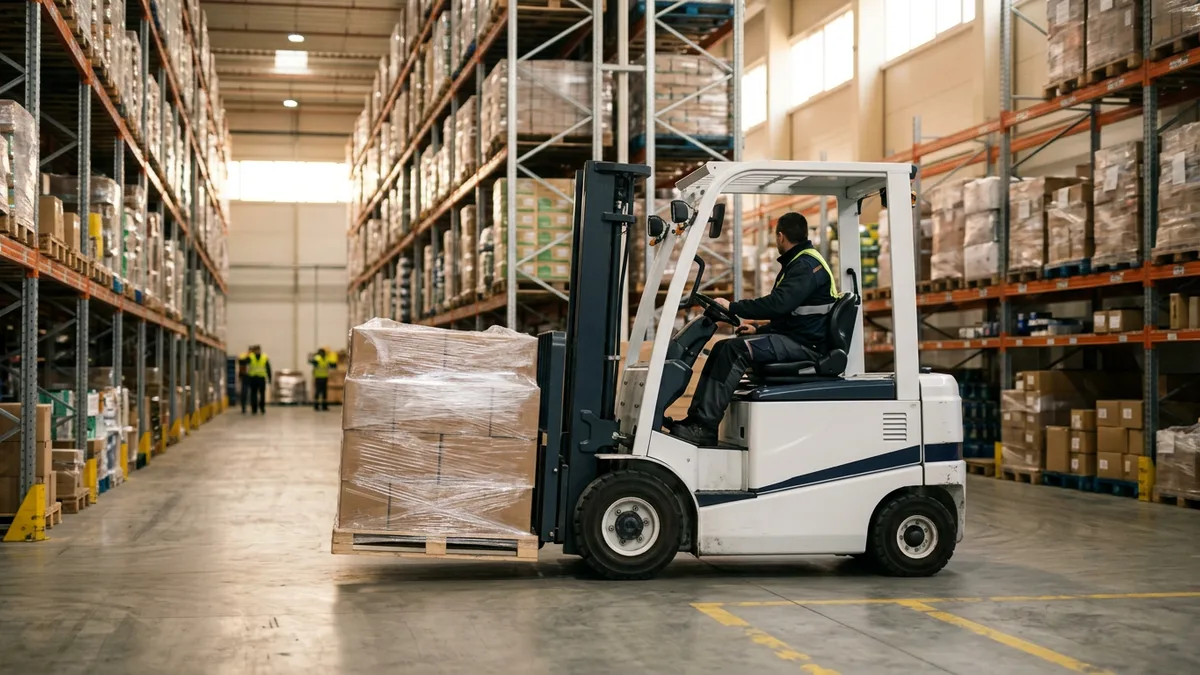
Forklift financing splits into two paths. A loan hands the business ownership from day one. A lease lets it use the forklift for a set term, then return, renew or buy it.
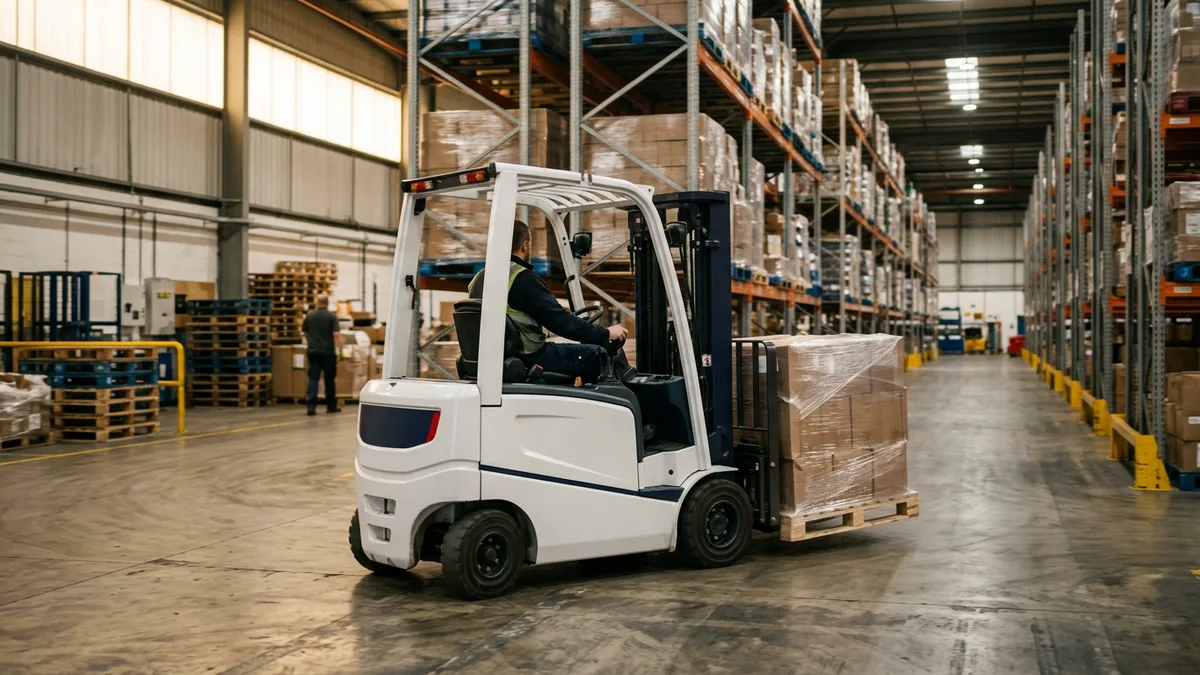
Warehouses, distribution centers and manufacturers go through forklifts faster than almost anything else on the floor. Most finance it instead. Here’s what actually changes: loan versus lease for a forklift, the truck classes worth knowing, and what’s different when the truck is used or came from a private seller instead of a dealer.
Buying more than a forklift this year? Our heavy equipment financing overview covers excavators, skid steers, cranes and dump trucks too.
Which forklift is this for?
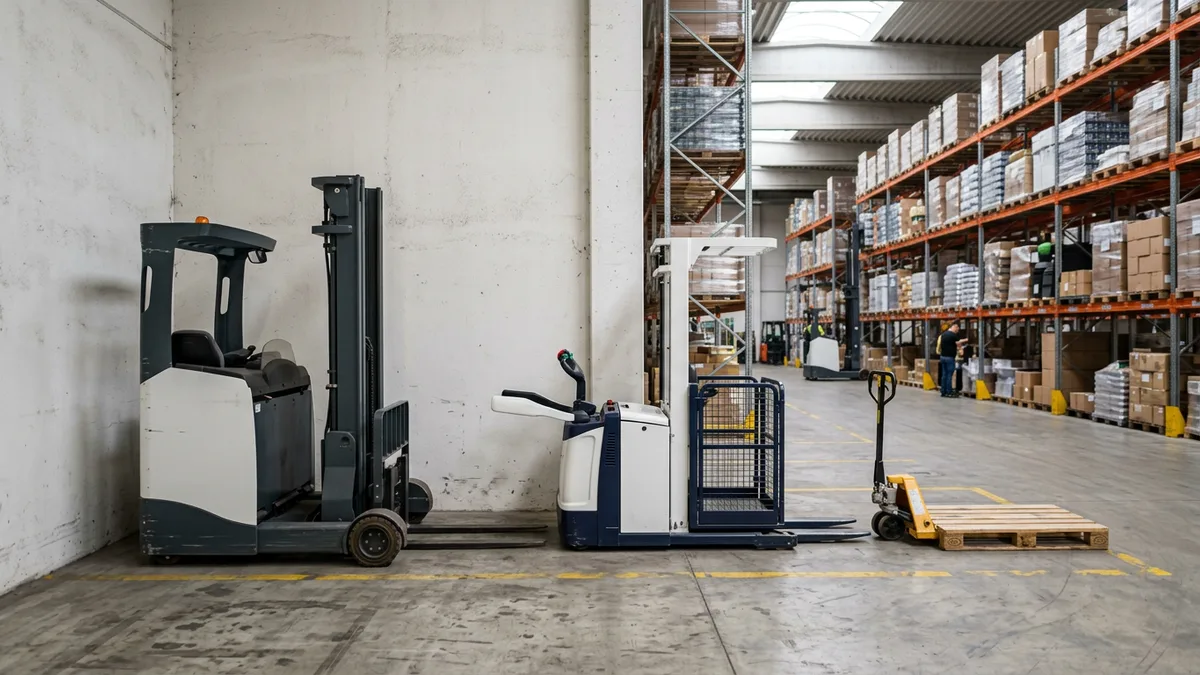
A forklift isn’t just one machine. The floor, the racking and whether the job’s indoors or out decide which type actually works.
- Electric counterbalance: the default for indoor aisles, batteries instead of ventilation
- Internal combustion (IC) counterbalance: propane, diesel or gasoline, more common outdoors and on rough yard surfaces
- Reach truck: lifts higher into narrow racking than a counterbalance truck can
- Order picker: raises the operator with the load for piece-picking
- Pallet jack: powered or manual, short floor moves without a full truck’s footprint
Size matters too. Capacity and tire type, cushion versus pneumatic, count just as much as the class itself. A 3,000-pound counterbalance for a retail backroom and a 15,000-pound container-handling truck at a port terminal get financed in very different ways, even though on paper they’re both just “a forklift.”
Forklift financing: loan or lease?
Take out a loan or an equipment finance agreement, and the business owns the forklift from day one while the lender holds a security interest, usually backed by a UCC-1 filing against that specific truck. With a lease, it’s flipped: the lessor owns the forklift during the term, and the business just pays to use it.
Fit depends on time. How long the forklift stays useful, and what the business wants to do when the term ends, usually settles it. Read our fair market value lease breakdown for the long version, and our equipment leasing page for how a true lease differs from a loan at tax time.
Loan, fair market value lease or $1 buyout lease
| Loan / EFA | Fair market value lease | $1 buyout lease | |
|---|---|---|---|
| Who owns it during the term | The business | The lessor | The lessor, in form only |
| Typical fit | Keeping the truck long-term | Swapping trucks every few years | Keeping the truck, paid off like a loan |
| End of term | Already owned, loan paid off | Buy at fair market value, renew or return | Buy for a stated, nominal amount |
Buying a forklift new, used or private-party
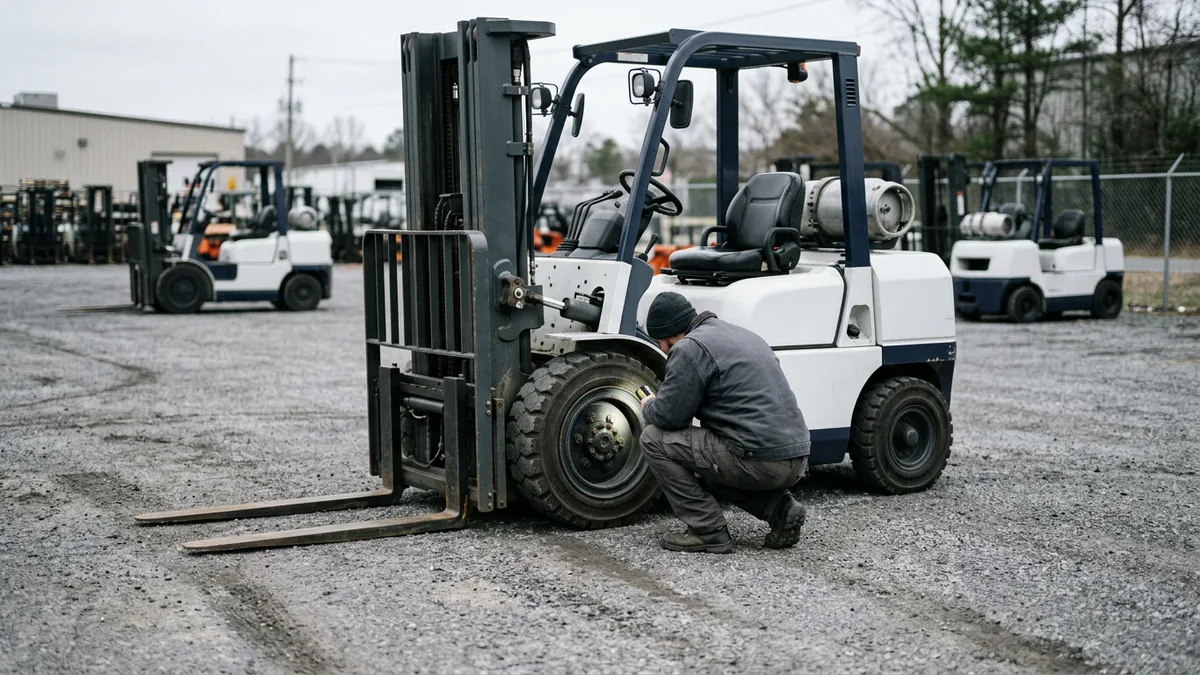
A new forklift from a dealer usually comes with a clean title, a warranty and financing already built into the floor plan. Used is different. A used or private-party purchase tends to move faster and cost less upfront, but the paperwork and the inspection carry more of the weight.
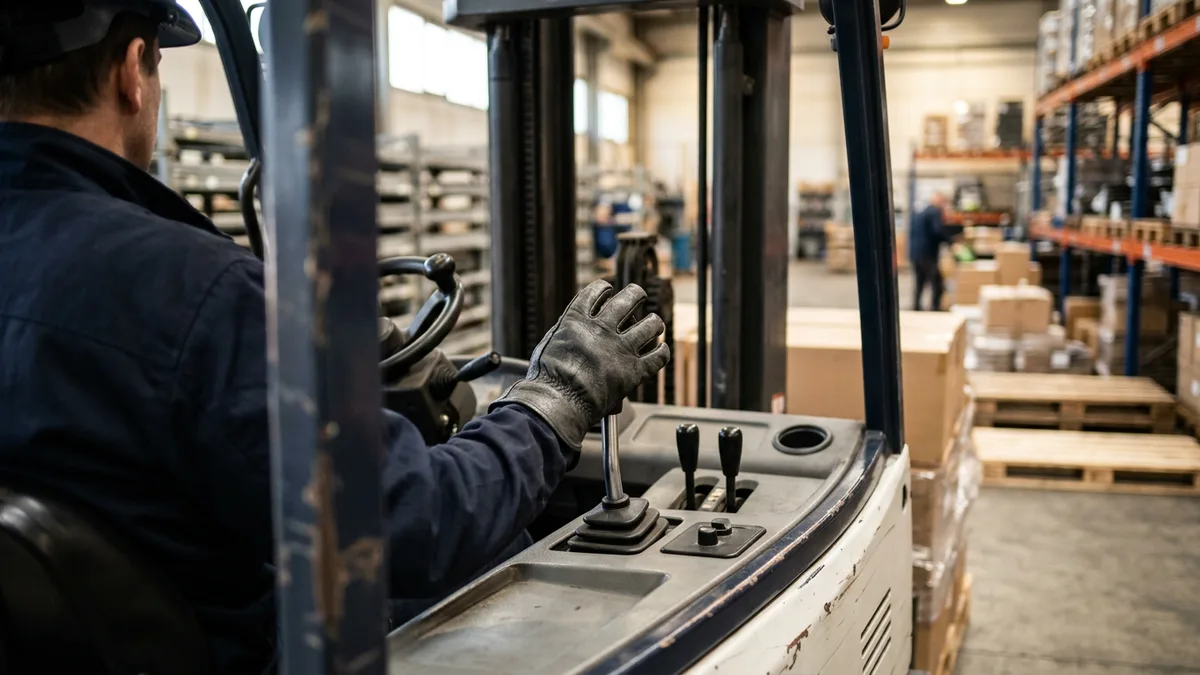
Before a used forklift gets financed, most lenders and buyers check the same five things:
- Hour meter reading, not just the model year
- Mast and chains, checked for wear, bent forks or a stretched chain
- Tire condition, cushion or pneumatic, and how much tread is left
- Hydraulics: lift, tilt and any auxiliary function, checked under load
- Battery or engine hours, plus any service and maintenance history
A clean bill of sale and a visible serial number matter more than how the truck looks. Paint doesn’t matter. Private-party and auction purchases skip the dealer’s prep work, so budgeting for an independent inspection before the forklift gets financed is worth the afternoon it takes.
Why buyers choose forklift financing
Forklift financing structures to know
Before you finance a forklift
How much does a forklift cost?
Price depends more on lift capacity, mast height and power type than on the brand name stamped on the counterweight.
A small cushion-tire counterbalance for a retail backroom costs far less than a high-capacity container-handling truck at a port. Not close at all. Financing or leasing turns either price into a monthly payment instead of one lump sum.
What’s the difference between leasing and financing a forklift?
A forklift loan or equipment finance agreement makes the business the owner from day one while it repays the lender; a forklift lease is a true lease, so the lessor owns the truck until the lease ends.
At the end of a fair market value lease, the business can buy the truck, renew it or hand it back. Not a $1 buyout lease. That one is built so keeping it was always the plan.
Can a used or private-party forklift be financed?
The better question is usually what paperwork the seller can produce, not whether a used forklift qualifies at all.
Lenders that finance used and private-party equipment typically want a bill of sale, the hour meter reading and recent maintenance records before pricing a deal. Dealers skip most of that. The truck already comes assembled and ready to finance.
What happens at the end of a forklift lease?
A fair market value lease prices the end-of-term buyout at what the forklift is actually worth then, while a $1 buyout lease was built from the start so the business keeps it for a token amount.
Returning or renewing are the other two options on most true leases, and the lease itself should spell out which ones apply. Read it first.
How long does a forklift typically last before it needs replacing?
Duty cycle decides a forklift’s working life more than the year stamped on the data plate.
A single-shift warehouse truck can run a decade or more. A three-shift cross-dock truck wears out much sooner. Hours matter more than years. That’s why the hour meter, not the model year, is what a lender or a buyer checks first on a used machine.
Does Section 179 apply to a financed or leased forklift?
For the 2026 tax year, the IRS caps the Section 179 deduction at $2,560,000, with the phase-out starting once qualifying purchases pass $4,090,000 (IRS Publication 946).
Section 179 generally applies to equipment that’s purchased or financed with a loan or an equipment finance agreement and placed in service that year. Leases are different. A true lease doesn’t transfer ownership, so the tax treatment changes. Read our Section 179 deduction guide for the full breakdown, and consult your tax advisor before you count on any deduction.
Can forklift financing work alongside an SBA loan?
Direct answer: equipment financing often picks up what an SBA 7(a) or 504 loan doesn’t reach, like a single forklift, racking or a sprinkler system a project still needs.
SBA loans are built for the bigger picture, like real estate or a long equipment list, and they can take weeks to close. Timing is the gap. A separate equipment lender can often move faster on one piece of equipment while the SBA piece is still in underwriting.
Ready to move on a forklift?
Tell us about the forklift, new, used or private-party, and we’ll walk through whether a loan or a lease fits.