
How to Start a Construction Company: Licensing, Equipment and Cash Flow

Key takeaways
How to start a construction company comes down to four things: one trade, the licenses your state requires, the insurance and bonds your jobs demand, and enough cash to cover payroll until invoices are paid.
- A general contractor pays subcontractors before the owner pays the contractor, so the cash gap runs wider than most first-year owners plan for.
- Licensing is a state question. Sometimes a city one.
- Rent before you buy, and buy used before you buy new.
- Your slowest-paying customer decides how much cash you need.
- Financing is one tool in the plan. It isn’t the plan.
Knowing how to start a construction company is a different skill from knowing how to frame a house, run a trench, or wire a panel. Nobody teaches the business side. So this guide covers it: licensing, insurance, and bonds, the machines, and the cash that has to last between a finished job and a paid invoice, because that stretch is where a first year gets decided.
We finance equipment. Weigh the equipment sections with that in mind. Financing is one part of seven here, and paying cash or renting is a perfectly good way to begin. When a machine does make your list, our page on heavy and construction equipment financing covers that side.
What It Takes to Start a Construction Company
A construction company is a business that contracts to build, repair or alter structures, and it carries costs that arrive long before revenue does: licenses, insurance, bonds, equipment, payroll, and materials. Starting one means sorting out those costs in an order that lets you take the first job without scrambling to fund it.
Here’s the order. Skip one. The next one stalls.
- Pick the trade you’ll sell first.
- Form the business and get an EIN from the IRS.
- Find out which license your state, county, and city want for that trade, and get it.
- Put insurance in place, and bonding if your jobs call for it.
- Decide which machines every job needs on day one. Rent the rest.
- Write your payment terms and billing schedule into the contract before you sign one.
- Line up working capital while your books are clean, not the week a payroll comes up short.
Start a Construction Company With One Trade
A general contractor sells a finished project and hires the trades to build it. A specialty contractor sells one trade: concrete, framing, electrical, excavation. Different bills, too. The difference shows up in who pays whom, and when.
A general contractor often owes subcontractors and suppliers before the owner has paid the contractor. Specialty work has a gap too, but it’s usually narrower, because the bills in it are mostly your crew’s wages and your materials, and you can price both before you bid.
That’s why we treat the first-year pick as a cash decision, not a branding one. Pick what you know. You can price work you’ve done before, and your estimates land closer.
Add a second trade, or move up to general contracting, once the receivables are steady. Not before.
Licensing Changes at Every State Line
There’s no national contractor license. The SBA’s guide to licenses and permits says the requirements and fees vary with your activities, your location, and government rules, and it lists construction among the activities commonly regulated at the local level. Depending on where you work, the permit can come from the state, the county, or the city.
California is one example.
$450
California’s application fee for a contractor license by exam in one classification, before an initial license fee of $200 for a sole owner or $350 for any other owner, as listed on October 30, 2026
Source: California Contractors State License Board, List of All CSLB Fees, 2026
Another state means other fees, another exam and its own insurance and bond rules. Nothing carries over.
The rule we’d follow: confirm the license with your state contractor board before you sign a contract or buy a machine. Doing licensed work without the license can bring fines, and in some states it can cost you the right to collect what a customer owes, so ask the board how it handles that where you work. Don’t guess.
Questions for the board:
- Which classification covers the work you plan to sell?
- Does the license need an exam, proof of experience, or both?
- When the company is an LLC or a corporation, who has to hold the license? Some boards license a named individual who qualifies the business.
- What proof of insurance or a bond does the application want?
- When does it renew?
- Do small residential jobs fall under a separate registration?
The business side is shorter. The IRS issues your EIN. Whether you run as an LLC, a corporation, or a sole proprietor is a question for an attorney and a CPA, because it changes your liability and your taxes, and we’re neither.
Insurance and Bonds Before the First Bid
Owners and general contractors ask for proof of insurance before you start, and often before you bid. General liability covers damage and injury your work causes. Workers’ compensation covers employees once you have them, and each state writes its own rules for it.
Commercial auto covers the truck. Inland marine covers the tools and equipment you haul between sites.
A bond is different. It’s a three-party promise: a surety company guarantees you’ll do what the contract says. A bid bond backs your bid, a performance bond backs finishing the job, and a payment bond backs paying your subcontractors and suppliers.
$9 million
The contract size the SBA’s Surety Bond Guarantee Program covers on non-federal work, with up to $14 million on federal contracts, read October 30, 2026
Source: U.S. Small Business Administration, Surety Bonds, 2026
It isn’t a loan. It guarantees the bond a participating surety issues, and you still have to pass the surety’s credit, capacity, and character review, which reads your finances, so keep clean books from the first month.
Equipment: Rent, Buy Used or Buy New
Buy too much early and you own machines that sit. Buy too little and a job you could’ve won goes to someone with a bigger fleet. Neither works. The middle path is to buy only what every job needs, and rent the rest.
Start with new iron. Bobcat publishes a suggested list price for each mini excavator it sells in the U.S., and three of them mark the range a trenching or foundation crew tends to shop.
| Model | Operating weight | Suggested list price |
|---|---|---|
| E17 | 3,774 lb | $38,820 |
| E26 | 6,489 lb | $53,623 |
| E32 | 7,403 lb | $60,131 |
Bobcat’s footnote matters. The prices cover base models only, and they leave out freight, pre-delivery inspection, taxes, surcharges, options, accessories, and attachments. The dealer sets the price. We read the page on October 30, 2026.
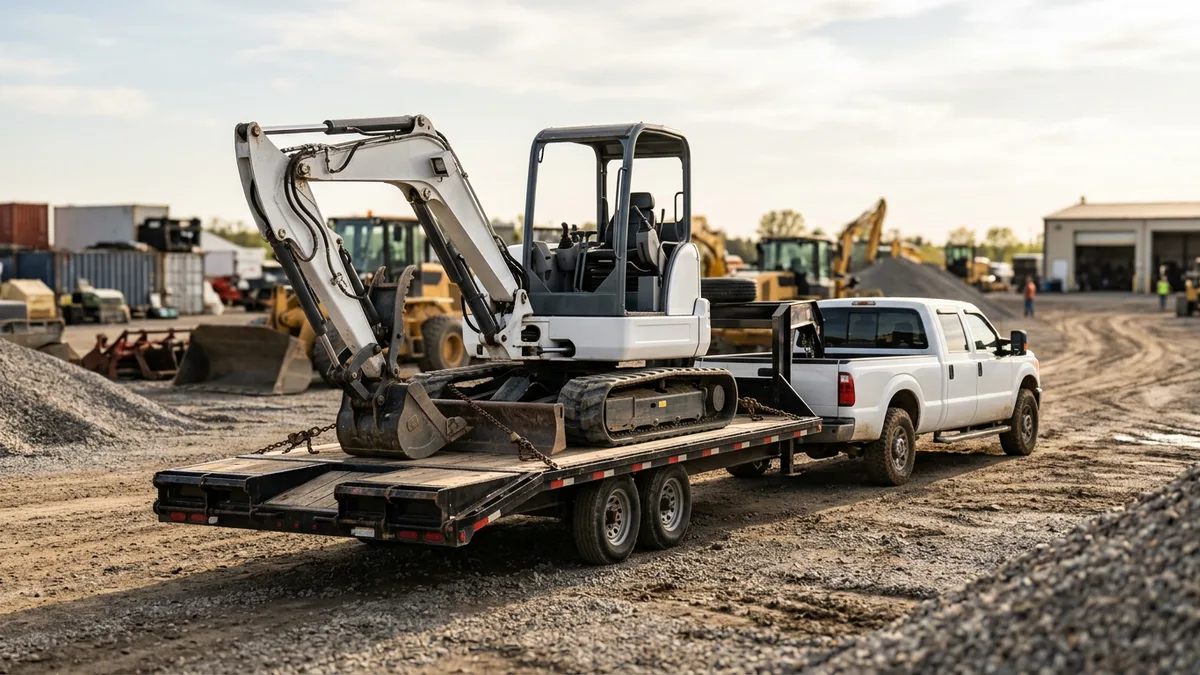
Add a trailer, a truck that can pull it, and a bucket or two, and a first machine becomes a first-year line item that has to be paid for before the machine has earned anything. For other machines, our guides to what an excavator costs and skid steer prices put a source and a date beside every figure.
| Rent | Buy new | Buy used | |
|---|---|---|---|
| Cash out at the start | Rental fees | Full price or a down payment | A lower sticker price, set by hours and condition |
| Who fixes it | The rental company | The warranty, then you | You, from day one |
| Resale risk | None | Yours | Yours, on an older machine |
| What to check | Return terms | The dealer’s quote, line by line | Hour meter, service records, liens |
Rent first. A rental tells you whether the work is steady enough to justify owning, and it costs nothing but the fees. When one machine is on a job more days than it’s back in the yard, price a purchase against what you’ve already paid in rent.
Plenty of owners start used. That’s fine. Hours on the meter say more than the year on the title, and the service records say more than either.
Buying from a private seller adds two jobs before any money moves. Search for an existing lien on the serial number, and make sure the title is clean if the machine is titled. A UCC search at the state filing office shows whether another lender already has a claim, and our guide to how a UCC-1 filing works explains what you’re reading on the results page.
One more question. Ask any lender what the lien covers, because it shapes your options a year out.
A lien can name one serial-numbered machine, or it can cover everything the business owns. A blanket lien can crowd out a bank line later, since the bank may want first claim on assets another lender already covers. Which kind you get is each lender’s call. Ask before you sign.
Cash Flow Decides Who Makes Year Two
The trouble in a first year is seldom a lack of work, and more often the distance between the day you pay for labor and materials and the day the customer pays you. The Bureau of Labor Statistics tracks how long businesses last. Construction’s first year is steep.
76.0%
of construction establishments opened in March 2013 were still operating a year later, the sharpest first-year drop of any large industry group; ten years on, 40.1% were, against 34.7% across all private industries
Source: U.S. Bureau of Labor Statistics, Business Employment Dynamics, 2024
BLS counts establishments, not companies, and it doesn’t say why one closes. It’s weight, not a forecast.
Four tools shrink the gap. A schedule of values breaks a contract into line items so you bill as work gets done, and a pay application, such as the AIA G702 and G703 forms on commercial work, is how that billing usually goes in. A deposit pays for materials.
Then there’s retainage, a slice of each invoice the owner holds until the job closes out. It surprises new owners most. It’s your money, and it won’t arrive for a while.
Lien waivers cut both ways. When you’re paid, you’ll often be asked to sign one saying you’ve been paid for that period. When you pay a subcontractor, ask for one back. Some states prescribe the exact form, so use your state’s version.
Size your reserve by the longest payment cycle in your contracts, not the average. If your slowest customer pays 60 days after the invoice, you’re carrying 60 days of payroll, insurance, and materials. That’s arithmetic, not a feeling. When the reserve falls short, it becomes a working capital question, and it’s easier to ask while the books are clean.
Where Financing Fits, and Where It Doesn’t
Financing a machine takes three common forms. A loan makes you the owner from day one. An equipment finance agreement works much like a loan and differs in the contract’s form, while a lease lets you use the machine for a term, then return it, renew it, or buy it, depending on what the lease says.
None is required. If you have the cash and the machine will earn its keep, paying cash is simple, and renting is simpler. Financing earns a place when buying would drain the reserve you need for payroll.
With no revenue history to read, a lender can’t judge you by your numbers. It weighs the machine as collateral, your experience in the trade and your plan, and our page on how lenders review a new business walks through each one in plain language. For a machine that isn’t new, used equipment financing covers dealer and private-seller purchases.
Compare lender types, too. Our guide to how construction equipment lenders compare separates manufacturer finance arms, banks, independent finance companies, and online lenders.
What New Contractors Ask Before Starting
Is it possible to start with almost no cash?
Almost, if you start as a one-person specialty trade, rent what you need and bill by milestone. Almost is doing the work.
Licensing, insurance, and the first materials still come due before the first invoice clears, so price those before you say yes to a job, and add a cushion for the week a supplier wants payment up front.
Which license do you actually need before the first job?
Short answer: your state’s contractor board decides, and a county or city may add its own requirement on top.
Call the board before you bid, name the trade and the size of the job, and ask what applies. Get it in writing.
What should the first-year budget look like?
Wrong question, slightly. No single figure fits, because a solo remodeler and a ten-person framing crew start in different places, so build your number line by line instead.
Add license fees, insurance, any bond, a vehicle, tools and equipment, a lawyer and an accountant, and the cash to cover payroll until the first invoices are paid, and that last line is the one that matters most.
Rent a machine or buy one for the first jobs?
Rent through the slow months, and price a purchase once one machine is working most weeks.
Owning has bills of its own. Insurance, a trailer, a truck to pull it, repairs. They land whether the machine works or sits. Lay them beside the rent you’ve actually paid, and ignore the rent you’re guessing at.
Can a machine from a private seller be financed?
Some lenders finance them. Others won’t touch a private sale. Find out which before you shake hands on a price.
Expect to hand over the serial number, the hour meter reading, and the sale terms. The lender runs a lien search to see if somebody got there first. Run it yourself, too. Better you find the problem than the lender does.
What do lenders look at when a business has no track record?
Three things carry the review: the machine, your years in the trade, and the plan behind the first twelve months.
There are no revenue numbers to read yet, so those stand in. Each lender weighs them its own way. Ask how.
How much cash should you hold back?
Plan for your longest wait between invoice and payment, because payroll, insurance, and materials don’t pause while an invoice sits.
Take the slowest payer you expect. Add the retainage the owner holds until close-out. Round up, then round up again.
Next Steps
Start with the license and the cash. Iron is the easy part. When you’re ready to price that side, see construction equipment financing at Paramount Financial, or start an application once you’ve picked the machine.