
How to Start a Medical Practice: Equipment and Startup Cost Planning

Key takeaways
How to start a medical practice comes down to sequence: pick the model, check your state’s ownership rules, lock an address, start payer enrollment early, and buy equipment to fit the plan.
- Medicare’s billing date follows your filing date, and the look-back is short.
- Ownership is a state question. Ask before you form the entity.
- Published cost figures sit far apart, so build your own from quotes.
- Exam tables age slowly. Imaging doesn’t, and it can bring a state filing with it.
Most physicians working out how to start a medical practice open a spreadsheet and begin pricing exam rooms. We get why. It’s the part that feels real. But three other questions can change what goes in those rooms, and they come first: who’s allowed to own this practice, when will payers start paying it, and does your state want a filing before a scanner gets ordered?
This guide takes them in that order, then gets to the budget and the equipment list. We finance equipment, so weigh those later sections knowing that. Got a quote in hand already? Our page on medical equipment financing starts where this guide stops.
How to Start a Medical Practice in Eight Steps
- Read your current employment contract, then pick the model and the services you won’t offer.
- Ask a healthcare attorney who may own the practice in your state, then form the entity.
- Write the plan with one-time costs and monthly costs kept apart.
- Sign a lease once the zoning, the build-out quote, and any state filing all work.
- Get your NPIs and file Medicare, Medicaid, and commercial payer enrollment.
- Order equipment to fit the floor plan and the first year’s visits.
- Set up the EHR, billing, HIPAA policies, malpractice coverage, and staff.
- Open with a cash reserve that outlasts the first slow claims.
Steps two through five overlap. Physicians Thrive’s startup guide, updated September 24, 2026, says to plan on six months to a year from the time you commit to the day you see your first patient. Believe the long end.
Choose the Practice Model First
A practice model is the combination of services, payers, and site type a practice is built around. It decides how much space you’ll lease, which payers you enroll with, what you buy in the first year, and whether a state filing stands between you and opening, so it comes before any quote.
| Model | What the space needs | First equipment |
|---|---|---|
| Lean solo or telehealth | A small office, or none at first | EHR, a laptop, one exam room |
| Primary care clinic | Exam rooms, a lab nook, a front desk | Exam tables, ECG, vitals, an autoclave |
| Urgent care | Procedure room, walk-in waiting, X-ray room | Digital X-ray, procedure lights, point-of-care lab |
| Imaging center | Shielded rooms, power, a rigging route | Ultrasound, CT, or MRI, plus a service contract |
| Surgery center | Operating rooms, sterile processing | Surgical lights, tables, sterilizers |
A small-town clinic and a multi-location urgent care aren’t the same business at two sizes. They buy differently. They staff differently. So pick one. Then write down what you won’t do in year one, since that list saves more money than any negotiation with a vendor.
Cash-pay and direct primary care models sidestep a good share of the payer wait described below, but they give up the patient flow that comes with being in-network on the plans your neighbors already carry. That’s a real trade. Run the math on both.
Who Can Own It, and Who Can Say No
Start with your own contract, oddly enough. A non-compete can limit how far away you can open and for how long. Sign a lease inside that radius and you’ve found out the expensive way.
Then ownership. The Physicians Thrive guide notes that many states have corporate practice of medicine laws, which restrict or bar non-physician ownership of a practice, and that some allow partial ownership or a management services organization in between. It’s a state-by-state map, and it moves.
Got an outside investor? Expect the entity that signs the lease and the entity that treats patients to be two different companies, which vendors and lenders will ask about, so sort it out early. Very early.
Planning anything that scans or operates? Keep reading.
NCSL’s certificate-of-need brief, updated April 29, 2025, says 35 states and Washington, D.C., run programs that can require state permission before certain health care services or facilities are added. The lists differ. A lot. Connecticut’s covers acquiring CT, MRI, and PET scanners; Virginia’s names MRI and PET; Alaska’s and Connecticut’s both reach ambulatory or outpatient surgical facilities. Some states have nothing of the kind.
Our rule is simple. No deposit on imaging or a procedure suite until your state’s health planning office has answered in writing. A scanner you can’t legally run is a very large paperweight.
One more for imaging. If your physicians will order scans on machines the practice owns, ask your attorney about the Stark Law’s in-office ancillary services exception before the first order goes out. Don’t ask the sales rep.
The Address Comes Before the Paperwork
Enrollment forms want a practice location. So do malpractice carriers and commercial payers. The address drives everything downstream, including the date money can start, which makes the lease a bigger decision than the rent suggests.

Ask the city or county whether medical use is allowed at that address, then read the use clause in the lease. Walk the unit with a contractor who’s built clinics, because a space that already held dental chairs may have plumbing in every room, and a retail box has it in one corner, if that.
- Sinks in each exam room mean plumbing runs, and that’s where budgets go first.
- Is there enough electrical capacity? Imaging may need its own feed.
- An X-ray room needs a shielding plan before the drywall closes.
- Parking and an accessible entrance, tested at the hour patients will actually come.
- Can a crated machine physically reach the room? Measure the doors and the elevator.
Negotiate for a tenant improvement allowance and for free rent during the build-out, and try to make the lease contingent on zoning and on any state filing you need, even though landlords sometimes say no. Ask anyway. A personal guaranty goes to your lawyer, always.
What It Costs to Start a Medical Practice
Wide. That’s the honest answer. The most specific published bands we found are in the Physicians Thrive guide, a physician consulting firm’s page, which says industry estimates put most practices between about $70,000 and $500,000. It doesn’t name the estimates or date them.
| Practice type | Where it says costs land |
|---|---|
| Telehealth-only or lean solo | Often under $100,000, not counting your own pay |
| Specialty with diagnostics or more space | The middle of the range |
| Procedural, surgical, or imaging-heavy | Often $300,000 to $500,000 or more |
| Surgical practice with its own surgery center | $1 million to $3 million |
Now look at a number with a company’s name on it. Franchisors have to disclose an estimated initial investment, and some post a figure on their own sites.
$948,250 to $1,514,000
Estimated initial investment for one new American Family Care urgent care clinic, including the $60,000 franchise fee, as the franchisor posts it.
Source: American Family Care, Investment and Costs, checked November 1, 2026
Take out the fee and you’re still at $888,250 to $1,454,000. That’s one brand’s urgent care, with its build standards and its X-ray room, and the line items on that page weren’t readable when we checked, so we can’t tell you how it divides between walls and machines.
It’s nowhere near a two-room family practice. Still. It shows where the top of the “most practices” band stops being useful.
We looked for a neutral, dated figure for an independent practice. We didn’t find one worth repeating. Most of what ranks is a software vendor’s estimate. So build your own, from a contractor’s quote, an equipment list, and a real lease.
Split it in two, the way the SBA’s planning guide does:
- One-time: build-out, deposits, equipment, IT setup, legal work, licensing, opening supplies.
- Monthly, for as long as you’re open: rent, payroll, malpractice, EHR and billing, supplies, medical waste pickup, the cleaning crew that knows what a sharps box is.
Then the reserve. Physicians Thrive says insurance reimbursements often take 60 to 90 days to arrive and suggests three to six months of operating expenses on hand before opening. The SBA’s guide is blunter for new businesses generally: count at least one year of monthly expenses, and five is ideal.
Those aren’t the same advice. Pick deliberately. If you’re leaning on commercial insurance and your payer contracts aren’t signed yet, plan closer to the SBA’s year, and leave your own paycheck in the math.
Enrollment Decides When the Money Starts
This is the dry section. It’s also the one we’d read twice.
Under 42 CFR 424.520(d), a physician’s or physician group’s Medicare billing privileges start on the later of two dates: the day an application that was subsequently approved got filed, or the day services first began at a new practice location. 42 CFR 424.521 then allows billing for services up to 30 days before that date, on three conditions: circumstances prevented enrolling in advance, every program requirement was met, including state licensure, and the visits happened at the enrolled location.
So there’s a hard edge. See Medicare patients for two months before you file, and the first weeks may never be billable. Notice the word approved, too. If an application gets rejected and you file a new one, expect the later date to count.
The rule writes itself. File before the first Medicare patient. Those 30 days are a backstop, never a plan.
Commercial plans run on their own clocks. Physicians Thrive says getting enrolled with a single insurer commonly takes four to six months, sometimes longer. They run side by side, so your slowest must-have payer sets the date, and patients you see before it clears may be out-of-network. Does the plan backdate? Ask in writing.
The filings, roughly in the order they depend on each other:
- NPIs through NPPES: a Type 1 for each clinician and a Type 2 for the entity.
- A complete, attested CAQH ProView profile, which many commercial plans pull from.
- PECOS for Medicare, with the CMS-855I for the physician and the CMS-855B for the group.
- Your state’s Medicaid enrollment, if you’ll take it. It’s a separate application.
- DEA registration, if you’ll prescribe controlled substances, tied to the new address.
- CLIA, if you’ll run any test at all on site. More on that in the questions below.
Proofread your NPPES record before anything else. A mismatched name or address travels into every form downstream. Then you’re fixing it in six places.
Equipping a New Medical Practice Without Overbuying
Two questions sort almost everything. Would the visit stop on day one without it? Buy it. Could you send it out instead? Then send it out, and count the orders for six months. Let the count make the case. A referral to an imaging center doesn’t come with a service contract.
How many ECGs did you actually order last month? Be honest. Most first-year wish lists are built on what a hospital department owns.
| Equipment | How it ages | Ask before you order |
|---|---|---|
| Exam tables, stools, casework | Stays in service for years | Delivery, assembly, an accessible table option |
| Autoclave | Long life with upkeep | Water and drain needs, who services it, spore testing |
| ECG, spirometer, vitals monitors | Middle of the road | EHR interface, calibration, what the software adds |
| Ultrasound | Technology cycle | Which probes are included, software upgrades |
| Digital X-ray | Technology cycle | Shielding, state registration, the service contract |
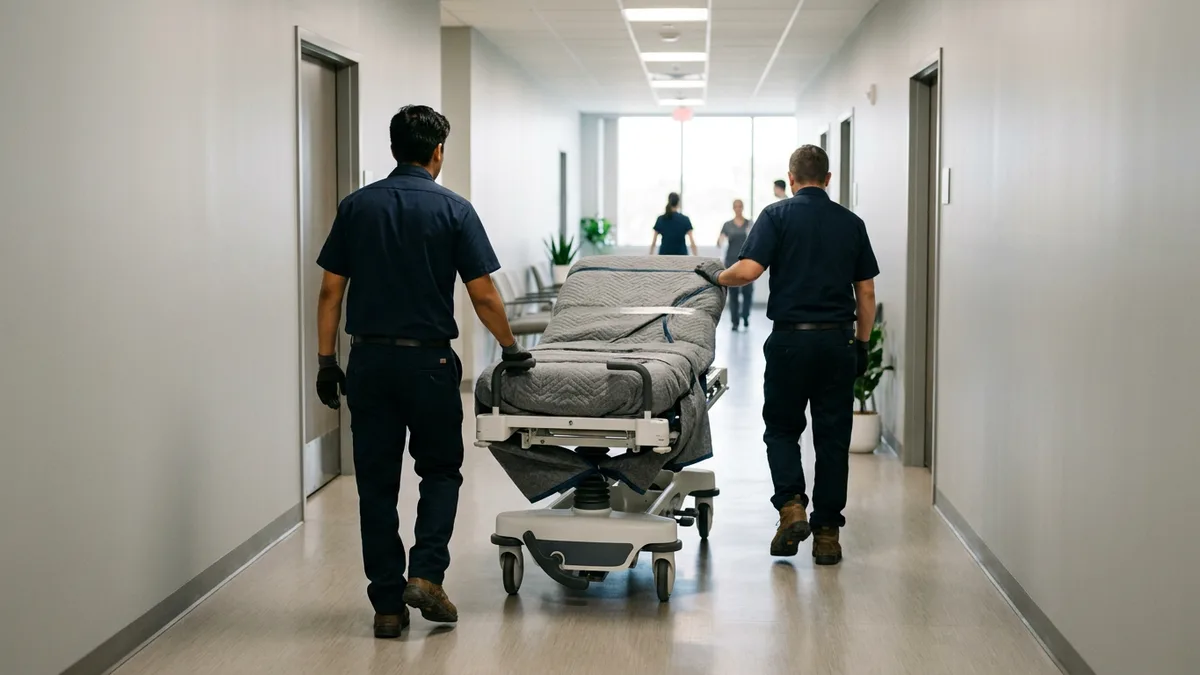
We can’t give you a trustworthy price sheet for a small clinic’s exam room. We didn’t find a neutral one, and dealer lists swing with the model and the options. Get each piece quoted by two sellers, with delivery, installation, training, and the first calibration on the same page. For the big-ticket end, our guide to what an MRI machine costs puts a date and a source beside its figures and counts the room.
Three things catch new owners.
X-ray comes with paper. The company that assembles a diagnostic X-ray system files a report of assembly on Form FDA 2579, which goes to the purchaser and, where it applies, to the state’s radiation agency. Keep your copy, and call your state’s radiation control program before the install to find out what the owner has to register.
Accessibility reaches the equipment itself. A 2024 HHS rule under Section 504 addresses accessible medical diagnostic equipment, including exam tables and weight scales, at organizations that take federal money. Ask your attorney how it applies to you, and ask the seller whether a table meets the Access Board’s standards before you buy six that don’t.
Then there’s the calendar. A delivery date shouldn’t set your opening date while enrollment is still pending. A gleaming exam room with no billable patients is just rent.
Refurbished Equipment for a New Practice
A first location is where refurbished gear earns a look. Tables and stools don’t care who owned them. Your budget does.
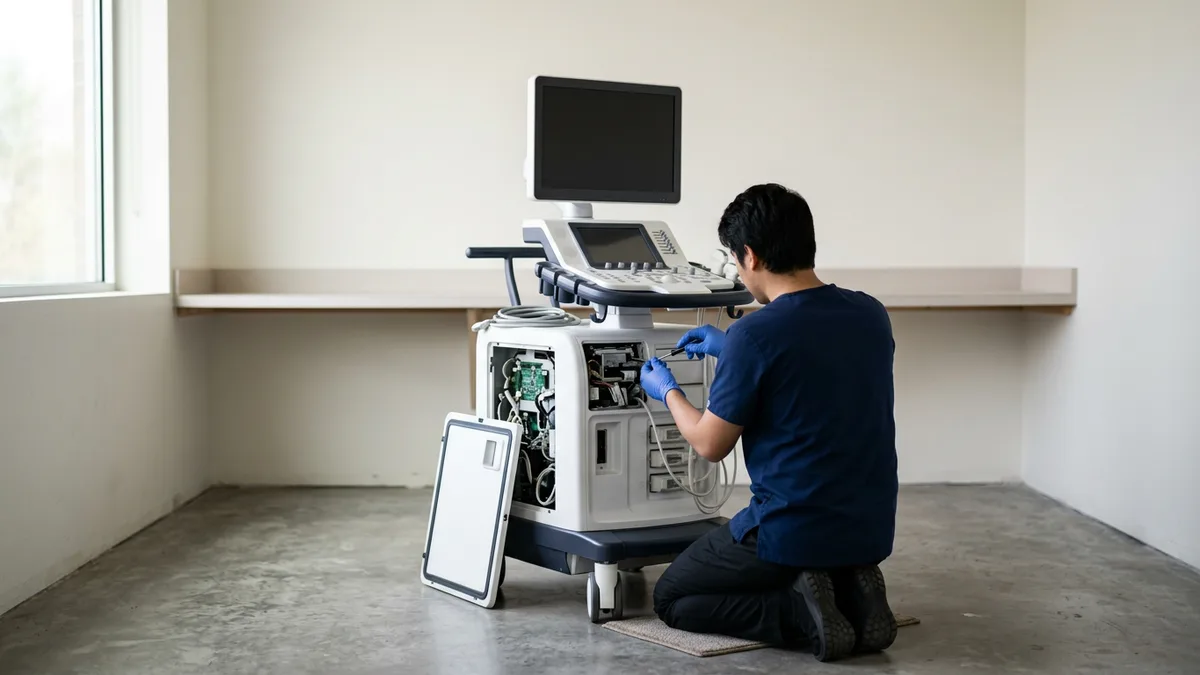
But “refurbished” isn’t one grade. It can mean a manufacturer’s certified program, an independent shop’s rebuild, or a clinic’s closing sale with a fresh wipe-down. Different things. Find out who did the work. Get it in writing.
- Make, model, serial number, and year of manufacture, on the invoice.
- Service and calibration records. No records? Price it as if it has no history, because it doesn’t.
- Who’s selling: the manufacturer, a refurbisher, or a private party.
- A written warranty, if there is one.
- What installation and recertification will add.
- Are parts and software support still available from someone, and until when?
Our rule of thumb: buy refurbished where a failure is an inconvenience, and think harder where a failure cancels a day of patients. A dead probe is one problem. No replacement probe left on the market is another.
Paying for it works differently too. With no new-unit price list to lean on, a lender tends to look at age, condition, service history, and resale value, so those records do double duty. Our guide to used equipment financing walks through that paperwork.
Where Financing Fits, and Where It Doesn’t
Paramount Financial finances equipment, so read this part with that in mind. You might not need a lender at all. A lean office can open with secondhand tables and savings, and some hospitals offer physician recruitment support under a federal exception your attorney can walk you through. If that covers it, good. Skip the paperwork.
| Pay cash | Equipment loan | Equipment lease | |
|---|---|---|---|
| Who owns it | You | You, with the lender’s lien | The lessor, during the term |
| Often fits | Small pieces, used gear | Items you’ll keep for years | Technology you’ll replace |
| Watch for | A thin reserve | Total cost over the term | The end-of-term option |
An ultrasound on a technology cycle is the usual case for a fair market value lease. An exam table isn’t. Your tax advisor should weigh in on how each gets treated before you sign.
Look at an SBA 7(a) loan early, and be fair to it. Local lenders make these loans with an SBA guarantee behind them, and the SBA’s 7(a) page lists machinery and equipment and working capital among the uses, with a $5 million maximum. Because the government backs the loan, it can be some of the lowest-cost money a new owner will see. The trade is everything else. It takes good business and personal credit, solid planning, and time. The SBA also wants to see that you can’t get the credit on reasonable terms elsewhere. Nothing’s guaranteed at the end of it.
So weigh two real things against each other: a higher cost on some other structure, or a space, a seller, or a start date that won’t wait. Only you can price that. Some owners use both. We’ve written up how equipment financing alongside an SBA loan can work.
Equipment agreements cover equipment. They won’t make payroll during the wait for your first claims, which is a working capital question, and a separate conversation.
A practice that hasn’t opened has no statements to show. Lenders read other things instead, like the equipment’s resale value, your background and credit, the plan, and whether the invoice matches the application, and our page on startup equipment financing breaks those down. No lender can tell you the answer before reading the file. Ask this of each one: does the UCC-1 filing cover this one unit, or everything the practice owns?
The Last Stretch Before Opening Day
None of this is glamorous. All of it bites. The HIPAA Security Rule expects a risk analysis, which is hard to do once the EHR is live and everybody’s logged in. OSHA’s Bloodborne Pathogens standard calls for a written exposure control plan once staff can touch sharps or blood.
Billing is the decision people put off. In-house or outsourced? Either can work. Just name who owns denied claims, because in month three somebody has to.
Patients don’t appear because the paint dried. Write to the physicians who used to refer to you, if your contract allows it. Claim your local listings early.
Opening a dental office instead? See dental equipment financing. Other kinds of owners can read how to start a restaurant, how to start a coffee shop, how to start a gym, or how to start a landscaping business, which run the budget the same way with very different machines.
What New Practice Owners Ask
So how much money does a new practice really take?
Pick the model and that number starts to narrow, since published bands run from under $100,000 for a lean solo office to $1 million or more with a surgery center. A figure from us would be useless to you. Take a lease, a contractor’s quote, an equipment list, and a year of bills, and add them up.
Can someone who isn’t a physician own a medical practice?
Your state decides. Plenty restrict or bar it under corporate practice of medicine rules, and some allow partial stakes. Where outright ownership is off the table, investors often use a management services organization instead. Hire local counsel before filing anything.
Realistically, how long before the first patient walks in?
Six months to a year, by Physicians Thrive’s estimate. Construction can stretch that. So can one slow insurer. We’d count backward from whichever plan your patients can’t do without, then add a month.
Does a small office need a CLIA certificate for a rapid strep test?
Short answer: yes, a waived test still needs a Certificate of Waiver. You’d file Form CMS-116 with your state agency, and CMS tells applicants to match the certificate to the most complex test on your menu. New York and Washington do it their own way.
Is refurbished equipment a mistake for a first location?
Not if the records hold up. Casework’s an easy call. A probe, a tube, or aging software isn’t, so find out who’ll still fix it three years from now.
With no revenue yet, what does a lender actually read?
Start with the machine. What’s it worth used? After that it’s you, your credit, and your plan, plus one dull test: does the invoice agree with the application? Lenders don’t all weigh these alike, so ask each one what’s holding up your file.
Next Steps
Phone the attorney. Then phone zoning. Together they’ll cost you less than a lease you can’t use. Once the model’s chosen and the equipment list is priced, compare loans and leases for medical equipment. Want us to take a look at it? You can start an application.