
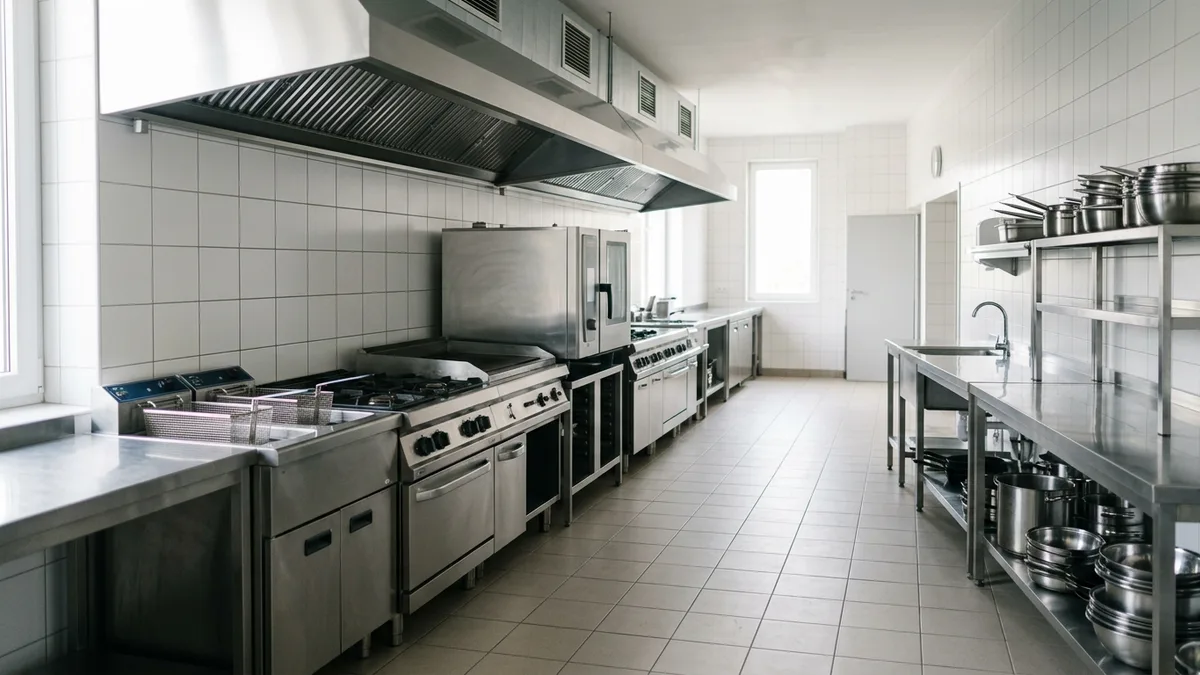
How to Start a Restaurant: Startup Costs and Kitchen Equipment Planning

Key takeaways
The short version of how to start a restaurant: write the menu, find a space zoned and built for food service, clear plan review and permits, then buy the kitchen, since menu and room set the equipment list.
- A former restaurant can cut the budget by six figures, if what it left behind still works.
- The hood and the grease interceptor belong to the room. Price them with the build-out.
- Expect the health department to want your plans before construction starts.
- Year-one closures run far below the “9 out of 10” line. Thin margins are the harder fact.
What are you going to cook? Answer that before you tour a single storefront. Plenty of guides on how to start a restaurant put the menu around step seven, after the lease is signed, and that’s backward, because a fryer line and a sandwich counter need different hoods, different gas, different drains, and a different room.
Pricing the kitchen itself? Our page on restaurant equipment financing starts where this guide stops.
How to Start a Restaurant in Eight Steps
- Write the concept and a draft menu.
- Turn the menu into an equipment list and a rough floor plan.
- Build the budget, with one-time costs and monthly costs kept apart.
- Form the business and get an EIN.
- Confirm the zoning, then negotiate the lease.
- Submit plans to the health department and pull building permits.
- Install the kitchen and pass the inspections.
- Hire, train, and run a soft opening.
Start With the Menu, Not the Lease
A restaurant concept is the mix of menu, service style, price point, and seat count a business is built around. It decides the kitchen equipment, the ventilation, the plumbing, and the square footage, so it has to exist on paper before anyone quotes a build-out or asks you to sign a lease.
| Concept | What the kitchen needs | Ask first |
|---|---|---|
| Sandwich counter | Refrigeration, slicers, little cooking | Do you need a full hood? |
| Full-service grill | Range, fryers, walk-in, dish machine | Is there a working hood? |
| Pizza shop | Deck oven, mixer, prep cooler | Can the gas and floor take it? |
| Bar with food | A short line, glass washer, ice | Can this address get a license? |
Cut the menu until it hurts. Then cut one more. Every dish you drop can take a machine with it.
What Restaurant Startup Costs Look Like
Search this and you’ll get ranges from point-of-sale vendors. Many trace back to one survey, secondhand. So go to the survey. RestaurantOwner.com asked independent operators what opening cost them, and more than 350 gave usable answers.
$375,500
Median total cost to open an independent restaurant, with the middle half of respondents between $175,500 and $750,500. Members of one online community, self-reported, in a report dated 2018.
Source: RestaurantOwner.com, Independent Restaurant Cost to Open Survey
Old number. Volunteer sample. We looked for a government or trade association figure and didn’t find one. Use this to start, not to quote. Then look at the split.
| Project type | Median to open | Median per square foot |
|---|---|---|
| New construction | $650,500 | $193 |
| Remodeling a non-restaurant space | $425,500 | $146 |
| Remodeling an existing restaurant | $275,500 | $73 |
Read the bottom two rows. That’s $150,000 at the median. The room did that. The survey’s overall medians also put construction at $200,000 and kitchen and bar equipment at $95,000.
Want actual line items? The FTC’s Franchise Rule makes a franchisor disclose its estimated initial investment in a table, Item 7 of the Franchise Disclosure Document, and Port of Subs posts its version on its own site. The page, checked November 1, 2026, gives no document date. And it’s a sandwich shop. Borrow the categories, not the totals.
| Port of Subs line | Low | High |
|---|---|---|
| Leasehold improvements, construction | $183,895 | $475,000 |
| Furnishings, fixtures, standard equipment | $96,000 | $160,000 |
| Architect, engineer, legal counsel | $12,500 | $24,000 |
| Initial inventory and smallwares | $10,000 | $25,000 |
| Additional funds, three months | $15,000 | $30,000 |
| Total, all lines | $419,895 | $938,570 |
We left out smaller lines, so the rows don’t add to the total. Strip the $25,000 franchise fee and $5,000 real estate support fee, which an independent wouldn’t pay, and it runs $389,895 to $908,570.
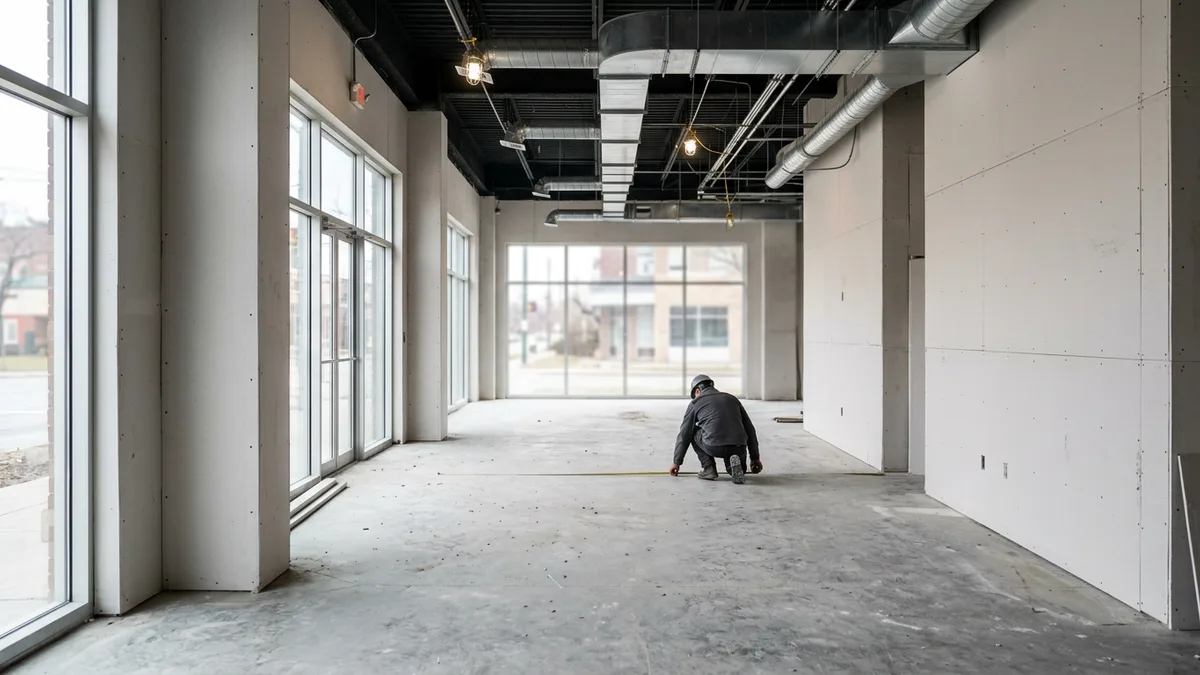
Now split your own version in two:
- One-time: build-out, the kitchen, furniture, deposits, smallwares, opening inventory, legal work, permits.
- Every month after that, whatever sales do: rent, payroll, insurance, utilities, hood and grease cleaning, software.
Now the sum that keeps people honest. The survey’s median net profit was 5.5%. So each new dollar of monthly overhead takes about $18 in sales to carry, and that’s worth working out for every monthly bill you’re about to sign up for, since a restaurant rarely gets to raise its prices the week a new bill arrives.
Full-service respondents took a median of six months to turn a profit, and a quarter took more than twelve, while Port of Subs budgets three months of reserves, so we’d want more.
Why the Room Can Decide the Budget
New Orleans gets this right. The first step in the city’s restaurant how-to guide is confirming a restaurant is allowed at your location. Not the concept. Not the money. Ask your own zoning office, then read the lease’s use clause.
Next, go hunting for a dead restaurant. The trade calls it a second-generation space. Bring your contractor. Go through what the last tenant left:
- The exhaust hood and its ductwork. When were they last cleaned and inspected, and does the fan actually pull?
- A grease interceptor. Where is it, what size, and who pumps it?
- Enough gas and electrical capacity for your line, not for theirs.
- Floor drains, floor sinks, and a three-compartment sink in a spot that still works.
- Accessible restrooms and entry? ADA Title III covers restaurants.
- Why did they close? Ask the neighbors.
One trap. A health department can treat a new owner or a new type of operation as a reason to review the kitchen again. Call before you sign. Last year’s permit isn’t yours.
Our rule for the lease is blunt. No signature without the zoning answer, a use clause naming food service, and a contractor’s written number. Ask about a tenant improvement allowance and free rent during the build-out. Then get a lawyer on any personal guaranty.
That promise survives the restaurant.
Permits, Plan Review, and Inspections
Most of this is local, but much of it starts from one document. The FDA Food Code is a model that state and local agencies adopt, often with changes. Read your own version. Section numbers below are the model’s.
Section 8-201.11 catches people. Versions adopted in states like Minnesota and Delaware want plans and specifications sent in before construction or conversion, and often before an extensive remodel. Equipment goes on those plans. See why the menu’s first?
Section 2-102.12 deals with people: the code expects a certified food protection manager, someone who has passed an accredited exam, and many places want one on staff from day one. New Orleans lists ServSafe by name.
Then the sewer. EPA’s National Pretreatment Program, 40 CFR Part 403, bars discharges that obstruct the system, and local programs enforce it with interceptor rules, pumping schedules, and inspections. Size it wrong and you’ll hear about it.
The rest of New Orleans’s list gives you a fair sense of the pile: state registration, an EIN, an occupational license, a certificate of occupancy, a health permit and inspection, a fire marshal inspection, sales tax IDs, and workers’ compensation and business insurance. Alcohol is its own application. So is live entertainment.
Planning Restaurant Kitchen Equipment
Go dish by dish. For each item on the menu, name what stores it, what cooks it, what holds it, and what washes up after it. You’ll find machines you forgot. You’ll drop a few. Then hand that list to your hood contractor, because what’s under the hood changes what the hood has to be.
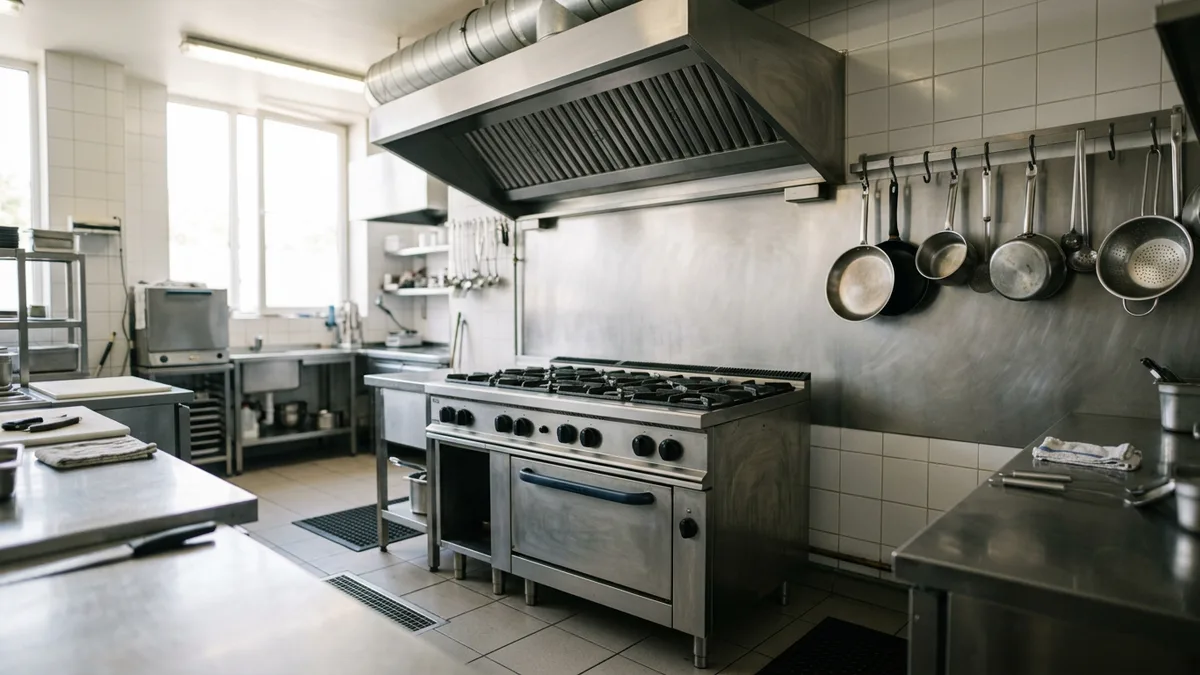
Check the label first. Food Code section 4-205.10 treats equipment certified for sanitation under an ANSI-accredited program as meeting its materials and design rules, and NSF is the mark you’ll see most. A home range from a closed cafe is a bargain until an inspector looks at it.
Now, used gear:
| Item | Used can work when | Watch for |
|---|---|---|
| Range, griddle | Burners, valves, and pilots all test clean | Your gas type |
| Stainless tables, sinks, shelving | Almost always | Whether a sink fits your plans |
| Fryer | The tank and thermostat hold up | Pinhole leaks at the welds |
| Reach-in, walk-in | A technician has tested it | Compressor age, door seals |
| Ice machine | Service history comes with it | Scale inside, parts availability |
| Hood, ductwork | It’s already in the room and passes | Moving one rarely makes sense |
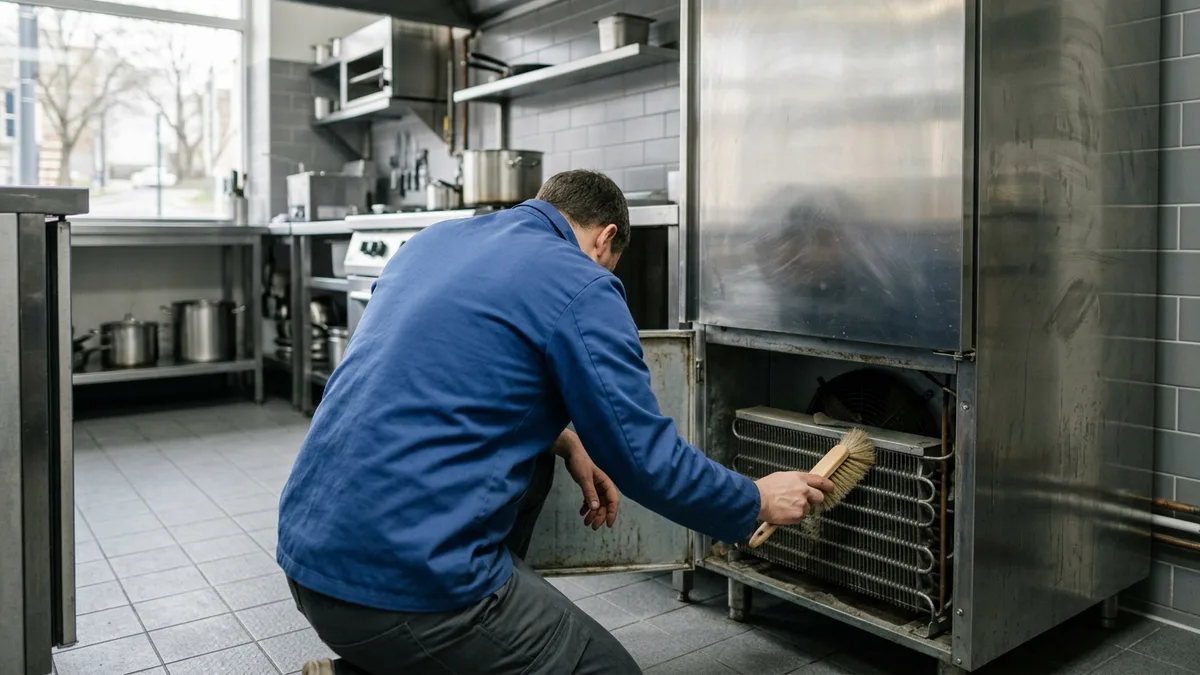
Pay for a technician’s hour before you pay for the machine. Get a bill of sale. Write down each serial number. Our guide to used equipment financing covers the paperwork.
So do you buy it used, or lease it new? Those are different questions. Buying used keeps the price down. It also hands you every repair.
A lease gets you newer equipment for a set term, and what happens afterward depends on the end-of-term option you signed, so learn how operating and finance leases differ first. Refrigeration you’d want to replace on a schedule might fit a fair market value lease. Stainless tables don’t need one.
| Buy used, pay cash | Equipment loan | Equipment lease | |
|---|---|---|---|
| Who owns it | You | You, with the lender’s lien | The lessor, during the term |
| Often fits | Tables, sinks, simple cooking gear | Machines you’ll keep for years | Machines you’ll replace |
| Watch for | A thin reserve, no warranty | Total cost over the term | The end-of-term option |
Where Financing Fits for a New Restaurant
A disclosure, since you’re reading a lender’s site: we finance equipment, and that colors how we see this. You may not need us. A second-generation space with a working line, plus used gear bought out of savings with the reserve left alone, is a fine way to open.
Otherwise, ask a lender about an SBA 7(a) loan, and be fair to it. It can carry some of the most competitive pricing around, because the government backs part of the loan for the lender that makes it. It also asks a lot: good credit, a solid plan, time, and no promise at the end. The lender decides. SBA also wants to see you couldn’t get the credit on reasonable terms elsewhere.
So a new owner weighs a likely lower cost against an opportunity that may not wait. That’s your call.
Equipment financing is narrower. It pays for machines. A contractor’s invoice for drywall usually won’t count, and a hood can be its own problem, because UCC §9-334 treats goods that become fixtures differently from ones that roll out the door. Ask each lender, in writing, what its agreement reaches.
No sales history exists yet, so lenders end up reading other things, like your background, your credit, the plan, the equipment’s resale value, and whether the invoice matches the application. Our page on how lenders review a new business walks through them. Nobody can tell you the outcome before seeing the file. Be wary of anyone who does.
Your tax advisor should weigh in too, on how a loan and a lease get treated.
One question for any lender: does the UCC-1 filing sit on the machines, or on your whole business?
The Failure Number Everyone Quotes
Nine out of ten restaurants close in year one. You’ve heard it. It isn’t true. Tian Luo and Philip Stark’s 2014 study used Bureau of Labor Statistics microdata on 81,000 full-service restaurants in the western U.S., and it found 17 percent of independently owned startups failed in their first year, a little under the roughly 19 percent for other service businesses. It’s hard enough without the myth. Different trade, same drill: we ran this budget with a mower and a truck in how to start a landscaping business. Planning something smaller than a full kitchen? See how to start a coffee shop. Opening a clinic instead? Read how to start a medical practice.
Questions First-Time Restaurant Owners Ask
What’s a realistic budget for a first restaurant?
No single number holds up, because the room swings it by hundreds of thousands. RestaurantOwner.com’s survey shows a $375,500 median and a middle half from $175,500 to $750,500, and that’s an older report. Start with a contractor’s written quote and a year of monthly bills.
Is taking over a closed restaurant really cheaper?
Often. The same survey’s median was $275,500 for remodeling a restaurant space and $425,500 for converting another kind of space. But a dead hood or a failing interceptor can eat that gap, so have someone test them before you sign.
Do you need a liquor license on opening day?
Only if alcohol’s in the opening plan, and plenty of places open without it. It’s a separate application, cost and wait vary widely by state and city, and some places limit how many exist. Ask before you build a menu that depends on one.
Which kitchen equipment is riskiest to buy used?
Refrigeration and ice machines, since a compressor can fail with no warning and take your inventory with it. Have a technician test them. Tables and sinks are close to no risk at all.
Do nine out of ten restaurants really close in year one?
Seventeen percent is the figure in Luo and Stark’s 2014 study of independently owned full-service startups in the western U.S. That’s one study and one region. It doesn’t make margins any wider.
What does a lender want to see before there are any sales?
Mostly proof you can run this, since there’s nothing else to read yet. Expect questions on your background, credit, and plan, and on whether the quotes match what you wrote down. Resale counts. Lenders don’t all weigh it alike, and our guide for new businesses goes further.
Next Steps
Get a menu on paper this week. Then make one phone call, to the zoning office, about one address. When the list is priced, you can compare loans and leases for a restaurant kitchen, and if you’d like us to look at it, start an application.