
How to Start a Landscaping Business: Equipment, Costs and First Contracts

Key takeaways
How to start a landscaping business comes down to four moves: register and insure the company, buy a lean kit of reliable equipment, price jobs from your real costs, and land recurring contracts before you hire a crew.
- Choose maintenance, installation, or both before you buy a single machine.
- Used is fine for machines that just have to run. Spend on the ones that earn every week.
- Startup-cost estimates online contradict each other, so build yours from local quotes.
- Recurring contracts pay for the second truck. One-off jobs rarely do.
- Financing is a tool, not a step, and sometimes cash or a rental beats it.
The mower’s easy. Anyone can find one. What trips up a new owner is the pile around it: the registration, the insurance, a trailer that’s too small for the machine, and a first customer who pays late.
Here’s how to start a landscaping business in the order the money actually leaves your account. Registration comes first, then the equipment, then the budget, then contracts that repeat. Financing gets one section. If you’d rather price it sooner, our page on financing landscaping equipment picks up where this one stops.
How to Start a Landscaping Business, in Order
Six moves. Order beats pace.
- Pick a lane: maintenance, installation, or both.
- Register the business and get an EIN.
- Get the licenses and insurance your state and county require.
- Buy a lean kit, used wherever the machine just has to run.
- Price jobs from your real cost of a crew-hour, not from a neighbor’s flyer.
- Land recurring contracts first, then add equipment.
Pick a Lane Before You Buy Anything
Maintenance means recurring visits on a schedule: mowing, edging, blowing, trimming, and seasonal cleanups. Installation means projects with a start and an end, such as patios, retaining walls, planting beds, sod, and irrigation. Maintenance is the lighter place to start, because the equipment costs less and the revenue repeats.
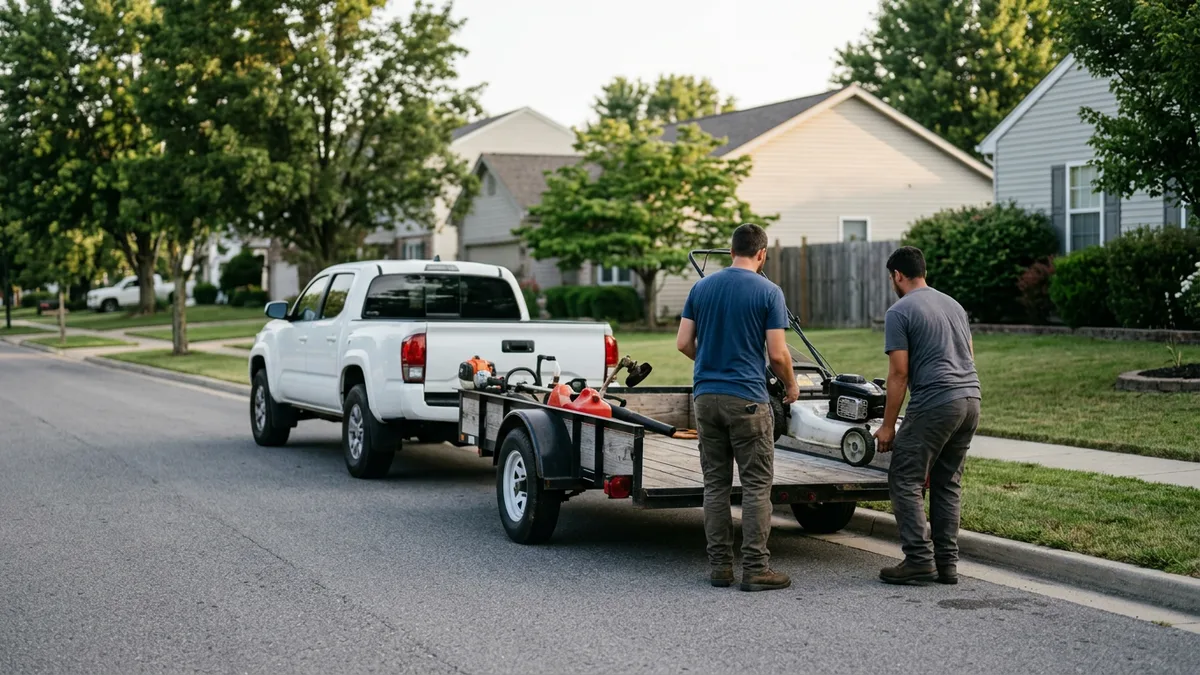
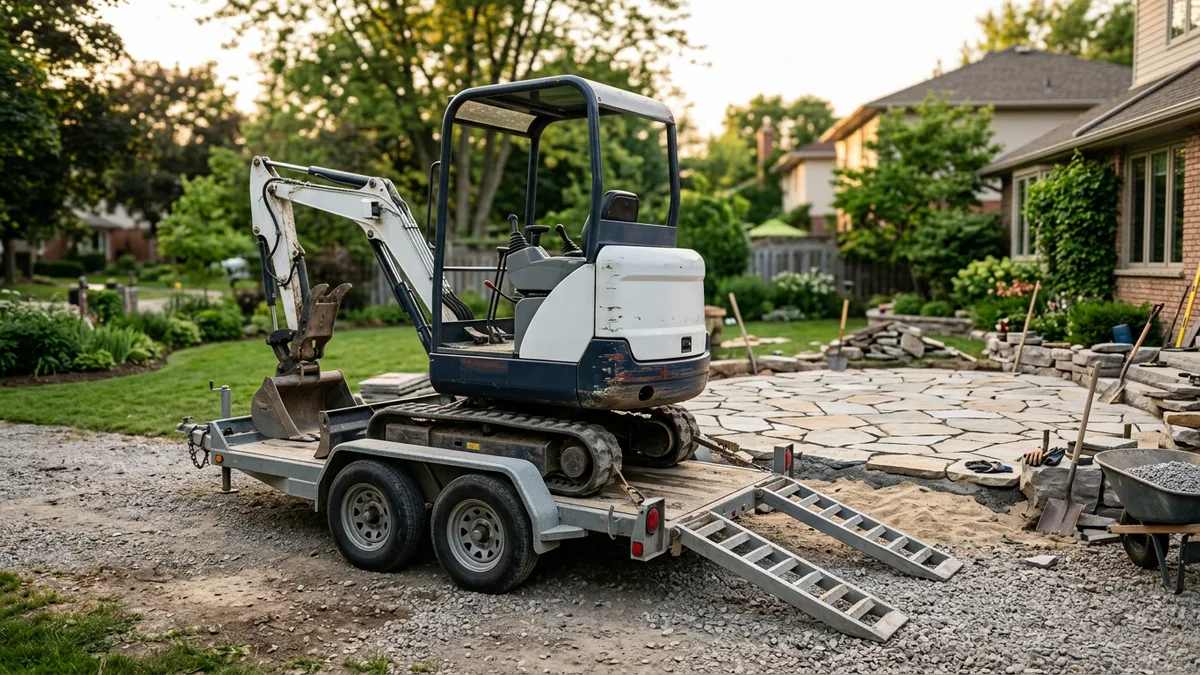
Both lanes pay. They ask different things of your bank account. A weekly mowing route needs a mower or two, a trimmer, a blower, and a trailer, while a paver patio needs a skid steer or a mini excavator, a plate compactor, a truck that can haul base rock, and enough cash to buy the stone before the client pays for it.
Pick one lane. Add the second later, once the first pays for it.
Register, License and Insure Your Landscaping Business
Registration is the cheap part. The SBA’s guide to launching a business says the total cost to register is less than $300 in most cases, though fees vary by state and by business structure, so check yours before you budget. A sole proprietorship is the easy form, with a catch: your house and your truck answer for the business’s debts.
An LLC protects personal assets in most instances, according to the SBA, though it adds state paperwork. Which one fits depends on your risk, your state, and your accountant. Ask first. File second.
Get an EIN next. It’s free, and the SBA lists why you’ll need one: paying federal taxes, hiring, opening a business bank account, and applying for licenses and permits. Open that bank account before the first job. Keep the two separate.
Licenses
Mowing and trimming often need little more than a general business license, but that’s your county’s call. Chemicals are a different story. The BLS profile of grounds maintenance workers notes that most states require licensing for workers who apply pesticides, and that getting one usually means passing a test on use and disposal. The EPA’s page on pesticide applicator certification adds that anyone applying restricted-use pesticides must be certified, and that many states require all commercial applicators to be certified, even those who never touch a restricted-use product.
The rules live with your state, and sometimes your county or city. Before you quote any spraying or fertilizer work, call the licensing office. It’s a short call.
Insurance
Insurance comes first. General liability is the usual starting point, and it covers the day a thrown rock meets a customer’s window. A truck you drive to jobs generally needs a business auto policy, because personal auto coverage may not respond to work use. Hiring changes things, because state workers’ compensation rules apply and they vary.
Commercial buyers will ask for a certificate of insurance before they let you on the property. Have it ready. A licensed insurance agent can sort out what your state and your clients require.
What a First Crew Actually Buys
Here’s the rule. Buy for the first route, rent or skip the rest. A new crew doesn’t need every machine on the dealer’s lot, only the ones that earn in week one.
| Item | What it does for a crew | New or used? |
|---|---|---|
| Walk-behind mower | Tight lots and fenced yards | Used works if the deck is sound |
| Zero-turn mower | Open lawns and commercial sites | Check hours and service records |
| Trimmer and blower | Every visit, every property | New, pro-grade, plus a spare |
| Utility trailer | Hauls the mowers | Used works; inspect axle and tires |
| Truck | Tows it all | Often the one you already own |
Start with the mowers, since mowing is the work you’ll do most. A walk-behind handles tight lots and fenced yards. A zero-turn covers open lawns and commercial properties in less time. It costs more.
$3,599 to $6,699
The cash prices Exmark listed on October 30, 2026 for a new 42-inch Quest E-Series and a new 48-inch Radius E-Series commercial zero-turn mower. Dealer quotes, freight, setup, and attachments change the final number.
Used changes the math. A used mower’s price tracks hours and service history more than model year, so ask for the hour-meter reading, the date of the last blade and spindle service, and whether the deck has ever been welded. A dealer may have records, a private seller may not, and either can be a fine buy if the machine checks out when you run it.
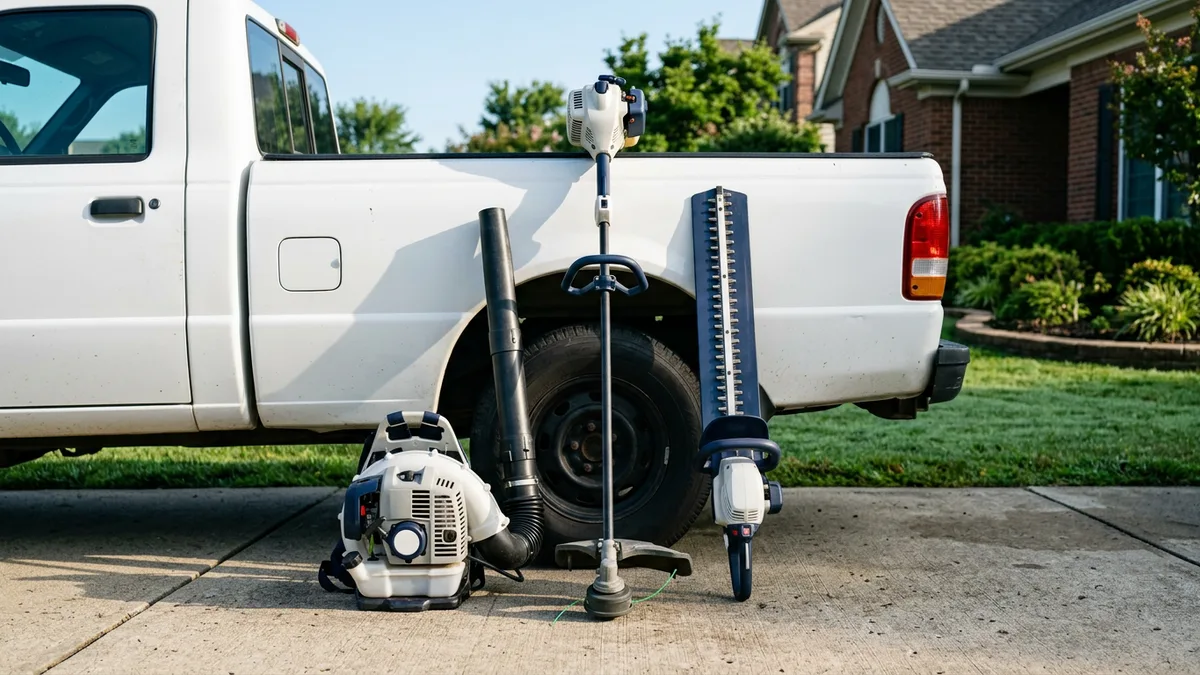
Trimmers, blowers, and hedge trimmers are the small purchases that take the most abuse. Buy pro-grade. Buy two of whichever one you can’t work without, usually the string trimmer, and keep spare line, blades, and a charged battery in the truck. Add ear protection and safety glasses too, because power equipment is loud and it throws things.
The trailer and the truck swing the budget more than anything else on the list. Prices vary by region. So price three listings near you before you write a number in the plan, and check your pickup’s tow rating in the owner’s manual against the trailer plus every machine riding on it.
Planning on installation work? Then the list changes. A skid steer or mini excavator is a different budget, and our post on what a skid steer costs is a better starting point than a guess.
Where the First-Year Money Goes
Search for startup costs and the answers contradict each other. They aren’t wrong, exactly. They assume different things: used or new, a truck or none, one mower or three, a solo owner or a crew. No estimate knows your county.
So build your own. The SBA’s planning guide lists the categories an estimate should cover, including equipment and supplies, licenses and permits, and insurance. It also says to count at least one year of monthly expenses, with five years ideal, and for a new crew one year is the number worth taking seriously, because the slow season shows up whether the pipeline is full or not.
| Budget line | When it hits | Where the real number comes from |
|---|---|---|
| Registration and licenses | Once, then renewals | Your state and county offices |
| Insurance | Monthly or annual | Quotes from two or three agents |
| Mowers and hand tools | Once | Dealer quotes, new and used |
| Trailer and truck | Once, plus upkeep | Three local listings each |
| Fuel, line, and repairs | Every week of the season | Your own log from week one |
| Cash cushion | Before the first invoice clears | A year of monthly costs |
That table hides a trap. Startup cost is what leaves the account before the first mowing. Cash needed is the bigger number, because it also has to carry you through the weeks between a finished visit and a customer’s cleared check. Budget for that one.
Winning Your First Contracts
Recurring beats one-off, and not by a little. A customer on a weekly schedule is revenue you can see in March, while a spring cleanup is revenue you have to chase again in April. Residential routes get built a street at a time, which is why your first three customers matter more than the next thirty. An office park or an HOA plays a different game, since a property manager usually runs it and will want a certificate of insurance and a written scope before anything else.
5%
Projected growth in employment of grounds maintenance workers from 2025 to 2035, against 3% for all occupations. The BLS adds that some grounds workers go on to start landscaping companies of their own.
Source: U.S. Bureau of Labor Statistics, Occupational Outlook Handbook: Grounds Maintenance Workers, 2026
Pricing is where it gets personal. Cost one crew-hour honestly: your own pay, a helper’s, the fuel, the wear on the mower, the insurance, the truck. Divide by the hours you really bill, because drive time and rain days don’t pay, then add a margin. The flyer on a neighbor’s door tells you what a competitor charges and nothing about whether they’ll still be in business next spring.
Walk the lot before you quote it. Pace it off, find the gates, the slope, the one corner a mower can’t reach. Satellite photos flatten everything. The slope is where your hours go, and it never shows up on a screen.

Then get it in writing. One page is plenty, and it saves the awkward phone calls later. Cover these:
- Which services, and how often. “Mow and edge weekly” beats “lawn care.”
- When the season starts and ends.
- What happens on a rain day.
- The price per visit or per month, and what counts as extra.
- How either side cancels.
First customers usually come from people who already know you: neighbors, friends, coworkers, your town’s local online groups. A small commercial bid or two can follow, with the insurance paperwork already in the folder. Keep what repeats. Drop what doesn’t.
Where Equipment Financing Fits In
We finance equipment. Weigh this section with that in mind. Most of what a new landscaping owner buys doesn’t need a lender, since a walk-behind mower, a trimmer, and a blower can come out of savings and a rental covers the one-off job. Financing starts to matter for the bigger pieces, such as a trailer, a truck, or a zero-turn, and for the next machine you add once the first route is paying for itself.
| Pay cash | Rent | Finance or lease | |
|---|---|---|---|
| Who owns it | You | The rental shop | Loan: you. Lease: the lessor. |
| Fits when | The tool is small | The job happens once | The machine works for years |
| Watch for | A cash gap in week three | Fees that pile up by the month | Total cost over the full term |
Lenders look at a brand-new business differently than a five-year-old one, though what they look at is fairly consistent. They want to know what the equipment is worth if it has to be resold, who the owner is and how they’ve handled credit, how the machine will earn, and whether the paperwork agrees with itself. Our page on startup equipment financing goes through each. Every lender weighs them differently, and none can promise an outcome before it sees the file.
Used machines add one more question: how does this lender value them? That varies, so ask. Our guide to used equipment financing covers what to bring up.
Ask about the UCC-1 too. When a lender finances a specific machine, it normally files a UCC-1 filing describing that machine, so the public record shows who has a claim on it. Whether the claim sits on the machine alone or on the whole business is worth asking before you sign.
Tax comes up first and gets understood last. The IRS’s Publication 946 explains how a business can elect to expense qualifying equipment under Section 179, or take bonus depreciation, with both reported on Form 4562, and the limits change by tax year. For tax year 2026, they’re in the publication’s “What’s New for 2026” section.
Whether any of it applies to your purchase is a question for an accountant. Our Section 179 deduction guide covers the mechanics. Consult your tax advisor before you plan a purchase around it.
The second machine is where this gets interesting. A mini excavator or a skid steer opens up installation work and moves the budget up a tier, and a work truck or van falls under commercial vehicle financing. By then you’ll have a season of records. That gives any lender more to look at than a plan alone.
Questions New Landscaping Owners Ask
What does a one-person crew actually need on the first day?
Less than most shopping lists suggest: one reliable mower sized to your first properties, a string trimmer, a blower, safety gear, a way to haul it all, and insurance in place before the first visit. Add a second mower when a route fills a day. Not before. Everything else can wait for a paying customer to ask for it.
Is a used mower a bad idea for a brand-new business?
Not by itself, because hours and service history matter more than age. A used mower with a documented history can be a better buy than a newer one nobody can vouch for. Check the deck and the spindles, and run it before you pay.
Do you need a license to cut grass for pay?
Often just a general business license, though the rule depends on your state, county, and city. Chemicals are separate. Most states require licensing for people who apply pesticides, so call your state’s licensing office before you quote any chemical work.
What do lenders look at when a landscaping business is brand new?
Four things come up again and again: the equipment, the owner’s background and credit, the plan for using the machine, and paperwork that matches. Each lender weighs them differently, and none can promise an outcome before it sees the file. Our page on how lenders review a new business walks through all four.
Should the first mower be bought, rented, or financed?
Rent what you’ll use once, pay cash for what’s small, and look at financing for what you’ll work for years. The mix depends on the cash you want left for the first slow month. Compare total cost over the same period before you decide.
How do you price the first few jobs without guessing?
Start with the true cost of one crew-hour: labor, fuel, equipment wear, insurance, and the truck. Add the margin you need, then check the result against what local crews charge before you quote. Price in a breakdown and a rain day too. A number that only works when nothing goes wrong is too low.
What insurance does a landscaper need before the first job?
General liability is the usual starting point, and a vehicle you drive to jobs generally needs a business policy too. Workers’ compensation rules apply once you hire, and they vary by state. A licensed insurance agent can tell you what your state and your clients require.
Next Steps
Register. Insure. Price the first route, then put real numbers on the equipment list. When you’re ready to talk it through, see how Paramount Financial handles landscaping equipment financing, or start an application.