
How to Start a Gym: Equipment, Space and Startup Costs

Key takeaways
Learning how to start a gym means settling four things in order: the format, a space zoned for it, your state’s filings, and then the equipment, because the room can cost more than the machines.
- Format first. A barbell box and a cardio-heavy club need different rooms.
- Read a franchise’s published cost table, even if you’ll never buy a franchise.
- Prepaid memberships can trigger state bond or security rules.
- No lease until the zoning, the use clause, and a contractor’s number all work.
Say you’ve found 4,000 square feet with good parking, and the landlord wants an answer by Friday. Don’t give one yet. Most advice on how to start a gym leaves the questions that matter here until step seven: does the zoning allow a gym, what will the build-out cost, and what does your state make you file before you sell a membership?
Those answers set the budget. The machines come later. Got an equipment list already? Our page on fitness equipment financing starts where this guide stops.
How to Start a Gym in Seven Steps
- Pick the format and the member you’re building it for.
- Write a gym business plan with one-time costs and monthly costs kept apart.
- Form the business and get an EIN.
- Confirm the zoning, then negotiate the lease.
- File what your state requires, then line up permits and insurance.
- Buy equipment to fit the floor plan, not the other way around.
- Sell memberships before opening day, once the filings allow it.
Pick a Format Before You Price a Room
A gym format is the mix of training style, membership model, and floor layout a facility is built around. It decides who joins, how many people use the floor at once, how much space you need, and which equipment you buy first, so it comes before the lease and before any equipment quote.
| Format | What the room needs | First purchases |
|---|---|---|
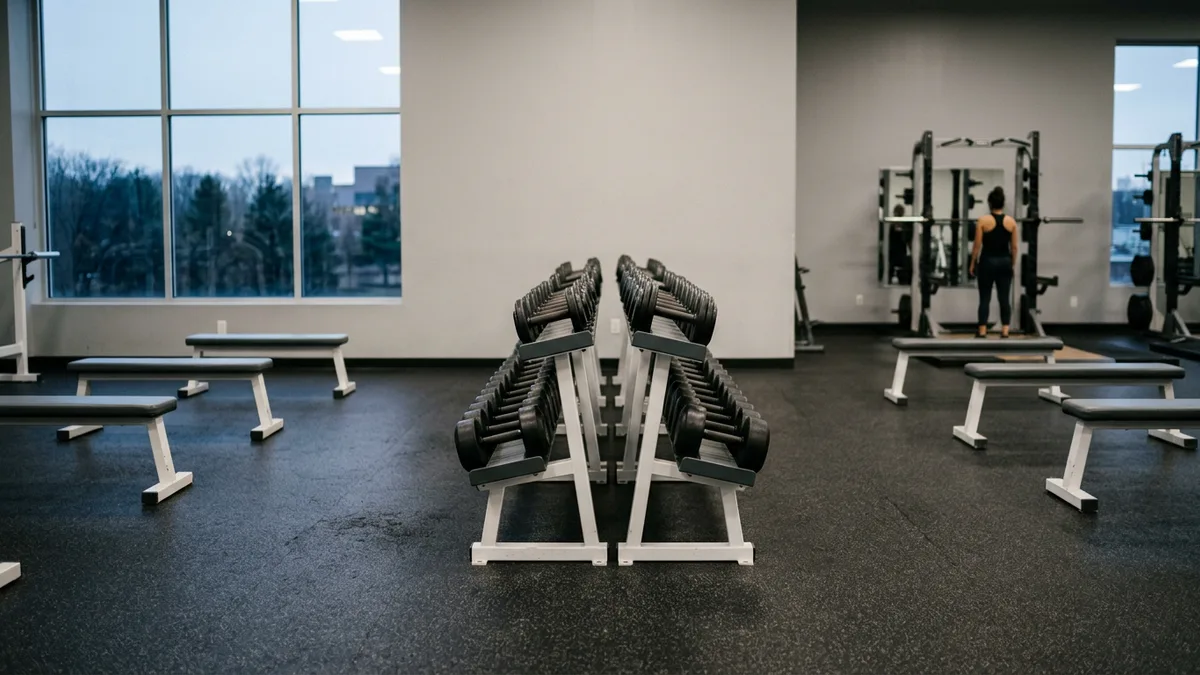
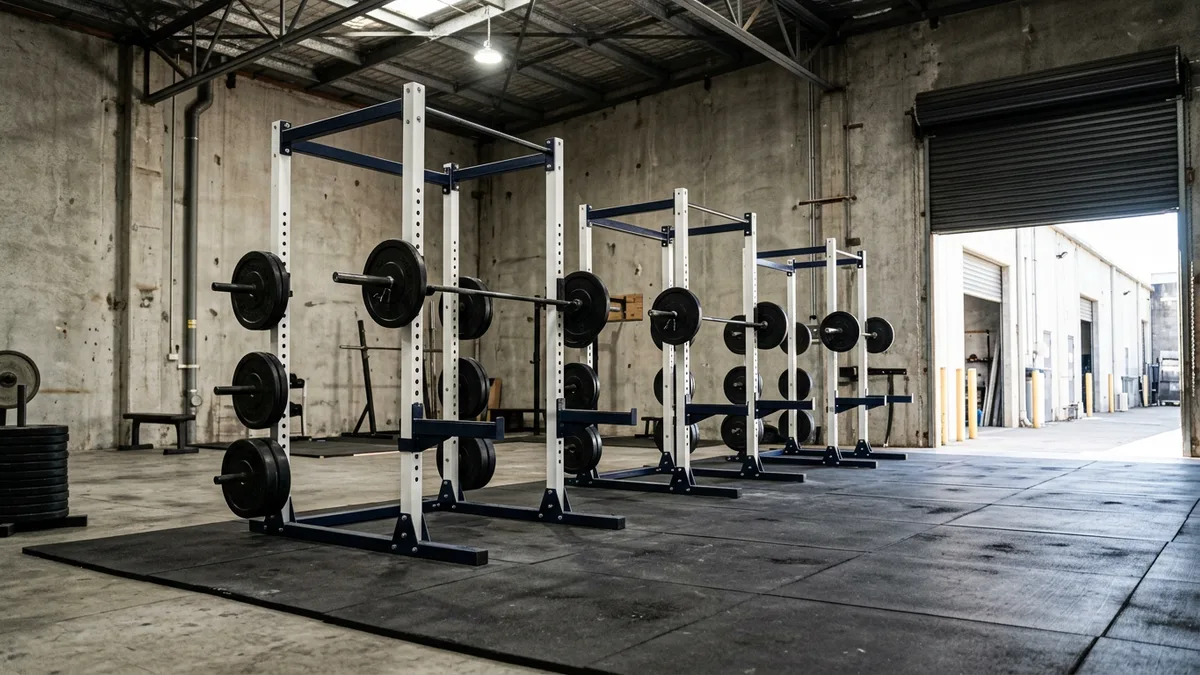
| Barbell or group strength | Open floor, high ceiling, heavy rubber | Racks, barbells, plates, rowers |
| Keyed all-hours club | Access control, cameras, cardio space | Treadmills, pin-loaded machines |
| Boutique studio | One class room, a lobby, good sound | Reformers or indoor cycling bikes |
| Personal training studio | The smallest footprint, often no showers | A rack, a cable machine, dumbbells |
Choose the one you can already sell. Then stop shopping.
What Gym Startup Costs Look Like
Search for startup costs and the ranges barely overlap. Most come from software vendors. Few show their work.
There’s a better place to look. The FTC’s Franchise Rule makes a franchisor disclose its estimated initial investment in a table, known as Item 7 of the Franchise Disclosure Document, and some gym franchises post that table on their own sites. You may never buy a franchise. Read one anyway.
$401,776 to $837,381
Total estimated initial investment for one D1 Training facility, a franchised model with a prototype of about 4,300 square feet. The page refers to Item 7 of the franchisor’s disclosure document and to a document dated April 30, 2026.
Source: D1 Training, Estimated Startup Costs, checked October 31, 2026
| D1 Training line | Low | High |
|---|---|---|
| Leasehold improvements | $201,521 | $432,413 |
| Strength and cardio equipment | $4,700 | $90,065 |
| Pre-opening salaries and wages | $29,000 | $46,200 |
| Security deposit | $5,000 | $39,463 |
| Additional funds, three months | $15,000 | $30,000 |
| Permits, licenses, professional fees | $4,000 | $6,000 |
| Insurance premium | $2,000 | $4,000 |
Look at the first two rows. Even the low end of the build-out line is more than double the high end of the equipment line. That’s one franchise’s model, with its own design standards, and its page doesn’t explain why the equipment figure starts so low. The lesson still travels. Walls, plumbing, and wiring can swamp the machines.
Two lines don’t apply to an independent owner. Take out the $62,500 franchise fee and the $29,500 opening support fee, and that table runs $309,776 to $745,381. Another franchise, with a different size and model, lists $528,757 to $1,014,575 on Snap Fitness’s franchise page, checked October 31, 2026.
We couldn’t find a neutral, published figure for an independent gym. We won’t dress up a guess as one. A small barbell box in a former gym can land far below all this. A raw shell usually can’t.
Now the reserve. D1’s table carries three months of additional funds, while the SBA’s planning guide tells a new owner to count at least one year of monthly expenses and calls five years ideal. Members arrive slowly. Plan for the longer cushion.
Split your own version in two:
- One-time: build-out, flooring, equipment, the deposit, legal work, filing fees.
- Monthly, forever: rent, insurance, payroll, utilities, software, music licensing.
Finding a Space That Works as a Gym
Start at the zoning office. Not the listing. Ask the city or county whether a gym is allowed at that address, then read the lease’s use clause, which says what a tenant may do in the space. A landlord’s “should be fine” won’t help you later.
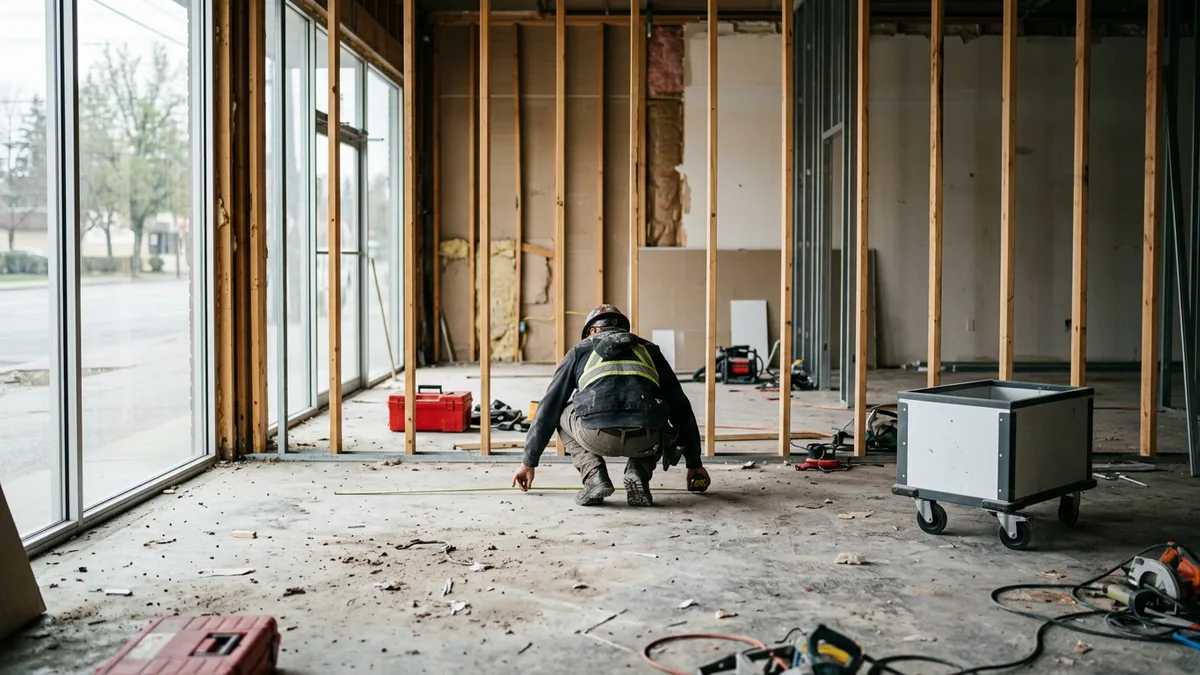
Walk the unit with a contractor if you can. A former studio can save a lot of build-out. A former shoe store won’t.
- Ceiling height. Overhead lifts need it.
- What’s below you. Dropped weights travel, and a dentist sharing your wall will notice.
- Showers, if your format needs them, since plumbing is often where a budget goes first.
- Enough electrical capacity for a row of treadmills?
- Parking at 6 p.m., not at the 2 p.m. showing.
Accessibility shapes the floor plan too. Gyms count as public accommodations under ADA Title III, and the U.S. Access Board’s ADA guide says at least one of each type of exercise machine needs clear floor space of at least 30 by 48 inches on an accessible route, or 36 by 48 when it’s enclosed on three sides. The machines don’t have to be modified. The room has to work. Draw it before you order.
Our rule for the lease is short. No signature without the zoning answer, a use clause that says gym, and a contractor’s number. Ask about a tenant improvement allowance and free rent during the build-out, and have a lawyer read any personal guaranty, because that one follows you home.
State Rules, Licenses, and Insurance
Most checklists flatten this into one bullet. They shouldn’t. Some states regulate gyms through the money members pay in advance.
Florida’s Department of Agriculture and Consumer Services makes health studios register every year, and some must post a $25,000 surety bond, letter of credit, or certificate of deposit to reimburse members if a studio doesn’t meet its contract obligations. New York’s health club law ties the amount to contract length: $50,000 for contracts up to 12 months, $75,000 for more than 12 and up to 24, and $150,000 for more than 24 and up to 36. Some clubs are excluded, including ones whose monthly dues option meets the law’s limits.
Read that again. In New York, the length of the membership you sell can change what you set aside. That’s a pricing decision hiding in a filing. Your state may have its own version, or none, so ask its consumer protection office and a local lawyer before you print a contract.
The rest is familiar: a general business license, a building permit if you renovate, and a certificate of occupancy. Ask for that last one by name.
Music catches people off guard. ASCAP and BMI both say a background music service doesn’t cover group fitness classes, and BMI says a streaming subscription doesn’t include public performance rights in the U.S. One organization’s license covers only its own catalog. The bill lands on the club, even when instructors are contractors.
Insurance usually means general liability, property coverage, professional liability for training, and workers’ compensation once you hire. Ask a licensed agent what your landlord will want to see.
How Much Gym Equipment Costs, and What to Buy First
The mix sets the price, far more than the square footage. D1’s line above spans $4,700 to $90,065, which tells you how wide this gets. So quote by the piece.
Ask one question of every item. Would a member notice on day one if it were missing? Racks, plates, and benches pass that test in a strength gym, and they barely age. Cardio takes more abuse. Lockers can wait. The sauna can definitely wait.
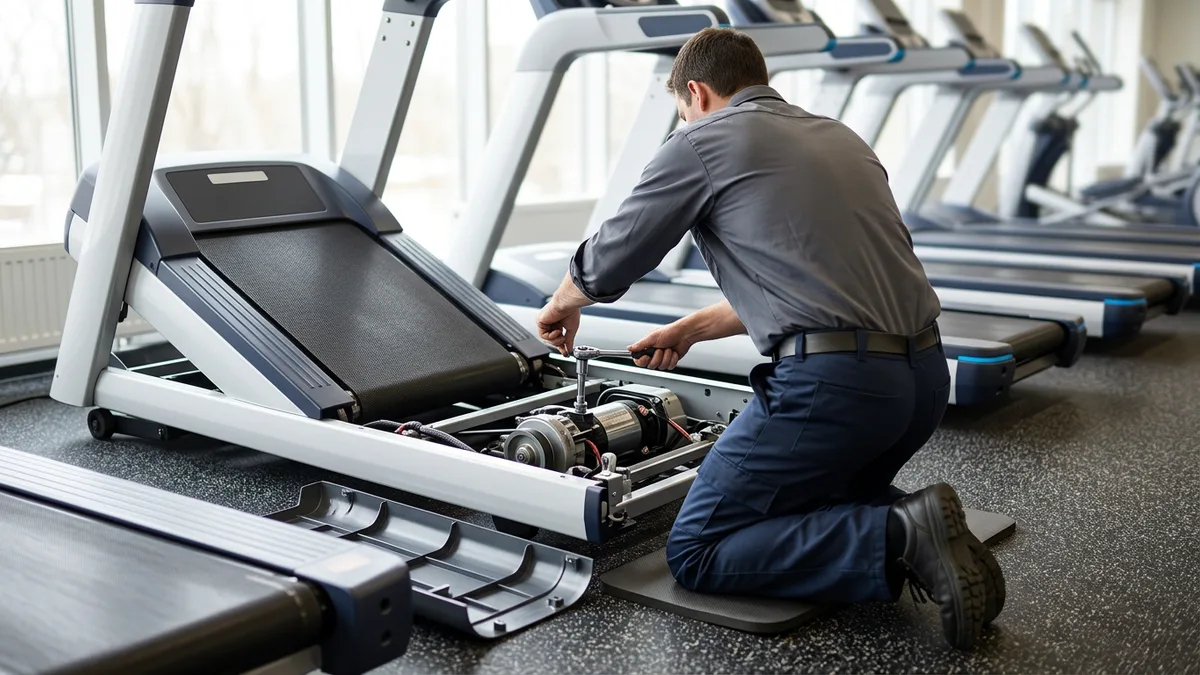
Listed prices leave things out, so ask what delivery, assembly, and flooring add. A closing club’s auction can stretch the budget. Check console hours, the treadmill’s belt and deck, and the cables on every weight stack, and write down each serial number. Our guide to used equipment financing covers the paperwork.
Where Equipment Financing Fits In
Fair warning: Paramount Financial finances equipment, so read this part knowing that. You might not need us. A first floor can start with a secondhand rack, plates from a closing club, and whatever’s left in savings once the deposit clears, and if that covers it, no lender has to be involved at all.
| Pay cash | Equipment loan | Equipment lease | |
|---|---|---|---|
| Who owns it | You | You, with the lender’s lien | The lessor, during the term |
| Often fits | Small pieces, used iron | Gear you’ll keep for years | Machines you’ll replace |
| Watch for | A thin reserve | Total cost over the term | The end-of-term option |
Treadmills get swapped, so a fair market value lease can make sense there. Steel? Different talk. Your tax advisor should weigh in on how each gets treated, and each lender should tell you in writing what its agreement reaches, because a wall isn’t a machine and the contractor still wants paying.
No operating history exists yet. That’s the whole problem. Lenders end up reading the gear’s resale value, your background and credit, the plan, and whether the invoice matches the application, and our page on startup equipment financing breaks those down.
Nobody can promise an outcome before seeing the file. Be wary of anyone who does. And ask this: does the UCC-1 filing sit on the machines, or on your whole business?
Selling Memberships Before Opening Day
Every gym guide eventually tells you to run a founding-member offer. Fine. Look at what that offer is, though, because a service that doesn’t exist yet, paid for months in advance, is precisely the situation Florida and New York had in mind when they wrote those security rules. New York’s law generally sends money taken before a club is fully operating into escrow. So don’t budget it for the build-out. Check your filings, then sell.
We ran the same budget drill with a mower and a truck in how to start a landscaping business, if you’re weighing another trade.
Questions New Gym Owners Ask
So how much money does it take to open a gym?
There isn’t one number, because build-out alone can swing by six figures. D1 Training’s published table hits $401,776 at the low end and $837,381 at the high end for about 4,300 franchised square feet, fees included. Start yours with a contractor’s quote and twelve months of bills.
Can you open a gym with none of your own money?
Rarely. The deposit’s due at signing, the insurer wants a premium, and wages start before member number one pays you. Landlords and lenders each set their own terms. Some owners train clients in a shared space first and grow into a lease.
How much space does a gym actually need?
Format decides. D1 Training’s prototype is about 4,300 square feet, with a typical range of 3,700 to 5,000, and a personal training studio can run far smaller. Sketch the machines and their clear floor space before you fall for a unit.
Does a gym owner need a license or a certification?
The business needs licenses; the trainers usually need certifications. Think general business license, local permits, and maybe a state filing like Florida’s or New York’s. Owning and coaching are separate questions. Check both.
Is used equipment a mistake for a first location?
Short answer: not if the inspection and the paperwork hold up. Plates don’t wear out. Motors do. An old treadmill may not have parts anymore, so ask before you buy it, and get a bill of sale whoever’s selling.
What do lenders look at when a gym hasn’t opened yet?
Resale value of the gear comes up first, then you, your credit, and your plan. Do the documents match? They’d better. Our guide to how lenders review a new business has the details, and every lender weighs it its own way.
Next Steps
Call the zoning office. It’s free, and it can save you a lease. Once the floor plan’s real and the list is priced, compare loans and leases for gym equipment. Want us to take a look? You can start an application.