
How to Start a Coffee Shop: Build-Out and Espresso Equipment Costs

Key takeaways
The short version of how to start a coffee shop: pick a format, test the space for water, power, and drains, clear health department plan review, then buy an espresso machine that space can actually run.
- Water, power, and a drain decide where the bar can go.
- In one 2026 franchise cost table, the build-out outruns furniture and equipment at both ends.
- Yes, coffee counts as food. Expect three sinks and a plan review.
- Refurbished can work, if someone local can service it.
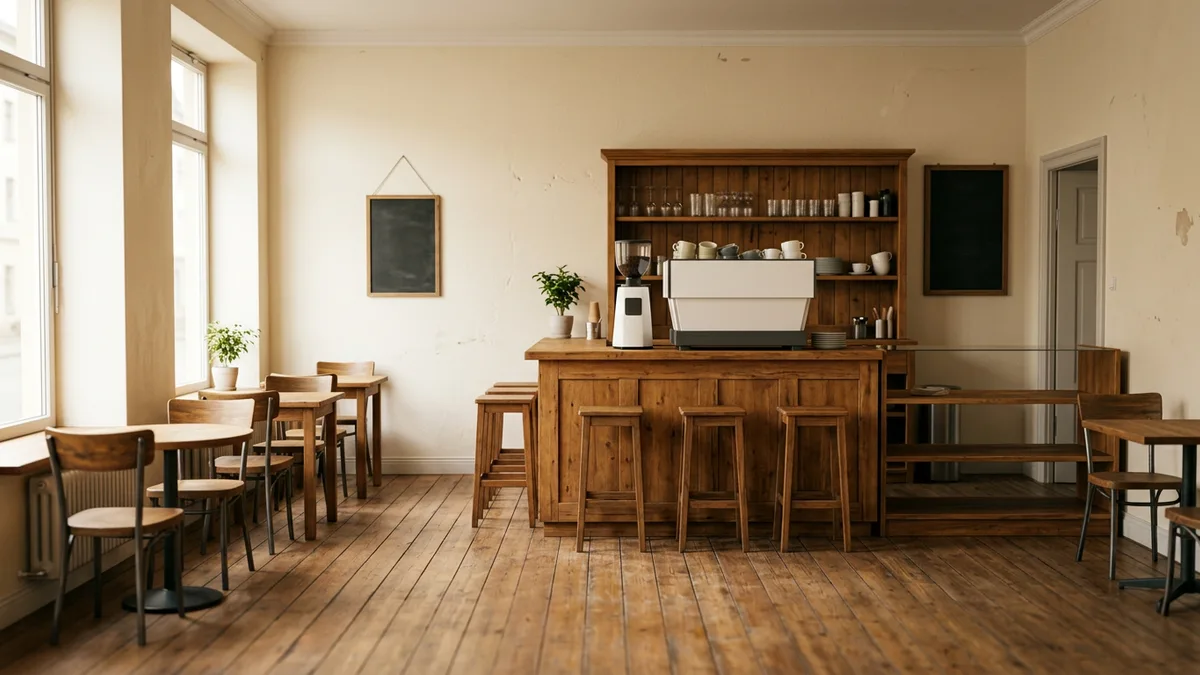
Choose a spot for the espresso machine before you fall for the storefront. Backwards? Most advice on how to start a coffee shop leaves equipment for step five or step seven, somewhere after the mission statement and the beans. But that machine shows up with demands of its own: a water line, a drain, and a heavy electrical circuit, and a charming old shop with none of the three is a very different budget from the one the listing suggests.
Got your list priced already? Our page on restaurant equipment financing starts where this guide stops. Everything else comes first.
How to Start a Coffee Shop in Eight Steps
- Choose the format: seats, a drive-thru, a kiosk, or a truck.
- Write a plan that keeps one-time costs and monthly costs apart.
- Form the business and get an EIN.
- Walk the space with a plumber and an electrician before you commit to a lease.
- Send your plans to the health department before construction starts.
- Build out the space and install the bar.
- Pass the pre-opening inspection and get your food permit.
- Hire, train, and open.
Pick a Coffee Shop Format, Then Price It
A coffee shop format is the physical setup you sell from: a cafe with seats, a drive-thru, a kiosk or stand, or a truck. It sets your square footage, the plumbing you’ll need, how many drinks your busiest hour demands, and more than anything else, the size of the opening budget.
Numbers online are all over the place. Few cite anything. Crimson Cup, a coffee roaster, at least tells you: its ranges reflect owners in its own opening program as of August 2026, and it sells that program, so read them knowing that.
| Format | Reported range |
|---|---|
| Seating only | $100,000 to $350,000 |
| Drive-thru only | $100,000 to $250,000 |
| Seating and drive-thru | $120,000 to $400,000 |
| Kiosk, stand, or cart | $90,000 to $150,000 |
| Food truck | $50,000 to $175,000 |
Look at the kiosk line. Small doesn’t mean cheap. A stand has no dining room to furnish, but it needs the same water, the same power, and the same machine.
What the Build-Out Costs Next to the Equipment
A roaster’s ranges give you the outline, not the lines. For those, go to a franchisor. Federal rules make franchisors estimate the initial investment in a table, known as Item 7 of the Franchise Disclosure Document, and a few put it on their own sites.
$242,200 to $610,000
Total estimated initial investment for a Biggby Coffee in a whitebox leasehold location, franchise fee included, based on Item 7 of a disclosure document dated April 30, 2026.
Source: Biggby Coffee, How Much Does It Cost?, checked November 1, 2026
| Biggby line | Low | High |
|---|---|---|
| Leasehold improvements | $105,000 | $269,000 |
| Furniture, equipment, and decor | $62,000 | $165,000 |
| Architectural and engineering | $6,100 | $19,000 |
| Blueprints, plans, and permits | $2,100 | $11,500 |
| Initial inventory | $10,000 | $15,000 |
| Insurance | $1,000 | $6,000 |
| Additional funds, three months | $10,000 | $40,000 |
Compare the top two rows. Walls, plumbing, and wiring beat every stool, grinder, and espresso machine combined, at both ends of the range, and that’s in a whitebox, meaning a space with a basic interior shell already in place. Biggby’s page says its modular and site-built locations generally run higher.
Pull out the $20,000 franchise fee and the table runs $222,200 to $590,000. It’s still a franchise. It has design standards. An independent shop moving into a former cafe could spend far less, and how much less is hard to say, because we looked for a neutral, published build-out figure for independent shops and didn’t find one. So get a contractor’s number. Nothing else counts.
That three-month line deserves a second look too. It’s one franchisor’s estimate for its own model. Nothing says your shop covers its bills by month four. Plan longer.
Split your own budget in two:
- One time: build-out, the bar, refrigeration, deposits, plans, permits, opening inventory.
- Every month, for good: rent, payroll, milk, beans, insurance, utilities, service calls.
Water, Power, and Drains Come Before the Lease
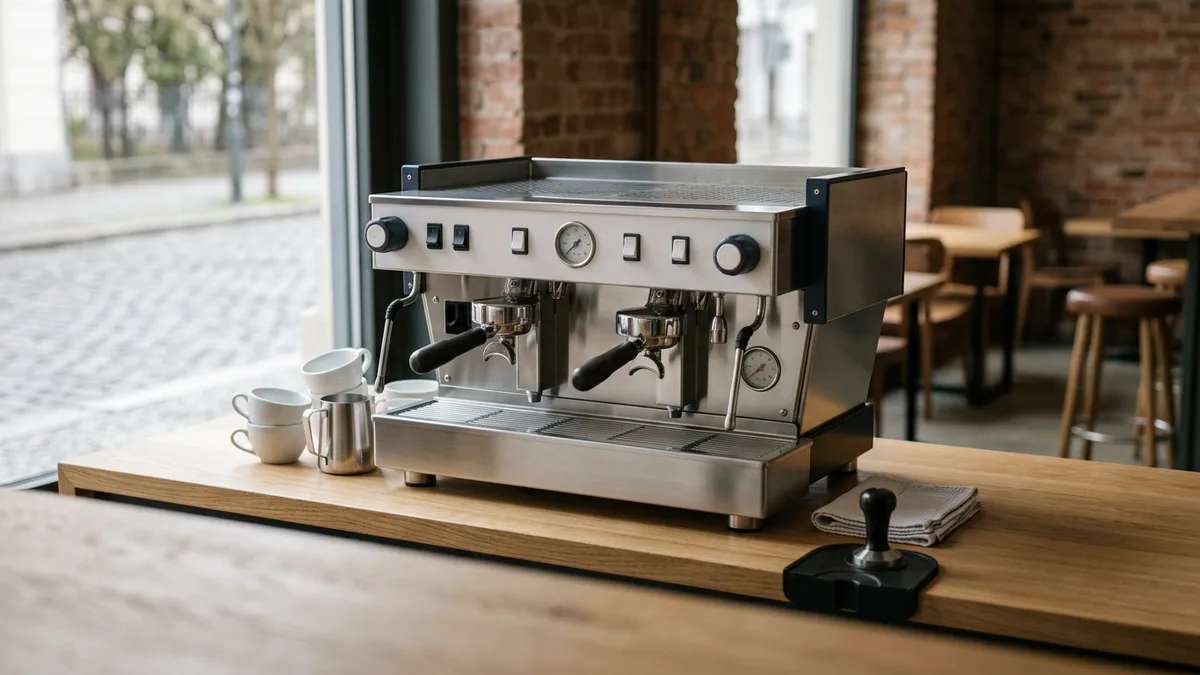
Here’s what one machine asks for. La Marzocco’s U.S. installation guide for the two-group Linea Classic S lists 208 to 240 volts on a single phase, 4,600 watts, a 22-amp full-load draw, and a suggested NEMA 6-30 outlet within five feet. That’s a lot of circuit. It weighs 130 pounds and sits 28 inches wide.
Then there’s the water. The guide calls for a 3/8-inch cold line delivering 45 PSI, a filter that isn’t included, an external pump, and a 3/4-inch drain line falling at least a quarter inch per foot to a floor drain. The grinder gets its own 110-volt, 15-amp supply.
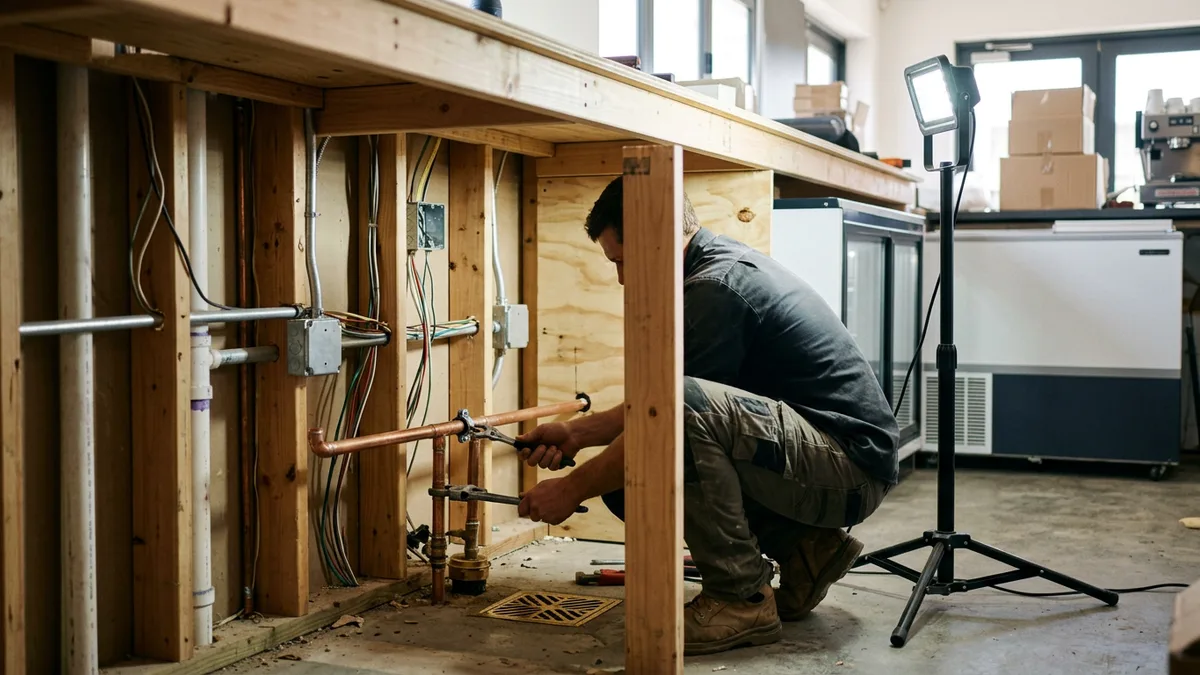
Your machine may differ. Most guides skip this. Pull the install sheet for the exact model you want, and take it with you when you walk the space, because the plumber and the electrician can price from that sheet in a way they can’t price from a photo of a machine you like.
- Does the panel have room for that circuit, plus refrigeration and a water heater?
- The nearest floor drain. Count the feet.
- Who pays if the slab gets cut? Get it in the lease.
- Water hardness, since La Marzocco’s target is 70 to 100 ppm and yours may be nowhere close.
- Enough counter to carry a 130-pound machine, with a hole for the lines?
We’d hold to this: no lease until a plumber and an electrician have priced the bar in writing, for the machine you’re actually buying. Ask about a tenant improvement allowance while you’re at it, and have a lawyer read the lease and any personal guaranty before your name goes on either.
Health Code Rules for a Coffee-Only Menu
You’d think a limited menu buys a lighter rulebook. It doesn’t. “In terms of health codes, a coffee shop is almost as involved as a full fledged restaurant,” says a coffee shop brochure from the Harrison County, Indiana health department, which also lists the questions to ask before signing a lease. It’s local. The copyright reads 2012. Use it as a question list, not as your rulebook.
The national reference is the FDA Food Code 2022, a model that states and counties adopt in their own editions, so ask which version yours enforces. Four things hit a coffee bar directly.
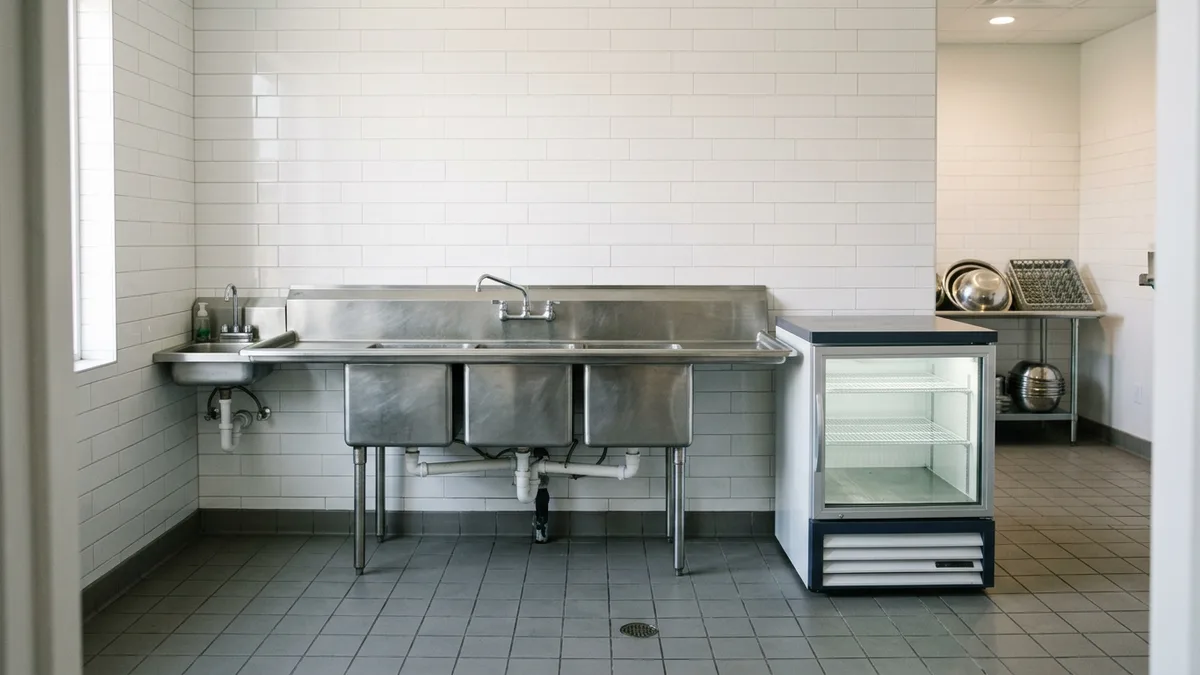
- Section 4-301.12: a sink with at least three compartments for washing, rinsing, and sanitizing.
- Hand sinks too, under 5-203.11, placed where staff can actually use them. Harrison County’s limit is 25 feet from prep and washing areas.
- A service sink or curbed cleaning area for mop water (5-203.13). No, the toilet doesn’t count.
- Plans reviewed and approved before you build or convert a space, under 8-201.11, and a permit application at least 30 calendar days before opening, under 8-302.11.
Harrison County’s plan review wants a layout, a menu, and a list of equipment. So your equipment list has to exist before construction starts. Choose the machine early.
Milk needs a refrigerator with a thermometer in it, held at 41 degrees Fahrenheit or below. Grease interceptors vary, and that county’s brochure simply says the building inspectors will know, which is honest and also a good reason to call them. Equipment certified to a recognized sanitation standard is deemed to comply under 4-205.10, so look for that mark on anything you buy.
What Espresso Equipment Costs
Machines first. These are two-group prices from Prima Coffee’s listings, checked November 1, 2026, and some ranges span options or a third group.
| Machine | Listed price |
|---|---|
| Rocket Boxer | $7,200 to $7,600 |
| Nuova Simonelli Appia Life Compact Volumetric | $7,600 to $8,300 |
| La Marzocco Linea Classic S Auto-Volumetric | $12,370 to $22,085 |
| Slayer Steam LP | $23,900 to $29,500 |
Dealer to dealer, we saw the same compact Appia differ by hundreds of dollars. Get delivery and installation quoted on the same page, since a price that leaves them out isn’t the price.
Buy for your worst hour. A line out the door at 7:40 on a Tuesday is the test. Not your average day. The rest of the bar builds out from there:
- Grinders, usually more than one, on that 110-volt supply.
- A water filter sized to the machine. Scale kills boilers.
- Under-counter refrigeration, since milk has to be within reach.
- Ice machine and blender? Only if cold drinks are really on the menu.
- A batch brewer for the customer who just wants coffee.
Used or Refurbished Machines
“Refurbished” isn’t a defined term. One seller means a full strip-down and new seals. Another means a wipe. So ask what was replaced, and ask to see it in writing, along with how long the warranty runs and what it leaves out, because a refurbished warranty is often shorter than the one on a new machine.
- Call a local espresso technician before you buy. Will they work on this model?
- When was the boiler last descaled? Nobody knows? Assume never.
- Voltage has to match the circuit you planned for.
- Get a bill of sale with the serial number, whoever’s selling.
Refrigeration is simpler, though seals and compressors wear out and an inspector will look for torn gaskets. Our guide to used equipment financing covers the paperwork on a secondhand purchase.
Coffee Shop Equipment Financing: Lease, Loan, or Cash
Paramount Financial finances equipment for a living, so weigh this part accordingly. Maybe you don’t borrow at all. A secondhand grinder doesn’t need a lender. Neither does a batch brewer. And the owner who buys modestly still has a reserve when that first slow month shows up.
| Pay cash | Equipment loan | Equipment lease | |
|---|---|---|---|
| Title during the term | Yours | Yours, with the lender’s lien | The lessor’s |
| Often suits | Small and used items | A machine you’ll run for years | Gear you expect to replace |
| Read closely | What’s left in reserve | Total cost over the term | The end-of-term option |
Say you expect to swap that first espresso machine for a bigger one once the line grows. That’s the case for a lease. With a fair market value lease, you hand it back, renew, or buy it at what it’s worth when the term ends. Reach-in coolers get the same talk. Planning to run one two-group for a decade? Owning may sit better. Please consult your tax advisor about how each gets treated.
Walls are the catch. An equipment agreement gets written around machines. Your new plumbing, once it’s inside a landlord’s building, isn’t one. So get the answer on paper: what does this agreement cover?
No sales yet? Of course not. So a lender’s eye goes elsewhere, to what the gear would fetch on resale, to the owner’s background and credit, to the plan, and to whether the vendor’s invoice matches the application. Our page on how lenders review a new business breaks that down. Every file differs.
Ask one more thing. Does the UCC-1 filing sit on the machine, or on your whole business?
Questions New Coffee Shop Owners Ask
So how much money does a small coffee shop really take?
Crimson Cup’s August 2026 range for a seating-only shop is $100,000 to $350,000, drawn from owners in its own program. Your contractor’s quote will move that more than anything on the menu. Treat national figures as a start.
Can a coffee shop open with none of your own money?
Rarely. Deposits, insurance, inventory, and wages all land before the first latte sells, and landlords and lenders each set their own terms. Crimson Cup’s cheapest listed path is a brew bar inside a business that already exists, at $1,500 to $30,000, and its low end covers equipment only.
Does a drive-thru actually cost less than a cafe with seats?
At the top of the range, yes; at the bottom, no. Crimson Cup lists both starting at $100,000, with seating-only running to $350,000 and drive-thru-only to $250,000. You skip the dining room, but you still need the machine, the sinks, and the site work.
What licenses does a coffee-only menu need?
A food permit, because a coffee shop is still a retail food establishment even on a limited menu. Add your general business license, any building permits, and a certificate of occupancy after the final inspection. Your county health department and city hall will have the exact list.
Is a home espresso machine good enough to start with?
Wrong tool for a storefront, in most cases. Home machines aren’t built around a morning rush, and an inspector will want to know the equipment meets a recognized sanitation standard. Ask your health department before you buy anything, especially if a cart is the plan.
What do lenders check on a shop with no sales yet?
Three things, usually: what the gear would resell for, your own background and credit, and whether your plan and the vendor’s invoice tell the same story. Every lender weighs them its own way, so ask what yours wants to see.
What to Do This Week
Download the install sheet for the machine you want. Call a plumber. Ask the county health department for its plan review packet, which is free to ask for and could save you a lease. When the list is real and priced, compare financing and leasing for food service equipment, or start an application if you’d like us to take a look. Planning a full kitchen instead? Read how to start a restaurant. Still deciding between trades? We walk through very different startups in how to start a landscaping business and how to start a medical practice.