
Last updated: November 1, 2026
Business Trailer Financing for Flatbed, Dry Van and Equipment Trailers
Read the trailer the way a lender does, then pick the loan or lease that fits the work.
Business trailer financing spreads the cost of a flatbed, dry van, equipment or utility trailer over a loan, equipment finance agreement or lease. It’s for trailers that work for a business, not RVs or campers.
A trailer earns nothing parked. So a contractor hauling a mini excavator, a carrier adding a 53-foot van and a landscaper replacing a worn tandem-axle all land on the same two questions. Buy it or lease it? And what’s a lender going to read on something with no engine?
This page sits under our commercial equipment financing overview, and it stays with the trailer. Shopping for what pulls it? Start with commercial truck financing or commercial vehicle financing.
What business trailer financing covers, and what it doesn’t
Business trailer financing is a loan, equipment finance agreement or lease that pays for a trailer used to earn revenue, with the trailer usually serving as the collateral. The business repays over a set term. The paperwork follows the trailer’s weight, its title and how it hitches to the truck, which is why two trailers at the same price can produce two very different files.
Buyers often shop by maker: Great Dane, Utility, Wabash and Fontaine on the highway side, Trail King, Big Tex and PJ Trailers closer to the job site. Naming them here implies no tie to any of them. Campers, travel trailers and weekend toy haulers? Wrong page.
Seven trailers, seven things to read first
| Trailer | Who tends to run one | What to read first |
|---|---|---|
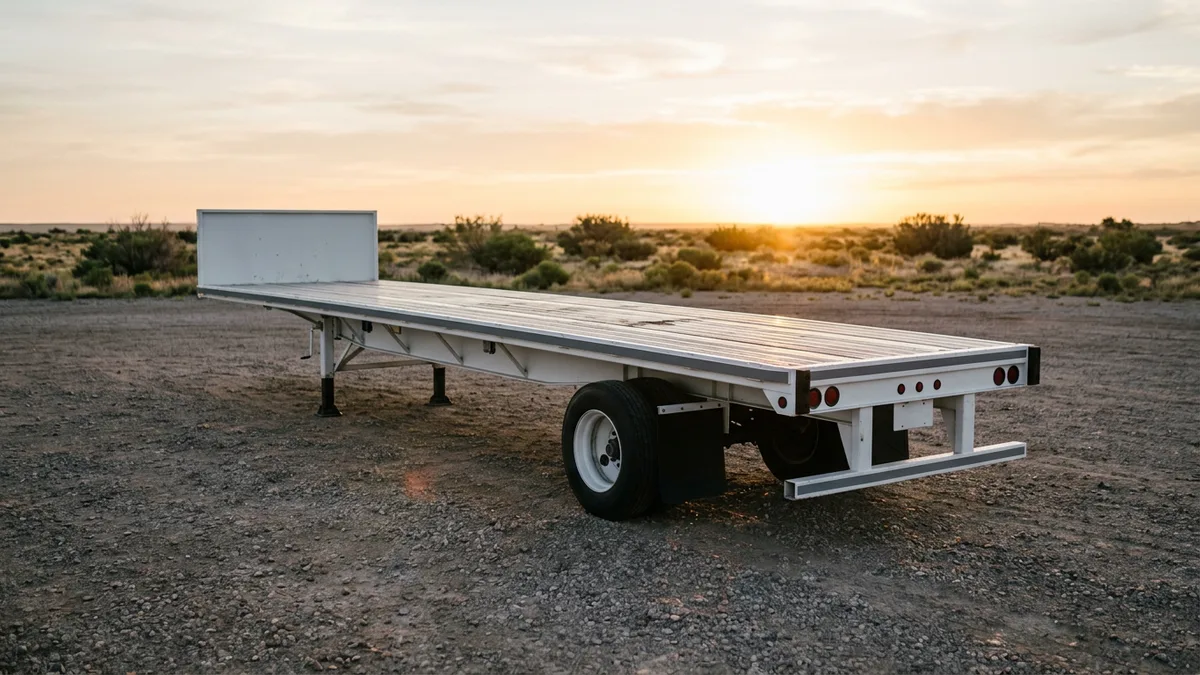
| Flatbed | Carriers hauling steel, lumber and machinery | Deck boards, crossmembers, and whether it’s steel, aluminum or a mix |
| Step deck or drop deck | Carriers with loads too tall for a flatbed | Welds at the step, ramps and the deck height you’re actually getting |
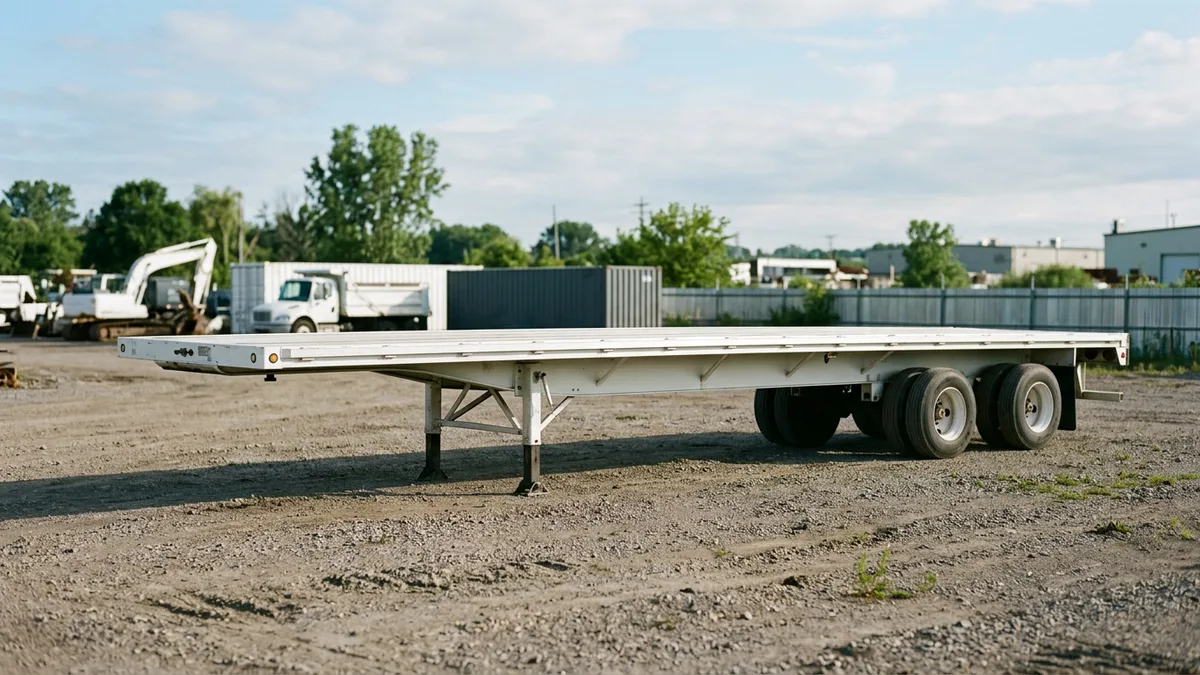
| Dry van | Regional freight and distribution fleets | Floor, roof patches, door seals, and swing doors or roll-up |
| Lowboy or RGN | Heavy-haul and excavation outfits | Axle ratings, gooseneck hydraulics and any permit history |
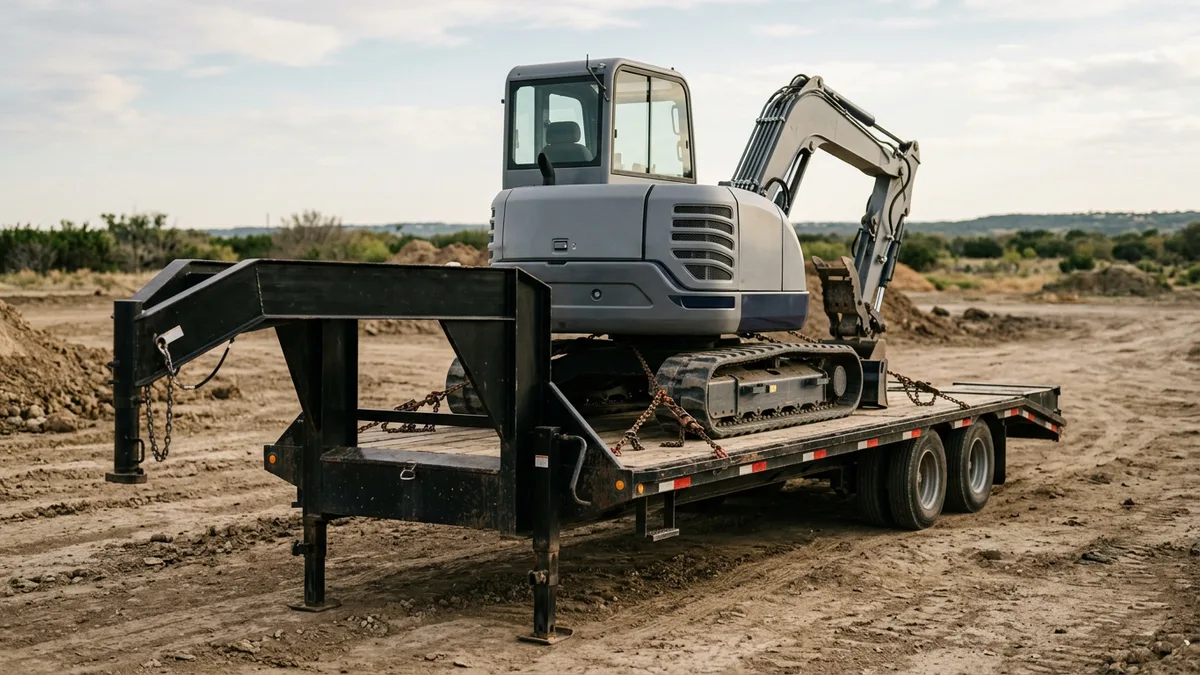
| Gooseneck or tag trailer | Contractors moving their own machines | Rated capacity against the machine’s weight, ramps and hitch fit |
| Dump trailer | Landscaping, roofing and demolition crews | Hoist cylinder, floor thickness and the tailgate latch |
| Utility or enclosed | Landscape crews and service trades | Axle count, brakes and whether your state titles it |
Do the math first. The machine’s operating weight, plus chains, plus the trailer itself, has to sit under the rating on the label, and the truck has to be rated for the whole combination. Buyers skip this. Then they find out at a scale.
Buying a used equipment trailer with financing
Plenty of working trailers have already lived one hard life. That’s fine.
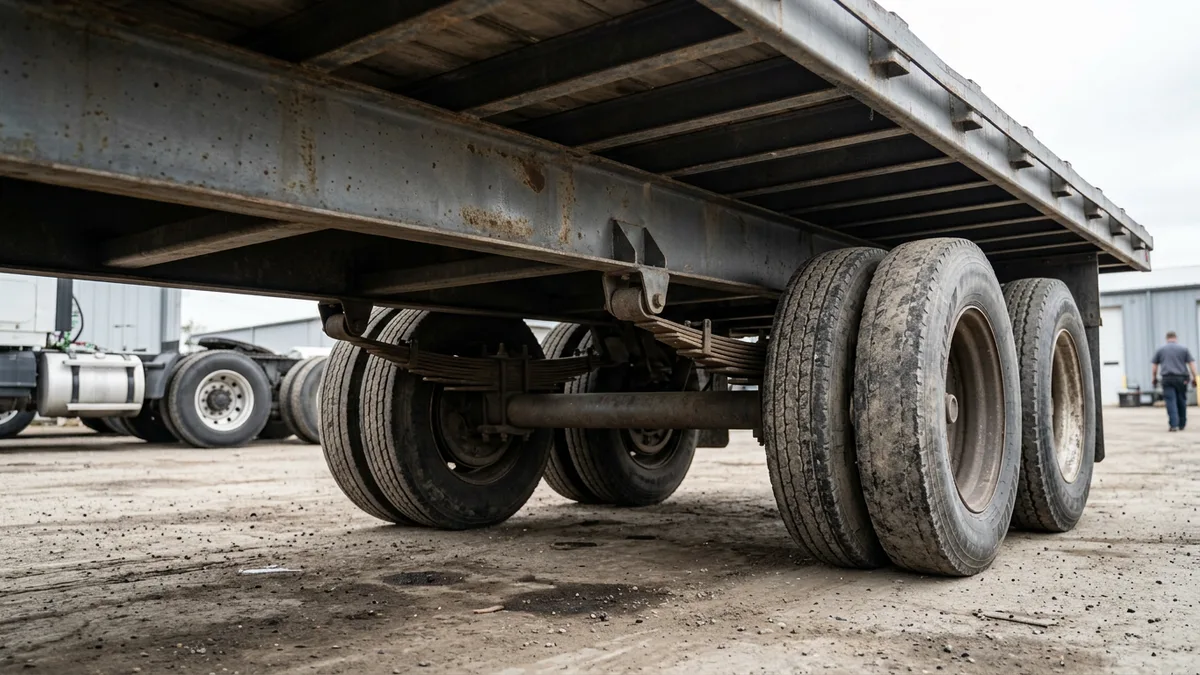
With no engine to hide anything, most of the wear is right there. Bring a flashlight. Give it an hour.
Get under it, then walk around it
Then the paper. Where a state titles the trailer, a lien goes on the certificate of title under UCC section 9-311, so the seller’s name has to match and any old lien has to be released first. No title in your state, which can happen with lighter units? A lender may file a UCC-1 financing statement against the serial number instead.
Each lender draws its own lines on age, condition and seller, so ask before the deposit rather than after it, and our used equipment financing page goes through those same questions across other machines.
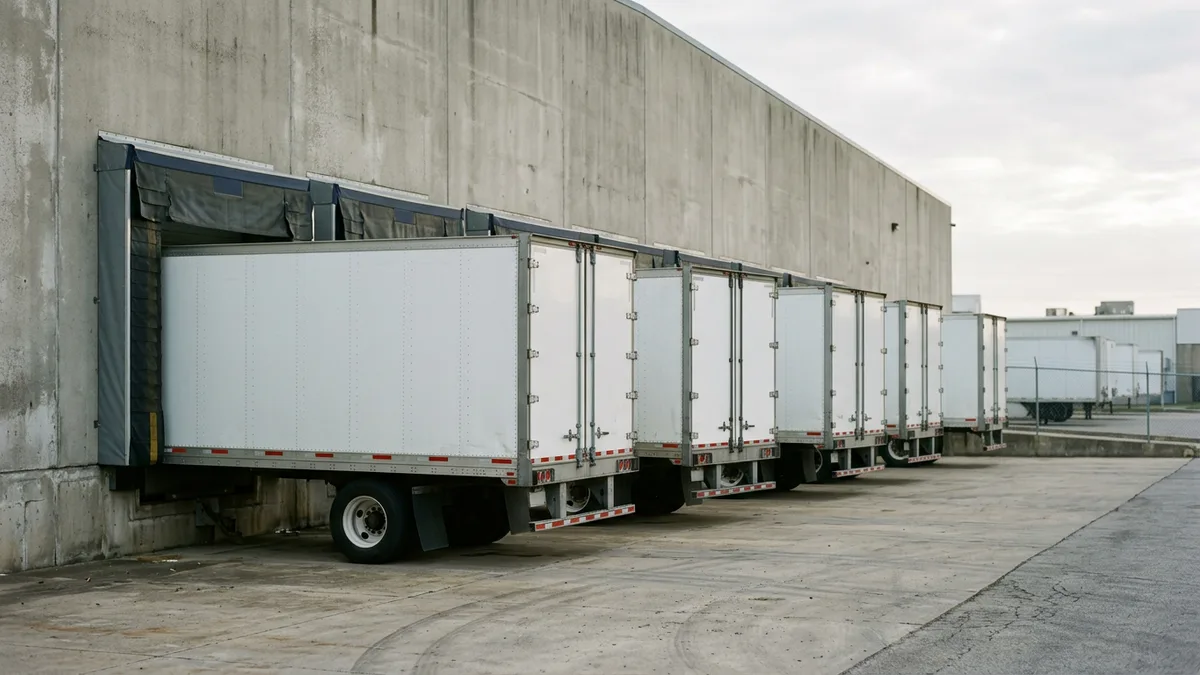
Trailer leases, loans and who holds the title
Ownership is the real split. Sign a loan or equipment finance agreement and the business owns the trailer while the lender holds a lien, but sign a lease and the lessor owns it for the term.
How long will it stay? Ten years behind your own trucks leans toward owning. A few vans tied to a contract that ends in four might lean toward a lease. Equipment leasing lays out the wider set, and operating lease vs finance lease covers the accounting side.
| Structure | Who owns the trailer during the term | When the term ends |
|---|---|---|
| Loan or equipment finance agreement | The business, with the lender’s lien on it | Balance paid, lien released |
| Fair market value lease | The lessor | Hand it back, renew, or buy at its value then |
| $1 buyout lease | The lessor, on paper | Built so the business keeps it for a nominal amount |
| TRAC lease | The lessor | Rental adjusts up or down on what the trailer brings at sale |
Trailers get their own mention in the tax code. Section 7701(h) covers a terminal rental adjustment clause, or TRAC, on “a motor vehicle (including a trailer)”, so these leases do come up around trailers, and the resale risk they leave with the business deserves a careful read before anyone signs. Weak auction year, bigger bill. Your tax advisor should see it first.
Read the label, then these four lines
Federal rules put a weight rating on every trailer’s left front. That rating decides more of what follows than the price tag does.
10,001 lb
Weight rating where a vehicle in interstate commerce becomes a commercial motor vehicle, trailer combinations included
Source: FMCSA definitions, 49 CFR 390.5T (checked November 2026)
26,001 lb
Combination rating that calls for a Group A CDL once the towed trailer is rated over 10,000 pounds
26,000 lb
Gross vehicle weight at or under which a trailer stays outside the 12% federal retail excise tax on heavy trailers
Source: IRS Publication 510, December 2025 (checked November 2026)
12 months
Longest a commercial trailer can run since its last periodic inspection, with proof of that inspection on it
Source: Periodic inspection, 49 CFR 396.17 (checked November 2026)
The excise tax falls on the first retail sale and the seller owes it, so on a new heavy trailer ask whether the quote includes it. Consult your tax advisor. States can add rules of their own.
Who runs a business trailer
What else rolls with the trailer
Business trailer financing questions owners ask
Can you finance a used trailer?
Short answer: many lenders will look at one, and each draws its own lines on age, condition and seller. A clear title and some service records help. A rotted deck doesn’t. Ask for the limits before you put down a deposit.
What’s the down payment on a commercial trailer?
Three things set it: the trailer, the structure and the business behind the file. Anyone naming a figure before seeing all three is guessing. Get it in writing. A lease treats money up front differently from a loan, too, so ask for the total cost over the term alongside it, since a small figure today can hide a larger one later on.
Does a trailer need a title to be financed?
State law decides whether a trailer has one at all, and lighter utility trailers are where the answer most often changes. On a titled trailer the lien goes on the title, and without one a lender may rely on a UCC-1 filing and a bill of sale. Rules vary. Call your state’s motor vehicle agency before you buy.
Should a business lease a trailer or buy it?
Start with the end of the term, not the monthly figure. Keep it for a decade and owning tends to fit; run it for one contract and a lease might. Neither wins everywhere. Tax treatment differs as well, so consult your tax advisor before that becomes the reason you choose.
Do I need a CDL to pull an equipment trailer?
A heavy trailer can change your license even behind a pickup, since a combination rated 26,001 pounds or more with a towed unit rated over 10,000 pounds falls in Group A under 49 CFR 383.91. Read both labels. Plenty of owners don’t until a roadside stop, and states have their own exceptions.
Can a trailer qualify for a Section 179 deduction?
For tax years beginning in 2026, Revenue Procedure 2025-32 sets the Section 179 limit at $2,560,000, shrinking once Section 179 property placed in service passes $4,090,000. Whether yours qualifies depends on what it does all day, how you got it and whether it’s leased. The IRS text and our Section 179 for vehicles page have the detail. None of this promises a deduction, so consult your tax advisor.
Does this cover campers or a personal utility trailer?
Not on this page, which sticks to trailers a business runs to earn money, so a camper or a travel trailer belongs somewhere else. Those are consumer loans. The rules change. Different conversation.
Got a trailer picked out?
Tell us the trailer, who’s selling it and what it’ll haul. A Paramount Financial specialist takes it from there, or jump straight to the credit application.