
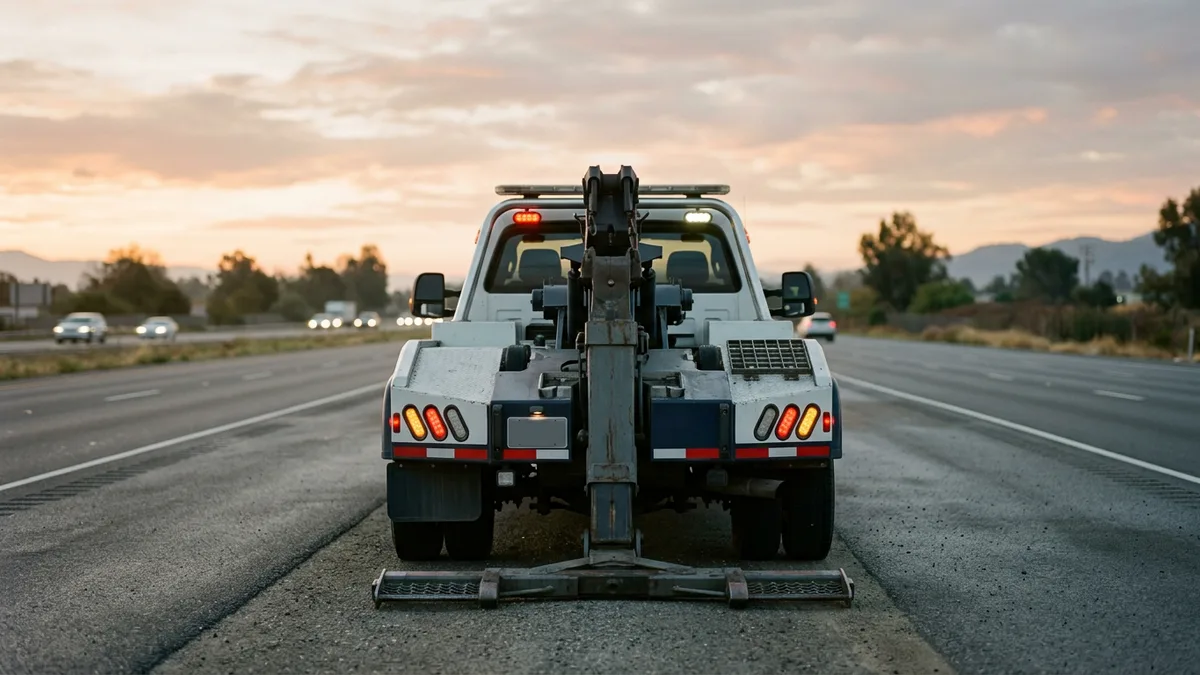
How to Start a Towing Company: Trucks, Licensing and Startup Costs

Key takeaways
How to start a towing company, in order: pick the tows you’ll run, license for that work, insure each truck, buy the truck, then sign up for calls.
- In Texas, a truck on police and accident calls carries $500,000 in liability. A truck on owner-requested tows carries $300,000.
- There’s no national towing license. State and city rules stack.
- Read a police rotation list’s rules before you build a business around it.
- Most used tow truck listings we read show no price at all, so plan to ask.
Most people working out how to start a towing company begin by pricing trucks. Wrong end. The truck you need, the policy you carry, and the license you apply for all follow from one decision, which is who’s going to call you when a vehicle has to move. Settle that first.
When you reach the truck itself, our page on tow truck financing covers how paying for one works.
What a Towing Company Does
A towing company moves vehicles that can’t or shouldn’t move themselves, for a fee, using a truck built to lift or carry them. The work comes in three kinds, sorted by who asks for the tow: the vehicle’s owner, the owner of the property it’s parked on, or a police officer at a crash.
Texas writes those three kinds straight into its permits. That makes the Texas Department of Licensing and Regulation (TDLR) a handy model, even if you’ll never tow there. Your state may slice it differently. Check yours.
| Consent | Private property | Incident management | |
|---|---|---|---|
| Who asks for the tow | The owner or driver | The parking lot’s owner | A peace officer, or a crash |
| Liability, per truck | $300,000 | $300,000 | $500,000 |
| Cargo or on-hook | Not required | $50,000 | $50,000 |
| Operator certified | No | Yes | Yes |
| Also allowed | Nothing else | Consent tows | Both others |
Those are per-incident minimums from TDLR’s company page and its page on operator licenses, read October 31st, 2026. See the pattern? The less say the vehicle’s owner has, the more the state asks of you.
Federal law leans the same way. Under 49 U.S.C. §14501(c), states and cities generally can’t regulate a motor carrier’s prices, routes, or services, but that limit doesn’t reach tow truck operations performed without the prior consent of the vehicle’s owner or operator. So the rulebook thickens right where the customer didn’t choose you. Cities use that room.
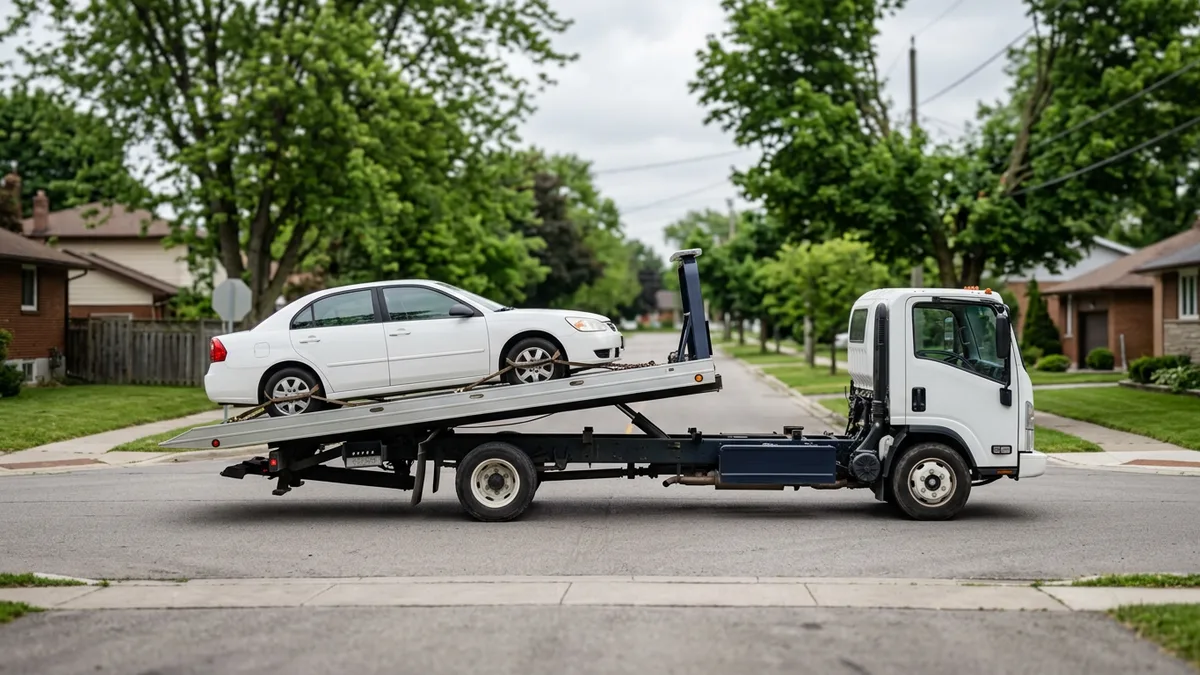
So choose. A one-truck shop running tows for drivers and repair shops is a different business from a yard on a police list, with other hours, other insurance, and another kind of phone call at 3 a.m. Same truck, maybe. Different company.
Licensing a Towing Company
Nobody issues a national towing license. You’ll answer to your state, often your city, and sometimes both at once. Here’s the order that holds up across the rules we read.
- Pick the kind of tow you’ll run first.
- Form the business, then get an employer identification number (EIN) from the IRS. An attorney or accountant can say which structure fits you.
- Ask your state and your city which licenses that work takes, and whether they want a drug and alcohol testing policy on file.
- Get insurance quotes for that work, per truck.
- Buy the truck and permit it.
- License your operators.
- Sign up for calls.
Texas charges $350 for the company license and $75 per truck, and every owner, officer, and general manager goes through a criminal background check that TDLR says can take one to six weeks, depending on their history. Operators pay $100 each.
Certification comes next. Everyone but a consent operator needs it first, through one of the eight programs the state accepts, including WreckMaster and the Towing and Recovery Association of America (TRAA), and TDLR doesn’t run the classes itself. No certificate, no license.
Then the city. Philadelphia wants $632 for its tow company license and $126 for each truck, and it lets some outside companies skip the license when a tow only starts, ends, or passes through the city. That exemption stops at its police rotation program. Join the rotation and you’re licensed in Philadelphia. Full stop.
Cross a state line and federal rules join in. This is the part we couldn’t pin down for you. A USDOT number comes into play at 10,001 pounds in interstate commerce, and the general rule from the Federal Motor Carrier Safety Administration (FMCSA) asks for-hire carriers of regulated commodities to hold an MC number too, but we found no FMCSA page that addresses towing a disabled vehicle by name.
So ask FMCSA. Do it before your first interstate tow. Our box truck post walks through the FMCSA registration sequence for any for-hire carrier that needs it.
Your truck’s rating sets one more rule. A single vehicle rated 26,001 pounds or more puts the driver in commercial driver’s license (CDL) Group B, the line our guide to tow truck weight classes and prices explains. Light rollback, usually under. Heavy wrecker, over.
What It Costs to Start a Towing Company
Guides we read put a basic used truck anywhere from about $10,000 to $85,000, and the whole start anywhere from $60,000 to over $1 million. The ones we could open didn’t say where those numbers came from. We left them out. This table holds only what we could source and date.
| Line | Figure | Source and date |
|---|---|---|
| Used rollback, 2022 Hino | $80,900 to $84,900 asking | Construction Equipment Guide, October 31st, 2026 |
| New rollback or wrecker | $72,998 to $142,999 listed | Our price guide, October 29th, 2026 |
| Company license | $350 Texas, $632 Philadelphia | TDLR and the city, read October 31st, 2026 |
| Per truck | $75 Texas, $126 Philadelphia | TDLR and the city, read October 31st, 2026 |
| Per operator | $100 Texas | TDLR, read October 31st, 2026 |
| Insurance | Get quotes | Texas minimums above |
| Storage yard | Get quotes | Only if your work needs one |
3 of 20
used rollback listings showed a dollar price, on the first page of 74 we read. Eleven said call for price, and six carried auction pricing. It’s a small sample of asking prices, not sale prices.
Source: Construction Equipment Guide, Used Rollback Trucks, October 31st, 2026
Those three priced trucks were late-model Hinos, which is why they overlap the new range. Older ones generally ask less. We can’t give you a sourced figure for how much less, and we won’t guess.
You’ll notice there’s no sum at the bottom. Your two biggest lines are the truck and the insurance quote, and neither one is real until a seller has named a price and an insurer has looked at the work you plan to run. Add it up yourself. Then keep some cash back for fuel and repairs, because a new company’s first bills arrive whether or not the phone rings, and the first repair rarely waits for the first good week.
Starting a Towing Company With a Used Truck
For a first truck, used deserves the first look, simply because the same work can often be done for less money up front. Buy for the tows you picked. Not the truck you like.
Price is part of the hunt here. Most sellers on that page wanted a phone call, so make a short list of chassis and body combinations, then call. Ask three things. What’s the mileage, what’s the service history, and has the bed or boom been repaired?
Auction pricing is its own game. You may not get to run the winch before you bid, and that’s the one thing you most want to run. If you can’t inspect it, price that risk in.
TDLR’s tow truck permit rules make a decent pre-purchase list, wherever you are. They call for the manufacturer’s capacity figures for the boom, winch, and carry mechanism, on a data plate or kept in the truck. A winch can’t be rated above the boom. No hydraulic or winch oil leaks.
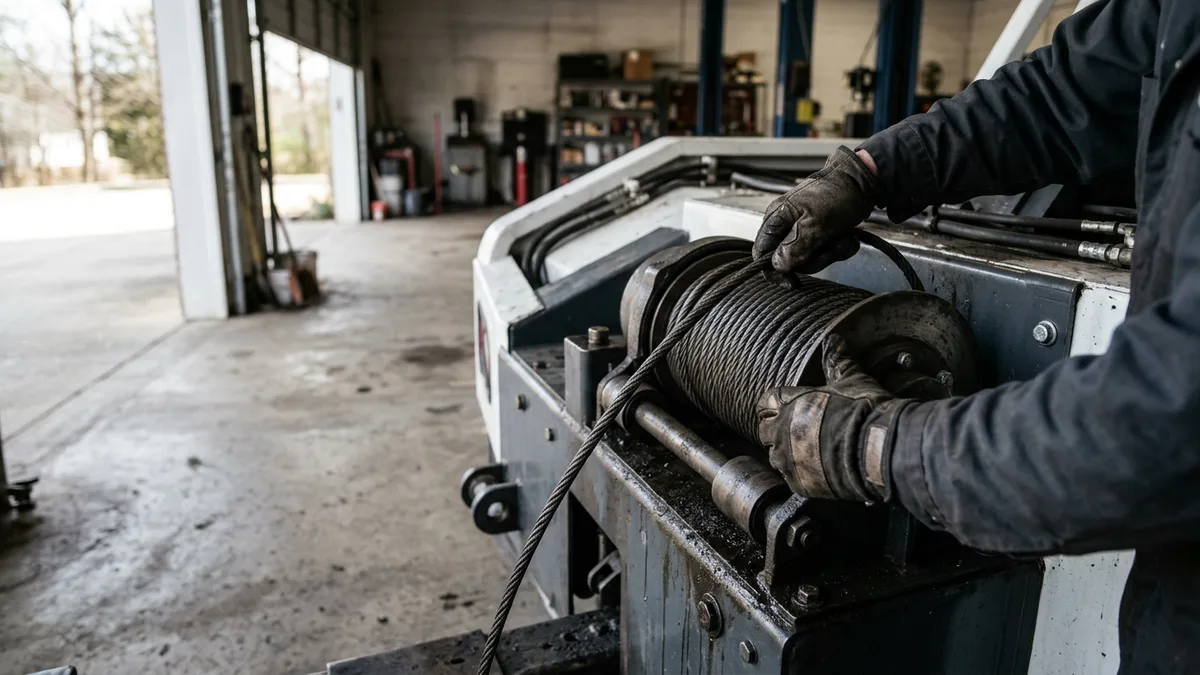
A truck that fails those is a truck you can’t permit in Texas, however good the price looked. Our tow truck cost guide covers the rest of the walk-around.
Private seller? Match the title to the seller’s name, look for a lien noted on it, and run a UCC search for any financing statement against the truck. Those three take an afternoon. A surprise lien takes longer.
Where the First Calls Come From
- Motor clubs and roadside networks. Before you sign, ask what a call pays and how soon they expect you on scene.
- Repair shops, body shops, and dealers, where a standing arrangement is consent work and needs no police list at all.
- Apartment managers and parking lot owners. That’s private property towing, so check your state’s notice and permit rules first.
- The police rotation, which is the one with a rulebook.
Calls on a rotation list usually move down a fixed order. Getting on it is a project. The Arkansas State Police rules are a fair sample: a physical location in the state, a fenced and lighted storage area, your name permanently on the truck, and tow and hook, liability, and garage-keepers insurance.
The equipment gets specific too. The state police’s light-duty list asks for a wheel-lift truck, plus a rollback for what other methods can’t tow. Can’t get a heavy-duty truck rolling within 20 minutes? You forfeit the call. It goes to the next company. Other agencies differ. Read yours.
Look at what that does to your budget. A yard is a second business, with its own lease, its own insurance, and sometimes its own license. Philadelphia requires $100,000 in garage keeper’s legal liability if you store vehicles, and Texas licenses vehicle storage facilities separately from tow companies.
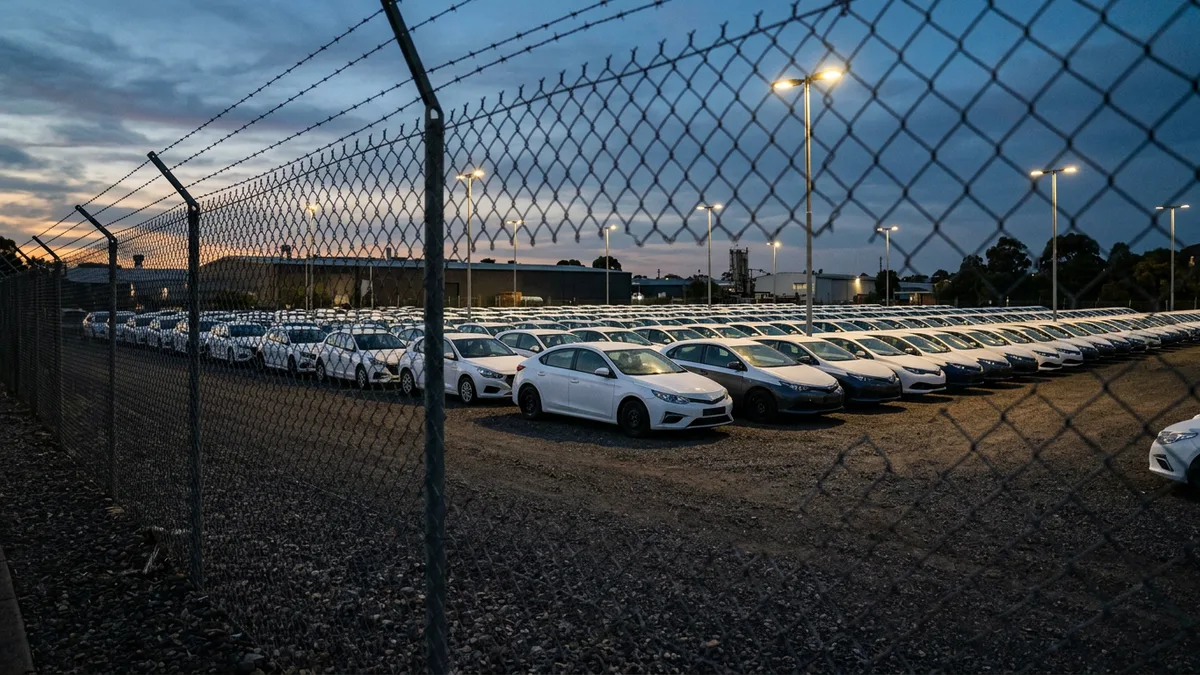
Start without one if you can. Plenty of consent work doesn’t need a yard. You’ll learn your market before you sign a lease.
Where Financing Fits
We finance equipment, so we’re not neutral on this part. Cash may suit an older, cheaper truck better. A lease has its own end-of-term rules, and a rental can cover you while you test a market.
If you do borrow, expect a lender to read the truck by its vehicle identification number, title, weight rating, and body, along with the work it’ll do and who’ll be driving it. A new business has no history yet. So the owner’s background and plan carry more of the load, and our page on how lenders review a new business goes through that side.
Lenders differ on new towing companies. Ask each one directly. Get the terms in writing. Then compare.
A truck bought from a private seller adds paperwork, which our page on used equipment financing covers. Get your insurance quote before you ask anyone about the truck. It’s the number most likely to change your plan.
What New Tow Operators Ask First
Does every tow truck driver need a CDL?
No, the truck’s rating decides it. A single vehicle rated 26,001 pounds or more falls in Group B, so most light rollbacks sit under the line and heavy wreckers sit over it. What you’re towing can change the answer. States add rules too. Confirm with your licensing office.
Can one person run a towing company with a single truck?
The Texas and Philadelphia pages we read set no minimum fleet, so one truck can work on paper. Then the phone rings at 2 a.m. You’re the dispatcher, the driver, and the billing department. Many owners would do well to start with consent work during hours they can actually cover.
So what does on-hook insurance actually cover?
On-hook coverage, which Texas calls cargo or cargo on hook, is for damage to the vehicle you’re towing. Liability covers harm your truck does to others. Garage keeper’s coverage is for vehicles in your care at the yard. Ask your insurer where each one stops.
Realistically, how long before a new company can take its first tow?
Short answer: there’s no national timeline, because the licensing office sets the pace. In Texas, the step that can drag is the background review, which TDLR says can take one to six weeks. Ask your own state’s office. Don’t book a first day until the license is in hand.
Does towing make sense as a first business if you’ve never run a wrecker?
Maybe, but learn the work on someone else’s truck first. Winching a car out of a ditch is a skill. Damage comes out of your policy and your reputation. Texas accepts certification programs such as WreckMaster for its non-consent operators, and a course is a low-stakes way to find out whether you like it.
What should you read before asking to join a police tow list?
The agency’s written rotation rules, every page. Look for the required yard, the insurance kinds and amounts, the equipment by duty class, response times, and who can remove you. Then price what it’d take to comply. Then apply.
Your Next Move
Pick your kind of tow this week. Then call your state’s licensing office and your city’s, in that order. Ask for the insurance minimums in writing, so your quotes match them.
When the truck is next, read how financing a new or used tow truck works. If you’re ready, you can start an application or talk to our team about what you’re planning.