
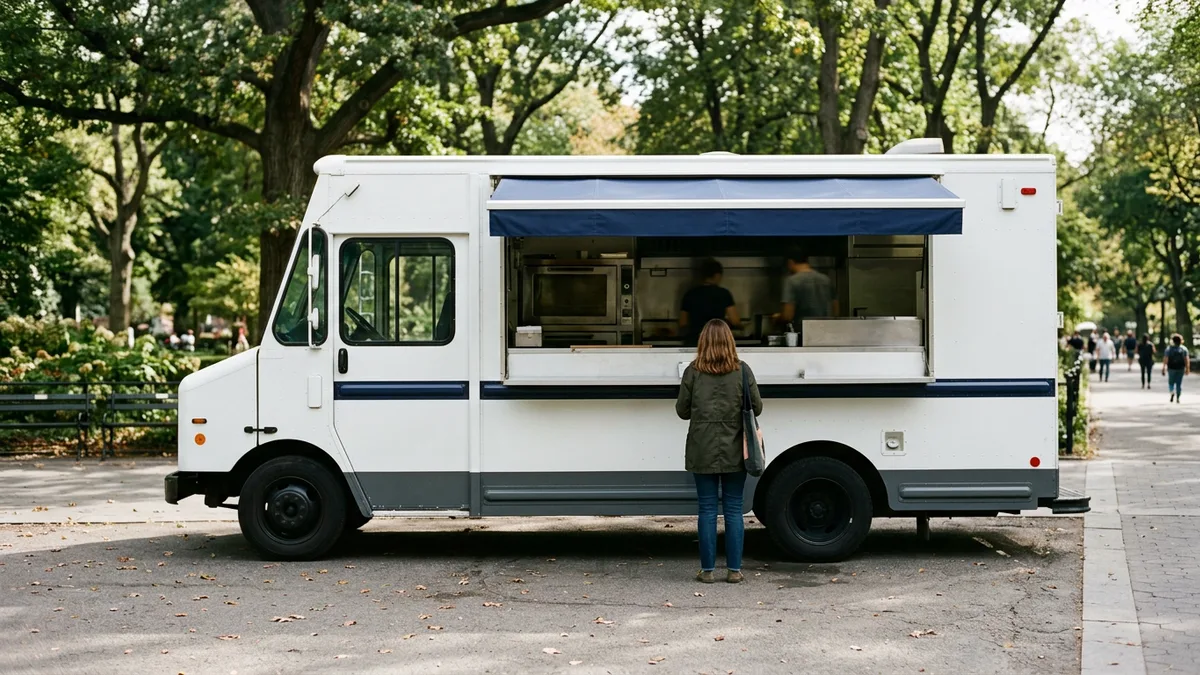
How Much Does a Food Truck Cost? New vs Used Trucks, Kitchen Build-Out and Startup Equipment

Key takeaways
How much does a food truck cost depends on condition: guides put used trucks around $30,000 to $100,000, while three public buyers approved $147,005 to $257,560 for trucks between 2015 and 2024.
- Three bids on one truck spec landed $72,469 apart.
- A used truck is an engine and a kitchen, and they age separately.
- The griddle is cheap. The hood rules aren’t.
- Your county’s fee schedule beats any national average.
Most answers to how much does a food truck cost hand you one wide range and stop there. We wanted something you could check, so on November 2, 2026, we read public purchase records, restaurant supply listings, and posted permit fees, then marked what’s a recorded figure and what’s somebody’s estimate.
Paying for the truck is a separate question, and our page on food truck financing covers it. We finance equipment, so weigh what we say with that in mind. Testing a menu for one summer? You may not need to buy anything yet.
How Much a Used Food Truck Costs
A used food truck is really two assets sharing one title. There’s the vehicle, with its mileage and its service history, and there’s the kitchen bolted inside it, which may be older or far newer than the truck. Price them apart, because either one can be what’s actually wrong with the deal.
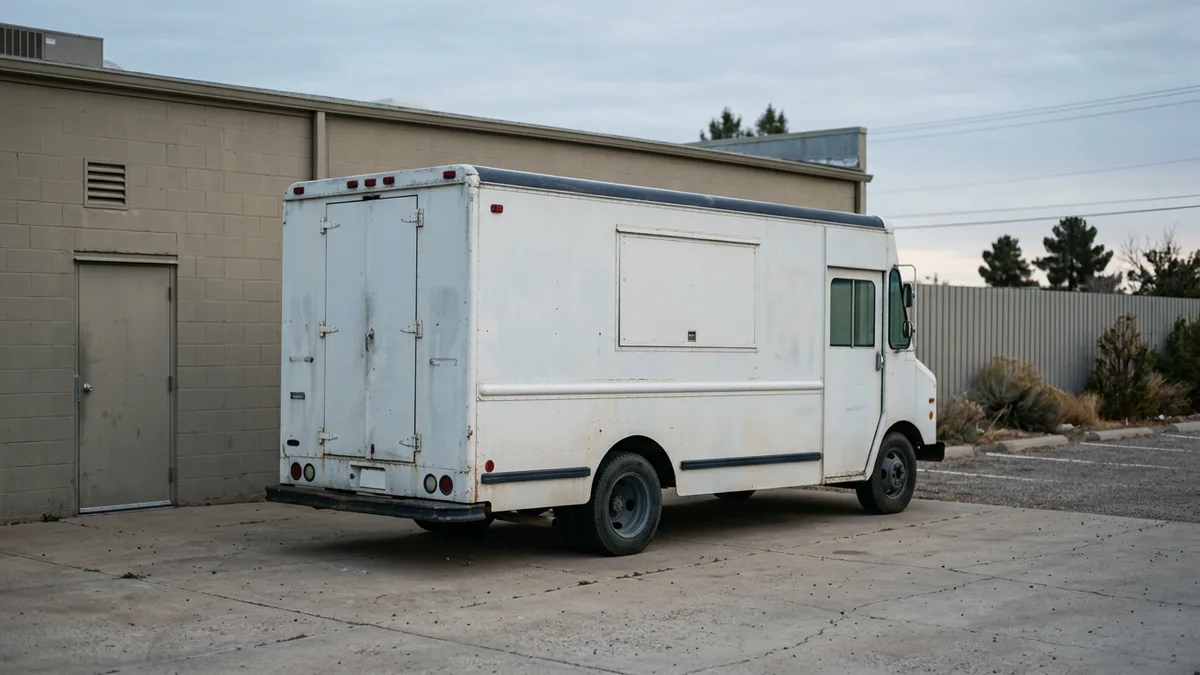
Here’s what the guides say. Neither one names a source for its range, and we’re not going to pretend otherwise.
| Guide | Used truck | New truck | Date |
|---|---|---|---|
| Escoffier | $50,000 to $100,000 | $100,000 to $175,000 | Updated 2025 |
| DoorDash | $30,000 to $100,000 | $75,000 to $200,000 | Sept. 2026 |
Why no list of individual trucks? Most sites that show used food truck prices also sell financing. We don’t send readers to another lender’s pitch. We did read them, though. Asks ran both below and above those guide ranges, so treat the band as a starting point.
It isn’t a floor. It isn’t a ceiling either.
Public records add one low number. Danville Public Schools in Virginia paid $42,000 for a summer-meals truck in 2019. The report doesn’t say whether it was new or used. It’s also seven years old.
Builders resell, too. Custom Concessions keeps a page of used stock, mostly Ford step vans from 2009 to 2012, with fryers, a four-burner stove, a griddle, and a three-compartment sink. Every unit on it was marked sold. No prices shown.
Then there’s the far end of cheap. A recycling company owner paid $7,400 for a surplus 1981 Mack fire engine from Brockton, Massachusetts, in 2022 and talked about adding a pizza oven and a grill. That’s a chassis. It isn’t a kitchen, and the distance between those two words is where a bargain goes to die.
What to Check Before You Pay for a Used Truck
A private seller won’t hand you a dealer’s file. You build it yourself. Do it in this order, since the first two items can end the conversation for the price of a morning.
- The mechanic. Escoffier’s guide figures a few hundred dollars, against what it calls a $50,000 mistake.
- Someone who’s actually built out a truck, walking the kitchen with you. Ask them what the remodel would run.
- Will it pass here? A truck licensed two states away may not meet your county’s code, so send the health department photos and the equipment list before a deposit moves.
- Hood service records, plus the date on the suppression system’s last inspection tag.
- Liens. Run a UCC filing search on the seller, and match the VIN to the title, because an old lender may still hold a UCC-1 on that kitchen equipment.
- Weight, which nobody asks about until it matters. Commercial appliances are heavy, and a step van has a limit printed on it.
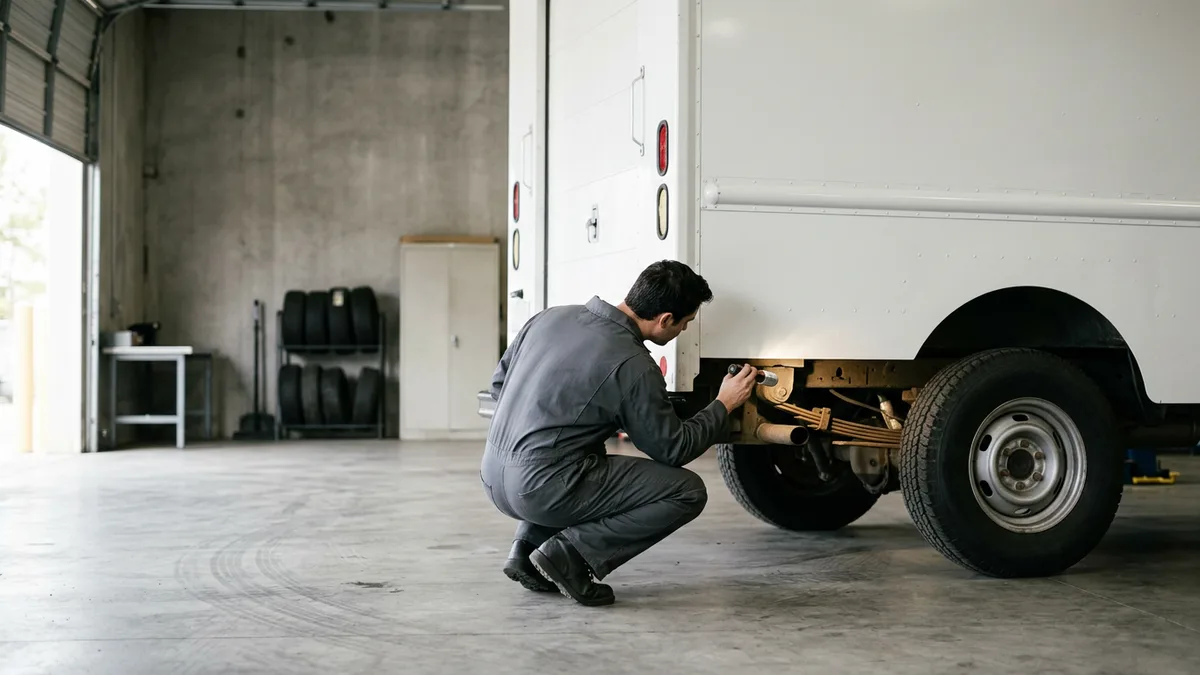
Our used equipment financing page goes through what generally gets reviewed on an older asset, and it’s worth a read before you bid on anything with six-figure mileage.
What Food Trucks Cost on the Public Record
Public buyers have to show their work. So here’s what school boards and county commissioners wrote down, and these look like new builds. Only Ashtabula’s record shows a new chassis, though. Lewisville’s report gives no spec at all. An agency’s spec may also be more than a first-time operator needs.
| Buyer | What the record says | Date | Amount |
|---|---|---|---|
| Ashtabula County, OH | Bid awarded, diesel powertrain and generator option | Dec. 2024 | $256,189 |
| Lewisville ISD, TX | Truck to rotate among five high schools | Nov. 2017 | $147,005 |
| Keller ISD, TX | Board-approved spending for a district truck | June 2015 | $257,560 |
Ashtabula’s is the one to read. The county wanted a truck for the lodge at Geneva State Park and took three bids on November 15, 2024: $220,528, $256,189, and $292,997, each including the diesel powertrain and generator option. That’s $72,469 between low and high. Same request.
The low bid lost. Commissioners’ Resolution 2024-547 says it didn’t follow the spec on the hood brand, didn’t specify the type of hot equipment, and quoted a new 2022 chassis that was “potentially” sitting since 2021. New doesn’t always mean recent. Ask for the chassis build date.
Keller saw something similar nine years earlier. Its lowest response, $167,890, missed the spec because it had no slide-out service window, dual exhaust, or dual air conditioning, and the highest came in at $264,275. Those three options may not explain the whole gap. They do show one way a quote gets cheap, which is by leaving out something you’d have to add later.
Compare what’s included. Then compare the totals.
Grants get mistaken for prices, by the way. Tioga County, New York, won $243,533 in state block grant money in 2025 for a food truck-style mobile cafe. That’s project money. It’s not a sticker.
Kitchen Build-Out and Startup Equipment Prices
Line items next. We read these on one restaurant supply dealer’s site and one RV retailer’s, and they’re single examples, not a shopping list.
| Item | Example | Listed at |
|---|---|---|
| 36-inch gas griddle | Globe GG36G, 258 pounds | $2,242 |
| Three-compartment sink | 16-gauge kit with legs | $693.97 |
| Reach-in refrigerator | Bolder one-door, 19 cubic feet | $1,595.74 |
| Generator | Cummins Onan QG 7000i DF | $7,216.49 |
Those four add up to $11,748.20. Not much, right? Set it beside a federal guide for senior meal programs, which says a shuttle bus or small school bus can be retrofitted for $25,000 to $50,000 depending on how it’s equipped, or beside any bid in the table above, and you can see the appliances aren’t where most of the money goes.
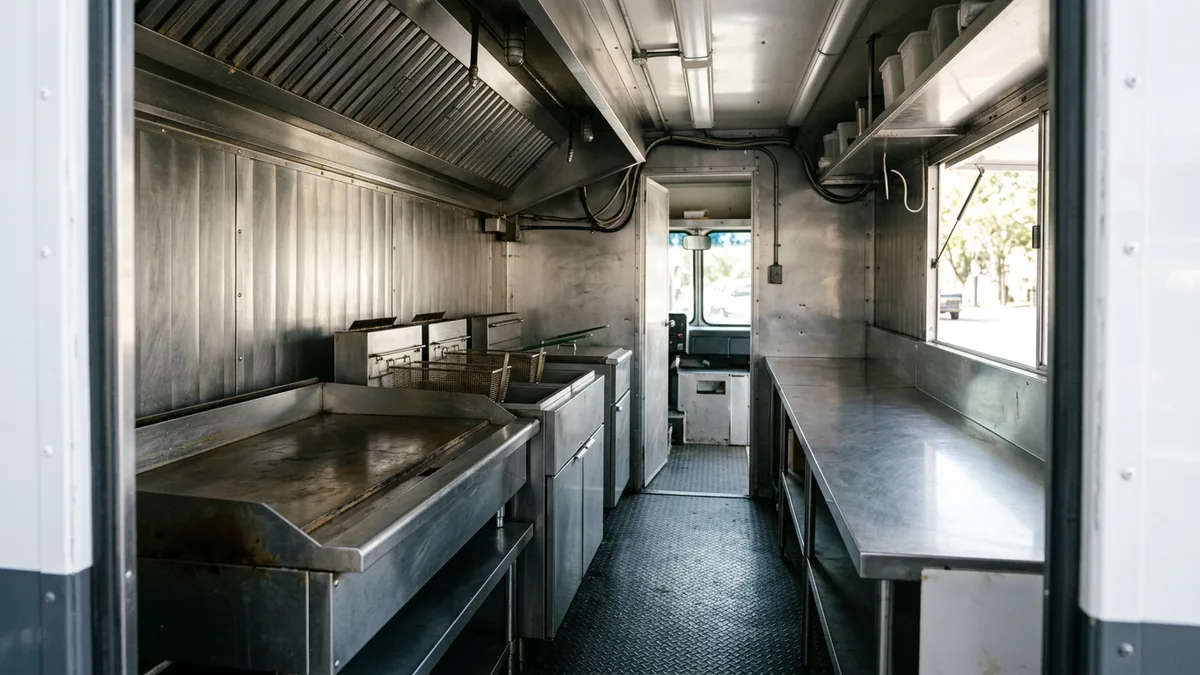
So where does it go? Into the build, as we read it. Wiring, plumbing, water tanks, propane lines, and the hood all sit between that appliance list and a truck you can open for business.
Check the griddle listing, too. It’s marked for indoor use only. Ask your builder and your fire marshal about that before you order one. Griddles also vary several times over by build, and 36-inch models sell for far less at other dealers, so a single line can move more than you’d guess.
The hood deserves its own budget line. Albuquerque’s fire department requires a Type 1 hood under NFPA 96 for any vendor producing grease-laden vapors, whether that’s frying or griddle work, with a suppression system on top, service every six months, and a separate extinguisher for trucks with portable generators. That’s one city, in a document dated 2019. Yours will have its own version, so call before you spec.
If this is starting to sound like a restaurant, it is one. Our guide to starting a restaurant covers the planning order, what a coffee shop costs by format includes a truck line for anyone pouring coffee, and restaurant equipment financing covers the kitchen side.
Permit and Commissary Costs by City
Nobody’s permit bill looks like anybody else’s. That’s the finding, and it’s why we’d distrust a national average even from a good source.
$28,276
on permits, licenses, and ongoing legal compliance to start and run a food truck for one year, across 45 procedures and 37 business days, using 2017 figures
Source: U.S. Chamber of Commerce Foundation, Food Truck Nation, 2018
That number is old and it’s broad, since “ongoing legal compliance” runs well past a health permit. Posted fee schedules are narrower and easier to trust. Here are two.
| Agency | Category | Annual fee | Plan review |
|---|---|---|---|
| Los Angeles County | High risk, raw meat on board | $761 | $741 |
| Los Angeles County | Moderate risk | $598 | $544 |
| Washington County, OR | Class IV, any foods | $1,112 | $874 |
| Washington County, OR | Class III, no raw foods | $980 | $847 |
Los Angeles County’s fees took effect March 6, 2024, and Washington County’s run from July 1, 2026, to June 30, 2027, and neither one includes your business license, insurance, fire inspection, or city vending permits.
Ask about the commissary before you pick a truck. That’s a licensed kitchen base where a truck stocks up and cleans out. Washington County licenses one at $1,112 a year, and that’s the commissary operator’s fee, not yours. Your bill is whatever they charge you. Call two of them.
Rent, Convert, or Buy Used
Start with how sure you are about the menu and the market. If you’re still testing, a rental costs you months and not years, and Escoffier’s guide estimates $3,000 to $5,000 a month for one. If you’ve got a proven concept and a builder you trust, a conversion lets you choose the kitchen. If you’ve got a good mechanic and a health department willing to look at photos, used can work.
The rule we’d use is simple. Get a written number for what it takes to make the truck legal in your county, add it to the asking price, and only then compare that total with a new build. A truck that needs a new hood, new suppression, and new plumbing isn’t cheap anymore.
Chassis matter too. Our look at box truck prices covers a close cousin of the step van, and semi truck prices sit further up the weight scale. Still at the planning stage? Read how to start a food truck business before you buy anything.
What Buyers Ask About Food Truck Prices
Is a food trailer really cheaper than a truck?
Usually, on the unit itself, because there’s no engine or drivetrain to buy. You’ll still need a vehicle to tow it and a capable driver, as the federal senior meals guide points out, and a trailer is harder to get into tight spaces. Price the tow vehicle first. Then decide.
What does renting a food truck run per month?
$3,000 to $5,000 is Escoffier’s estimate, and it doesn’t name a source. Ask what’s included. Insurance, commissary, and repairs can each sit on either side of that line.
Can a shuttle bus become a food truck for less?
A shuttle bus or small school bus can be retrofitted for $25,000 to $50,000, according to the federal guide written for senior meal programs, last updated in August 2022. That’s the retrofit. Add the bus. The same guide says a retrofit can take one to three months and suggests other truck owners as the place to find a reputable shop.
What should a used food truck inspection cost?
A few hundred dollars for the mechanic, by Escoffier’s estimate. The kitchen is a second visit, and we didn’t find a published price for it, so ask a builder or a hood service company for a quote.
Why do permit totals differ so much between cities?
Health fees are often set by the county, and vending, parking, and fire rules can come from other offices, so you’re adding several schedules together. One won’t tell you the total. Ask your health department who else you’ll deal with.
Does every food truck need a hood and a fire suppression system?
Not every truck, going by Albuquerque’s rules, which tie the Type 1 hood to grease-laden vapors from frying or griddle work. A truck serving prepackaged food is a different conversation. Your own fire marshal decides, and it’s worth asking before the kitchen layout is final.
What extra paperwork comes with buying from a private seller?
More of it, and all on you. You’ll want a bill of sale, the title, the VIN, the serial numbers on major equipment, the latest health inspection, and a lien search. Lenders differ on private-party deals, so ask before you hand over a deposit.
Next Steps
Pick the menu. The menu picks the kitchen. Ready to price a specific truck? Start an application, talk to our team first, or read how operators fund new and used food trucks.