
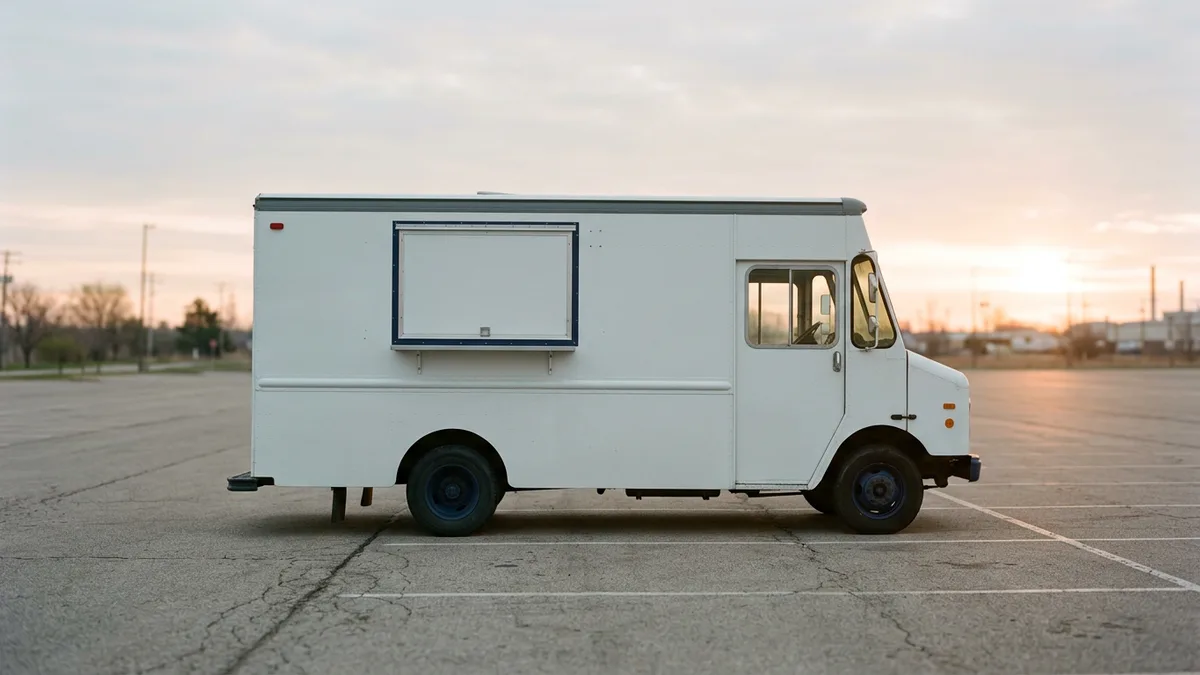
How to Start a Food Truck Business: Permits, Truck and Kitchen Equipment

Key takeaways
Here’s how to start a food truck business without buying the wrong truck: write the menu, take it to your health department, line up a commissary, and only then buy the truck and kitchen those rules call for.
- Your menu can change which permit you need, and what you’re allowed to cook.
- A home kitchen rarely counts. Plan on a commissary.
- On a used truck, ask for the fire paperwork before you ask about the price.
- Published truck prices are wide, and few of them name a source.
The truck comes fourth. It feels like the first decision, because trucks are for sale right now and permits are boring, but a county health department can tell you not to buy equipment until it has signed off on your plans, and one does exactly that in writing. So anyone working out how to start a food truck business should pick up the phone before they pick up a deposit.
This guide runs in that order: menu, permits, commissary, truck, kitchen, budget. When you get to paying for it, our page on food truck financing takes it from there. Want the price records first? See how much a food truck costs.
How to Start a Food Truck Business, Step by Step
- Write a short menu and pick the one or two dishes that sell it.
- Ask your health department which permit class that menu falls under.
- Form the business and get a free EIN from the IRS.
- Sign a commissary agreement your county will accept.
- Submit your plans for review, before you buy anything built in.
- Buy or build the truck and kitchen to match the approved plans.
- Pass the health and fire inspections, then get your permit.
- Check each city’s rules, insure the truck, and book your first spots.
Your county may swap two of those. Fine. The order that matters is that step six comes after step five.
Your Food Truck Menu Sets the Permit
A mobile food permit is the health department’s license to sell food from a vehicle that moves. It’s issued to a specific unit, on a specific menu and plan, after an inspection. Local agencies write these rules, so the same taco can mean different equipment in two neighboring counties.
Fort Worth goes further. Its health division has a separate class, the wrapped or prepared food truck, that can sell only precooked or shelf-stable packaged food. Think breakfast burritos in wrappers. No scooped ice cream either.
Up in Washington, the Snohomish County plan review guide, revised in November 2023, says cooking raw meat thicker than one inch is prohibited on an occupied truck. So much for the thick-cut pork chop, at least there. A menu that looks fine on a napkin can be a menu you aren’t allowed to serve.
| On the menu | What it can add | Where we read it |
|---|---|---|
| Wrapped, precooked food | Commercial refrigerators and warmers, thermometers | Fort Worth |
| Made-to-order tacos or sandwiches | A food prep refrigerator | Snohomish County |
| Griddled burgers | A ventilation hood, plus a limit on meat thickness | Snohomish County |
| Anything from a deep fryer | A hood, a Class K extinguisher, a locked cover for travel | Snohomish County, Lenexa |
| Produce washed on board | A separate prep sink, maybe bigger tanks | Snohomish County |
Those are examples from three places, not national rules. Yours will differ. Take your actual menu to your actual inspector, and ask what it adds to the truck. It costs a phone call.
Food Truck Permits: Who Signs Off
$28,276
Average cost of permits, licenses, and ongoing legal compliance to start and run a food truck for one year, across 20 U.S. cities, with 45 procedures over 37 business days.
Source: U.S. Chamber of Commerce Foundation, Food Truck Nation, 2018
That’s old, and it comes from a pro-business foundation. Still the number people quote. The spread is the useful part: annual regulatory operating costs ran as high as $37,907 in Boston and as low as $5,410 in Portland, Oregon, and Denver required 10 procedures to get going while Boston and San Francisco required 32. Same truck. Very different paperwork.
Expect several agencies, and don’t assume they talk to each other.
- The health department comes first. It reviews your menu, your plans, and your commissary, then inspects the unit.
- Fire. If you run propane or cook anything that throws grease, a fire marshal probably has a checklist with your name on it.
- A state agency, sometimes. Washington requires Labor & Industries approval for electrical, structural, and mechanical work, with a label on the outside of the vehicle, and Sonoma County’s trucks and trailers page lists a California HCD insignia.
- The DMV, for the truck or the trailer itself.
- Every city you park in. Fort Worth bars mobile vendors within 50 feet of homes, vacant lots, and city parks, and from operating between 2:00 a.m. and 7:00 a.m.
- Your food protection manager certificate, which DuPage County, Illinois requires.
Some fees are small. Fort Worth’s wrapped-food class lists a $65 plan review fee and an annual health permit of $285 plus $5 per employee. Time hurts more, because a truck you’ve paid for sits parked while a reviewer reads your plans. DuPage says to allow up to 20 business days once everything is in, and Snohomish County’s goal is a response letter within 30 days.
Snohomish also prints the sentence every new owner should tape to the fridge: “do not purchase equipment or begin construction” until you have its written approval. Not every county says it that plainly. Ask yours if it applies.
The business itself is the easy part. An LLC is a common choice, though the structure is a question for your accountant or attorney, and an EIN comes straight from the IRS. “You never have to pay a fee for an EIN,” the agency says, and it warns about sites that charge for one. Believe it.
Find a Commissary Before You Find a Truck
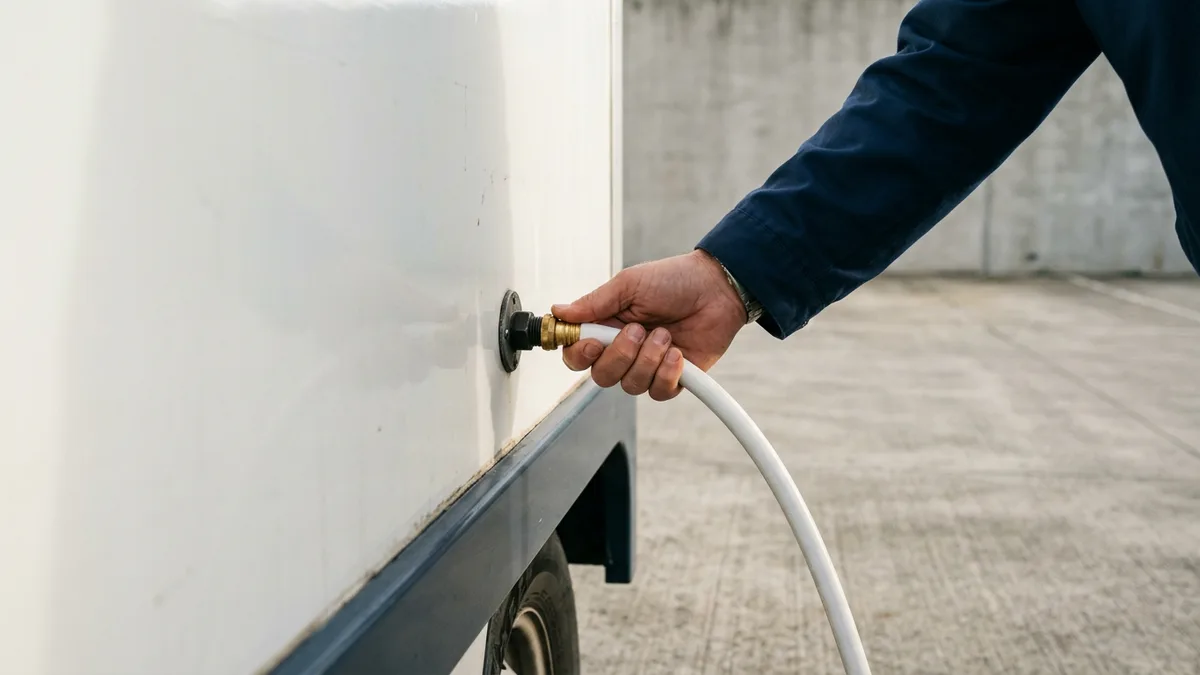
A commissary is an approved food establishment where a truck stores food, fills its clean water, dumps its wastewater, and gets serviced. The FDA’s 2026 Food Code now spells out that commissaries are food establishments, and it adds a definition for a mobile food establishment, one that “can change location and moves as part of its routine operation.” Your state decides what it adopts and when.
Now the catch. Snohomish County requires a daily return to the commissary and doesn’t allow one outside the county. DuPage County will take an out-of-county commissary if you hand over its latest health inspection report. Two rules, opposite answers. Call yours.
Fort Worth is blunt about the obvious idea: personal homes aren’t permitted businesses, so you can’t prep and store food in your house for that truck class. Other places may draw that line differently. Don’t count on it.
Get the signed agreement early, because many health departments want it inside your application. Ask the commissary three things. Is there a waitlist? Can a truck your size fit the yard and reach the water and drain? And when does the gate open and close? You’ll live by that clock every day you operate.
Buying the Truck: New, Used, or Trailer
Prices first, with a warning. Vendors publish most of these numbers, and few say where they came from. We read three and left them side by side so you can see the disagreement.
| Source and date | New truck | Used truck |
|---|---|---|
| DoorDash, Sept. 2026 | $75,000 to $200,000 | $30,000 to $100,000 |
| WebstaurantStore, June 2026 | $100,000 to $150,000 | $50,000 to $100,000 |
| Escoffier, May 2025 | $100,000 to $175,000 | $50,000 to $100,000 |
The bottom of the used range runs from $30,000 to $50,000, depending on who you read, and Escoffier, a culinary school, adds that you may find one for less. So treat none of this as a quote. It tells you what size of problem you have, and that’s all. WebstaurantStore also puts a converted vehicle at $100,000 to $250,000, a useful reminder that a cheap step van plus a custom kitchen isn’t automatically the cheap route.
Here’s a decision rule. If your county’s plan review will take a used truck as built, and its fire tags are current, used is a sensible place to start looking. If the seller’s truck needs a new hood, new plumbing, and new electrical to pass, you’re paying for a conversion anyway, so price it against one. Do the math. Add the repairs to the asking price before you compare anything.
And a trailer? No engine and no drivetrain, so it tends to cost less, as DoorDash notes. But Snohomish County wants proof you own a tow vehicle, and whatever you tow with has to handle the weight. Our page on trailer financing covers paying for the unit itself.
The Used Food Truck Paper Trail
A used food truck comes with a history, and the history is written down, or it isn’t. The fire inspection checklist from Lenexa, Kansas, built with the Heart of America Fire Marshal’s Group and updated in 2026, doubles as a very good list of what to ask a seller for.
- A current inspection tag on the hood suppression system.
- Has anyone changed the hood? Added shelves and baffle plates can mean the suppression system has to be re-evaluated by someone certified, on your dime.
- The annual fuel-system tag and a current leak test, for propane or natural gas lines.
- Grease cleaning records. Lenexa wants the hood and exhaust cleaned every six months for moderate-volume cooking, with the date and who did it.
- The latest health inspection report from wherever it last operated. Any critical violations? Settle them before closing.
- That state label or insignia, if your state uses one.
Missing paperwork isn’t always a dealbreaker. It’s a price cut, or a reason to walk.
Then get it in front of a mechanic, because it’s still a truck. Drive it. Listen to it. Run every appliance at once on the generator, which is WebstaurantStore’s point and a good one: can the power actually carry the kitchen?
If a truck was built in another state, ask your health department before any deposit moves whether it’ll accept that build. We couldn’t find a rule that promises it will. Fort Worth, for one, won’t approve a home-built unit in that wrapped-food class and may ask for proof of commercial manufacture.
Buying from a private seller instead of a dealer? Our guide to used equipment financing covers the paperwork side of a secondhand purchase.
Food Truck Kitchen Equipment and Fire Rules
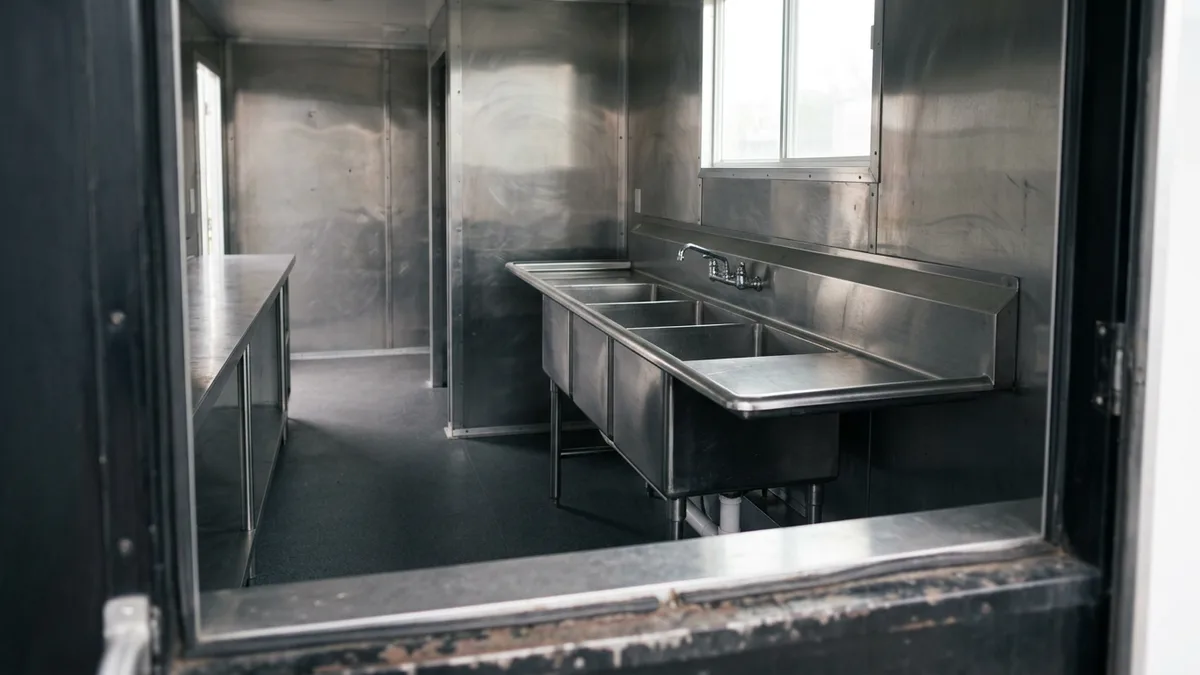
Water comes first, oddly enough. Snohomish County requires a three-compartment sink with drainboards on an occupied truck, big enough to submerge what you wash, plus a wastewater tank at least 15% larger than your fresh tank, so a 35-gallon fresh tank means a 42-gallon wastewater tank. Measure them. Hot water has to fill one sink compartment at temperature. Those aren’t glamorous purchases. They’re the ones that fail inspection.
Beyond that, the list follows the menu. Expect to price some version of this:
- Cooking gear for the two or three dishes you settled on, and nothing for the dish you might add next year.
- Refrigeration, commercial grade, with a thermometer in each hot and cold unit, as Fort Worth’s inspection asks.
- Hood and suppression system, if you’re cooking with grease. Lenexa’s list ties the hood to NFPA 96.
- Propane piping built to NFPA 58, with that annual inspection.
- A generator big enough for all of it, running together, at the same time, on the hottest day of the year.
- A point-of-sale setup, and a screened order window, which DuPage requires.
Check for the NSF listing on anything you buy. DuPage says all equipment must be NSF approved and household units aren’t, and Snohomish County wants NSF or the equivalent on almost everything. That home-style fridge on a used truck? It may be coming out.
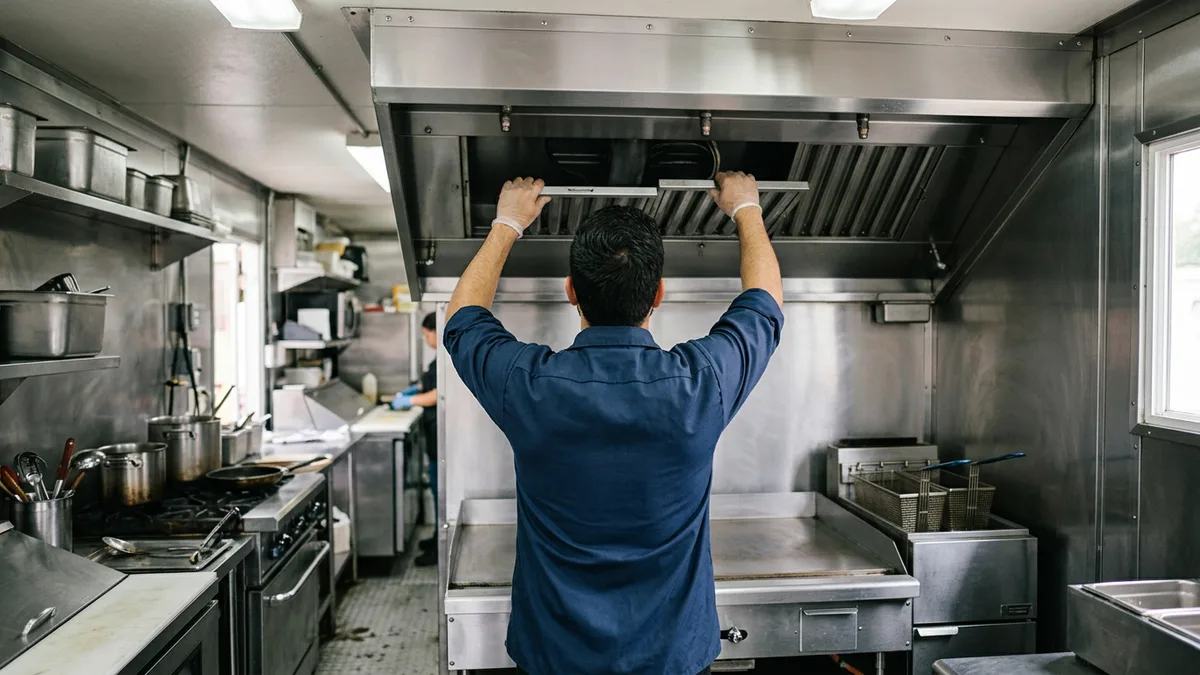
Fryers get their own attention. Lenexa’s checklist calls for a Class K extinguisher where a deep fryer is in use and at least 16 inches between the fryer and surface flames next to it, while Snohomish County wants a tight, heat-resistant cover locked on for travel. Hot oil and a pothole. You can picture why.
Many of the same questions show up on a brick-and-mortar kitchen, and we go through those in how to start a restaurant.
Build Two Budgets, Not One
Keep one-time costs and monthly costs on separate pages. Blend them and your startup number looks finished when it isn’t, because the bills that repeat never stop arriving.
One-time: the truck, the conversion or repairs, kitchen equipment you add, plan review and permit fees, wrap and graphics, your first food order, a point-of-sale system, and deposits. Monthly: commissary and parking, insurance, fuel, propane, generator service, event fees, payment processing, payroll, and hood cleaning when it comes due.
DoorDash lists commonly cited ranges of $400 to $1,200 a month for commissary and parking and $200 to $400 a month for general liability and commercial auto insurance, without naming a source. Call two commissaries and an insurance agent, and replace those figures with your own. It takes an afternoon.
Also, plan on slow weeks. A rained-out festival still has a truck payment, a commissary bill, and spoiled food behind it, and winter in a northern city can take out a whole season of street sales unless you’ve got catering lined up. Set aside a reserve before the truck, not after it. Weather doesn’t negotiate. No published number tells you how big, because that depends on your menu and your weather.
Thinking about a bigger vehicle with no kitchen at all? We walk through that very different startup in how to start a box truck business, and its costs look nothing like these. Hauling freight in a tractor-trailer is another thing again, and how to start a trucking company in 2026 covers it.
Paying for the Truck and Kitchen
We finance equipment, so read this section knowing that. Savings may be all you need, particularly for a used truck that already passes, and a first truck bought with no debt has less to carry through a slow winter.
Look at SBA programs next. Be fair to them, too. In the SBA 7(a) program, the agency doesn’t lend directly: it backs part of a loan made by a lender, and that government backing is why an SBA loan can be among the most competitively priced options a small business will see. It also takes good business and personal credit, a solid plan, and time, with no certainty at the end of it. The SBA says borrowers must be creditworthy and show a reasonable ability to repay, and it lists machinery and equipment among the uses.
SBA microloans are smaller and made through nonprofit, community-based lenders, with a program limit of $50,000 and an average of about $13,000. That average won’t buy a truck on any range in the table above. It might cover part of a kitchen.
Equipment financing is the other common route, typically secured by the equipment itself, and we explain how it can sit beside an SBA loan in equipment financing alongside an SBA loan. It can cost more than SBA money. So an owner weighs a higher cost against the chance that the truck they’ve inspected, in a county that’ll accept it, gets sold while they wait. Sometimes paying more is worth it. Sometimes waiting is. Nobody but you can price that opportunity.
Lenders commonly ask a new business for a quote or bill of sale, the truck’s VIN and title details, formation documents, the owner’s credit and background, and a plan. Whoever you talk to, ask these:
- Does this cover the vehicle and the kitchen together, or only the chassis?
- Private seller. Does that change the paperwork?
- What’s the total of every payment, plus anything due at the end?
- Is the UCC-1 filing on the truck alone, or on everything your business owns?
If you already run a kitchen and you’re adding a truck, the questions change a little, and restaurant equipment financing is a closer fit for what you own today.
Questions Owners Ask Before Buying a Truck
Can a food truck run out of a home kitchen?
Short answer: plan on no. Fort Worth says personal homes aren’t permitted businesses for its wrapped-food trucks, and Snohomish County requires every mobile unit to have a commissary kitchen. Rules vary by county, so ask your own health department before you assume anything, in either direction.
How long do food truck permits usually take?
Thirty-seven business days was the average across 20 cities in the Chamber Foundation’s 2018 study, covering every procedure. Today’s single-agency numbers are shorter pieces of that: up to 20 business days for DuPage County’s review, and a 30-day response goal in Snohomish County. Your clock starts when your file is complete, not when you first call.
Truck or trailer for a first-time owner?
Wrong starting point, slightly, since your menu and your stops should pick. A trailer usually costs less but needs a tow vehicle, somewhere to unhitch, and room to set up. A truck drives up and opens the window. Street service with frequent moves tends to favor the truck, and a long stay at one spot can suit the trailer.
What’s the cheapest honest way to test a food truck idea?
Renting a truck, or a shift in someone else’s, tests the idea before you own anything, though WebstaurantStore puts a lease around $2,000 to $3,000 a month and Escoffier estimates rent at $3,000 to $5,000. Catering a few events through a licensed kitchen is a smaller test, if your county allows it. Sell the dish first. Buy the truck second.
Will a food truck actually make money?
Some do, and the public numbers won’t tell you whether yours will. Most margin figures online carry no source, so build your own: price the menu, count what you can realistically sell per service, subtract food, labor, and the monthly budget, then see how many service days you need. If that count looks silly, change the menu before you buy.
What do lenders look at when a food truck has no sales yet?
Three things, mostly: the truck’s value as collateral, the owner’s background and credit, and whether the plan holds up. Food service experience helps a lender read that plan. Each one weighs these its own way, and our page on how lenders review a new business goes through the documents to prepare.
What to Do This Week
Write the menu on one page. Then call your county health department and ask for its mobile food plan review packet and its list of approved commissaries, and call the fire marshal for their checklist. That’s two calls and no deposit. Once you know which truck can actually pass, see how financing a truck and its kitchen works, or start an application when you’ve got a real quote in hand.