
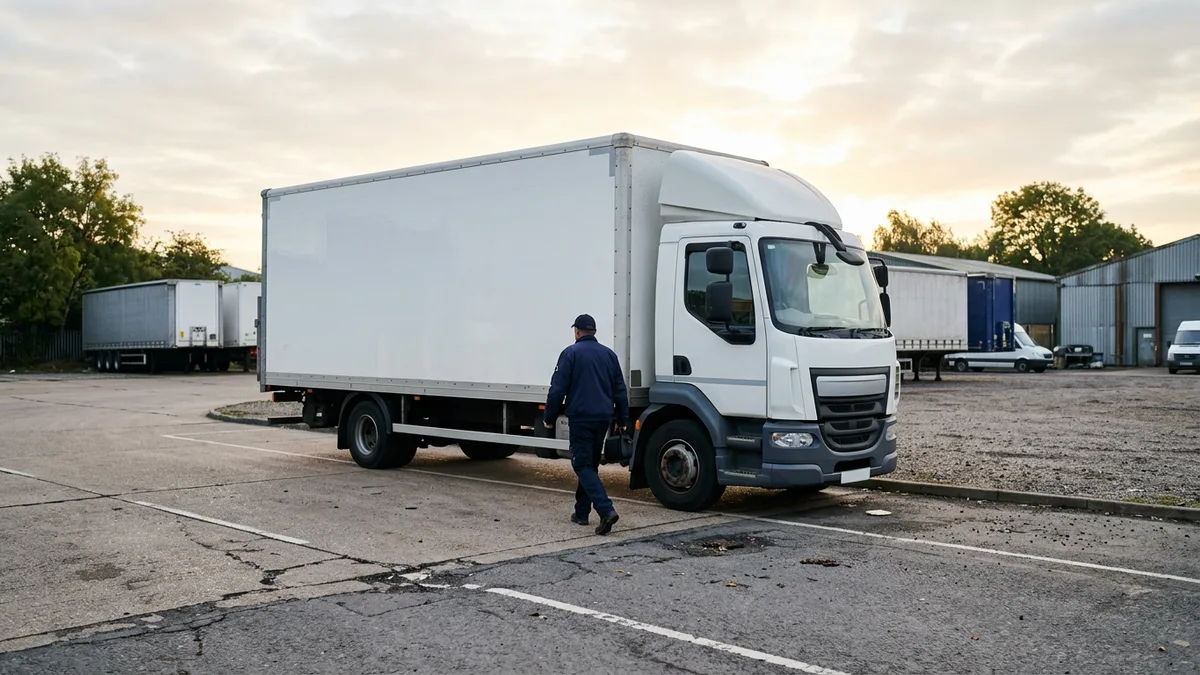
How to Start a Box Truck Business: Contracts, Costs and Your First Truck

Key takeaways
To start a box truck business, you register with FMCSA if you haul for hire across state lines, insure the truck, buy or lease it, and sign your first customer. The order matters more than the speed.
- Hauling for hire across state lines takes a USDOT number and operating authority. Staying inside one state can change both.
- Get the insurance quote before you pick a truck.
- A contract settles who pays when something goes wrong, so read that clause before the rate.
- Financing is one way to pay for the truck, and renting first is another.
If you’re working out how to start a box truck business, the obvious first move is shopping for a truck, and it’s usually the wrong one. The truck is the biggest purchase, but the registrations, the insurance and your first customer’s contract decide whether it can earn anything. They come first. Here’s the order, the costs we could source and date, and where box truck financing fits in.
What a Box Truck Business Is
A box truck business moves other people’s goods for a fee in a straight truck, a single vehicle with an enclosed cargo box mounted behind the cab. The work ranges from local deliveries and moves to freight between states. The registrations you need depend on which of those you do, and where.
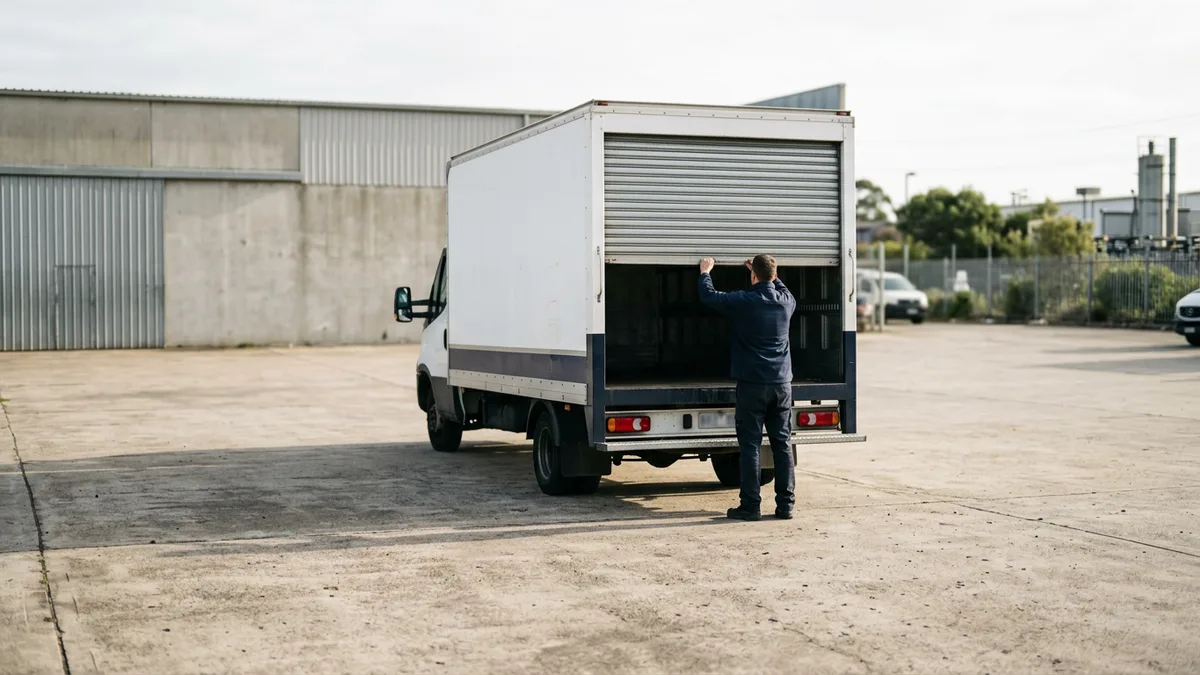
Two federal ideas matter here. One is the USDOT number, which the Federal Motor Carrier Safety Administration (FMCSA) requires for a vehicle rated at 10,001 pounds or more that’s used in interstate commerce, and plenty of full-size box trucks sit above that rating. The other is operating authority, the MC number. It’s a separate thing.
| Your own goods, or one state | For-hire freight across state lines | |
|---|---|---|
| USDOT number | The federal rule is for interstate work, but many states ask for one anyway | Required at 10,001 pounds or more |
| Operating authority | Not needed to carry your own cargo | Required for regulated freight |
| UCR registration | Not for one-state operators | Required |
| Insurance on file with FMCSA | Set by your state and your customers | Filed by your insurer |
Some states want a USDOT number even when you never cross a line. FMCSA’s page lists them. Check yours first.
Registering a Box Truck Business
Here’s the sequence for a for-hire carrier working across state lines. Exempt? Read the first two steps anyway.
- Form the business with your state, then get an employer identification number (EIN) from the IRS. An LLC or corporation comes first, the EIN second. Ask an attorney or accountant which structure suits you, because it changes your personal liability.
- Apply to FMCSA through its Unified Registration System. A new applicant gets a USDOT number and, with authority, an MC number.
- Pay $300 for each type of operating authority. FMCSA’s OP-1 instructions say the fee isn’t refunded once the application is accepted, even if it’s denied or dismissed.
- Have your insurer file the BMC-91 or BMC-91X. File the BOC-3 yourself or through a process agent, who accepts legal papers on your behalf in each state. Both are due within 90 days of the day your application appears in the FMCSA Register. Miss that window and the application is dismissed. The $300 is gone.
- Register with the Unified Carrier Registration plan if you run interstate. For one to two vehicles, the 2027 fee is $46.
Step four is why the quote comes first. The insurer files the paperwork, and under 49 CFR 387.9 the federal minimum financial responsibility is $750,000 for a for-hire carrier of nonhazardous freight in a vehicle rated 10,001 pounds or more. Quote before truck.
Weight sets one more rule. A single vehicle rated 26,001 pounds or more puts the driver in commercial driver’s license Group B, and below that, weight alone doesn’t, which is the line our guide to what a box truck costs walks through in detail.
What It Costs to Start
Every figure here has a source and a date. Anything we couldn’t source stays out.
| Line | Figure | Source and date |
|---|---|---|
| Used truck, 14 to 16 feet | $17,950 to $43,997 asking | Dealer listings, October 28, 2026 |
| New truck, 14 to 16 feet | $59,900 to $104,360 listed | Dealer listings, October 28, 2026 |
| Operating authority | $300 for each type | FMCSA OP-1 instructions |
| UCR, one to two vehicles | $46 | UCR plan, 2027 year |
| Insurance | Get quotes | $750,000 federal minimum |
There’s no total. The truck and the insurance quote swing it too far to add up honestly. A guess isn’t worth printing.
$2.336
the industry-average cost per mile to operate a truck in 2025, up 3.4 percent from 2024. It comes from a survey of trucking companies in general, not box trucks, so treat it as a benchmark and not your number.
Source: American Transportation Research Institute, Operational Costs of Trucking 2026 Update, July 15, 2026
Notice what’s missing: a dollar figure for insurance. The sourced numbers we found are industry-wide and per mile, so they can’t tell you what your truck will pay. Only a quote does.
Contracts to Read Before You Sign
Work reaches a one-truck owner in a few ways. A business that ships often might offer a standing arrangement, a broker might offer one-off loads, and a delivery company might hand you a contractor agreement. Each one comes with paper, and the rate on page one is the least interesting part.
A rate per mile means little until you know your own cost per mile. The industry figure above isn’t yours. Build yours from the insurance quote, fuel, repairs and any truck payment. Do the math first. Then hold every offer up against it.
- Cargo liability. Under the Carmack Amendment, 49 U.S.C. §14706, a carrier is liable for the actual loss or injury to the goods it carries, though a written agreement can cap that at a reasonable declared value. Find the cap. The statute also bars a claims window shorter than nine months.
- When do you get paid, and what proof of delivery do they want?
- Waiting time. If the dock holds your truck for two hours, does anyone pay for them?
- The insurance certificate. Customers often ask for one naming them, and some set limits above the federal minimum.
- How either side ends it, and on how much notice.
Have an attorney read the first contract you sign. It’s an hour well spent. Every later one will look like it.

Your First Truck
The truck comes last in the sequence, not last in importance. Weight first. Read the rating on the label, then decide new or used from dated listings instead of a round number, which is what our box truck price guide is for.
If it’s used, buy the condition, not the model year. Climb into the box with a flashlight. Check the floor, the door seals and the rear door tracks, plus the liftgate if there is one. Look for daylight overhead. Then get underneath and look at the frame rails, the brakes and the springs, because an hour of a mechanic’s time is cheap next to a surprise.
Private sellers add paperwork. Look for three things: a title in the seller’s name, any lien noted on it, and a UCC search that shows whether a lender filed a financing statement against the truck. A lender that holds a claim may still hold it after you pay the seller.

Renting is a real option, too. Try before you buy. A few jobs on a rental teach you your routes, your customers’ dock times and your fuel use before you sign for a truck.
Where Financing Fits
We finance equipment, so weigh this section with that in mind. Cash might serve you better. So might a rental, or equipment leasing, which is a separate contract with its own end-of-term rules.
A lender reads a truck by its vehicle identification number, its title, its weight rating and the work it will do, and for a new business it also reads the owner’s background and the plan, because there’s no history yet to go on. Our page on how lenders review a new business covers that side. Some lenders finance trucks for new businesses and some don’t. Terms differ. Ask each one directly.
A truck from a private seller changes the paperwork again, and our page on used equipment financing covers it. Whichever way you pay, one rule holds. Get the insurance quote first.
What New Box Truck Owners Ask First
Does a box truck business always need an MC number?
Not always. Operating authority is for for-hire carriers working across state lines. FMCSA lists private carriers hauling their own cargo, carriers of exempt commodities and carriers inside a commercial zone as exceptions. Your state may still ask for its own registration, and a USDOT number can apply even without an MC number.
So what’s UCR, and does a one-truck owner pay it?
UCR is the Unified Carrier Registration, a yearly registration for carriers that operate across state lines. Operators who stay inside one state don’t register. For one to two vehicles the 2027 fee is $46. Brackets rise with fleet size.
Realistically, how long does it take to get authority?
FMCSA’s instructions give a sequence, not a date: the application, a protest period, the insurance and process-agent filings, then the grant. The one deadline in it is yours, 90 days to get both filings in. Guides quote different times. Plan around the steps.
How do you check a used box truck from a private seller before paying?
Three checks. Match the title to the seller’s name, look for a lien noted on it, and run a UCC search for a financing statement against the truck. Then have a mechanic look at the frame, the brakes and the box.
Who pays when the cargo is damaged?
49 U.S.C. §14706 is the rule for interstate freight: the carrier is liable for the actual loss or injury to the goods it carries, though a written agreement can cap it at a reasonable declared value. That’s why the cap in your contract matters. Read the cap before you accept the load.
Next Steps
If the truck is your next step, read how financing a new or used box truck works, then see what equipment financing at Paramount Financial covers for other kinds of equipment.