
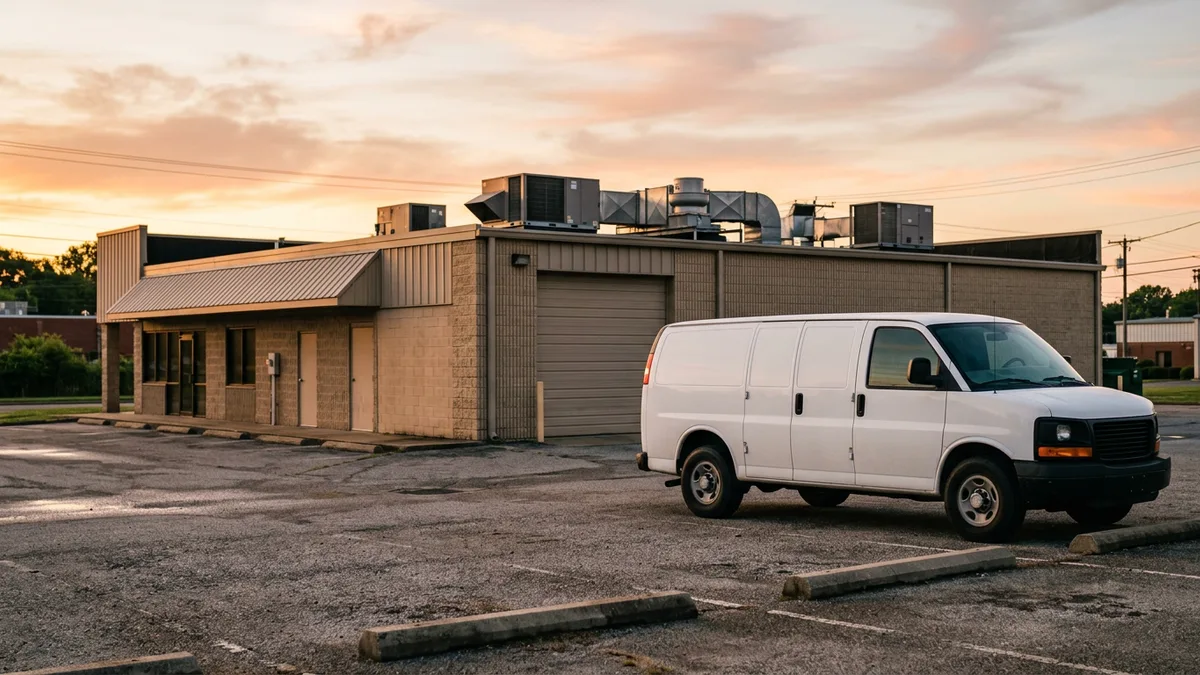
Last updated: November 3, 2026
HVAC Equipment Financing for Service Contractors
Loan or lease for service vans, tools and diagnostic gear, with the payments planned around your busy season.
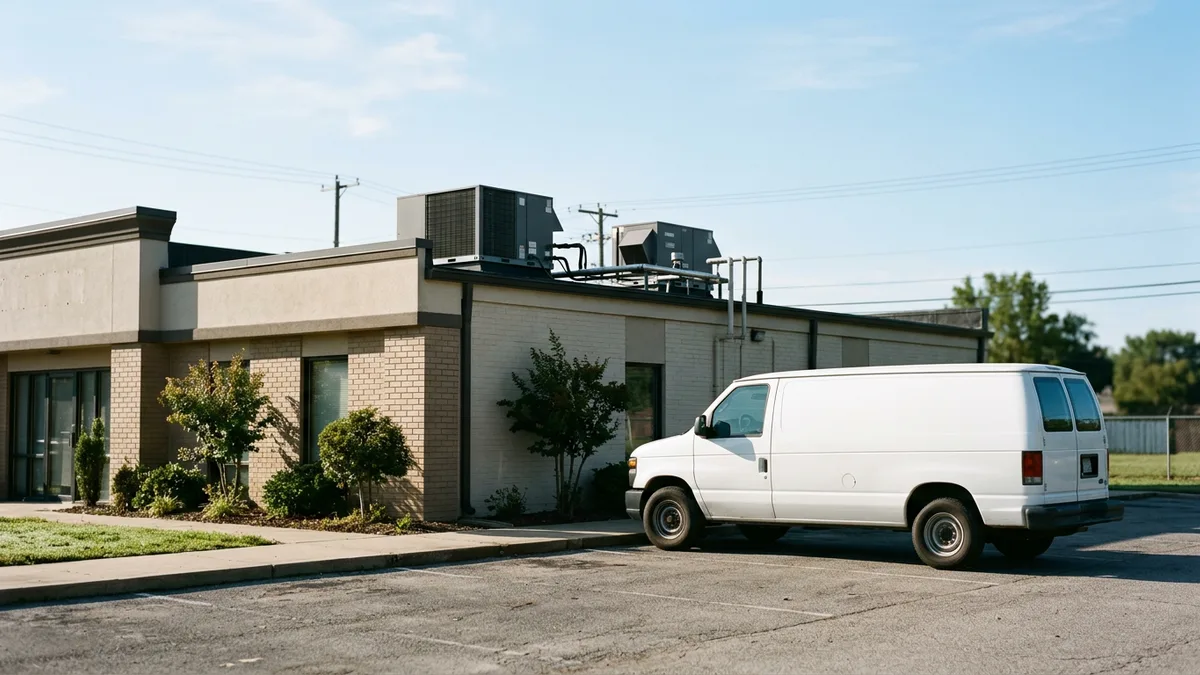
HVAC equipment financing lets a service contractor pay for a van, a recovery machine or diagnostic tools over time, through a loan or a lease. The best structure depends on how long each piece earns its keep.
An HVAC company doesn’t earn its money in the office. The truck is the shop, the warehouse and the billboard. This page sits under our guide to equipment financing by industry and covers the contractor side, meaning the vans, the tools that ride in them and the calendar that sets the budget. Homeowners shopping for a new furnace need a different page.
Below: how a lender reads a van, what else goes on the list and what to have ready. Prefer to talk it through? Talk to Paramount Financial’s team. Fine by us.
Service vans and trucks, from the chassis to the shelving
A technician’s day starts in the van and ends there too. The Bureau of Labor Statistics says HVAC technicians travel to each site, making service calls, which means one thing for the money: a van that’s down is a crew that isn’t billing, and nobody’s covering that gap but you.
The vehicle itself
A cargo van, or a pickup with a service body, is a titled vehicle. VIN, registration, a lienholder line on the title. Lenders can value one. Step vans and box trucks follow the same logic and live on our box truck financing page, while commercial vehicle financing covers vehicles of every size, from a half-ton pickup to a straight truck with a lift gate.
The build-out
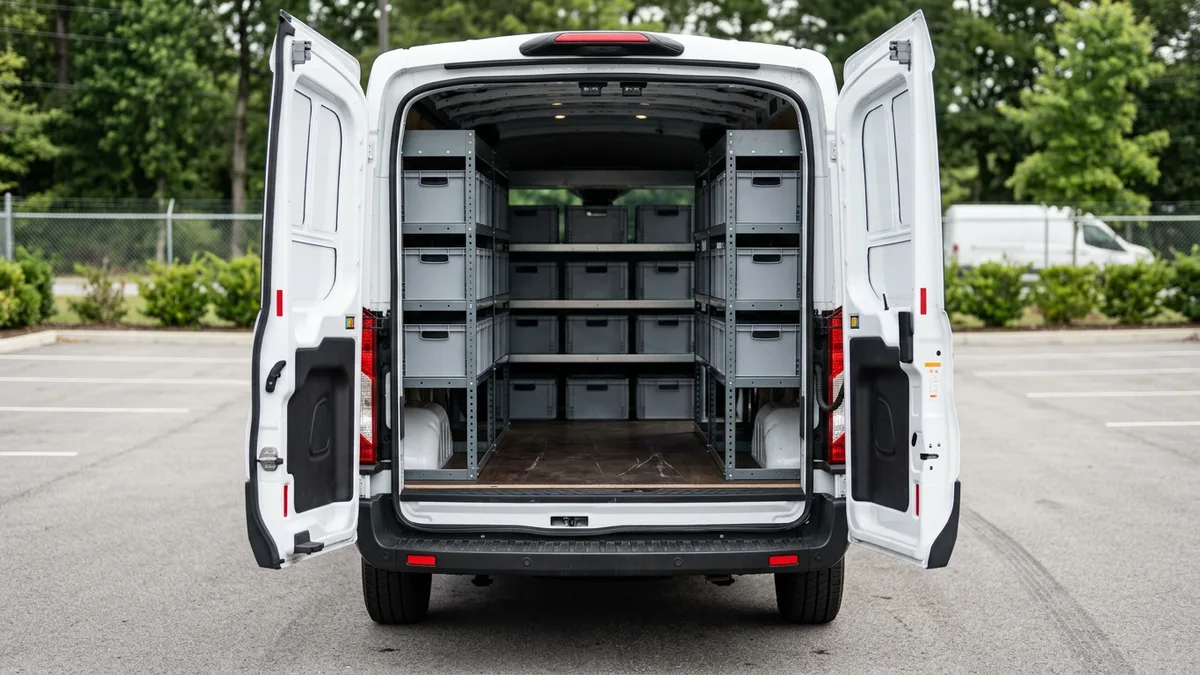
Shelving, bins, ladder racks, a partition. That’s the rolling shop. It often comes from a separate upfitter on a separate invoice, so ask early whether the van and the build-out can ride on one request, because funding the bare van one way and the shelving another is a headache nobody needs.
What HVAC equipment financing covers beyond the van
The list runs longer than the truck. Much longer. A service company buys a van once, then spends years filling it (and yes, the ladder rack counts).
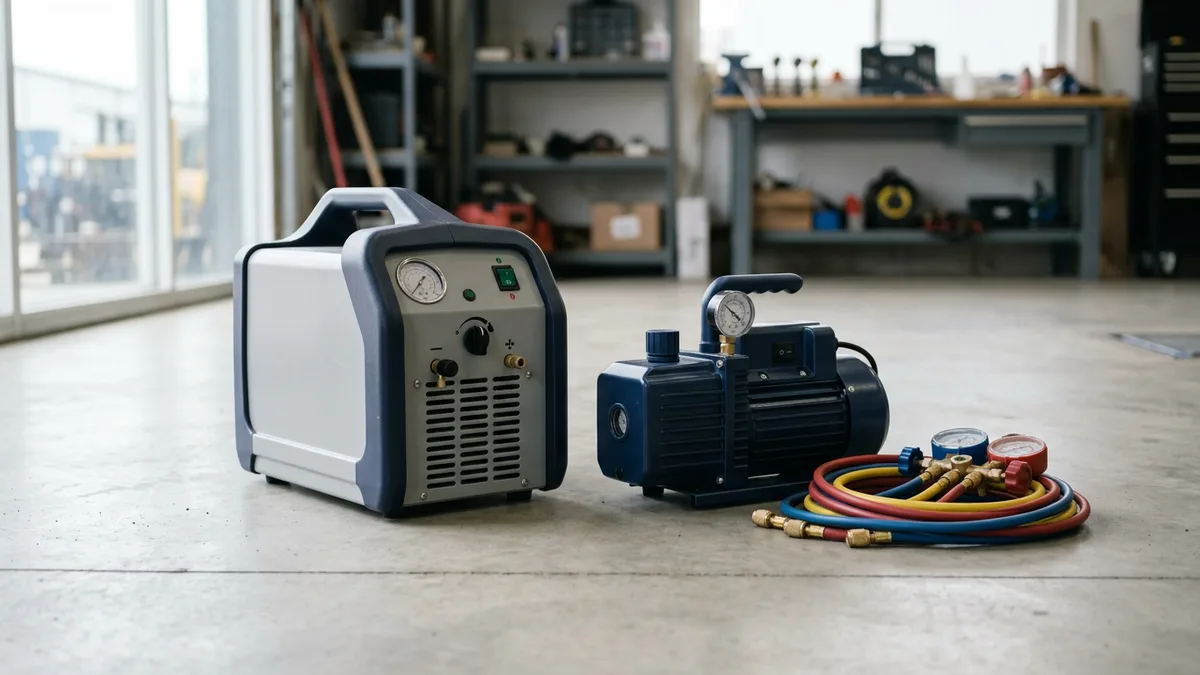
Small tools add up fast. Group them with the bigger machines on one quote, so the paperwork reads as a single purchase and not ten receipts from ten supply houses, each with its own date and its own total. A lender can follow a serial number. A drawer of loose wrenches is harder.

Buying used: vans, trucks and tools
A used van can be the sensible buy. It does change what a lender looks at, though. The odometer talks. There’s no new-vehicle sticker to measure against, so mileage, age, condition and service history carry the weight, and the seller matters too, because a dealer, an auction house and a private party each hand over a different stack of paperwork.
What to have ready
Open the rear doors and look at the floor. Check where the shelving bolts through. Rust hides there.
Then price the whole picture: the purchase, the repairs, the build-out, and the days a tired engine keeps the van off the road. A cheap van that lives at the mechanic isn’t cheap. Run both numbers. Our guide to used equipment financing goes deeper on older units.
The HVAC year and the payment calendar
HVAC work doesn’t show up evenly. The Bureau of Labor Statistics notes that technicians sometimes work overtime or irregular schedules during peak heating and cooling seasons. A payment doesn’t care what the thermostats are doing. Look at the calendar first, then pick the structure.
Spring tune-ups
Cooling tune-ups and early installs. A van that arrives now is on the road before the rush.
Summer cooling peak
The calls stack up. A van on the road earns. A van in the shop doesn’t.
Fall tune-ups
Heating checkups and furnace swaps. Revenue can run thin while crews wait for the cold.
Winter heating peak
Cold snaps bring emergency calls. The oldest vehicle in the fleet takes the most strain.
Dark rule: a peak season. Light rule: a shoulder season. The timing shifts by region, so mark your own.
Ask what payment schedule fits that rhythm, and bring twelve months of numbers, not only the busy ones. A lender looking at a slow October wants proof you planned for it, and you can’t show that with a summer-only spreadsheet that quietly leaves out the three months when everyone’s cash is tightest. Nobody enjoys a payment landing in a month with no calls. Plan for it.
HVAC equipment financing structures compared
A fair market value lease prices the buyout at whatever the equipment is worth when the term ends, and the business can return it, renew it or buy it. That suits diagnostic gear that technology replaces on a cycle. A loan or an equipment finance agreement suits the van you plan to drive for years.
| Structure | Who owns it during the term | At the end of the term | Where it tends to fit |
|---|---|---|---|
| Fair market value lease | The lessor | Return it, renew it or buy it at its then-current value | Diagnostic gear and tools replaced on a cycle |
| $1 buyout lease | Structured so the business keeps it | The business keeps it for a nominal payment | Recovery machines and shop equipment you’ll run for years |
| TRAC lease | The lessor, with a residual value set up front | Buy it at that residual, or sell it and settle the difference | Service vans and trucks |
| Loan or equipment finance agreement | The business, with the lender holding a security interest | Already the business’s once the balance is paid | Vans you plan to keep, and units you may trade in |
Whichever you choose, the lender will usually file a UCC-1 financing statement to record its interest. Read what it lists. One van by its VIN is a very different thing from every asset the business owns, and the difference shows up the day you want a second loan or a bank asks what’s already pledged. Ask early.
The HVAC trade, in numbers
440,900
jobs held by heating, air conditioning and refrigeration mechanics and installers in 2025
11%
projected growth in those jobs from 2025 to 2035, much faster than the average for all occupations
Source: U.S. Bureau of Labor Statistics, Occupational Outlook Handbook: job outlook, 2025 to 2035
$2,560,000
the maximum Section 179 deduction for tax years beginning in 2026
Section 179 limits change by tax year. Consult your tax advisor before you choose a structure for tax reasons.
What to line up before you apply
Pages to read next
Questions HVAC contractors ask before they finance equipment
Should an HVAC contractor lease or buy a service van?
Short answer: it depends on how long the van stays on the road and who pays when it breaks.
A van you’ll drive for eight years usually belongs on a loan or an equipment finance agreement, because the payments end while it’s still earning and the repair bills are yours either way. A lease with a fair market value buyout suits the company that rotates vehicles before the repairs climb. Watch the mileage limits and the wear charges on any lease. Have your accountant run both.
What counts as HVAC equipment you can finance, beyond the van?
Think in three layers: the vehicle, the tools that ride in it and the equipment in the shop.
The vehicle includes its build-out. The tools run from recovery machines and vacuum pumps to gauges and leak detectors. The shop side is benders, brakes and fabrication gear. Anything with a serial number is easy to list on a quote, and the small consumables belong in your cash-flow budget instead.
How do lenders look at a used service van or truck?
A used van gets judged on its history, not its sticker.
A new van has a published price to check against. A used one has a VIN, an odometer and whatever the seller kept in the glovebox. The lender reads all of it, along with who’s selling and how the van was serviced, and a gap anywhere can stall the request while someone hunts for the missing page. Records matter.
How does seasonal work change an HVAC equipment financing request?
The better question is how the quiet months look next to the loud ones.
A lender reading twelve months of income sees the summer and winter peaks and the dips around them, and the shape of that year says more about the payment than any single month does. Bring all of it. A base of service agreements or steady commercial work can smooth the picture, and it’s worth saying so up front. Ask what payment schedule fits your calendar before you sign anything.
What slows down an HVAC equipment financing request?
Mismatched documents, mostly, and they’re avoidable.
The dealer quote lists one trim level and the invoice lists another. The business name on the application isn’t the one on the registration. A VIN is missing, or the seller can’t be reached. Each mismatch costs a phone call, and the phone calls add up.
Can an HVAC contractor deduct a van or tools it leases or finances?
Sometimes, and the answer depends on the structure of the deal, the vehicle and the tax year.
The IRS explains how business property is depreciated in Publication 946 (2025), and Form 4562 is where the Section 179 election is made. For tax years beginning in 2026 the maximum is $2,560,000, reduced once equipment placed in service passes $4,090,000. Those limits change by tax year, so check irs.gov for the year you’re filing and consult your tax advisor before you choose a structure for tax reasons.
Vehicles follow their own rules, which our guide to Section 179 and business vehicles walks through.
Can the shelving and racks go on the same quote as the van?
That depends on the lender and on how the upfitter writes the quote.
Vans often arrive from a dealer and get their shelving, racks and partitions from a separate upfitter. That’s two invoices for one working vehicle. Ask whether both can go in a single request, and get the upfitter’s quote in writing with the van’s VIN printed on it, because a quote nobody can match to the title is a quote that stalls.
Have an HVAC equipment quote in hand?
Send the van or the tools, who’s selling and when you need them working, and Paramount Financial’s team will reply. Prefer the application? Start your application online.