
Section 179 Deduction for Vehicles: Work Trucks, Vans and SUVs (2026 Tax Year)

Key takeaways
The Section 179 deduction for a vehicle turns on its weight rating, its body, and how much it’s used for business. Heavy SUVs are capped at $32,000 for 2026; some work trucks and vans fall outside the cap.
- For heavy SUVs, the test is the manufacturer’s gross vehicle weight rating, not what the vehicle weighs empty.
- A pickup bed of six feet or more can take a truck outside the SUV cap. A shorter bed can’t.
- More than half the miles have to be business miles, and the log is your proof.
- A true lease keeps the vehicle on the lessor’s books, so read the end-of-term clause before you count on anything.
Six feet. That’s how long a pickup’s cargo bed has to be before the Section 179 cap for SUVs stops applying to the truck.
Three things decide the rest. Weight. Body. Business miles. Miss on one and the truck you were counting on lands under a $32,000 cap for 2026, or outside Section 179 entirely.
This page picks up where our Section 179 deduction guide leaves off for vehicles. Everything here is for tax year 2026, with the IRS sources linked and your tax advisor as the last word. Fair warning: Paramount Financial finances equipment, so we’re not neutral on whether you buy a truck. Cash buyers face the same vehicle rules. So do borrowers.
How the Section 179 Deduction Treats a Vehicle
The Section 179 deduction is an election that lets a business expense the cost of qualifying property in the year it’s placed in service, instead of depreciating it over several years. You make the election on Part I of Form 4562, filed with the return for that year. Nobody does it for you.
The rule is 26 U.S.C. § 179, and IRS Publication 946 explains how it works in practice. A vehicle has to clear three tests on top of the usual ones. The business must have bought it, which § 179(d)(1)(C) calls “acquired by purchase.” It must be placed in service, meaning ready and available for a specific use, by December 31st for a calendar-year business. And the work miles have to beat everything else. Miss one and it’s out.

Weight and Body Decide the Rules
Start with the gross vehicle weight rating, the maximum loaded weight the manufacturer assigns the vehicle. It isn’t curb weight. It isn’t what the truck weighs on a scale this morning, either, and a listing can show either number. Check which one you’re reading.
The 6,000-pound line comes from § 280F(d)(5), which judges a car by its unloaded gross vehicle weight and a truck or van by its gross vehicle weight. At or under the line, the IRS calls it a passenger automobile and sets yearly dollar caps on its depreciation, Section 179 included, while over the line, up to 14,000 pounds, a vehicle built to carry passengers counts as an SUV for this purpose and § 179(b)(5) caps the cost you can expense. Box trucks run from van-chassis models to 26-footers, which is why how much a box truck costs starts with the same weight rating.
| Vehicle | Rule that applies | For 2026 |
|---|---|---|
| Car or small SUV, 6,000 lbs or less | Passenger automobile limits | Yearly dollar caps |
| SUV, over 6,000 to 14,000 lbs | The SUV cap | $32,000 |
| Pickup over 6,000 lbs, 6-foot bed | A statutory exclusion | Outside the SUV cap |
| Enclosed van over 6,000 lbs, no rear seat | A statutory exclusion | Outside the SUV cap |
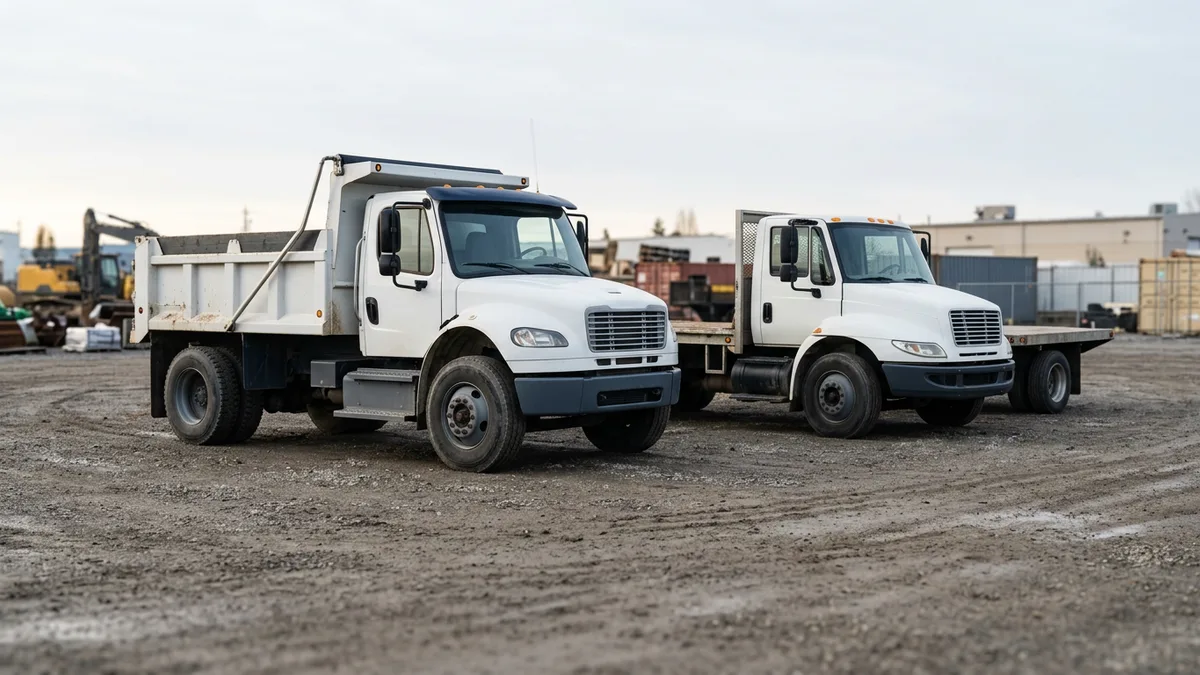
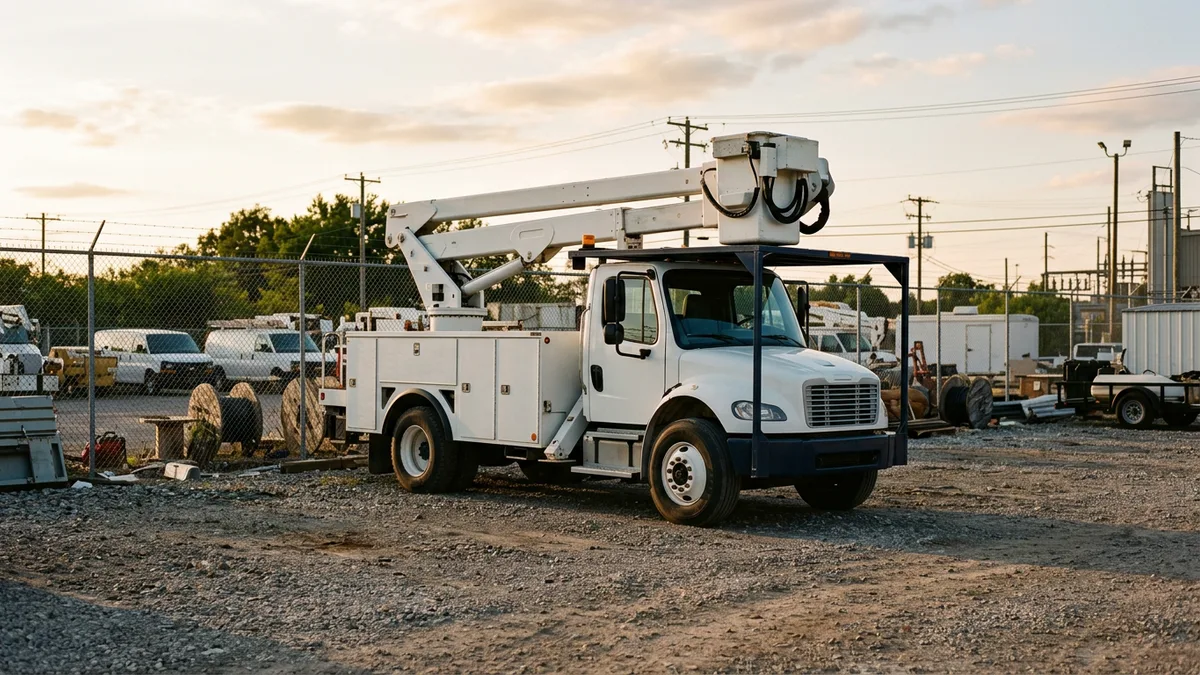
| Dump truck, flatbed, bucket truck | An excepted vehicle | Not listed property |
Two footnotes. A truck or van specially modified for work, with permanent shelving and a painted company name, can be a “qualified nonpersonal use vehicle,” and Publication 946 says those aren’t passenger automobiles. And “not listed property” means the extra log and recapture rules for vehicles don’t apply to a dump truck or flatbed, though Section 179 still wants more than half of the use in the business.
Now the number itself. Under § 179(b)(5), the cost of a sport utility vehicle that can be taken into account in a year can’t exceed a base amount, adjusted for inflation. For 2026 that’s $32,000. Not $31,300. That was 2025.
$32,000
The most an SUV’s cost can count toward the Section 179 deduction for vehicles placed in service in tax years beginning in 2026.
The cap limits one SUV. It doesn’t touch the rest of the year, since the overall limit for 2026 is $2,560,000 and it starts shrinking only once the year’s qualifying purchases pass $4,090,000.
Measure the Bed, Not the Badge
A heavy-duty badge on the tailgate doesn’t exempt a pickup from anything. The statute lists three exits from the SUV definition, and the vehicle has to match one of them on its own body.
- Seating for more than nine people behind the driver. Shuttle-style vans, mostly.
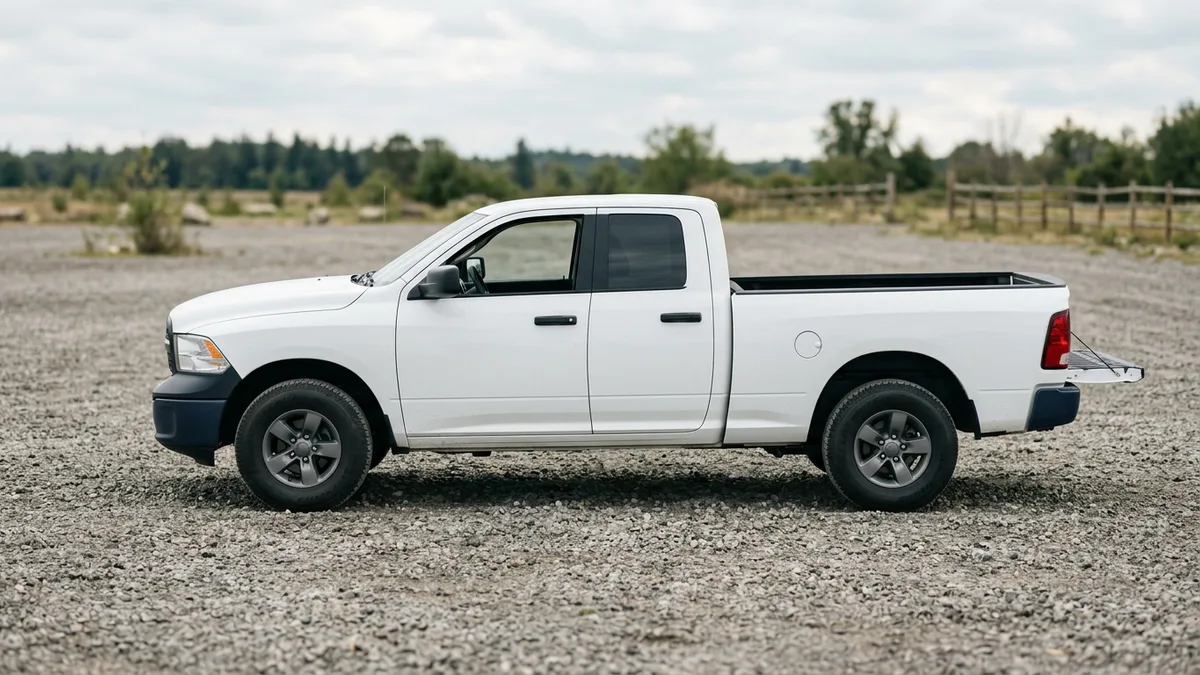
- A cargo area at least six feet long inside, open or covered by a cap, and not reachable directly from the passenger compartment. That’s the pickup rule, and “interior length” means what it says.
- A full enclosure around the driver and the cargo space, no seat behind the driver’s seat, and no body section sticking out more than 30 inches ahead of the windshield. That’s the cargo van.
So here’s the decision rule. If the pickup is rated over 6,000 pounds and its bed is under six feet, plan on the cap. A crew cab with a short box is the textbook case.
More Than Half the Miles, Plus Proof
The election needs more than 50% business use in the year the vehicle goes into service. Take 12,000 miles in a year, 9,000 of them for jobs: that’s 75%, and the deductible share follows it. The arithmetic is easy. The paperwork isn’t.
Commuting between home and a regular workplace isn’t business use. Publication 946 asks for adequate records instead, meaning an account book, diary or log plus receipts, showing the amount of each expense, the business and total mileage, the date and the business purpose. A daily log isn’t required. A record made at the time beats one rebuilt in March, though.
Keep the log. If business use falls to 50% or less in a later year, the excess depreciation, meaning what the earlier deductions exceeded what straight-line depreciation over the alternative period would have allowed, comes back as income and gets reported on Form 4797, Part IV. Same if the truck drifts into personal use. Start the log on day one.
Bought, Financed or Leased
Under Publication 946 a lessee can depreciate leased property only when it keeps the incidents of ownership, which is the IRS’s way of asking who really holds the vehicle, so the word on the cover of the contract doesn’t settle anything. Three structures, three different answers.
A Financed Purchase
Borrowing doesn’t change the buyer. Bought is what the statute asks for, and a business that finances the vehicle bought it. Your tax advisor should still read the agreement.
A $1 Buyout Lease
This one ends with the business buying the vehicle for a nominal amount. Many of these leases are treated as purchases for tax. Many isn’t all. Our guide to operating lease vs finance lease shows how the IRS, the accountant and the lawyer each test the same paper and can land in different places.
A True Lease
The lessor owns it. The business pays to use the vehicle, then returns it, renews it or buys it at fair market value, an option our page on the fair market value lease covers. On a true lease the business generally can’t elect Section 179, and its payments are usually treated as a business expense. Publication 463 covers a leased car’s own rules under “Leasing a Car.”
| Financed purchase | $1 buyout lease | True lease | |
|---|---|---|---|
| Tax owner | The business | Usually the business | The lessor |
| Section 179 election | Generally available | Often, per the contract | Generally not |
| Clause to read first | The purchase agreement | The buyout price | The end-of-term option |
Find the buyout line before the payment line. A nominal figure points toward a purchase, and “fair market value” points toward a rental. Our guide to leasing vs buying equipment covers the non-tax half of that choice.
Bonus Depreciation on the Rest of the Cost
Section 179 isn’t the only fast option. Under IRS Topic 704, qualified property acquired and placed in service after January 19th, 2025 gets a 100% special depreciation allowance, and that allowance is taken after any Section 179 deduction.
100%
The special depreciation allowance for qualified property acquired and placed in service after January 19th, 2025.
Source: IRS, Topic no. 704, Depreciation (reviewed September 24th, 2026)
Order matters. The part of a heavy SUV’s cost the cap leaves out can become a bonus depreciation question, and it’s one for your advisor. The 2026 table of passenger-automobile caps wasn’t on irs.gov when we checked on October 30th, 2026, and the latest one in Publication 946 covers vehicles placed in service in 2025, so ask your advisor for the current figures, because the first-year cap on a car or small SUV changes with every placed-in-service year.
A Checklist Before You Order the Truck
- Find the gross vehicle weight rating on the manufacturer’s label for the exact vehicle and write it down. A brochure isn’t the label.
- Pickup? Measure the bed’s interior length. Six feet is the line.
- Van? Count the seats behind the driver and look at the body ahead of the windshield.
- Write down the date the vehicle will be ready for its job, then add a week. A truck still waiting on a body or shelving build may not be ready and available.
- Start the mileage log the day the vehicle arrives.
- Hand your advisor the draft contract with the buyout or end-of-term clause marked, and ask how your state treats it.
Questions Owners Bring to Their Tax Advisor
Which SUVs clear the 6,000-pound line?
Only the manufacturer’s rating on the exact vehicle can say, and it can change with trim, drivetrain and model year. The line is a gross vehicle weight rating above 6,000 pounds and not more than 14,000. Read the label. Not a list.
Is a pickup with a short bed still under the SUV cap?
Usually, when it’s rated over 6,000 pounds and the bed is under six feet. The $32,000 cap for 2026 then applies unless another exclusion fits, and a pickup rated at 6,000 pounds or less falls under the passenger automobile limits instead.
Does leasing a work truck ever get Section 179 treatment?
Wrong question, slightly. The end-of-term clause matters more than the word “lease.” A true lease leaves the vehicle with the lessor, so the business generally can’t elect Section 179 on it, while a lease with a nominal buyout can be treated as a purchase for tax. Your contract and your tax advisor decide which one you have.
What happens if business use drops to half or less later?
Form 4797, Part IV. That’s where recapture gets reported. When a vehicle was used more than 50% for business in the year it was placed in service and falls to 50% or less in a later year, Publication 946 requires including the excess depreciation, Section 179 included, in income.
What counts as “placed in service” for a truck I order in December?
Short answer: ready and available for a specific use by December 31st, which is more than ordered, paid for or parked on a lot. A truck still waiting on its body or shelving in January may land on next year’s return. Build in time for delivery and setup.
Do commuting miles count as business use?
Not under Publication 946. It treats commuting between home and a regular workplace as personal. Only business trips count toward the percentage, and the log should show each trip’s purpose and mileage. Ask your advisor how your own routes are treated.
This article is educational. It isn’t tax, legal or accounting advice, and the rules depend on your facts, so consult your tax advisor before you rely on any figure here. The figures are for tax year 2026 and come from the IRS.
Next Steps
Pricing a truck or a van? Our page on commercial vehicle financing is where we start, and you can see how Paramount Financial finances equipment or talk to our team with the quote in hand. Bring the vehicle’s weight rating and the draft contract. The rest is your advisor’s call.