
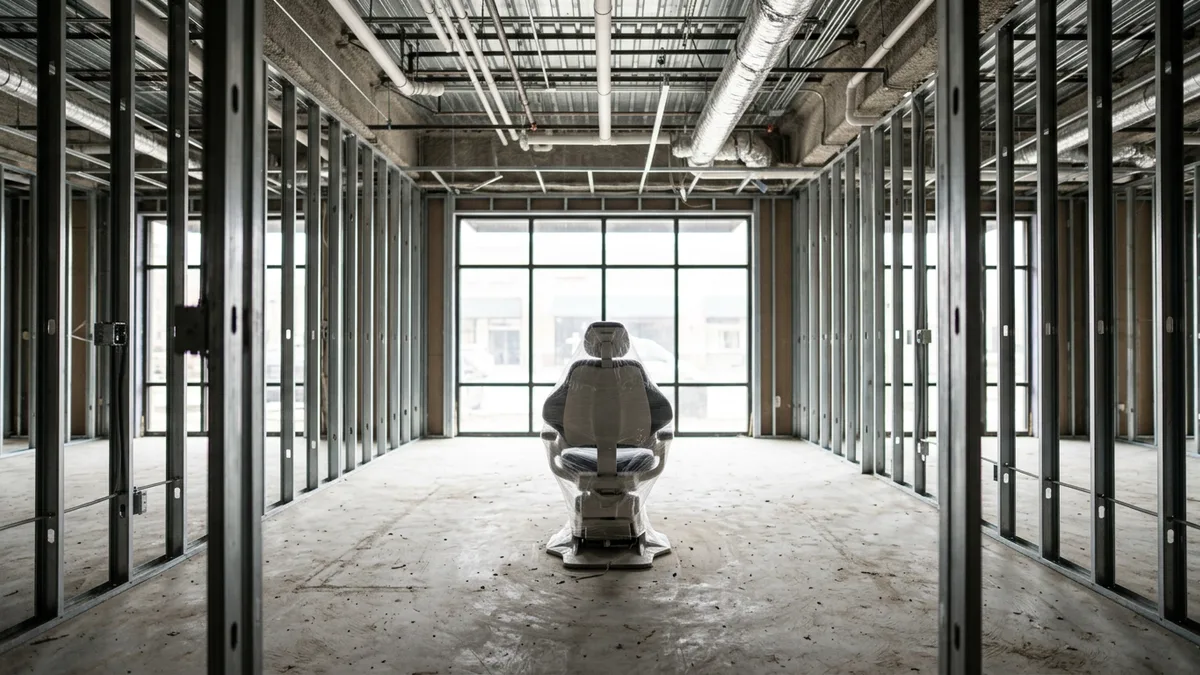
How to Start a Dental Practice: Operatory Equipment and Startup Costs

Key takeaways
How to start a dental practice comes down to order: license, entity and lease first, then the room’s utilities, then chairs and instruments, with every cost priced from quotes rather than from a published average.
- Air, water, vacuum, and drain lines go in before the first chair. Chairs can be added later.
- Published startup totals disagree, so build yours from a contractor’s quote and an itemized equipment list.
- One chair package, two listings, two very different prices.
- The sterilizer and the amalgam separator both come with rules.
- State paperwork can set your opening date before the equipment does.
A dental treatment room runs on five utilities: compressed air, water, vacuum, a drain, and electrical power. All five get built into the space before the walls close, and the chair is bolted down afterward. That order is the core of how to start a dental practice, and it shapes the budget as much as the equipment list does.
This guide follows that order: licensing, the lease, what goes behind the walls, the equipment, then payment. Every figure carries its source and date. Paramount Financial finances equipment, so we have a stake in the financing section, and you should read it with that in mind. Our page on dental equipment financing covers loans and leases for dental chairs, imaging, and digital systems.
How to Start a Dental Practice in Order
- Confirm your license is current in the state you’ll open in, and read that board’s rules for a new office.
- Form the entity with a dental attorney and an accountant, and ask who is allowed to hold ownership in your state.
- Write the plan with one-time costs and monthly costs on separate lines.
- Sign a lease only after the zoning, the utility plan, and a build-out quote all hold up.
- Build out the space with lines roughed in for every room you’ll want within three years.
- Buy and install equipment for the rooms you’ll staff this year.
- Register and insure: your NPI, any state radiation registration, malpractice coverage, and credentialing with the dental plans you’ll accept.
- Set up software, written safety plans, and staff, then open.
Steps four through six overlap. A quote in step six can send you back to the plan in step three. Expect that. Several of these filings run on waiting periods set by the agency that handles them, so ask each one for its current timeline before you promise a landlord, a contractor, or a patient an opening date.
Start From Scratch or Buy an Existing Practice
A de novo practice is a dental startup in an empty suite: the dentist picks the location, the layout, and every piece of equipment, then builds a patient base from zero. Buying an existing practice reverses the trade, with patients, a working office, and its equipment already in place.
72.5%
of U.S. dentists were private practice owners as of 2023, down from 84.7% in 2005, according to the ADA Health Policy Institute.
Source: American Dental Association, Health Policy Institute, Dental Practice Research, 2023 data
The same ADA page counts 135,665 dental practice establishments nationwide, from the Census Bureau’s 2023 County Business Patterns, and puts 16% of dentists in a dental support organization as of 2024. It also says affiliation with large group practices keeps growing, most of all among early-career dentists.
That’s the backdrop. Starting from scratch asks the most planning of you and gives you the most control, while a purchase gets you patients sooner but leaves you inspecting the equipment the way a used-equipment buyer would, one machine at a time. Joining a group as an associate first puts the decision off. That’s a legitimate answer too.
What Sits Behind a Treatment Room’s Walls
Floor space isn’t enough. A treatment room needs compressed air for the handpieces, water, a vacuum line, a drain, and electrical service for the chair and the light. Those lines usually reach the chair at a junction box, which is why the catalog package priced below lists a junction box with regulators.
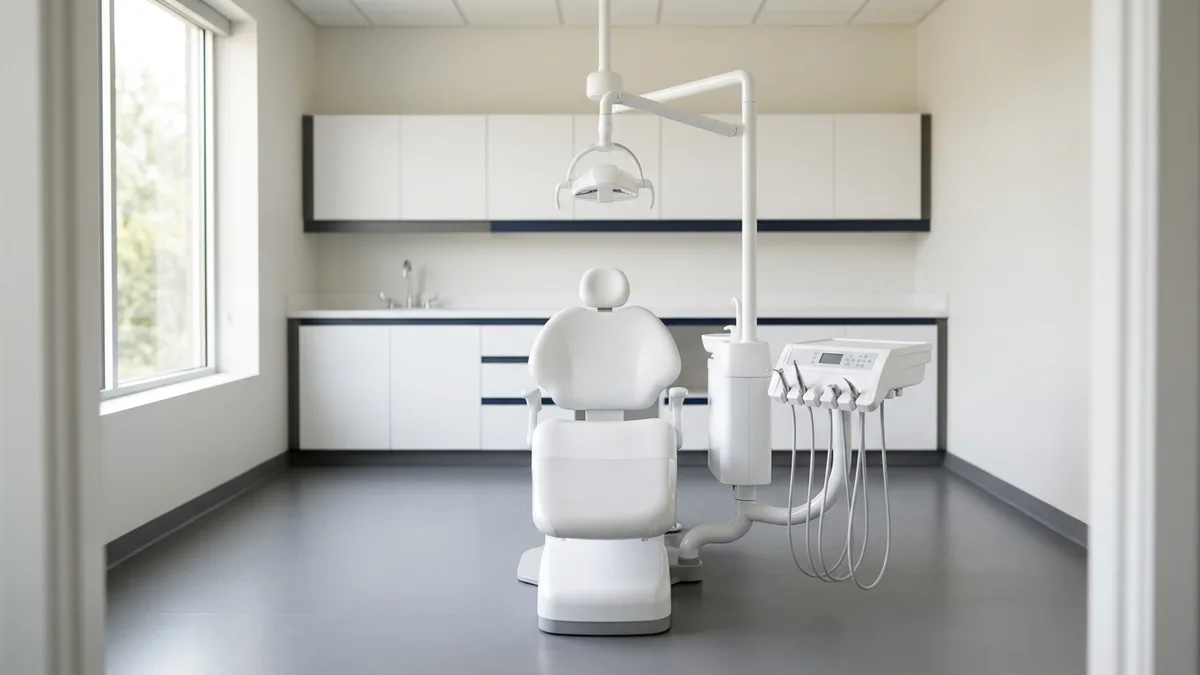
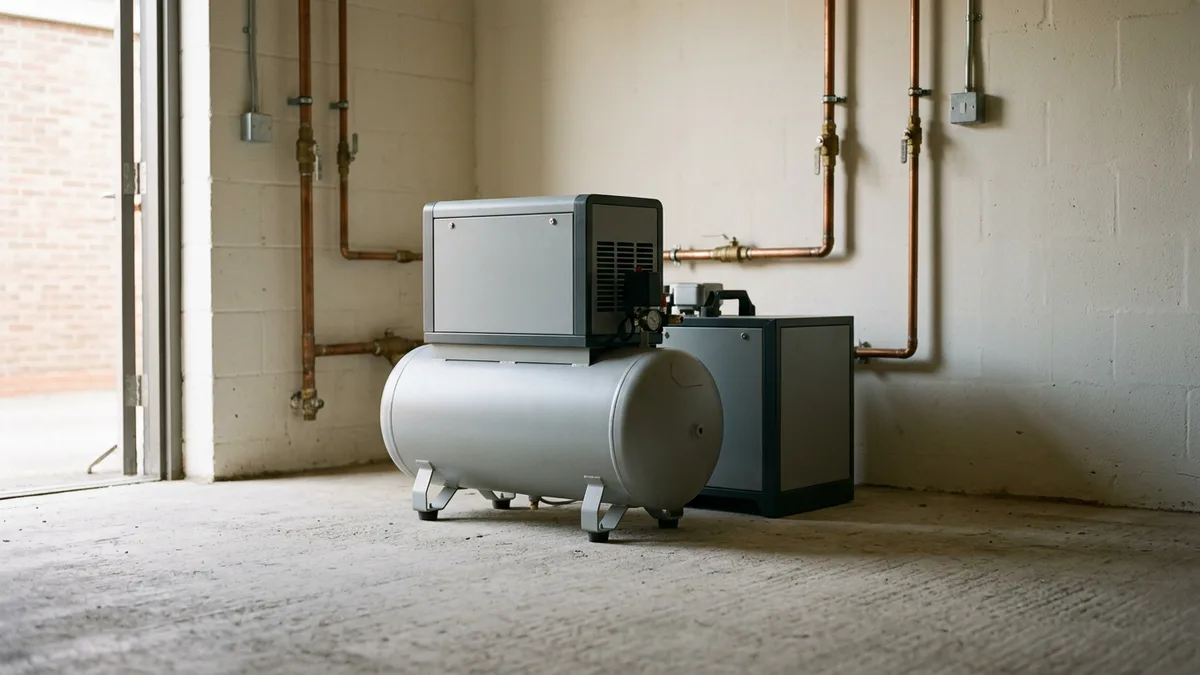
Two machines sit behind it. An air compressor feeds the handpieces, and a vacuum pump feeds the suction at every chair. Both are loud, and both give off heat. Neither belongs in a treatment room, so they usually get a utility room of their own, with ventilation and floor space for a service technician.
Here’s the decision rule. Rough in the lines for the rooms you’ll want in three years, and equip only the rooms you can staff this year. Chairs can wait. Lines can’t.
Dental & Medical Counsel, a California law firm that advises dentists, says the same thing in its build-out guide: plan for future expansion now, because retrofitting infrastructure later is expensive and disruptive. Adding a line after the fact means opening a finished wall or floor.
Before you sign a lease, get answers to these:
- Can the building’s water, drain, and electrical service reach every room you want, and will the landlord let the compressor and vacuum pump have a ventilated spot of their own?
- Who pays to bring the suite up to a dental build: an improvement allowance from the landlord, or you.
- Does the zoning, and the lease’s use clause, allow a dental office with X-ray equipment?
- The equipment seller’s installation specifications, in hand before the contractor prices the job.
What It Costs to Start a Dental Practice
The most specific figure we found with a date on it comes from a law firm, Dental & Medical Counsel, whose build-out guide is dated June 4th, 2026.
$300,000+
is the low end of the firm’s $300,000 to $600,000 or more all-in budget for a typical dental startup in California, covering construction, equipment, technology infrastructure, millwork, plumbing, electrical, medical gas lines, and permitting, as of June 4th, 2026.
Source: Dental & Medical Counsel, Dental Office Build-Out Guide, June 4th, 2026
Equipment alone, the same guide says, typically runs $100,000 to $200,000 for a standard build. It puts tenant build-out at $150 to $350 per square foot in California, and ground-up construction at $400 or more.
Three limits apply. It’s a California figure. It comes from a law firm that advises dentists, not from a survey of them, and “or more” has no ceiling. The other published ranges we read start lower and end higher, and none of them showed its math, so we found no neutral national figure worth repeating.
| Cost | What’s in it | How to price it |
|---|---|---|
| Build-out | Walls, plumbing, electrical, flooring, cabinetry, permits | A contractor who has built dental offices, on your floor plan |
| Equipment | Chairs, delivery units, lights, compressor, vacuum, sterilizer | Itemized quotes from two sellers, with delivery and installation on the page |
| Technology | Practice software, sensors, computers, network | The vendor’s quote, with support and update terms spelled out |
| Professional fees | Attorney, accountant, licensing, permits | Fee quotes, in writing |
| Working capital | Rent, payroll, supplies, and your own pay until the schedule fills | Monthly costs from the plan, times the months you want covered |
Put build-out, equipment, and deposits on one list, since they’re paid once. Put rent, payroll, supplies, and software on another, since they return every month, starting before the schedule fills. Working capital buys nothing you can see, which makes it easy to shave. Don’t.
Operatory Equipment, in Buying Order
An operatory is a treatment room. Its equipment falls into two groups: per-room items such as the chair, delivery unit, and light, and shared items such as the compressor, vacuum pump, and sterilizer. Buy per-room items for the rooms you open with. Size shared items for every room you’ve roughed in.
| Equipment | Per room or shared | Ask before you order |
|---|---|---|
| Patient chair | Per room | Where it sits on the floor box, and who repairs it |
| Delivery unit, assistant’s arm | Per room | How the waterlines are treated, and which handpieces connect |
| Operatory light | Per room | Ceiling or pole mount |
| Stools | Per room | Whether the package includes them |
| Air compressor | Shared | How many rooms it’s rated for, and where it goes |
| Vacuum pump | Shared | The same, plus the exhaust route |
| Sterilizer, ultrasonic cleaner | Shared | Water and drain needs, and who services it |
| Intraoral sensor, software | Per room or shared | Who supports it, and until when |
| Amalgam separator | Shared | Who installs it, and what paperwork follows |
A compressor rated for two chairs may not run four, and the same goes for a vacuum pump. Ask the seller for the rated room count, in writing, before you order either one.
Per-room items usually sell as a package. Two listings we read on November 4th, 2026 show the spread: a catalog package and a refurbished one, with different equipment inside each. Both prices are asking prices, not sale prices.
| Catalog listing | Refurbished listing | |
|---|---|---|
| Listing | Beaverstate Cascade package | DentalEZ Model J package, listed October 14th |
| Asking price | $17,299.95 | $4,995 |
| In the box | Chair, delivery unit with two handpieces, assistant’s arm with vacuum, standard light, junction box | Chair, delivery unit, assistant’s instruments, light |
| Left out | Stools, and freight by truck | Delivery, on a pallet over 550 pounds |
| Parts warranty | Five years | One year, parts only |
| Returns | None | Sold as-is |
The refurbished listing prices the chair alone at $1,400, so most of its $4,995 is the delivery unit, the assistant’s instruments, and the light. Neither listing mentions installation. Price that, and the connection to your plumbing and power, as separate lines.
Go slowly on imaging. Intraoral sensors and their software get bought for each room, or shared between a few. A panoramic or cone-beam CT unit is a separate project, with a room plan, a shielding question, and a state registration to settle before it runs, each on its own timeline. It can usually wait until the practice has shown it will use one.
Waiting-room displays and a second set of handpieces can wait too. Our guide to dental X-ray unit prices covers what each type costs and what your state may want on file.
Sterilizing, Amalgam, and the Rules on Equipment
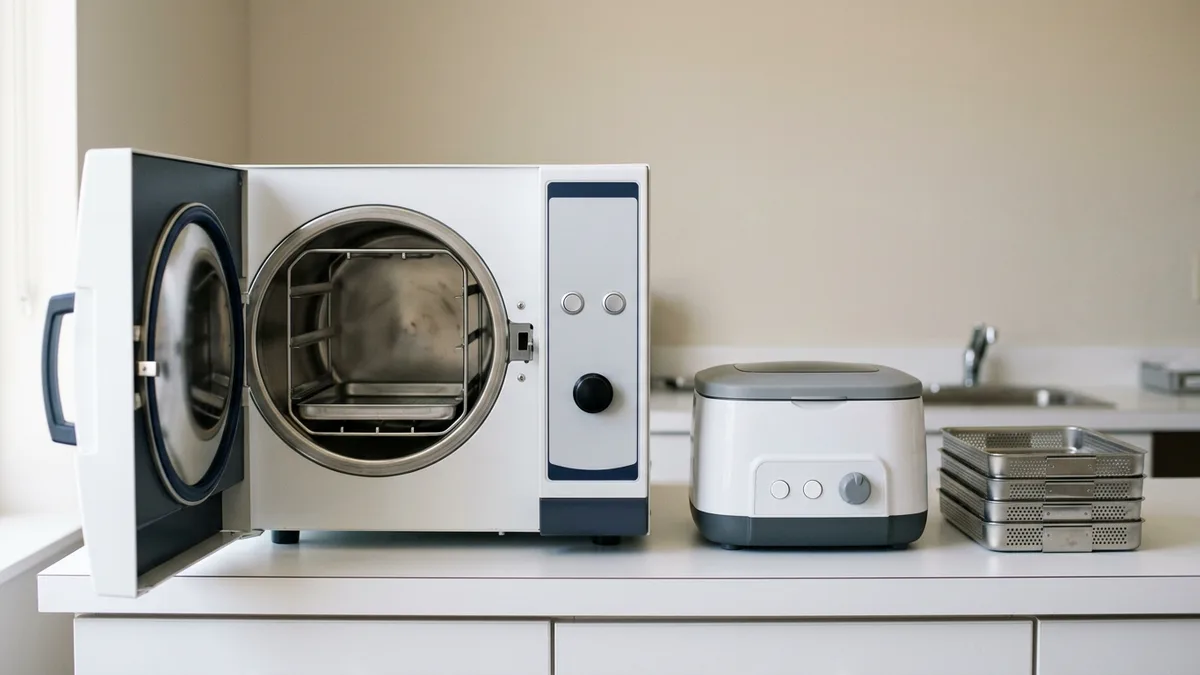
Two items in the office come with rules, which makes each one a purchase and a compliance task at once. The first is the sterilizer. The CDC’s page on sterilization monitoring says a spore test should be used at least weekly, with a matching control from the same lot, and that every load holding an implantable device needs one. So buy the unit, buy the testing, and name the person who runs it.
Second: the amalgam separator. The EPA’s dental effluent guidelines, codified at 40 CFR Part 441, say that dental offices that place or remove amalgam must operate and maintain a separator, and that existing and new sources file a one-time compliance report with their Control Authority. That’s a local wastewater utility, a state environmental agency, or an EPA regional office, depending on where you are. Ask which one you answer to before the plumber picks a spot for the unit.
Radiation belongs to your state. Whether it wants a registration, a shielding plan, or both depends on the machine and the state, and some states want them before the machine ships.
Then there’s paper. Staff who may touch blood or sharps need a written exposure control plan under OSHA’s bloodborne pathogens standard, and HIPAA’s Security Rule applies once you bill plans electronically, so neither can wait until the equipment arrives. Neither plan involves a purchase, which is how they get left for the week before opening. Don’t.
Buying Used Without Buying Trouble
Used and refurbished equipment is where a first-year budget finds some room, and it’s where the fine print matters most. Both listings are final sale. So ask first.
- Make, model, serial number, and year, on the invoice.
- Who refurbished it: the manufacturer, a dealer’s shop, or the seller’s own bench. Ask for the work order.
- Service records. None? Price it as though it has no history, because it doesn’t.
- The warranty, in writing, with what it leaves out. A parts-only warranty pays for parts and nothing else.
- Whether parts, and for anything with software, updates, are still available, and for how long.
- Who unloads a pallet that weighs over 550 pounds, and where it goes.
Chairs are easy to service. Sensors, scanners, and imaging units are different, because their software has a support date too. Our page on used equipment financing walks through how that paperwork reads when the equipment is paid for over time.
Paying for It
A lender isn’t a given. Two rooms of refurbished equipment, paid in cash with a reserve left over, is a real plan.
| Pay cash | Equipment loan | Equipment lease | |
|---|---|---|---|
| Who owns it | You | You, with the lender’s lien | The lessor, during the term |
| Often fits | Chairs, cabinets, used items | Gear you’ll keep for years | Technology that ages |
| Watch for | A thin cash reserve | Total cost over the term | The end-of-term option |
Structure follows how fast a piece of equipment ages. A chair can be repaired for years, so owning it makes sense. A digital sensor or an intraoral scanner runs on a software clock, so a lease that lets you return or upgrade it at the end of the term can fit better than owning it outright. A fair market value lease sets the buyout at what the equipment is worth when the term ends.
Your tax advisor should weigh in on how each one gets treated before you sign.
Some owners pair an SBA loan with equipment financing for the machines, and we’ve written up how equipment financing alongside an SBA loan fits together. Equipment agreements cover equipment. They don’t cover rent or payroll in the first months, and that’s a working capital question. Our page on startup equipment financing covers the paperwork a new business tends to bring.
Ask every lender one dull question: does the UCC-1 filing cover this one unit, or everything the practice owns?
Before the First Patient
These items don’t get a budget line as big as the chair, and they run on other people’s timelines.
- NPIs through NPPES: one for you, and one for the practice if you form an entity that bills.
- Credentialing with each dental plan you’ll accept. Ask how long it takes and whether it backdates, and get the answer in writing.
- A DEA registration, only if you’ll prescribe controlled substances.
- Malpractice and business insurance, in force before the first patient sits down.
- Practice management and imaging software, with backups and support terms spelled out.
- The word getting out, to patients and referring colleagues who already know you, if your employment contract allows it.
Different business? The budget logic carries over, with other machines. See how to start a medical practice, how to start a restaurant, how to start a coffee shop, or how to start a landscaping business.
Questions Dentists Ask Before They Open
Realistically, how much cash does a new office take?
$300,000 to $600,000 or more, in one California law firm’s estimate dated June 4th, 2026, and that range includes construction, equipment, and working capital. Your number turns on the square footage, the count of rooms, and what you buy new. Use your own quotes.
Does a new office need a panoramic X-ray on day one?
No rule we know of. A panoramic unit is a choice, and it brings its own room plan, its own cost, and possibly a state filing. Intraoral imaging is a separate purchase, so decide each one on its own.
Can someone who isn’t a dentist own part of a dental practice?
That’s a state question. Some states say no. Where ownership is limited to licensed dentists, partners and investors who aren’t dentists usually can’t hold a stake or direct clinical decisions, so talk to a dental attorney before you take outside money.
How often does the sterilizer need a spore test?
Weekly, at minimum. The CDC says a spore test should be used at least weekly to monitor sterilizers, with a matching control from the same lot, and every load holding an implantable device needs one too. File the results.
Is a refurbished chair package a mistake for a first office?
A chair is mechanical and can be repaired, so it isn’t the real risk. The fine print is: a parts-only warranty, a final sale, or a pallet over 550 pounds that arrives with nobody to move it. Read all three before you pay.
Should the equipment be financed, leased, or paid for outright?
Match the structure to how fast each piece ages. A chair that serves for a decade suits cash or a loan. A sensor that depends on software may suit a lease. Have your tax advisor read the terms before you sign.
Next Steps
Call your state dental board and a contractor who has built dental offices before anything else. Their answers set the space, and the space sets the budget. Then get quotes. When they’re in, you can compare loan and lease options for dental equipment, or start an application if you’d like us to look at the purchase.