
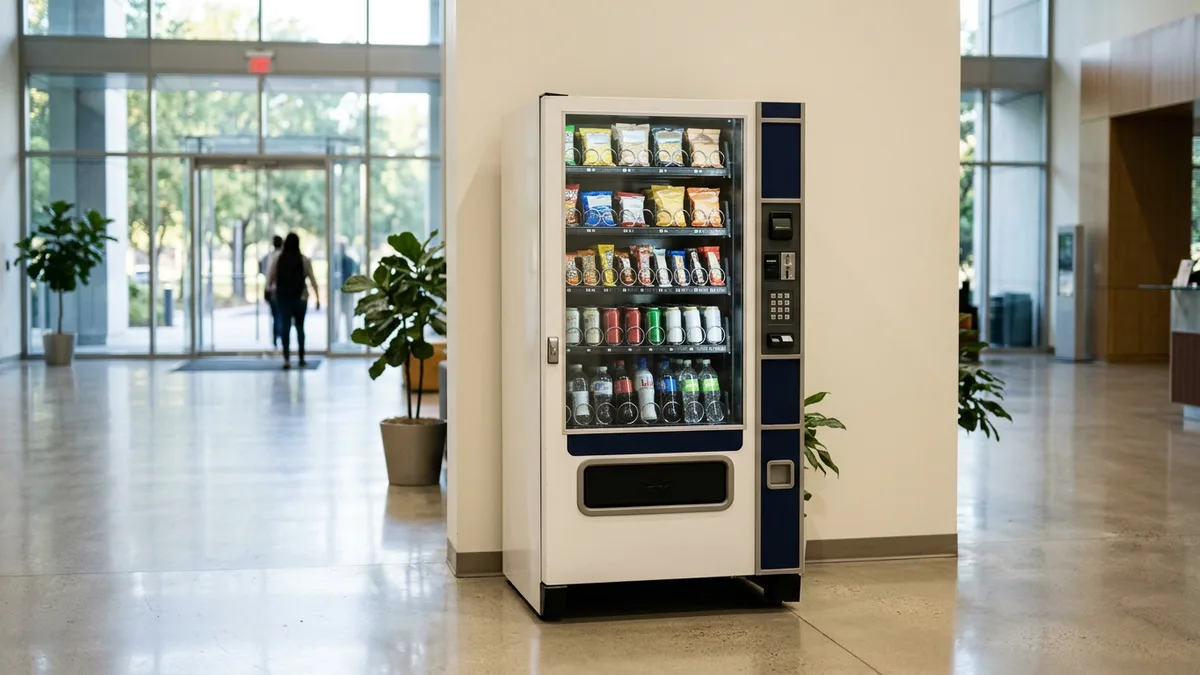
How to Start a Vending Machine Business: Costs, Locations and Equipment

Key takeaways
How to start a vending machine business comes down to three decisions made in order: what you’ll sell, where the machine will sit, and what your state and your host require before it plugs in.
- A location you’ve signed for is worth more than a machine you’ve bought.
- Published prices disagree by thousands of dollars.
- Own or run 20 or more machines and federal calorie rules apply.
- States and counties each have their own rules for vending operators. Ask yours first.
Most people start with the machine. It’s the fun part, it’s for sale online, and it fits neatly into a spreadsheet. Wrong order.
A machine with nowhere to go is an expensive coat rack, and the slow part is getting a business to say yes to it. So anyone working out how to start a vending machine business should shop for a spot before they shop for a unit.
This guide follows the order the work actually goes: what to sell, where to put it, what it costs, which rules apply, and how to pay. When you reach that last part, there’s a page on vending machine financing to pick it up.
How to Start a Vending Machine Business, Step by Step
- Decide what the machine will sell, and who walks past it.
- Find a host and get the agreement in writing.
- Form the business and get a free EIN from the IRS.
- Ask your state which licenses and sales tax registrations apply.
- Buy or lease the machine that fits the spot.
- Stock it, label it, and add a way to pay by card.
- Set a visiting schedule you can actually keep.
- Track what sells, and move what doesn’t.
Swap the first two if a host approaches you before you’ve picked a product. Don’t swap step five. Spot first, machine second.
What a Vending Operator Does
Federal regulations define a vending machine operator as someone who “controls or directs the function of the vending machine,” which includes deciding what it sells and where each item sits, according to 21 CFR 101.8. In practice, an operator owns machines, places them with hosts, restocks them, fixes them, and collects the money. That’s the job.
A route is the loop you drive between machines. Ten machines in one office park make a short loop. Ten spread across a metro area make a long day. Same count, different job.
$31.1 billion
Expected 2025 revenue for the U.S. convenience services industry, which covers vending, micro markets, office coffee, and pantry services, up from $26.6 billion in 2023.
Source: Vending Market Watch, March 20, 2026, reporting the NAMA Foundation’s census of convenience services
That’s an industry total. It says nothing about any one machine. The NAMA Foundation also notes that participating companies represent about 27% of total industry activity, so even the total is partly an estimate.
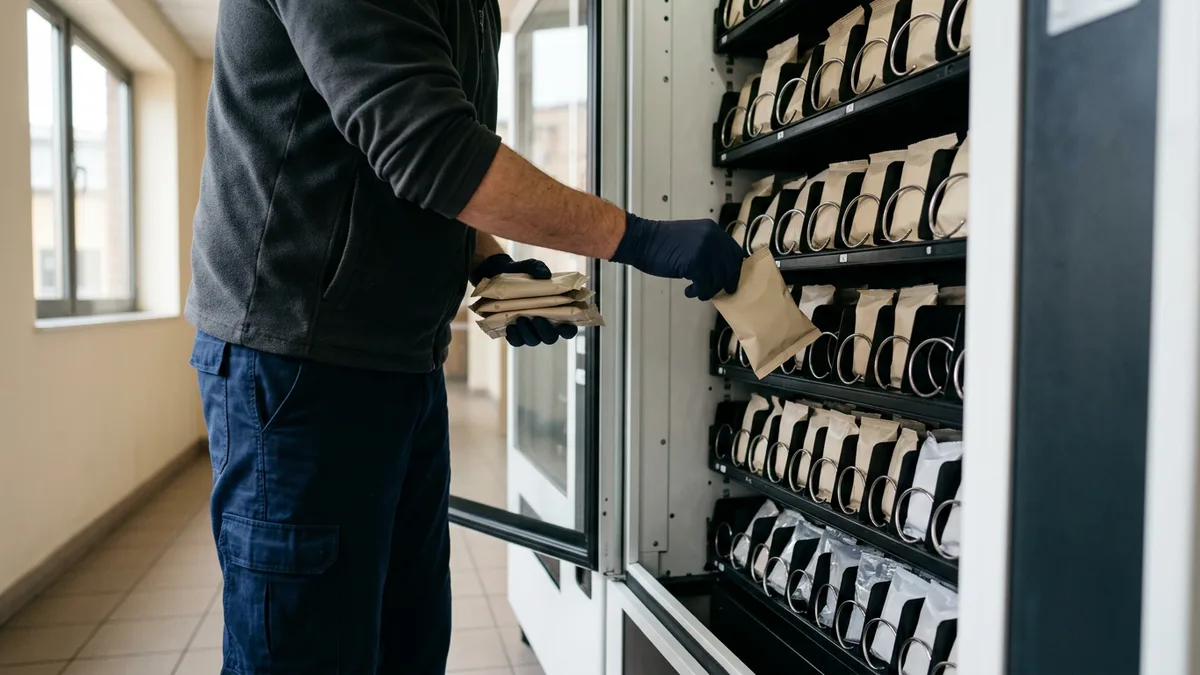
Choose the Product Before the Machine
What you sell decides which machine you buy, and in some states it decides which license you need. Florida’s licensing agency, DBPR, publishes a list of services that need a license that draws the line plainly: a machine stocked with sandwiches, ice cream, and milk needs one, and a machine stocked only with chips, candy bars, or canned drinks doesn’t. The list says it isn’t all inclusive, and it covers one state. Yours may differ.
Four machine types.
- Snack machines use spiral coils and hold things that sit happily on a shelf.
- Cold-drink machines need power all day, and they’re heavier than they look.
- A combo machine puts both in one cabinet, which suits a break room with space for exactly one.
- Smart coolers are glass-door refrigerators built around a card reader. They sell chilled items and fresh food, and spoilage becomes the operator’s problem.
Product follows place. The break room of a warehouse, the lobby of an apartment building, and the waiting area of a gym each sell something different, and the building manager can name what people already buy there.
Finding Locations That Say Yes
Foot traffic is the number that matters. A host can tell you how many employees or visitors pass the spot on a weekday, how long they stay, and which vending service already covers them, and a building with a staffed cafeteria or a vending contract that has three years left is not a prospect yet.
Put the deal on paper. VendingExchange, a marketplace that sells leads to operators, publishes a guide to location agreements and a list of questions to ask before signing, and the table sets out what they say next to the question each line raises for a host.
| Term | What one marketplace reports | What to ask the host |
|---|---|---|
| Commission | Usually 5% to 20% of sales, on net sales rather than gross | A percentage, a flat fee, or both? |
| Electricity | The host typically provides it | Is that in the agreement? |
| Term | A 12- to 36-month first term, often with auto-renewal | How do you exit, and when does it renew? |
| Exclusivity | Keeps other vendors out of the location | The whole building, or one floor? |
| Damage | The operator usually covers repairs, unless the host’s negligence caused it | Who pays if it’s stolen? |
VendingExchange puts commission at 5% to 20%, depending on location type and sales volume. ThePricer, an independent price guide updated October 1, 2026, says there is no defensible national rule that every location charges 10% to 20%. Two sources, one moving range. Ask before signing.
What a Vending Machine Costs
Machine prices come mostly from dealers and brokers, and few of them say where a number came from. The table sets three guides side by side: ThePricer, which says it sells nothing, VendingExchange’s startup cost guide, and a route broker’s. Our guide on how much a vending machine costs puts the seller, the model, and the date beside each price.
| Source and date | New machines | Used or refurbished |
|---|---|---|
| ThePricer, updated October 1, 2026 | Snack $3,850 to $7,800, combo $5,350 to $8,600 | $2,000 to $5,000 |
| VendingExchange, no date shown | Basic mechanical $1,200 to $2,500, smart combo $3,500 to $7,000 or more | No figure given |
| Route Consultant, no year shown | $3,000 to $10,000 | Starting around $1,200 |
The floor for a new machine is $1,200 in one guide, $3,000 in another, and $3,850 in a third, and only ThePricer shows a date. Not quotes. Just sizes. Our guide on how much a vending machine costs covers new, used, and combo machines.
ThePricer also lists refrigerated food machines at $6,100 to $9,100 and says premium smart coolers can reach $10,000 to $13,000 or more. For used machines it cites three listings: a refurbished combo at about $1,900, a 2023 AMS unit at about $3,500, and a 2024 Seaga at about $3,825. Age and condition explain the spread.
Use this rule for new versus used. A used machine with a written repair history and a parts supplier is a sensible way to test a location before committing more. If the seller can’t say what’s been replaced, you’re buying a repair project. Price the repairs in first.
The machine is one line on the budget. Keep one-time and monthly costs on separate lists. Blend them and the startup number looks finished when it isn’t. Two lists.
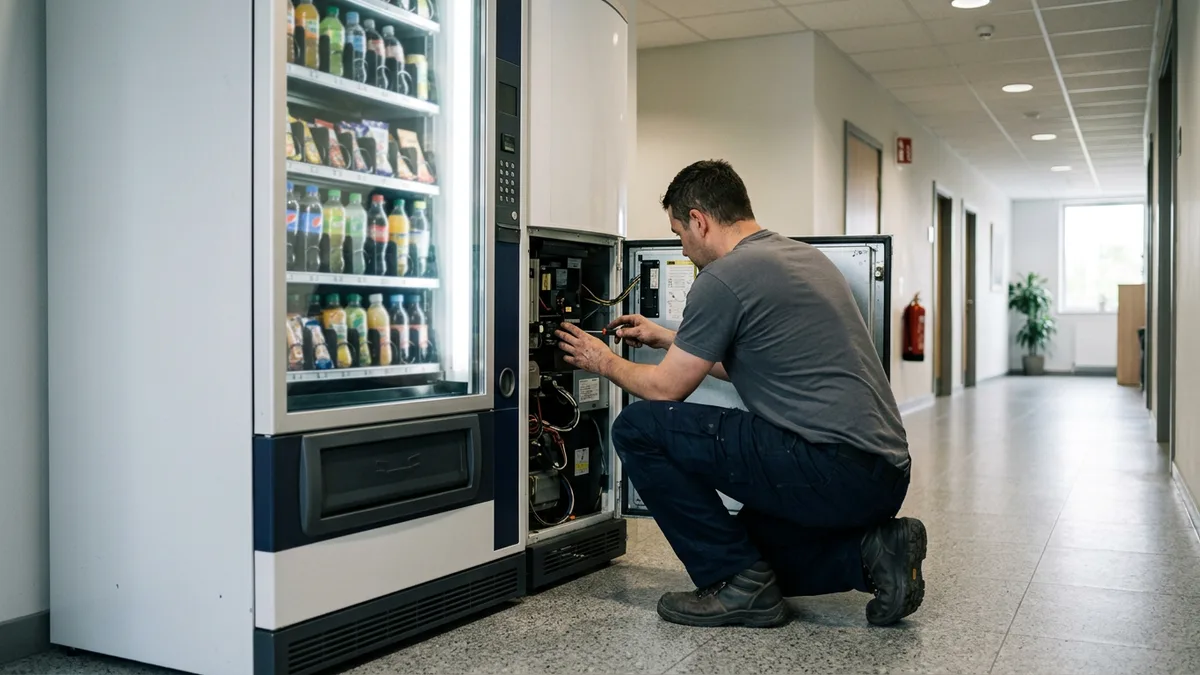
One-time: the machine, delivery and installation, the first load of product, a card reader, business formation, and any license or registration fee. Monthly: restocking, electricity (a refrigerated machine runs more of it than a snack machine), host commission, card processing fees, the reader’s service fee, repairs, insurance, and the fuel and time to visit. Get a quote for each. Replace any figure you read online with that one.
What can one machine earn? We found no verified figure. The sources that quote a profit don’t say where it came from. Build your own number instead: what a visit sells, times your margin on each item, minus the host’s share, card fees, restocking, repairs, and the cost of the trip. If it looks silly, change the location first.
Licenses, Sales Tax and Calorie Rules
Rules come from three levels here: federal, state, and your county or city. The SBA’s licenses and permits guide lists vending machines among the business activities commonly regulated locally, and it points you to your Secretary of State’s website to find out which permits apply.
Start with an EIN, the number the IRS assigns to a business. “You never have to pay a fee for an EIN,” the agency says, and it warns about websites that charge for one.
Then comes sales tax, which states handle in their own ways. Florida does it by county. Its statute on vending machine registration says an operator “may not operate or cause to be operated in this state any vending machine until the operator has registered,” and it requires a separate registration certificate for each county where machines sit.
That’s one state’s system. Yours may differ. Call your state’s revenue department before a machine goes anywhere, then your county or city clerk. For anything beyond registration, such as how the business’s income is reported for tax year 2026, consult your tax advisor.
One federal rule is worth knowing before you’re anywhere near it. Under 21 CFR 101.8, an operator that owns or operates 20 or more vending machines must disclose calories for the food it sells, and the FDA’s vending machine labeling page adds “subject to certain exemptions.” The declaration can go on a sign in, on, or next to the machine as long as it’s visible at the same time as the food and its selection button, and the operator’s name, telephone number, and mailing address or email must be readable on the machine or alongside the declarations.
Under 20? An operator below the line can still register with the FDA to be covered, and that registration renews every other year. Not required. Just available.
Buying an Existing Route
Some people skip the build and buy a route that’s already running. Seaga, a machine maker, says a route worth buying should come with at least 6 to 12 months of verified sales records, signed location agreements, and well-maintained machines, and it says to ask for proof of revenue before you pay. A route is mostly its agreements. Find out whether each one transfers to you, and for how long, before the machines are what you’re pricing.
Some routes outgrow a car. Our guide to how to start a box truck business covers the vehicle side, and how to start a food truck business covers the version of mobile food with someone in the window. Owners who grow into hauling can start with how to start a trucking company, which covers authority, insurance, and a first truck.
Paying for the Machines
We finance equipment, so weigh this section with that in mind. For a first machine, cash may be all you need, and a machine you own outright has no payment to cover in a slow month. Cash is a real option.
One public option is worth knowing about for small purchases. The SBA’s microloan program works through nonprofit, community-based intermediary lenders, with a program limit of $50,000 and an average of about $13,000, and its list of permitted uses includes machinery and equipment. The lender makes every credit decision and sets the terms, so eligibility is its call, not yours or ours. Terms vary by lender.
Equipment financing is the other common route. It’s typically secured by the equipment itself, and our guide to leasing vs buying equipment explains how the structures differ. Buying a used machine from a private seller? Our page on used equipment financing covers the paperwork side of a secondhand purchase.
Lenders commonly ask a new business for a quote or invoice for the machines, formation documents, the owner’s credit and background, and a plan. A signed location agreement shows where each machine will sit and for how long. Whoever you talk to, ask these:
- Does the amount cover delivery, installation, and the card reader, or only the cabinet?
- Would you finance one machine, or only several at once?
- What’s the total of every payment, plus anything due at the end?
- Is the UCC-1 filing on the machines alone, or on everything the business owns?
Common Questions About Starting a Route
Is a license needed before the first machine goes out?
Usually something is, and what depends on your state, your county, and what the machine sells. The SBA lists vending machines among activities commonly regulated locally, and Florida requires a registration certificate for each county where machines sit. Start with your state’s revenue department, then your city or county.
What do hosts usually get paid for a spot?
Five to 20 percent of sales is the range VendingExchange gives, and ThePricer says no national rule fixes it. VendingExchange’s questions list names three arrangements: a percentage of gross sales, a percentage of net sales, or a fixed fee.
Can a first machine be bought used?
Often, and a used machine with a written repair history is a reasonable way to test a spot. ThePricer puts used and refurbished machines at $2,000 to $5,000 and says age and condition matter greatly, while Route Consultant says used machines can start around $1,200. The model, its age, its repair history, and whether a card reader comes with it all belong in the seller’s description.
At what point do federal calorie rules apply?
Twenty. Under 21 CFR 101.8, an operator that owns or operates 20 or more vending machines must disclose calories for the food it sells, with some exemptions. An operator below that line can register with the FDA and be covered anyway.
Will a single machine pay the bills?
No verified source gives a profit per machine, and the sources that quote one do not say where it came from. The arithmetic is what a visit sells, times the margin on each item, minus the host’s share, card fees, restocking, repairs, and the cost of the trip.
What do lenders look at when a business is new?
The machine’s value, the owner’s credit and background, and the plan are the three things most lenders weigh, in different proportions. Our page on how lenders review a new business goes through the documents to prepare.
Before You Buy Anything
The first week’s work is three things: a list of ten places that fit one product, visits to three of them, and a call to the state’s revenue department about registration. At each visit the questions are who handles vending now, what the agreement says, and when it ends. With a signed spot and a quote for the machine in hand, the next step is to see how financing a vending route works, or to start an application.