
Last updated: November 5, 2026
Printing Equipment Financing for Commercial and Packaging Printers
How loans and true leases fit digital presses, offset presses, wide-format printers and the finishing line behind them.
Printing equipment financing pays for a press, a wide-format printer or a finishing line in installments over a set term, as a loan or a true lease, so the machine is working while the balance shrinks.
A print shop’s equipment list isn’t one machine. It’s a press or two, a bindery, a cutter, software and a service contract that decides what every page costs. Each ages on its own. This page sits under our guide to commercial equipment financing and goes deeper on print.
Paramount Financial offers true equipment leases, including operating leases, not only loans. Rather ask a question first? Contact Paramount Financial’s team.
Printing equipment financing follows the job mix
Print isn’t one business anymore. A shop that runs business cards and flyers all day and a plant that runs folding cartons by the pallet buy different machines, for different reasons, and keep them for different lengths of time.
Sort the work first. Four kinds of job matter. Here they are.
Short runs
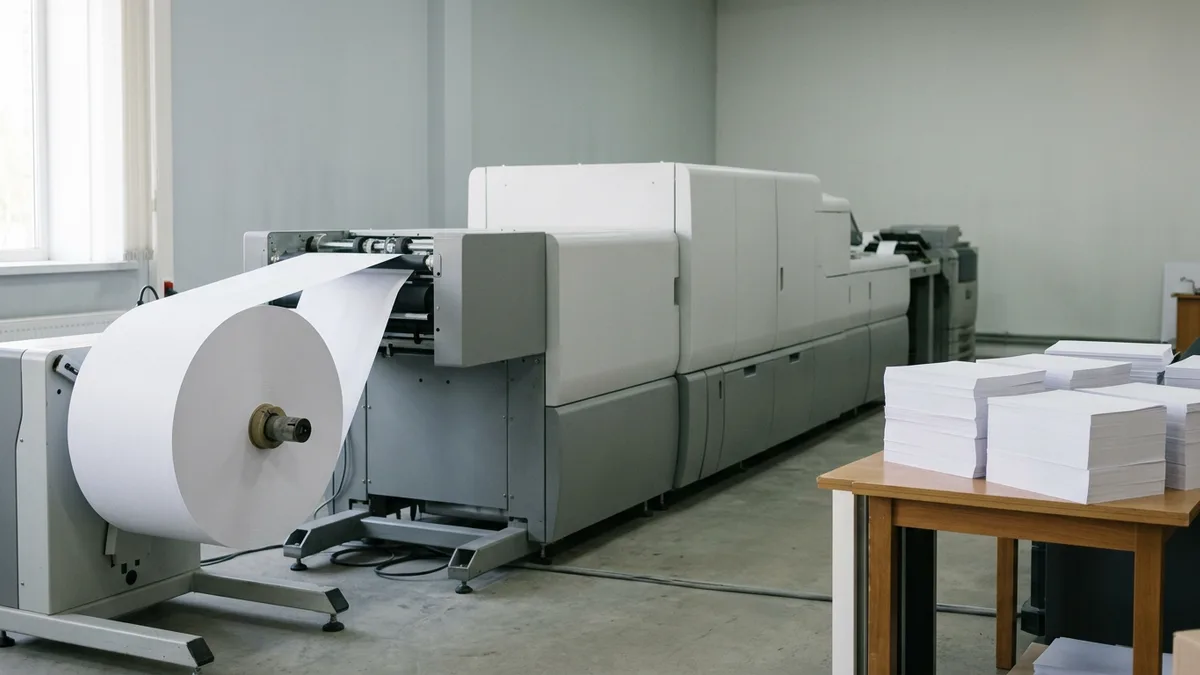
Digital presses, toner or inkjet, take short runs, variable data and quick turns. Engines get replaced often. That points to a lease with a defined end, or a short loan, and away from paying off a machine you’ll want to swap. Plan for that.
Long runs
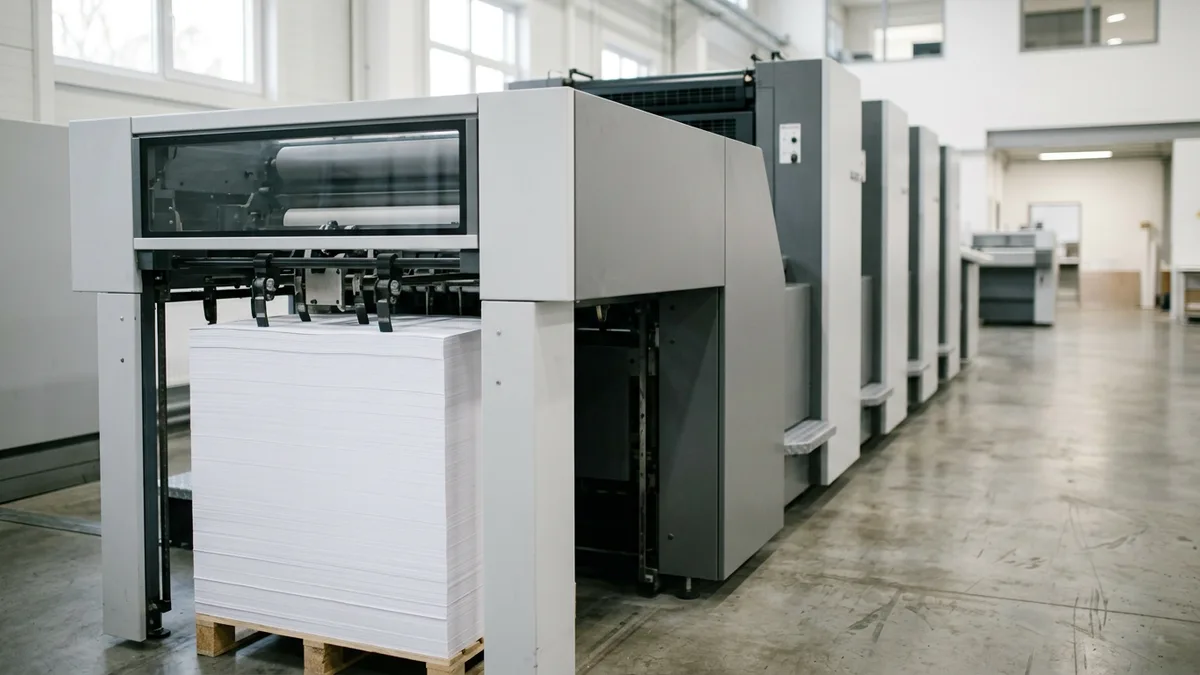
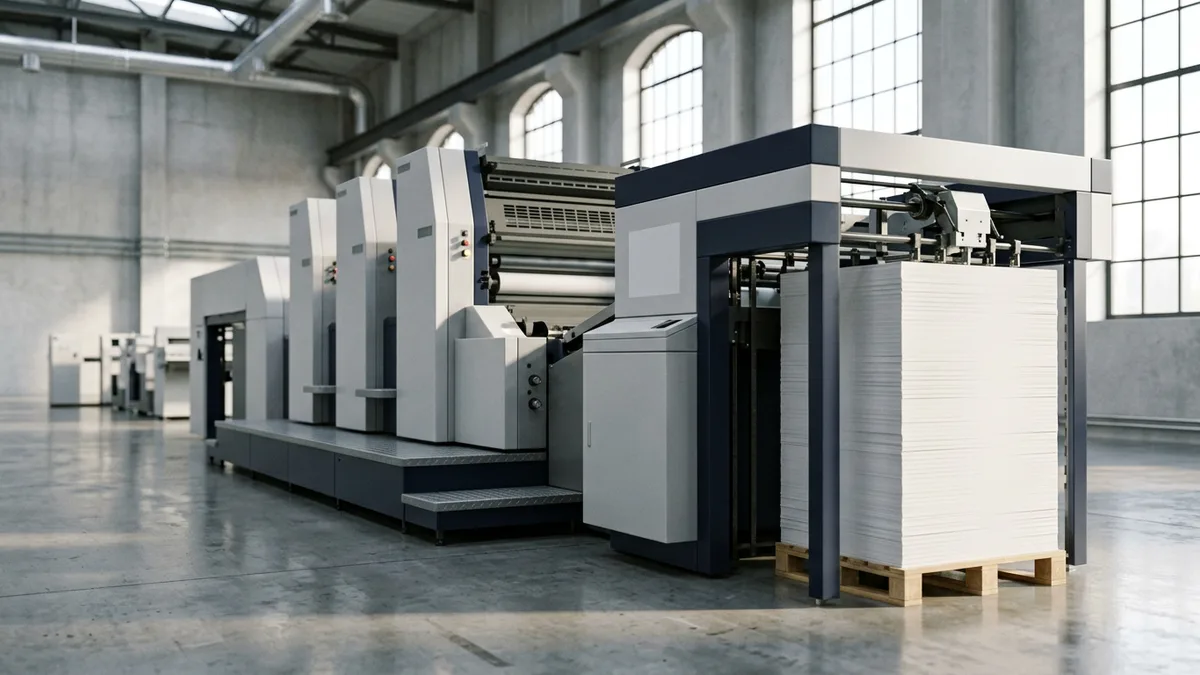
An offset press earns its keep on length, because the longer the run, the less each sheet costs. Rollers, blankets and wear parts get replaced, and the press carries on. That’s the case for owning it, on a loan or a $1 buyout lease. Simple enough.
Wide-format
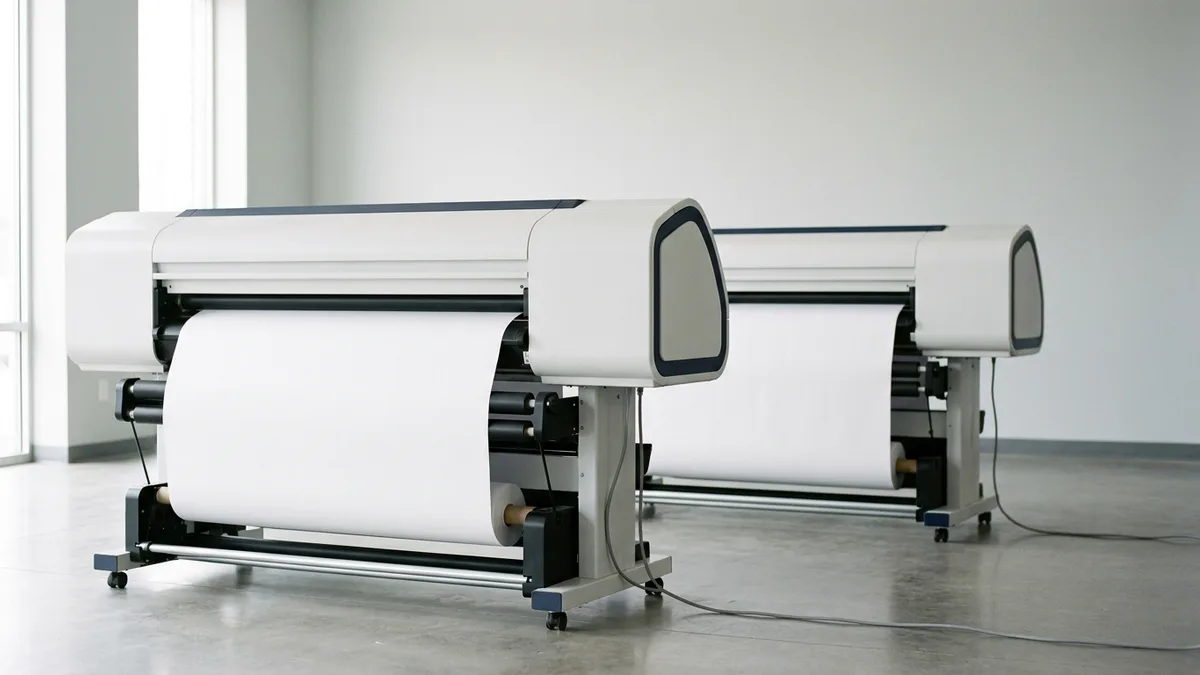
Roll-fed inkjet printers turn out banners, signs, wall graphics and vehicle wraps. Print heads and ink systems wear, and newer models arrive fast. Ask what a head replacement involves before you sign, not after the first clog. Heads matter most.
Packaging and labels
A carton job needs a die cutter, a folder-gluer and sometimes a laminator behind the press. The line works whole. Price it as one project, and ask whether the lender can fund the pieces together.
Printing equipment financing: lease the digital press, own the offset press?
Printing equipment financing is a loan, an equipment finance agreement or a lease that pays for presses, printers and finishing equipment over a set term. With a loan or an agreement, the business owns the equipment and the lender holds a security interest. With a true lease, the lessor owns it during the term.
Now the click. In a 2006 Printing Impressions piece on click charges, a Xerox vice president explained that the base charge covers a set volume and anything above it is billed per impression. He likened it to a car lease with a mileage allowance, and the coverage he described ran from one shift, five days a week, to three shifts, seven days.
Five questions for the lessor
Want the mechanics? Start with the fair market value lease, then set it beside operating lease versus finance lease. The Uniform Commercial Code draws its own line, and its definition of a lease covers possession and use of goods for a term, not a sale or a security interest.
A press quote, line by line
| Line on the quote | What ages it | Structure worth pricing first |
|---|---|---|
| Digital press or inkjet engine | Meter count, imaging parts and the model’s own replacement cycle | A lease with a defined end, or a short loan, if you expect to upgrade |
| Offset press | Rollers, blankets, wear parts and whether the maker still sells them | A loan, an equipment finance agreement or a $1 buyout lease for a press you’ll keep |
| Wide-format printer | Print heads, the ink system and the media path | A lease, or a loan sized to a short working life |
| Cutter, folder and bindery line | Knives, clutches and plain age, all of which move slowly | A loan, since these machines stay useful for years |
| Die cutter, folder-gluer or label press | Tooling, dies and the line’s configuration | One package for the whole line, as a loan or a lease on the line as a unit |
| Front end, software and workflow | Version cycles and license terms | Often one line on the larger quote, or paid in cash |
| Install, rigging and training | One-time costs that don’t age at all | Ask whether they sit inside the financed amount or get billed apart |
Vendors will quote one press two ways when asked, a lease and a loan. Write down what each leaves you owing, and holding, on the last day of the term. Then decide. Our leasing versus buying equipment guide walks through that sum.
Used printing equipment financing starts with the meter
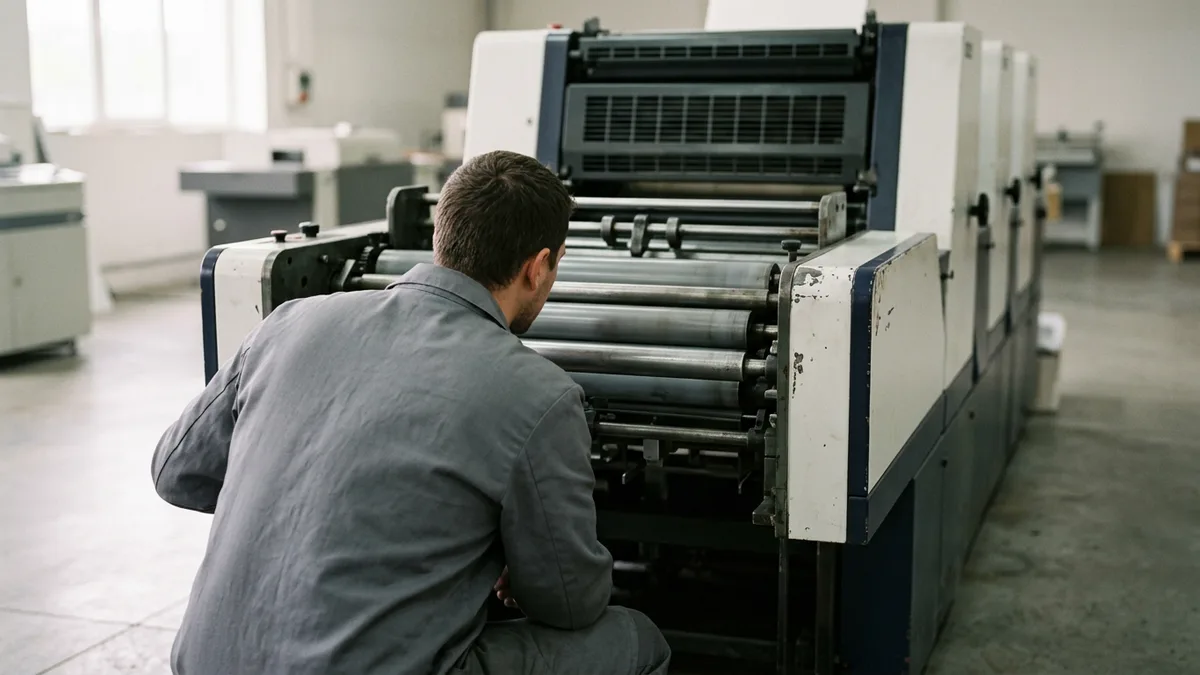
Pull the service log and read the meter on a digital engine. On an offset press, run it, then watch the rollers and blankets under load and check the cylinders for wear. A lender with no price list for a used model leans on age, condition and resale value, so what you see on the walk-around counts for more than the asking price.
Checks first, price second. The used equipment financing page goes further on older machines.
Packaging and finishing lines bring their own machines
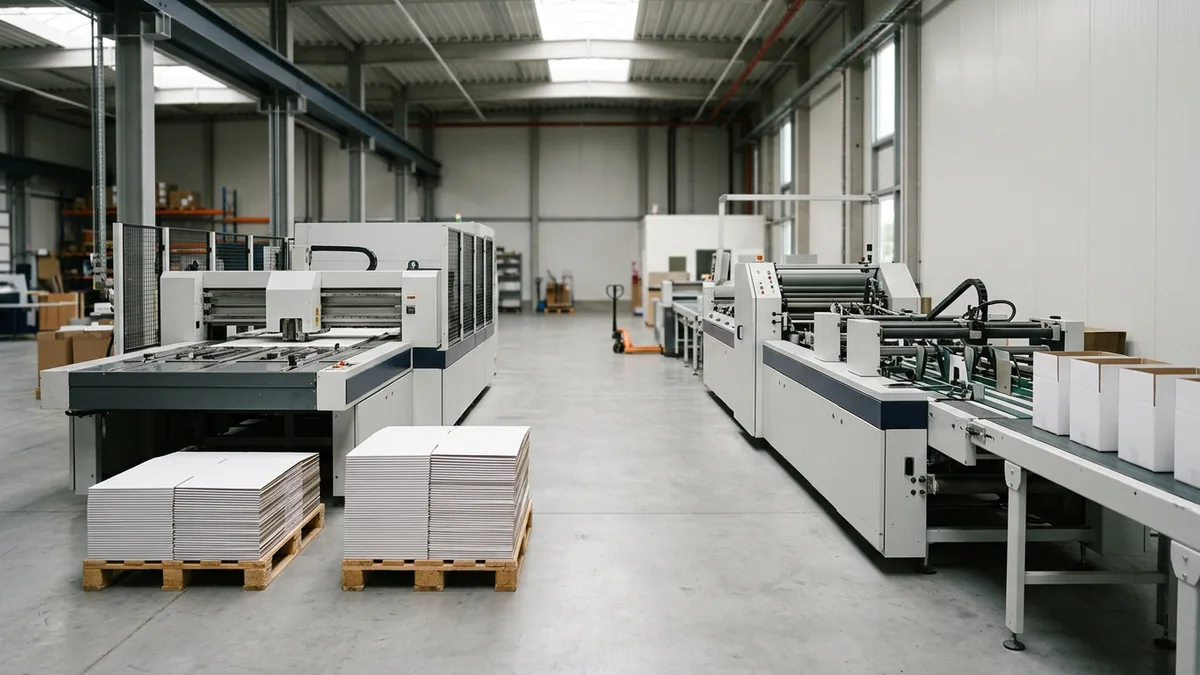
After prepress comes converting. A carton run moves through a die cutter and then a folder-gluer, and coated board may pass a laminator on the way. A label job runs on a narrow-web press with converting stations behind the print units. The line only works whole, so a buyer often prices it as one project.
Bank and SBA loans belong in the comparison too. The SBA’s 7(a) page lists the purchase and installation of machinery and equipment among eligible uses and sets a $5 million maximum loan amount, and the paperwork, the credit review and the wait all need a place on your calendar before the old press quits. Apparel decorators buy different machines, and our screen printing equipment financing guide covers them.
Commercial printing by the numbers
15,140
commercial printing shops in the United States in 2023
About 7 in 10
of those shops had fewer than 10 employees
280,276
paid employees at those shops in the March 2023 pay period
Source: Census Bureau, County Business Patterns, NAICS 323111
Four questions before you sign for a press
Keep reading: machines, shops and lease structures
What print shop owners ask before they finance
How do print shops usually finance a new press?
Print shops usually finance a press with a loan, an equipment finance agreement or a lease written against the machine, and the structure follows how long the press will stay useful. A toner or inkjet engine that a newer model will soon replace suits a lease. A sheetfed offset press that will run for years suits a loan or a $1 buyout. The finishing line, the install and the service contract can each be priced apart.
Should a print shop lease a digital press and buy an offset press?
Often, because the two machines age at different speeds. A digital engine gets replaced on its maker’s schedule, while an offset press can run for years on new rollers and blankets. Leasing the first and owning the second matches each payment to the machine’s useful life, though a shop’s mix may not split that cleanly, so price both ways and compare the full cost, click charges included.
What is a click charge, and does it belong in a lease?
A click charge is the per-impression fee that comes out of a digital press service plan. The plan carries a base volume, and impressions above it trigger the charge. Some vendors count a duplex sheet as two impressions, and some bundle the charge into the lease payment while others bill it apart, so get the base volume, the overage rate and the counting rule in writing.
Can a printer finance a used press?
Many lenders do finance used presses, and they underwrite the machine itself: its age, condition and resale value. An impression count and a service log carry weight on a digital engine, and the state of the rollers and cylinders matters on an offset press. Ask whether the maker still sells parts for the model. For a private sale or an auction buy, get the lender’s paperwork list before you agree on a price.
How do lenders look at a newer print shop?
Lenders reviewing a newer print shop tend to weigh the owner’s years in the trade, the equipment being bought and how the shop will cover payments month after month. A customer list with repeat orders, or work already booked, shows where the money comes from. Pressroom experience counts. The startup equipment financing page lists what to line up first.
What does a press quote leave out?
Installation, service and consumables usually sit outside the machine’s price. That covers riggers and electricians on arrival day, the service contract with its click charges, and the plates, ink, toner and stock that every job uses. A large press may also need more power or floor strength than the room has, so walk the pressroom with the vendor before you sign. Ask early.
What do you need to apply for printing equipment financing?
The vendor’s itemized quote, a short profile of the business and, for a used press, the serial numbers and the seller’s details. Some lenders also want recent bank statements or tax returns, and the list varies by lender. Some add a certificate of insurance naming them as loss payee on the machine. Have it ready.
Pricing a press, a bindery line or a wide-format printer?
What’s the quote for, and when does the shop need the machine running? Tell us below. Or apply online.