
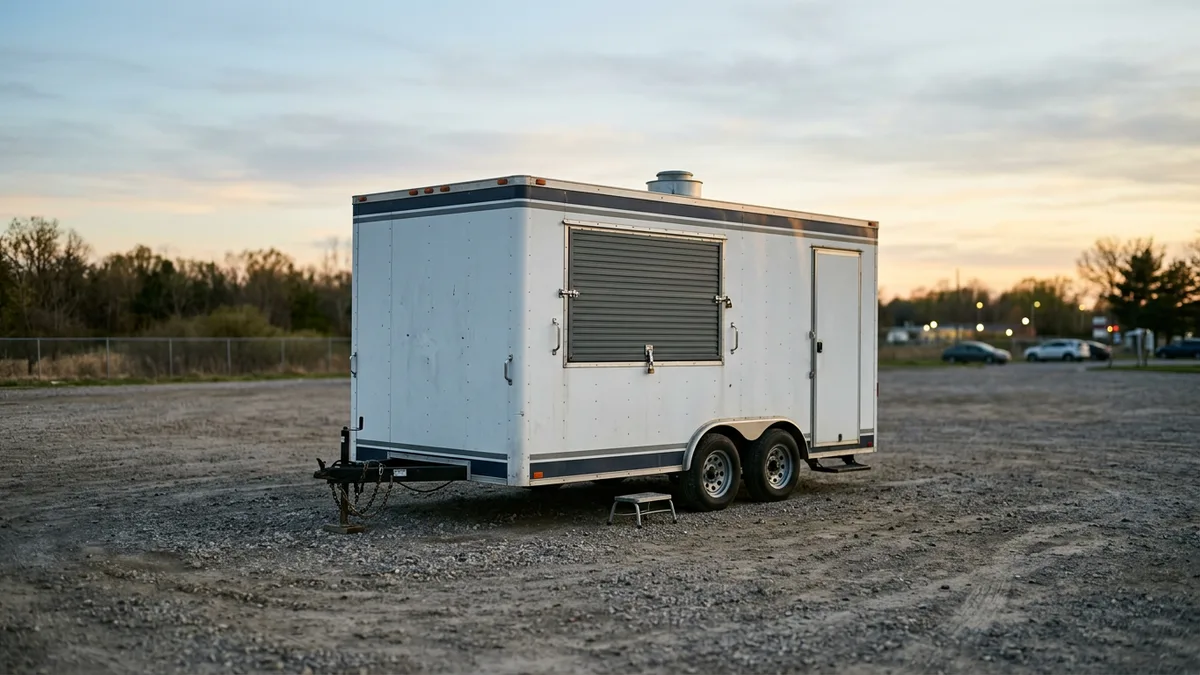
How Much Does a Food Trailer Cost? Build-Out and Equipment

Key takeaways
How much does a food trailer cost? A bare shell runs about $5,000 to $45,000 new, and the fryers, griddle, refrigeration, and fire suppression inside it usually add several thousand more.
- Two bills, not one. Price the shell and the kitchen separately.
- “Fully equipped” isn’t a standard term. Ask what it covers.
- A used shell can end up pricier than a cheap new one once you fix it.
- Fire suppression isn’t optional once there’s oil on the heat.
Call five sellers and ask what a food trailer costs, and you’ll hear five numbers that don’t line up, mostly because nobody asked which trailer you meant. A bare shell. A turnkey kitchen ready to cook on day one. A used unit somebody else already stocked, grease trap and all. Each seller is answering honestly. They’re just not answering the same question, which is why the number you see in an ad rarely matches the number you end up paying. This guide keeps the two apart on purpose: what the box costs, separately from what it costs to make that box cook something. Our page on food truck financing picks up the paying side once you’ve got a real number for both, trailer and kitchen equipment alike (we finance equipment, so take that into account reading the rest of this).
What Sets the Price of a Food Trailer Shell
What you’re actually buying at this stage is a box: frame, axles, exterior skin, a service window, and whatever rough electrical and plumbing the builder throws in before a single piece of cooking equipment touches it. Size is the biggest lever on the number, and it works in the obvious direction, mostly. A 7-foot-wide trailer tends to undercut an 8.5-foot one of the same length, and a 24-footer costs more than a 14-footer sharing its width, though not always by the amount you’d guess.
Finish level is the sneakier lever. Standard wiring and nothing else sits at the floor. Add a generator hookup, heavier electrical capacity, and a BBQ service patio, and the same floor plan climbs fast enough that two trailers sharing dimensions can end up thousands apart, which is the part most buyers don’t see coming until they’ve already fallen for one on size alone.
$16,500 to $45,000
New food trailer shells from one builder’s own 2026 price list, seven named models from 7×14 to 8.5×18, entry-level through fully equipped
Source: Hunt’s Custom Cargo, How Much Do Food Trailers Cost?, read November 6, 2026
Read that builder’s own list closely and the gaps get strange. An 8.5×16 lists at $19,900 with no label at all. The same 8.5×16, marked “Upgraded,” lists at $30,257. Ten thousand dollars, one footprint, and the only explanation offered is “better electrical systems” and “improved ventilation.” That’s the whole lesson in two sentences. Get the itemized list before you compare two trailers that happen to share a length.
Food Trailer Shell Prices, Seller to Seller
| Entry shell | Mid-range | Larger or fully equipped | |
|---|---|---|---|
| Size | 6×12 to 7×14 | 8.5×16 to 8.5×20 | 8.5×18 to 8.5×24 |
| Named example | Empire Cargo 6×12 shell, $5,295 | Cargo Craft 8.5×16 with A/C, $18,490 | Hunt’s 8.5×18, “Fully Equipped,” $45,000 |
| What’s included | Frame and skin, little else | A/C, basic electrical, service window | Full equipment package, advanced electrical |
One dealer’s Quality Cargo 7×12 asked $14,970 one week. Marked down from $16,410 the week before. Same unit, same dealer, eleven days apart. Trailers move on price more than most equipment categories, mostly because so much of this market is built to order through independent dealers instead of sold off one factory sheet.
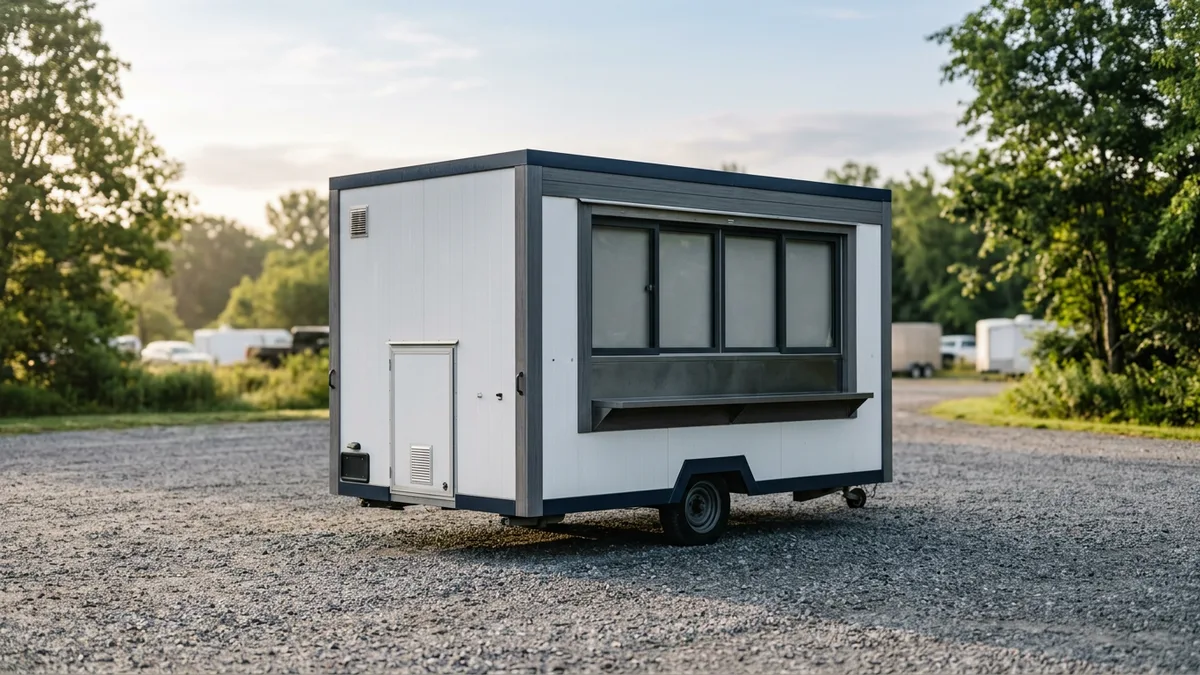
What the Kitchen Costs: Fryers, a Griddle, and Refrigeration
The shell is usually the cheap half of the sentence. Equip it and the second number starts stacking fast. One countertop fryer, a griddle, one reach-in refrigerator: past $3,000 before a single utensil is bought, and that’s before the hood, the duct, and whatever sits above the cooking line to put a fire out.
| Item | Model | Price | Source |
|---|---|---|---|
| Countertop deep fryer, 15 lb. | Waring WDF1700 | $687.00 | WebstaurantStore, November 6, 2026 |
| Countertop deep fryer, 10 lb. | Vollrath CF-1800 | $578.75 | WebstaurantStore, November 6, 2026 |
| Reach-in refrigerator, 25 cu. ft., one door | Arctic Air AWR25 | $1,869.00 | WebstaurantStore, November 6, 2026 |
Two fryers. Both 120-volt, both countertop. $108.25 apart. Not brand prestige, not condition. Capacity. The Waring holds 15 pounds of oil against the Vollrath’s 10, and those extra five pounds of fry capacity are most of the gap. Buy for your actual menu volume. Not the biggest fryer on the page.
A flat-top griddle belongs in that same table, and here’s the honest gap in this guide: no current griddle price held up on a live dealer page long enough to verify at writing time, so none is stated. Budget it somewhere near the fryers for a countertop unit, more for anything hardwired and full-width, and check a dealer’s live listing before you commit a number to it.
Fire Suppression and the Rules Behind It
Cook with oil in an enclosed box and the fire code follows you. Not the other way around. Even a single countertop fryer like the Waring unit above sits under the same hood rule as a full cook line, once it’s venting grease-laden vapor. NFPA 96 is the name behind most of that rule: the national fire-protection standard for commercial cooking, and the thing a local fire marshal usually points to when requiring a hood, a duct, and an automatic suppression system over anything that smokes or vents grease.
A standard CO2 extinguisher does not satisfy it. Full stop. The code calls for a Class K extinguisher, rated for cooking-oil fires, sitting next to the suppression system, never instead of it.
Here’s where it gets local. Jurisdictions enforce NFPA 96 with their own paperwork, their own inspection cadence, and sometimes their own named hardware requirement in a city vendor packet. None of it is uniform nationwide. Call the fire marshal in whatever city the trailer will actually operate in before a system gets priced, because what you’ll pay rides on their amendments, not the builder’s catalog.
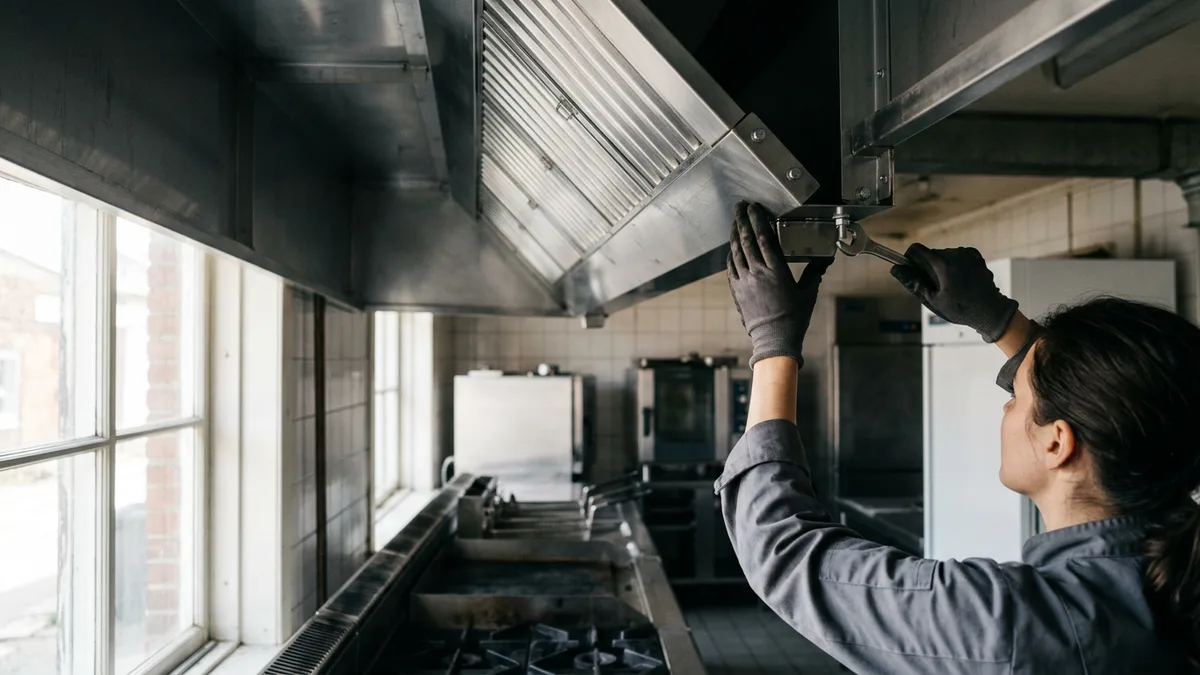
New vs. Used: Where the Math Changes
A used trailer is not automatically the cheaper buy. Read the equipment list before the price tag. A used shell with a tired fryer, a refrigerator on its last compressor, and no working fire suppression can cost more to bring current than a cheaper new unit that already works. Trailer and kitchen equipment both get financed new or used, and financing used equipment covers one trailer, one fryer, or a whole kitchen bought as a lot from a restaurant that’s closing, the same way.
Private-sale and estate-sale kitchen gear is where real savings show up. It’s also where you do the inspecting yourself, because nobody else will. Run the compressor. Check the fryer’s heating element. Ask when the fire suppression system was last serviced, and ask for the paperwork, not just the answer. A seller who can’t produce a service record is telling you something, whether or not they say it out loud.
Restaurants are a large share of what gets financed in this category, and the equipment inside the kitchen, not the trailer itself, is usually where the money actually goes. Our page on restaurant equipment financing covers kitchen gear on its own, whether it sits in a brick-and-mortar space or rolls on wheels. The shell and the equipment don’t have to be one loan, either. Plenty of owners finance them separately, especially on a used deal where the two came from two different sellers entirely.
Building toward the whole business, not just the trailer? Our guide on starting a food truck business walks the permits and commissary side step by step. And a food trailer isn’t the only lower-overhead mobile format worth pricing against each other. Someone comparing options sometimes lands on our guide to starting a vending machine business instead, which runs the exact same shell-versus-equipment math on a very different box.
Common Questions About Food Trailer Costs
So what does a bare food trailer shell actually run?
$5,000 to $45,000 new, depending on size and finish, per one builder’s own 2026 price list. A small 6×12 shell with no upgrades sits at the bottom. A larger trailer with a full equipment package and advanced electrical sits at the top. Used shells run lower, but condition decides more than age does.
Is the kitchen equipment really the bigger cost, or just the more visible one?
Depends on the build, honestly, but it adds up fast either way. A fryer, a reach-in refrigerator, and a griddle alone can clear $3,000 before the hood and fire suppression even go in, and a full commercial kitchen package can rival the shell’s own price. The shell gets photographed for the listing. The invoice for everything inside it is where the real number hides.
Does a used trailer actually save money once it’s equipped?
Sometimes. Not always. A used shell that needs a new fryer, a new compressor, and a fire-suppression recertification can cost more to bring current than a cheaper new unit that already has working equipment. Price the repair list before you price the trailer, never after.
What does fire suppression add to the cost, beyond the extinguisher itself?
A hood, a duct, and an automatic suppression system sized to the cooking line, plus a Class K extinguisher next to it, not instead of it. NFPA 96 is the standard most local fire codes point to for anything producing grease-laden vapor. Exact system and inspection schedule are set locally, so the fire marshal where the trailer will actually operate is the one who can tell you the real number.
Why do two “fully equipped” trailers price so differently?
Because “fully equipped” isn’t a standard term anywhere in this market. One builder’s “Upgraded” 8.5×16 lists over $10,000 above its unlabeled version of the same size, with the gap explained only as better electrical and improved ventilation. Get an itemized equipment list before comparing two trailers on price alone.
How long does a custom build take before it’s ready to equip?
Varies by builder, and lead times shift with demand, so get a written timeline from whoever builds yours rather than assume a season. Retrofitting an existing shell moves faster than a ground-up custom build with a full equipment package, a generator hookup, and a service patio.
Can financing cover the trailer and the kitchen equipment as one package?
It can. Or the two get financed separately, which happens often on a used deal where the shell and the equipment came from different sellers entirely. See how food truck financing works for new, used, and private-sale purchases, kitchen equipment included.