
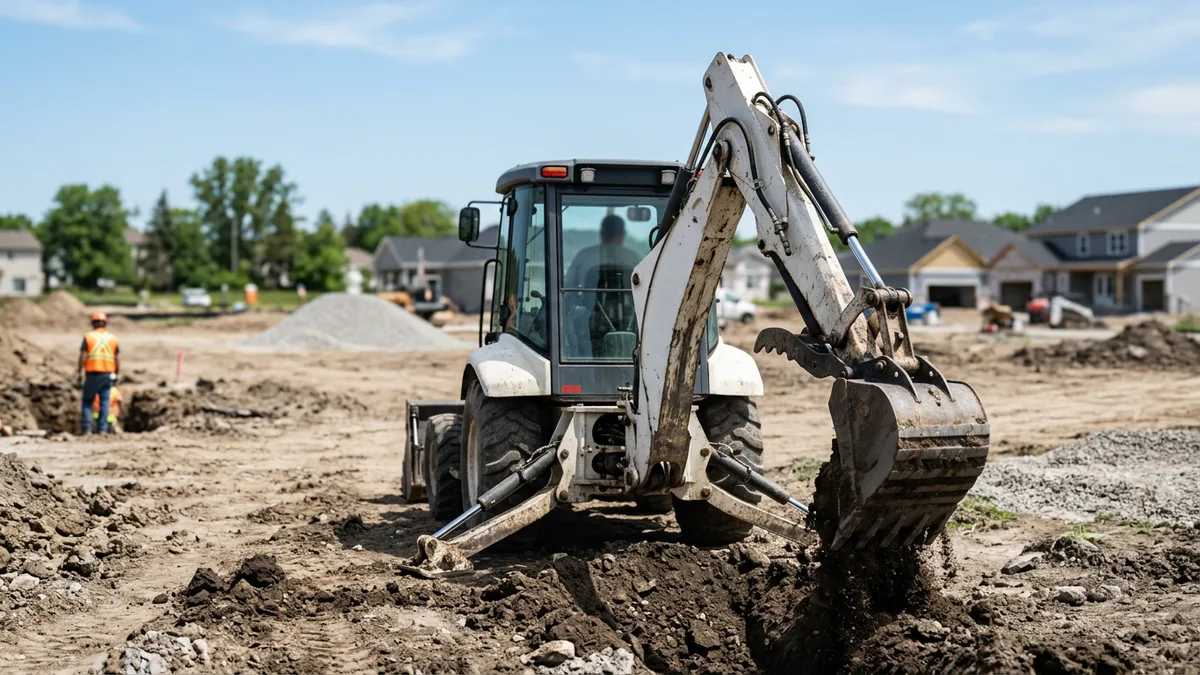
How Much Does a Backhoe Cost? New and Used Backhoe Loader Prices

Key takeaways
How much does a backhoe cost? Size and hours, mostly. Dealer listings read on November 6, 2026 priced a well-worn Case loader at $22,500 and a near-new Caterpillar at $198,262.
- Hours move the price more than the brand on the hood.
- Used backhoe loaders we found ranged from $22,500 to $198,262 on November 6, 2026.
- A mini excavator costs less. It’s also built for a narrower job.
- A dealer sale or a private sale, financing works the same either way.
A backhoe loader isn’t one machine with one price tag, and the number you’ll eventually pay depends on which size class you’re shopping, how many hours are already on the clock, and who happens to be selling it that week. Shoppers grab a round figure off a listicle somewhere and then get surprised at the dealer lot. Fair warning: most of what follows is dollar figures and tables, because we’d rather show you what real listings actually asked than hand you another guess dressed up as an answer. Once you’ve got a real number in mind, backhoe financing works the same way whether the machine you land on is new, used, or bought from a private seller, which we’ll get back to below.
Backhoe Loader Prices by Size and Hours
A backhoe loader is a wheeled machine with a front-mounted loader bucket for moving material and a rear-mounted digging arm, or boom, with its own bucket for trenching, and the size class it falls into decides most of what you’ll pay before you even get to condition or hours. Compact models run under 90 horsepower. Standard models, the kind most contractors actually buy, run from about 90 to 110. The badge on the hood barely moves the number either way.
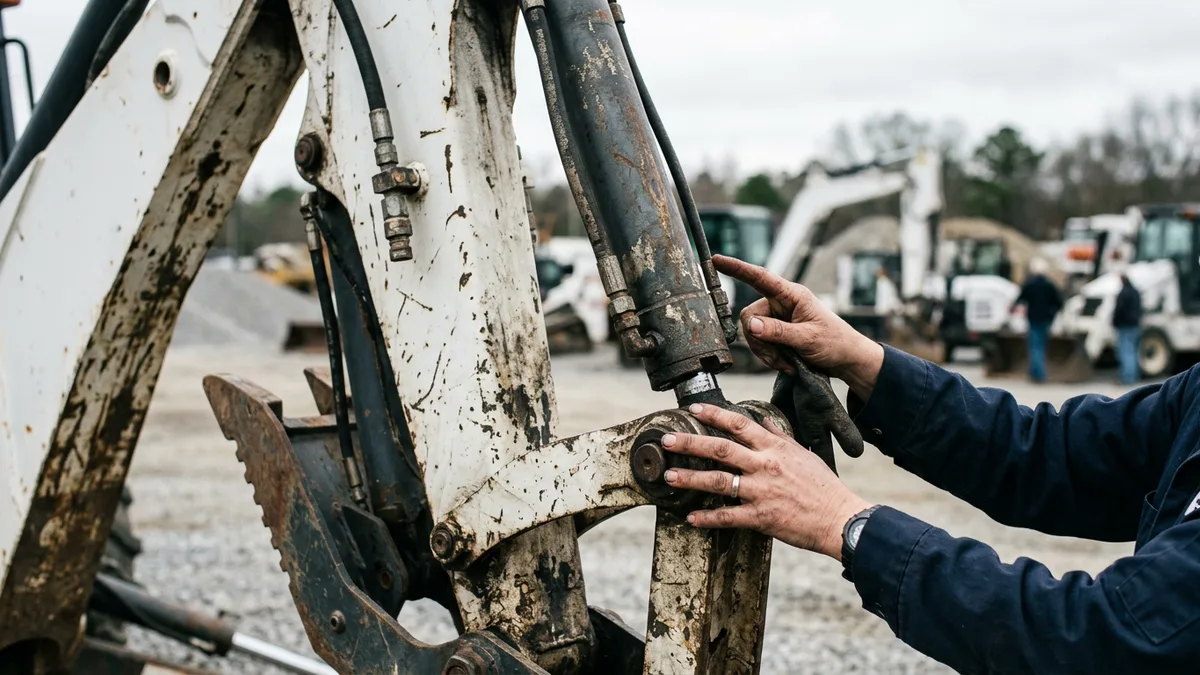
We read listings on Construction Equipment Guide and Surplus Record on November 6, 2026. Both sites refuse automated link checks, though their pages load fine in a browser, so the tables below name the seller instead of linking the listing page. Every number here is an ask. Not a sale. A seller can take less than the sticker. A seller can also sit on a machine for months and not budge a dollar.
New vs Used Backhoe Loader Prices, Side by Side
| Used, higher-hour | New or near-new | |
|---|---|---|
| Price band we found | $22,500 to $69,000 | $115,000 to $198,262 |
| Typical hours | 4,500 to 12,000 | Under 1,000, several under 100 |
| What moves the number most | Hours, undercarriage wear, attachments | Size class, bucket configuration, dealer region |
That’s not a clean line, and it shouldn’t be. A 2012 John Deere 310SK, hours not even listed, asked $43,900 in Belvidere, New Jersey. A 2024 Caterpillar 420 with 100 hours on it asked $119,000 in North Mankato, Minnesota. Twelve model years apart. Nearly three times apart in price. Age and use account for almost the whole gap.
Used and Private-Sale Backhoe Prices
Here’s the part most buyer’s guides skip entirely. Most of the equipment business we see isn’t a brand-new machine rolling off a dealer’s lot. It’s used. And a real share of that used business changes hands between two business owners directly, no dealer anywhere in the deal. That matters for pricing. A private seller carries no lot overhead and usually wants the machine gone fast. A dealer’s number bakes in reconditioning, a warranty window, and the ground the machine is parked on.
| Machine | Hours | Asking | Seller / location |
|---|---|---|---|
| 2015 Case 570N EP | 4,581 | $22,500 | Empire Machinery, Phoenix, AZ |
| 2016 Case 580SN | 11,820 | $27,000 | Foley Incorporated, Monroe, NJ |
| 2017 Case 580SN | 7,556 | $28,000 | Foley Incorporated, Monroe, NJ |
| 1996 Cat 416B | 7,708 | $25,000 | N C Machinery Co., Rygate, MT |
| 2021 Cat 420 | 2,222 | $66,000 | Louisiana Cat, Reserve, LA |
| 2021 Case 580SN WT | not listed | $65,000 | JL Hollinger & Sons, Manheim, PA |
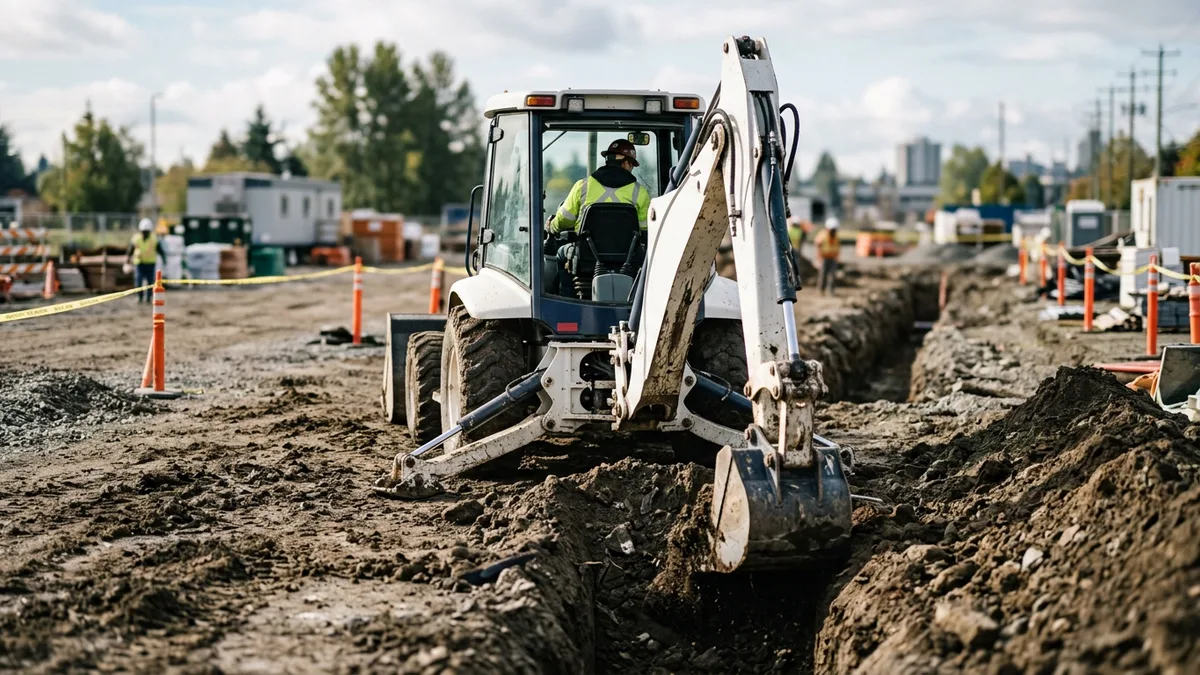
Those six rows are dealer listings. A private sale can land anywhere near that same band, sometimes under it, and the paperwork is a lot shorter. What doesn’t change is how a lender looks at the machine. Used, bought from a private seller, it finances the same way a dealer purchase does: an equipment finance agreement or a lease, with a lien filed against that specific backhoe either way. We finance equipment, so weigh that against what follows. If you’re torn between a private listing and a dealer’s higher ask, the financing part of that decision doesn’t have to be the hard part.
$2,560,000
The maximum Section 179 expense deduction for tax year 2026, with the phase-out starting once a business places more than $4,090,000 of qualifying equipment in service that year. A used backhoe can qualify, as long as it’s new to the business buying it.
That’s the mechanics of the deduction. It’s not a promise of what your business will save, and we’re not going to pretend otherwise. Every business’s tax picture is different. Consult your tax advisor before any number from Section 179 or bonus depreciation finds its way into your year-end plan. The National Equipment Finance Association, an industry group for the companies that finance machines like this one, is a reasonable place to dig further into how the broader industry handles new-versus-used decisions.
Backhoe Loader vs. Mini Excavator on Price
Worth asking before you commit to a full-size machine: does the job even need one? A mini excavator is smaller, lighter, built for a narrower set of tasks. Tight utility trenches. Landscaping. Work behind a fence line where a backhoe’s wheelbase simply won’t fit. It costs less, and that lower price buys a machine sized to a more specific job, which is usually exactly the trade a smaller operator wants to make. A general contractor who needs loading and digging on open ground still reaches for the backhoe. A landscaper working one yard at a time rarely does.
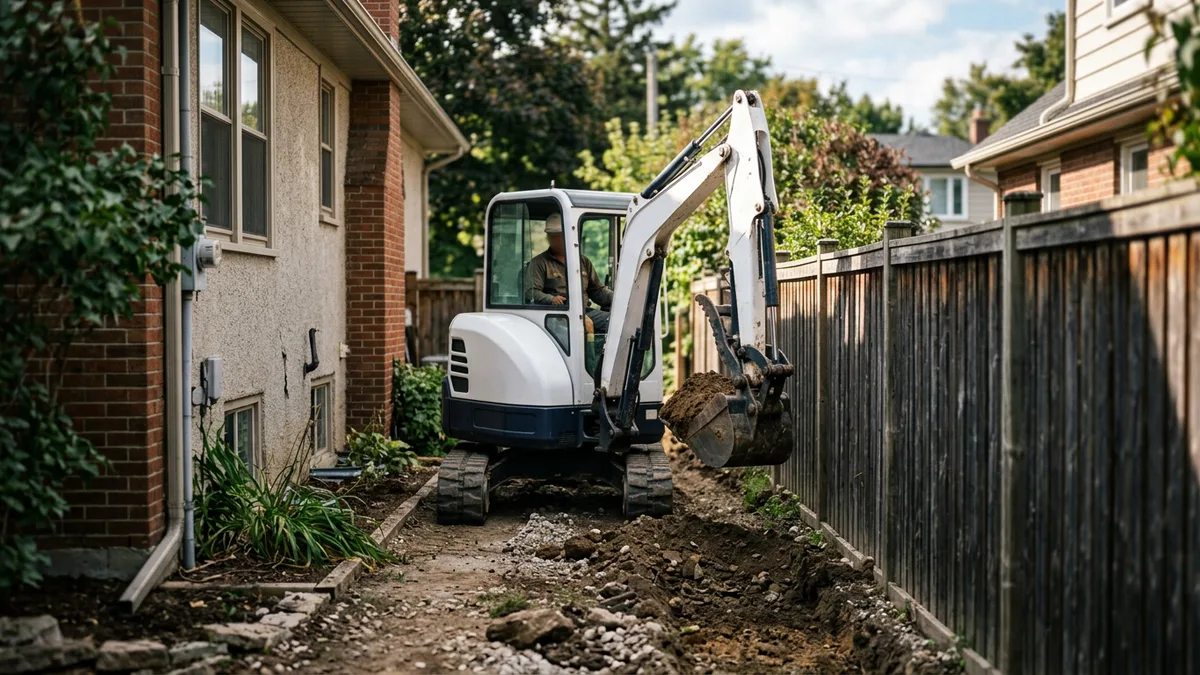
Neither machine is “better.” Different footprints, different jobs. Mostly tight spaces and shallow trenches? Price a mini excavator before you default to a backhoe out of habit.
What Actually Moves a Backhoe’s Price
Four things, roughly in this order.
Hours. Two machines years apart in age can land within a few hundred dollars of each other when their hour meters are close. Look back at the Case 570N and 580SN rows above. That’s the proof.
Attachments matter too, though less than you’d think. A wider bucket, a thumb, a quick-coupler, each adds a little to the ask. One Arizona seller’s own listing warned that the attachments pictured might not ship with the machine at that price. Read the fine print. Not just the headline number.
Size class sets the ceiling and the floor. A 416-class machine’s ask and a 450-class machine’s ask live in different price worlds, full stop, and comparing them tells you nothing useful.
Condition, last but arguably first. A low-hour machine that sat outside for a decade can underprice a high-hour machine that got serviced on schedule. Check the undercarriage. Run a lien search. Then trust the number on the sticker, not before.
Questions Buyers Ask Before Pricing a Backhoe
So how much should a buyer expect to pay for a used backhoe loader?
Somewhere between $22,500 and $140,000, based on what we read on November 6, 2026, mostly tracking hours and size class.
A handful of near-new units with very low hours priced close to new-machine territory, well above that range. There’s no single “used price.” There’s a used price for one specific machine with one specific hour count, and nothing else.
Does a bigger bucket always mean a higher price?
Usually, yes, but not by itself. A wider bucket or an added thumb nudges the ask up a little. Hours and size class still do most of the heavy lifting. A small machine with a big bucket is still a small machine.
Is a backhoe loader cheaper to buy than a mini excavator?
No. A backhoe loader costs more. The mini excavator is the lower-cost machine, built for a narrower job, and buying the bigger one only pays off when the work actually calls for loading and digging on open ground.
Can a used backhoe still qualify for the Section 179 deduction?
Often, yes. Used equipment can qualify for Section 179 as long as it’s new to the business claiming it, within the limits the IRS sets for that tax year.
Talk to your tax advisor about how it applies to your specific purchase and your business’s income for the year. We’re simplifying this a little. Not by much, but a little.
What pushes a backhoe’s hours up fast, and does that always lower the price?
Daily digging work runs the meter harder than loading does. Usually that lowers the price. Not always. A high-hour machine with a documented service history can still outprice a low-hour machine nobody ever maintained. Ask for the records. The meter reading alone won’t tell you much.
Realistically, is renting cheaper than buying for a short job?
For one job lasting a few weeks, usually yes. Once the work runs for months, or repeats every season, the math tends to flip toward owning. Run the numbers against your own job length before you decide either way.
Does financing work the same for a backhoe bought from a private seller?
It does. A lender files against the specific machine whether the seller is a dealer or a private owner. The paperwork looks a little different without a dealer handling the sale. The financing structure underneath it doesn’t change at all.
Next Steps
Pricing the machine is step one. Paying for it is the part we handle. See how backhoe financing works for a new machine, a used one, or a private-party purchase, or start an application once you’ve found the right one. Planning a bigger build-out? Our guide on starting a construction company covers the equipment list beyond just the backhoe, and our breakdowns of bulldozer prices and dump truck prices cover the rest of a typical fleet.