
Medical Equipment Financing Companies: What to Compare Before You Apply

Key takeaways
Compare medical equipment financing companies on structure, how each one quotes, and what happens at the end of the term, before you compare any monthly payment.
- No ranking, no names, no rates. A comparison you can run yourself.
- A quote for clinical equipment may leave out installation, shielding, software, and service. Ask what’s inside it.
- One tidy number, or a range with reasons? How a provider quotes tells you something.
- “Refurbished” needs a definition from the seller before it needs a lender.
- A lease can end with patient data still on the machine, which makes it a HIPAA question too.
The results for medical equipment financing companies on November 5, 2026 included an eight-lender ranking and a six-lender table. Each publisher placed itself first. Neither gave a source for the lender figures it printed. Ranked by a seller. Not a comparison.
Paramount Financial would belong on a list like that too. Our page on medical equipment financing explains loans and leases for clinical equipment. This post gives you six questions to put to any provider, us included.
Why This Isn’t a Top-Ten List
A list can’t see your equipment. A refurbished ultrasound cart and a new CT scanner are two different financing conversations, and one may belong with a specialist leasing company while the other sits with the maker’s own finance program. Rates, terms, and timelines are each provider’s to set.
So this post sorts by behavior: who funds the deal, how the quote is built, and what the agreement says about the machine at the end. All three can be checked before anyone asks for an application.
Kinds of Medical Equipment Financing Companies
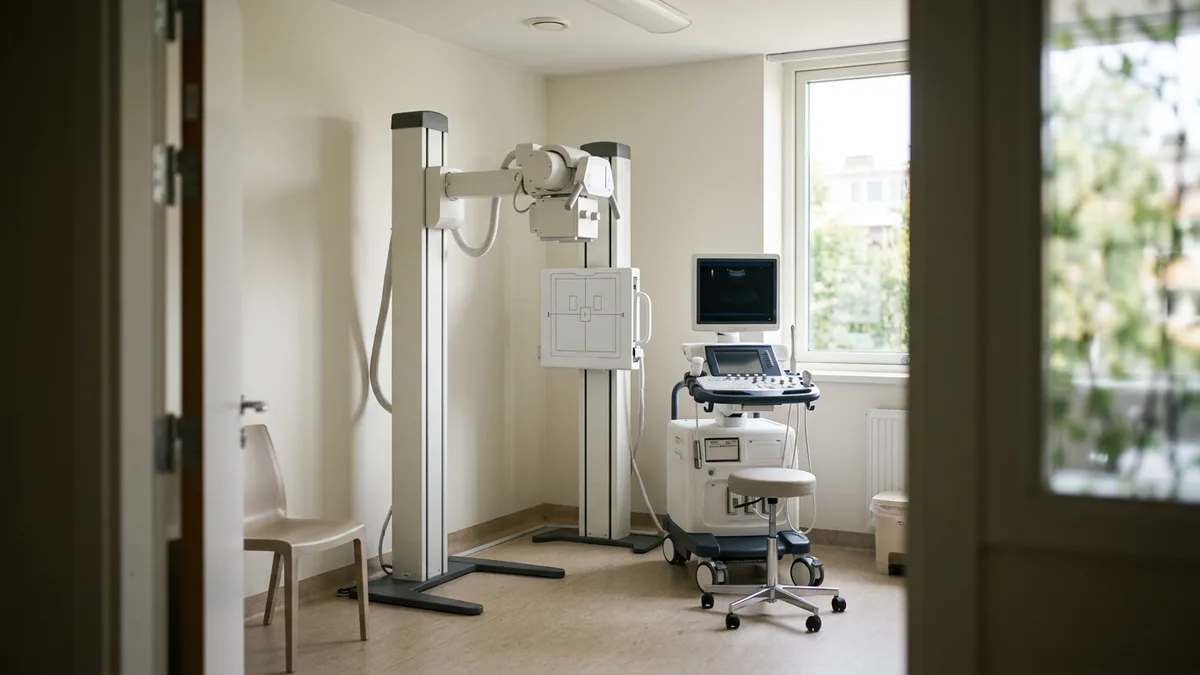
A medical equipment financing company pays for, or arranges payment for, clinical equipment such as a CT scanner, an ultrasound cart, or surgical lights, so a practice can use it now and repay over time. Some fund the deal themselves, and others place the request with a lender. The type decides who signs the agreement.

- The equipment maker or its dealer. The offer arrives with the sales quote. It covers that maker’s machines. Ask what the payment does when a promotional period ends.
- A leasing company that works mostly with healthcare providers. Imaging and surgical deals are routine for a specialist. Routine isn’t the same as better terms. Compare.
- Your bank or credit union. Often the first call. Ask whether its lien stays with the machine or reaches more of the business.
- An independent equipment finance company: loans, leases, or both, on equipment from any maker.
- A broker or marketplace. It might fund nothing itself. Ask who signs the agreement and who answers questions after it’s signed.
How to Compare Medical Equipment Financing Companies
Put these six questions to every provider in writing. Then lay the answers side by side. Skipped questions count as answers.
| Ask each one | A vague answer | A clear answer |
|---|---|---|
| Who funds the deal? | “We’ll find you a lender” | A named company that signs |
| What’s in the financed amount? | One bundled figure | Unit, delivery, installation, software, training |
| What does the lien cover? | “Standard paperwork” | The equipment, by serial number |
| How does the term fit the technology? | The longest term on offer | A term tied to how long the unit stays useful |
| How is the quote built? | One low number | A range, and what could move it |
| What happens at the end? | “We’ll talk then” | Return, renew, or buy, with the price basis written down |
Two rows deserve a closer look. On the lien, a UCC-1 financing statement can describe specific equipment by serial number or cover every asset the business owns, and how UCC-1 filings work explains the difference. On the term, a lease that outlasts the year you’d replace the scanner leaves you paying for a machine you’ve already outgrown.
How a Provider Quotes
Take one practice, one refurbished ultrasound cart, and one credit file. A provider can quote that as a single low figure that holds until the application is reviewed, or as a range that names the age of the unit, the term, the structure, and the practice’s credit as the things that move it.
Same file. Different promise. The first is a teaser quote, and the second is the one to plan around.
60%
of small employer firms that borrowed from online lenders reported higher-than-expected borrowing costs in a survey fielded September to November 2025, a greater share than among firms that borrowed from other types of lenders.
Source: Federal Reserve Banks, Key Insights From the 2025 Small Business Credit Survey, March 2026
That figure covers small-business borrowing broadly, not medical equipment, and the survey doesn’t say what drove the higher costs. It still supports one question for every provider. What could change this quote after you’ve reviewed my file?
Used and Refurbished Equipment
Ask the seller what “refurbished” means for this unit. Cleaned and tested. Parts replaced. Rebuilt. Three different jobs.
The FDA’s May 2018 report on device servicing found that most of the complaints and adverse event reports blaming “servicing” for patient harm were really about remanufacturing, and the agency said it would clarify the difference between the two. A provider that asks for the refurbisher’s work order and warranty is reading what a sales sheet leaves out.
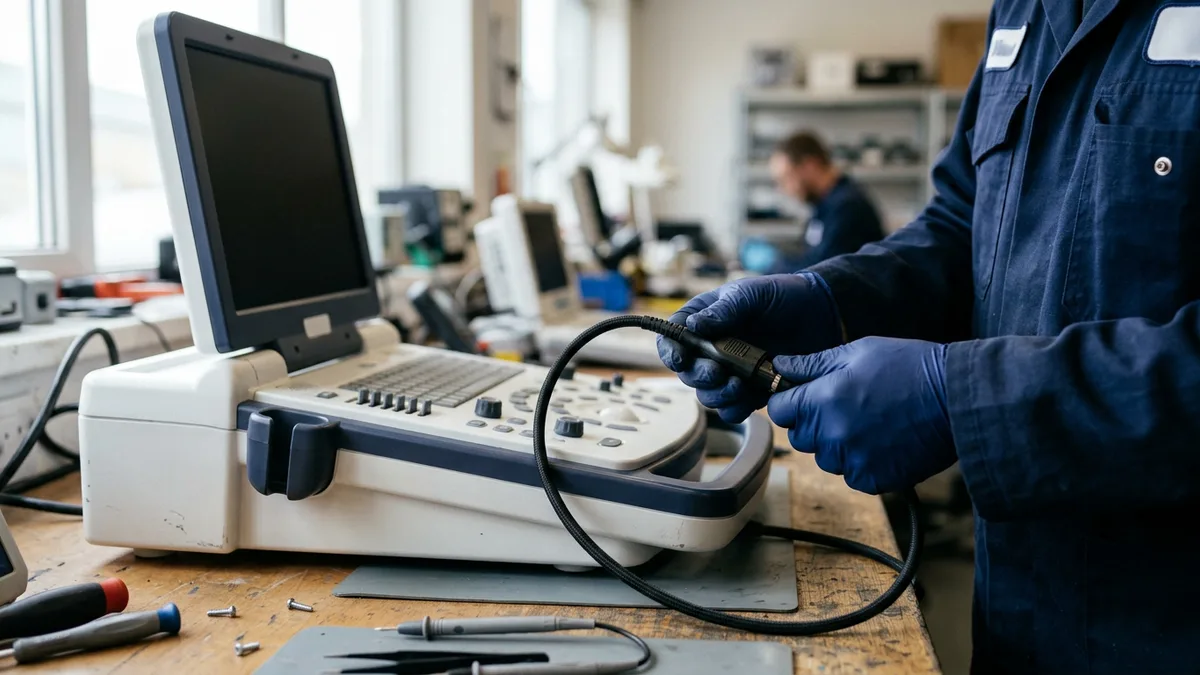
Ask each provider three things: whether it finances used or refurbished units at all, whether it limits the age of the unit or the type of seller, and whether a private sale changes anything. Our page on used equipment financing covers the paperwork.
Easy to forget. Ask when the manufacturer’s software support for the model ends. Resale value is part of what a lender weighs. A system nobody supports is harder to resell.
When the Lease Ends
Some imaging systems keep patient images on internal storage. Hand one back with the storage intact and patient data may leave with it.
Section 164.310(d) of the HIPAA Security Rule, published in 2003 and amended in 2013, requires a covered entity to have policies for the final disposition of electronic protected health information and for the hardware or media that holds it, plus procedures to remove that information before media are made available for reuse. Before you sign a lease on anything that stores patient data, ask the lessor in writing who clears the storage at return, who documents it, and who pays. Your compliance officer or counsel should read that clause.
The rest of the ending is the usual three. Return it. Renew it. Buy it. A fair market value lease prices the buyout at what the unit is worth then, a $1 buyout lease is built so the practice keeps it, and a loan has no ending to decide. Our post on operating and finance leases covers how the two lease types differ.
Surgery Centers, Imaging Centers, and Clinics
Buyers weigh the same questions differently.
- An ambulatory surgery center buys for several operating rooms at once. Ask whether one agreement can carry the lights, tables, scopes, and a C-arm, or whether each goes on its own paper.
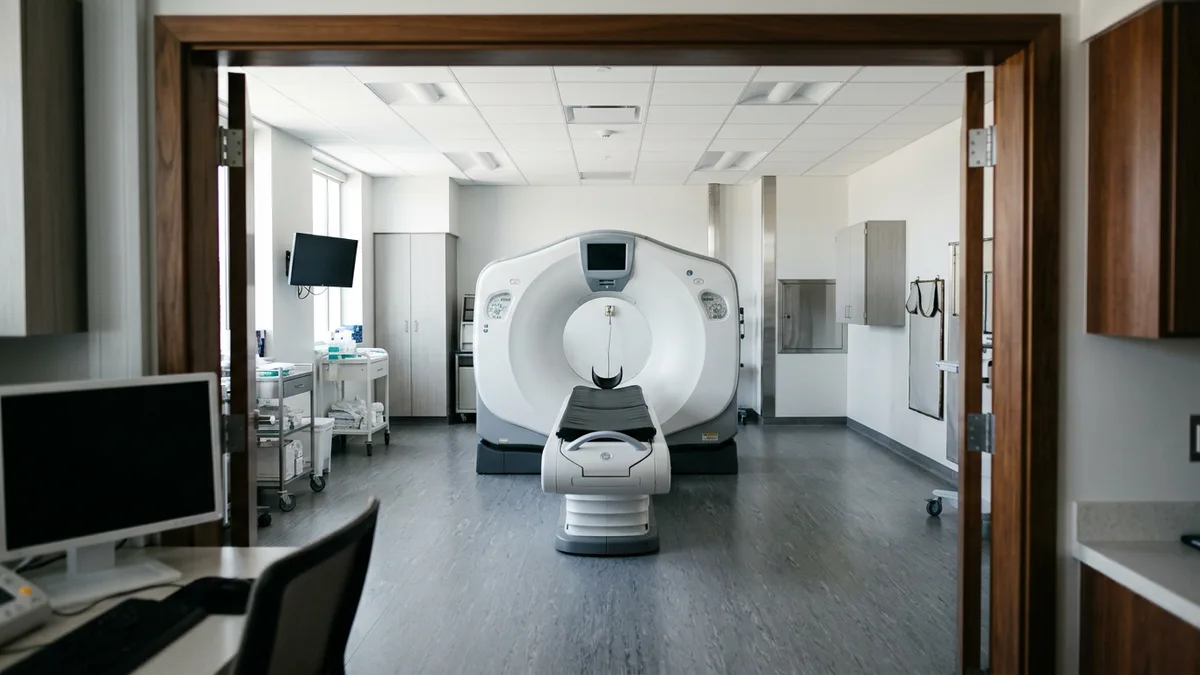
- An imaging center buys a few costly machines on a technology cycle, so term length and the end-of-term option carry the most weight. What an MRI machine costs covers the machine side.
- A multi-location urgent care repeats one purchase at every new site: an X-ray unit, an ultrasound, a sterilizer. Ask whether the first agreement’s terms carry to the next, and read X-ray machine prices before you budget.
- A small-town clinic often buys a single machine. The seller’s service reach can matter as much as the payment, since a repair visit may mean a long drive.
Whether a given provider finances a given kind of buyer is that provider’s answer to give. Ask. Opening a practice rather than adding to one? Starting a medical practice covers the order of things.
Where Paramount Financial Fits
Paramount Financial is an equipment leasing and financing company in Scottsdale, Arizona. That’s all this post claims about us. Put the six questions to us and to everyone else.
Sometimes no provider is the right answer, because cash that won’t thin out working capital, or a credit line already in place, can pay for the unit without a second company and a second lien on the books. For the same comparison across every equipment type, see our comparison of lenders across all equipment types.
Questions From Practices Weighing a Lender
Can a refurbished ultrasound or digital X-ray be financed at all?
That depends on the provider, and the answer comes with conditions. Some lend on refurbished units from an established seller and decline a private sale. Some set an age limit. Ask before you sign the purchase order, and bring the seller’s service records.
Should a practice lease or buy imaging equipment?
Shelf life decides most of it. Imaging equipment ages on a technology cycle, so a lease with a return or renew option often fits. Exam tables and surgical lights outlast that cycle, and a loan can suit them. Price the buyout first.
How do you tell a teaser quote from a real one?
Short answer: ask what could change the figure once the file is reviewed. A real quote comes with a range and the reasons it might move. A teaser comes with one number and a shrug. Get both in writing, then add up every payment plus the buyout.
What do lenders look at before they approve a medical equipment deal?
Four things get read: the equipment, the seller, the practice, and whether the paperwork agrees with itself. Each lender weighs them differently, so ask what it reads first. Used units lean harder on resale value. Mismatched quote, invoice, or application? Fix that before you apply.
Does a lease end with patient data still on the machine?
It can, if nobody plans for it. Some imaging systems store patient images internally, and 45 CFR §164.310(d)(2) requires covered entities to have procedures for removing protected health information from media before reuse. Settle who clears the storage, who documents it, and who pays, before you sign. Have counsel read the clause.
Do a surgery center and a small-town clinic ask different questions?
Mostly the same six, in a different order. A surgery center puts one agreement covering many rooms near the top. A single-machine clinic puts local service near the top. Same list. Different order.
Next Steps
Quote in hand? Our guide to medical equipment financing and leasing shows how the loan and lease paths line up. Ready to apply? Start an application once you’ve picked the equipment.