
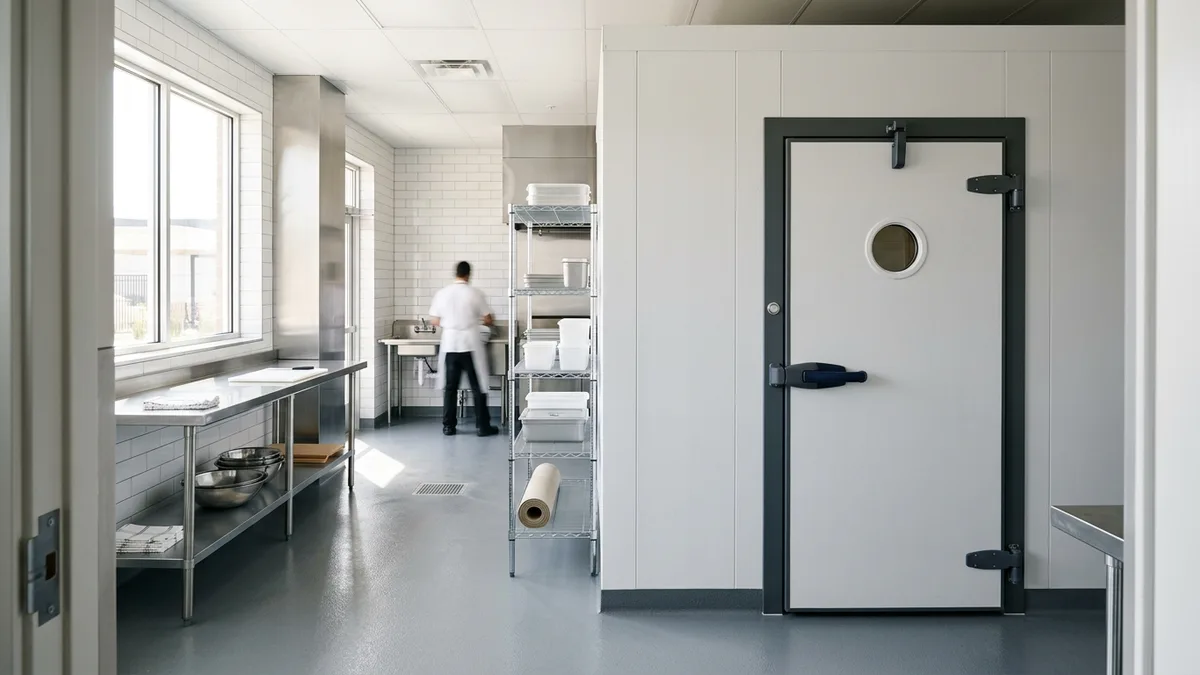
How Much Does a Walk-In Cooler Cost? Sizes, Installation and Used Units

Key takeaways
How much does a walk in cooler cost? One dealer’s current listing puts a new 10-by-12 unit at $15,149, and a used 6-by-8 unit recently sold for $6,800; a full installed project runs higher, commonly $12,000 to $25,000.
- Floor and refrigeration placement move the price more than size alone.
- The same model number ranged from $15,149 to $47,079 across retailers, mostly over whether a floor came with it.
- A used unit saves money up front. It almost always costs more later in service calls.
Ten dealers, ten numbers. That’s what you get asking how much a walk-in cooler costs, because the term covers a box, a door, a refrigeration unit, and sometimes a floor, and sellers bundle those four pieces differently every time. No two bundles alike. Pricing a restaurant kitchen, whether through restaurant equipment financing or cash, starts with pulling the pieces apart. Not one number off a cost-guide homepage.
What Sets the Price of a Walk-In Cooler
It’s a built room, not an appliance. Four things move the price: square footage, whether a floor ships with it, whether the compressor sits on top of the box or somewhere else entirely, and condition, if it’s used. That’s the short list. The long one has forty variables and nobody prices those on the phone.
Size tracks panel count, roughly, so bigger costs more. Unsurprising. Floor is where buyers get surprised. Skip it and the price can drop by thousands, because a floorless unit assumes the slab underneath is already insulated and sealed, which code usually requires anyway under commercial refrigeration. Some restaurants skip the floor on purpose for exactly that reason.
Top-mounted compressors sit on the box. Right in the kitchen. With its own heat and noise. Remote units move the compressor to a roof or an outside pad, quieter where the cooks work, for a bigger install bill.
New Walk-In Cooler Cost by Size
Here’s a model number, priced three ways by three sellers. Same unit. Not the same number.
| Configuration | Price | Source |
|---|---|---|
| 10′ x 12′ x 8′, top-mounted | $15,149 | WebstaurantStore, Nov. 2026 listing |
| Same model, different seller, discounted | $20,211 | Second retailer, Nov. 2026 listing |
| Same model with an ERA floor | $47,079 | Third retailer, Nov. 2026 listing |
$15,149
WebstaurantStore’s listed price for a Kolpak P8-1012-CT, a 10-by-12-foot top-mounted unit, as of November 2026.
Thirty-two thousand dollars of daylight between the cheapest and the priciest line on that table, and it’s almost all the floor. Dealers sell the ERA floor as its own line item, a structural panel with its own insulation under the whole footprint, rather than folding it quietly into one base number. So ask what’s actually in a quote. Every time. Before you set two side by side and assume you’re comparing the same box.
Used Walk-In Cooler Cost and the Risk With It
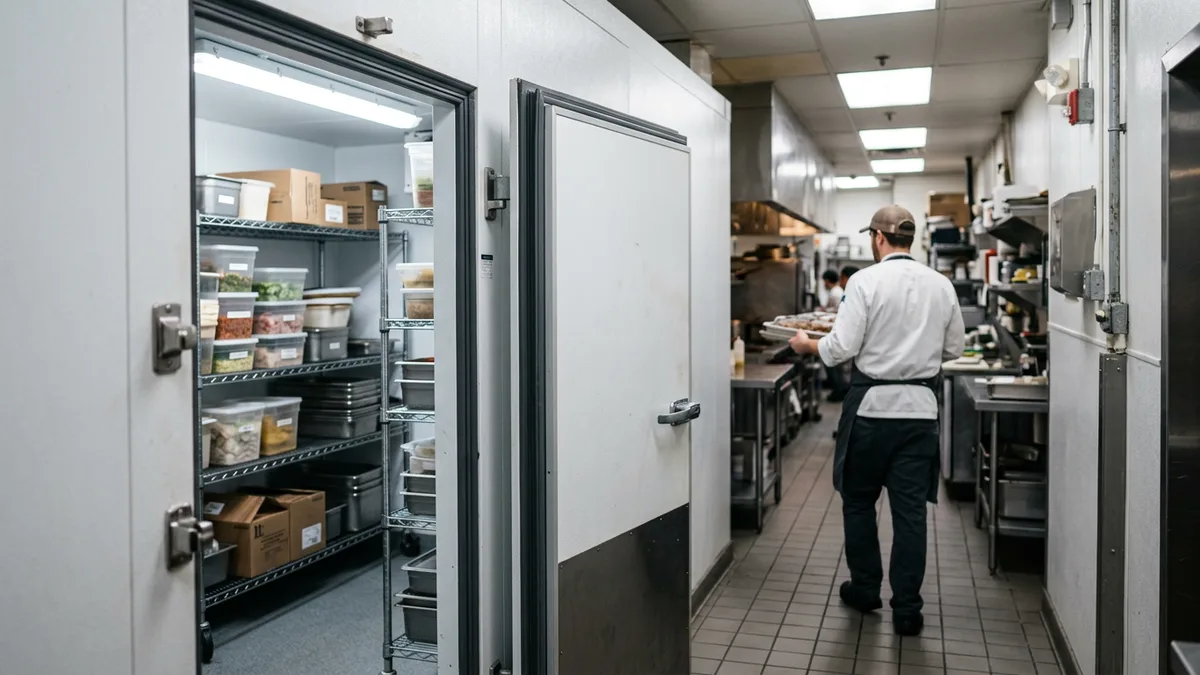
$6,800. That’s what a used 6-by-8 Nor-Lake, a 2020 model with its floor, recently sold for on one reseller’s site. Less than half a comparable new unit. The savings are real.
So is the risk.
| New unit | Used unit | |
|---|---|---|
| Warranty | Typically one year on parts, sometimes longer on the compressor | Often 30 to 180 days, if any |
| Floor condition | New, unblemished | Inspect for rust, pitting and seal gaps first |
| Refrigeration age | Zero hours | Unknown unless the seller discloses it |
| Price for a comparable footprint | $15,149 and up | $6,800 and up |
Price the floor and the refrigeration placement first. Then compare two “same size” quotes, not before. Most cost guides skip that step entirely and go straight to a dollar range. A used 8-by-10 with no floor and a tired remote compressor can run more, over a year, than a new unit with a fresh warranty. Even though the sticker says less. That’s the part a sticker never tells you.
Our page on financing a used walk-in cooler covers new and used units, and what to check before signing anything.
What Installation Adds to the Cost
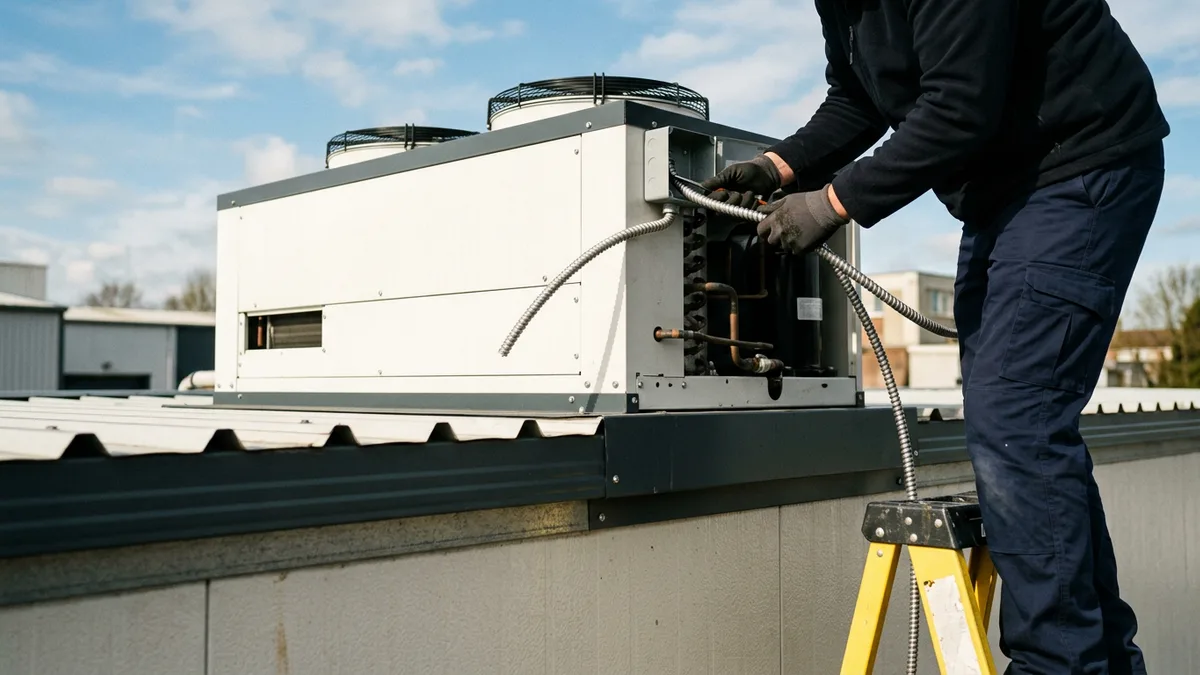
The box and the compressor are the start, not the finish, for most restaurants. One 2026 cost-guide breakdown puts the equipment alone at $1,000 to $10,000, labor at $2,000 to $5,000, and a typical restaurant-grade project, installed, at $12,000 to $25,000.
$12,000 to $25,000
What a standard restaurant walk-in cooler project runs installed, per a 2026 cost-guide estimate, once electrical, slab work and permits are added to the equipment.
Source: ThePricer, 2026 cost guide
Electrical, permits, slab work, shelving, freight access to the kitchen door. None of it. A quote that skips all five isn’t a real number yet, it’s a down payment on one. Ask what’s included. Every time. Nothing optional there.
And the box has rules to clear beyond anyone’s budget. NSF/ANSI 7 sets the minimum materials and sanitation bar for walk-in coolers and freezers, and most local health codes lean on it, plus two companion standards, NSF/ANSI 2 and NSF/ANSI 51, for construction. New units going forward also answer to the Department of Energy’s updated energy conservation standards for walk-in refrigeration systems and non-display doors, a rule finalized in December 2024. Neither standard touches the price tag directly. Both explain why a compliant new unit costs more than a bare box with a compressor bolted on top.
Common Questions About Walk-In Cooler Costs
Why does one site say $15,149 and another say $47,079 for the same model?
The floor, mostly. That Kolpak model number sells with and without an integrated ERA floor, and sellers price the floor on its own line, so two listings for “the same cooler” can be two different products once it’s counted. Check the configuration line before comparing numbers.
Is a used walk-in cooler worth buying instead of new?
Short answer: it depends on the warranty, not the sticker. A $6,800 used unit with 30 days of coverage and no compressor history can cost more over three years than a new unit at double the price. One bad service call changes the math fast.
Does skipping the floor actually save money?
Usually, when the slab underneath is already sealed and insulated to code. A floorless unit drops a structural panel and its insulation from the build entirely, and several dealers price that gap in the thousands, not the hundreds.
What does NSF/ANSI 7 actually require of a walk-in cooler?
Minimum food-protection and sanitation rules for the materials, design and construction of the box. Zinc-coated materials only go in certain places. Gaskets and seams follow set rules. Most health departments inspecting a restaurant kitchen expect a certified unit. Full stop.
Do walk-in coolers have to meet federal energy rules?
New ones do. The Department of Energy finalized amended efficiency standards for walk-in refrigeration systems and non-display doors, published December 2024, and manufacturers build to them now. An older used unit answers to whatever standard applied the year it shipped. Nothing more.
Top-mounted or remote refrigeration: which costs less to run?
Depends on the kitchen layout more than the unit. Top-mounted dumps the compressor’s heat and noise right into the room, fighting the kitchen’s own cooling load. Remote moves that heat outside for a bigger install bill, and a busy line often earns that back in comfort, if not on paper.
Can a restaurant finance a walk-in cooler instead of paying for it outright?
Some lenders do, bundle and all: box, installation, floor, together. What actually gets financed, and on what terms, comes down to the equipment’s age, its condition, and the paperwork a seller can hand over. Bring a real quote before you ask.
Next Steps
Box priced. Floor decided. Installation number in hand. Next question: how to pay for it. Our page on planning a restaurant kitchen covers the equipment list this guide leaves out, and our page on used equipment financing picks up where the warranty questions above stop. You can also see how Paramount Financial finances restaurant equipment, or start an application.