
Last updated: November 7, 2026
Packaging Equipment Financing for Manufacturers and Co-Packers
How loans and true leases fit fillers, labelers, case packers and palletizers, one machine or a whole line.
Packaging equipment financing pays for a filler, labeler, case packer or palletizer over a set term, as a loan or a true lease, so the line runs and earns while the balance shrinks.
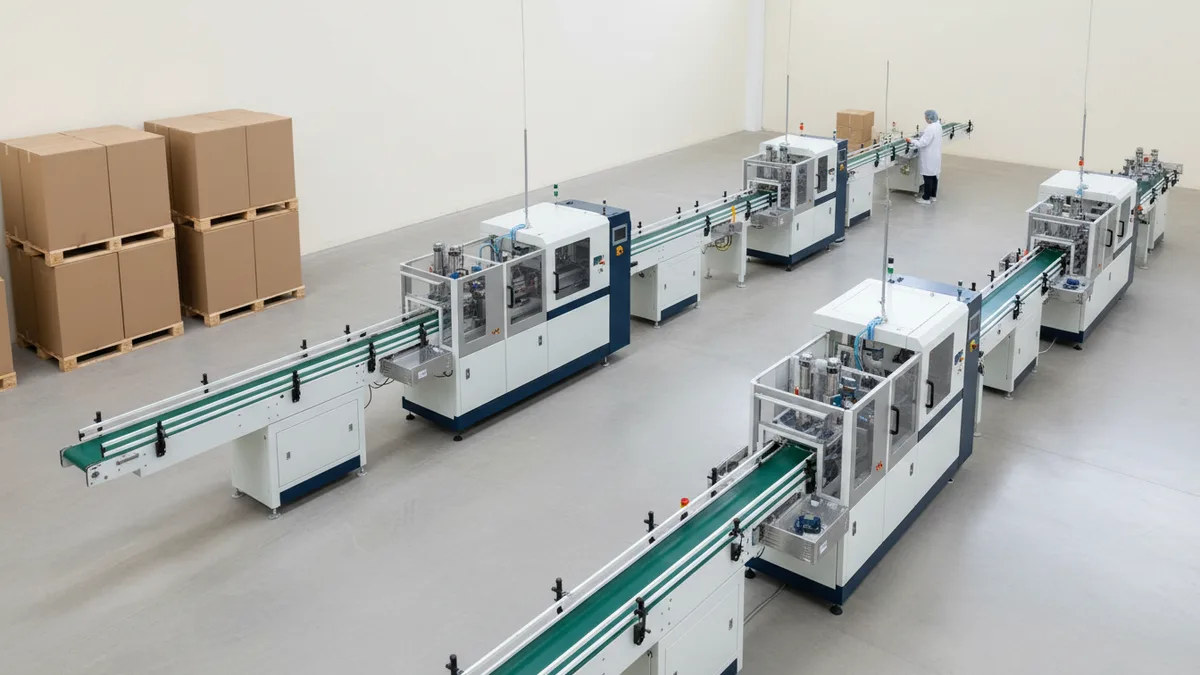
Count the stations on any line you’ve walked. A line is filler, closer, labeler, case packer and palletizer, with conveyors tying them together, and it moves at the speed of its slowest machine, so this page, under our guide to commercial equipment financing, goes deeper on packaging than the guide can.
Paramount Financial offers true equipment leases, including operating leases, not only loans. Questions first? Contact Paramount Financial’s team.
Packaging equipment financing follows the line, station by station
Walk a line from the infeed to the dock and you pass five kinds of machine. A stainless filler and a vision-guided palletizer don’t age alike, so price the line whole, then sort the stations into the ones that earn a loan and the ones that earn a lease.
End-of-line automation such as robotic palletizers and AMRs gets its own call-out in the summary of PMMI’s 2026 Packaging State of the Industry. Those stations change fastest.
Fill and dose
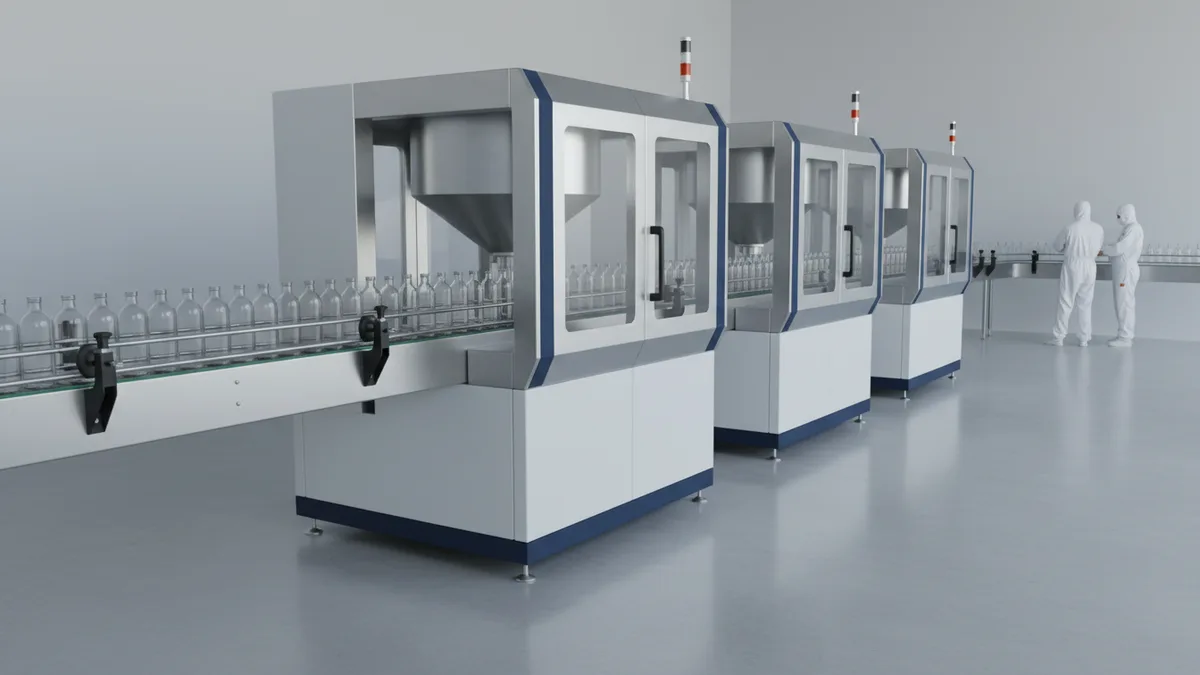
A rotary filler works a ring of nozzles, a piston filler pushes product one stroke at a time, and auger or weigh fillers handle powders and snacks. Seals wear first. A filler built to run for years points to a loan or a $1 buyout lease.
Seal and cap
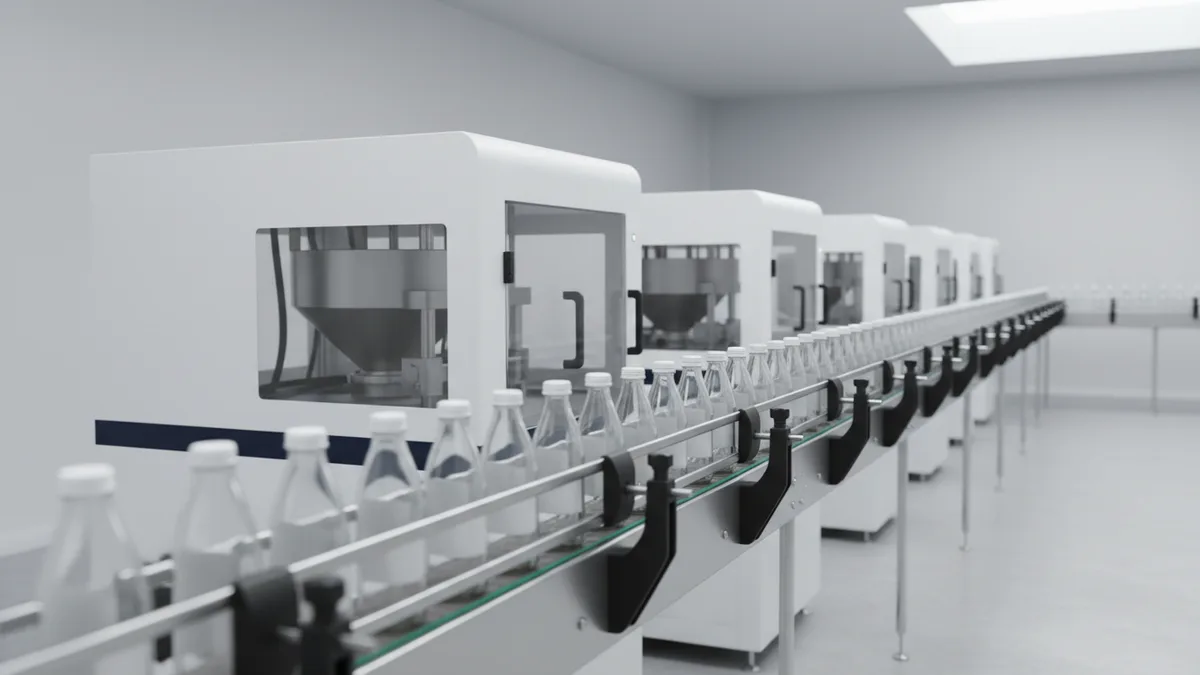
Induction sealers, cappers, flow wrappers and shrink tunnels run on heat, film tension and servo motors, and the heating elements are what get replaced. Wear is steady. A machine you’ll keep suits a loan or a buyout lease.
Label and code
A pressure-sensitive labeler follows the label stock, and a coder follows whatever the code has to say that month. Heads and controls age fastest. Price a defined-end lease beside a short loan.
Case pack
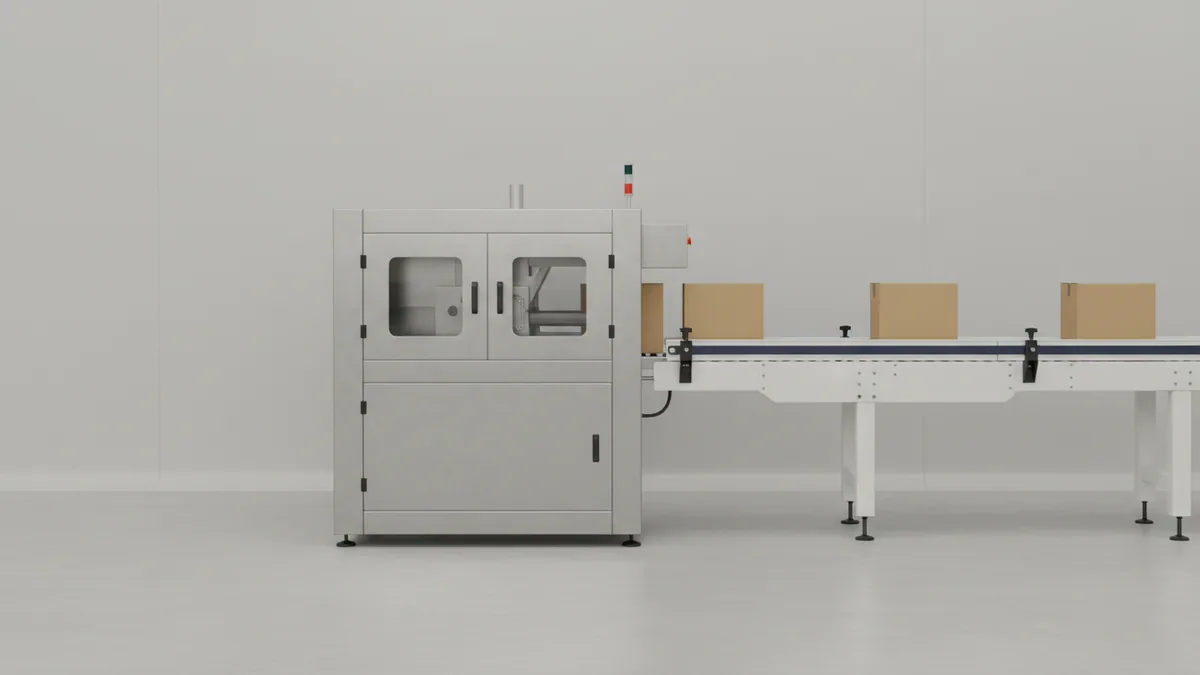
A case packer is built around one carton footprint. A second footprint means a second tooling set, and a co-packer with five customers can end up buying five. Ask what a changeover costs.
Palletize and wrap
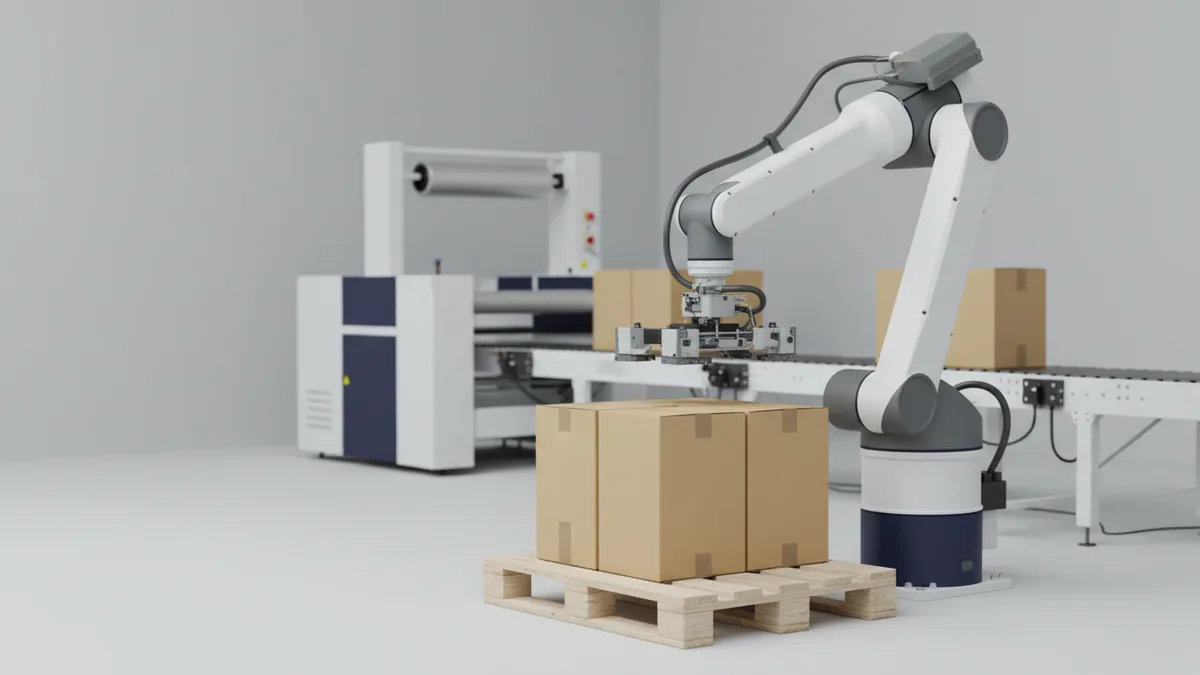
A robotic palletizer pairs an arm with vision software, an AMR hauls the finished pallets, and a stretch wrapper binds them. Software turns over fast. Get the maker’s support window in writing, then compare both.
Packaging equipment financing for co-packers: lease, loan and the contract behind the line
Packaging equipment financing is a loan, an equipment finance agreement or a lease that pays for fillers, wrappers, labelers and palletizers over a set term. With a loan or an agreement, the business owns the line and the lender holds a security interest. With a true lease, the lessor owns it during the term.
A co-packer’s line earns only while a customer’s contract keeps it running, so say a contract runs two years and the financing runs five. Three years are left over. They belong to the co-packer. Match the term to the contract, or to the machine’s useful life, and know which one you’re betting on.
Five questions for the lessor
Who claims the depreciation differs between a loan and a true lease. IRS Publication 946 and Form 4562, both in their 2025 revisions, explain how the cost of business property is recovered. Consult your tax advisor first.
Want the mechanics? Start with the fair market value lease, then set it beside operating lease versus finance lease. Under UCC Section 2A-103, a lease transfers the right to possess and use goods for a term in return for consideration, and a sale or a security interest isn’t a lease.
A packaging line quote, line by line
| Line on the quote | What ages it | Structure worth pricing first |
|---|---|---|
| Filler (rotary, piston, auger or weigh) | Nozzles, seals, change parts and the product’s own abrasion | A loan or a $1 buyout lease for a filler you’ll keep |
| Capper, sealer or wrapper | Heating elements, the film path and servo motors | A loan, or a lease with a purchase option, when the product mix is stable |
| Labeler and coder | Print heads, controls and label redesigns | A lease with a defined end, or a short loan |
| Case erector, packer and sealer | Tooling for every carton size, plus belts and grippers | A loan when case formats hold steady, with tooling priced as its own line |
| Robotic palletizer or AMR | Vision, software and the years a maker keeps supporting them | A lease with a written support window, or a loan sized to a shorter life |
| Conveyors, accumulation and guarding | Slow wear on chains, belts and drives | A loan, since these stay useful for years |
| Install, commissioning and training | One-time costs that don’t age at all | Ask whether they sit inside the financed amount or get billed apart |
Vendors will quote one line two ways when asked, as a lease and as a loan, so write down what each leaves you owing, and holding, on the last day of the term. Then compare. Our leasing versus buying equipment guide walks through that sum.
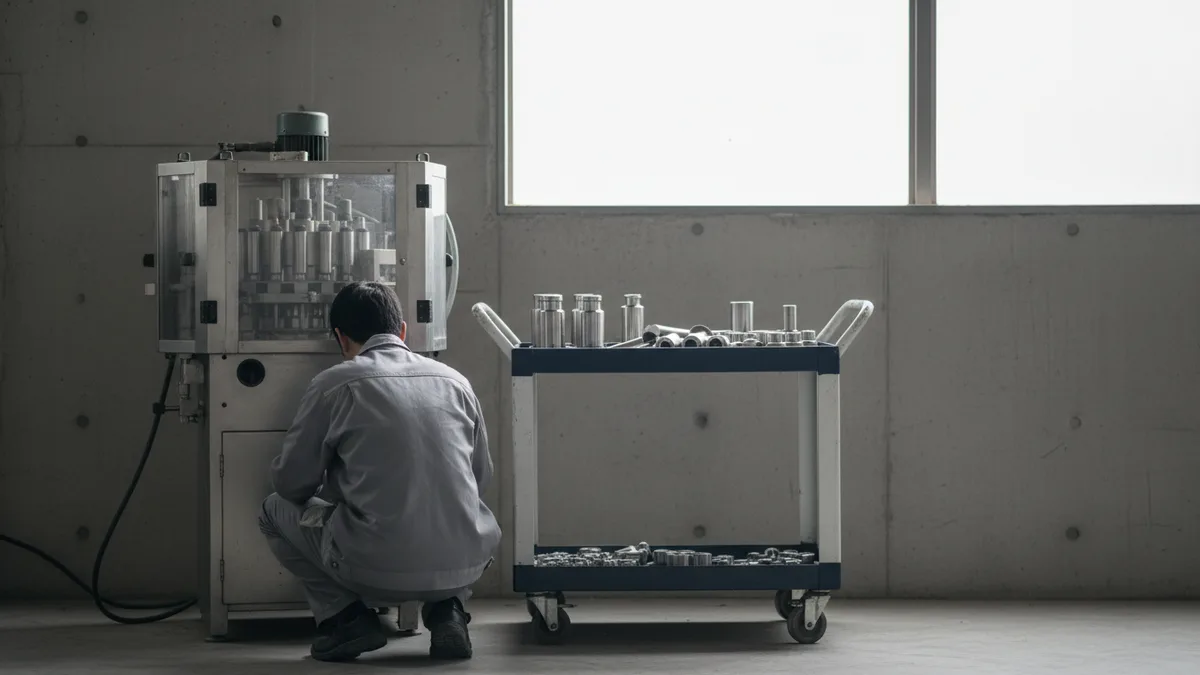
Used packaging equipment financing starts with the change parts
A used filler or case packer is worth what it can still run. Count the change parts and tooling for every product and carton size you plan to run before you count the price, because a lender with no price list for a used model leans on age, condition and resale value, and what you see on the walk-through carries weight.
Run it first. Older machines get more room on our used equipment financing page.
Other routes to compare before you finance a packaging line
Compare more than leases and loans. Bank term loans, maker programs and the SBA’s 504 program all deserve a quote. The 504 loan page describes eligible equipment as long-term machinery with a useful remaining life of a minimum of 10 years, so a filler or conveyor system built to outlast a decade could fit, and shorter-lived equipment doesn’t. Paperwork and review take weeks.
Makers and dealers sometimes bundle installation and training into one quote, so line it up against an outside lease item by item, and a new contract can also strain cash before it pays. Some co-packers cover those first weeks with working capital, because a line’s first payment can fall due before the first invoice gets paid.
Packaging machinery in numbers
$11.7 billion
US domestic shipments of packaging machinery in 2025
$3.8 billion
of packaging machinery imported into the United States in 2025
75.9%
US manufacturing capacity utilization in September 2026
Four things to settle before you sign for a line
Keep reading: related machines, shops and lease structures
What manufacturers and co-packers ask before they finance
How do manufacturers usually finance a new packaging line?
Manufacturers usually match the structure to each machine’s working life, with a loan or a buyout lease for long-lived steel and a defined-end lease for fast-aging automation. Say a filler will run a decade and a palletizer’s software will look old in four years. The filler goes on a loan, the palletizer on a lease. One quote, two structures.
Should a co-packer lease or buy its packaging equipment?
The deciding fact is the contract behind the line, set against the financing term. Take a line built for one customer who signed for a single year, and a five-year loan leaves four years of payments with no account behind them. A dozen customers change this. Owning can make more sense.
Can a whole packaging line be financed as one package?
Often, when the machines come from one vendor on one quote, because a lender can then write a single agreement for the whole line. Say the line has a filler, a labeler and a case packer from three makers. That’s three quotes, and it can mean three agreements. Ask the lender up front whether it will combine them.
Can used packaging equipment be financed?
Short answer: many lenders do, and they underwrite the machine itself, meaning its age, condition and resale value. A used filler with half its change parts missing is a machine that can’t run the product yet, and a lender reads it that way. For a private sale or an auction buy, ask what paperwork the lender wants before you agree on a price.
What does a packaging machine quote leave out?
Installation, change parts and commissioning usually sit outside the machine’s price, and delivery day brings riggers and electricians while the plant may need air, power and floor drains ready first. A food line also has validation paperwork before the first saleable case. Walk the plant with the vendor.
How do lenders look at a newer co-packing business?
Lenders reviewing a newer co-packing business tend to weigh the owner’s years in food or manufacturing, the equipment being bought and how the plant will cover payments month after month. Say the plant has two signed customers and an owner who ran a line for ten years elsewhere. That story, told with the contracts in hand, answers what a lender is asking. The startup equipment financing page lists what to line up first.
What do you need to apply for packaging equipment financing?
Bring the vendor’s itemized quote, a short profile of the business and, for a used machine, the serial numbers and the seller’s details. Lenders differ. Some also ask for recent bank statements or tax returns, and some want a certificate of insurance naming them as loss payee on the machine. Have it ready.
Pricing a filler, a case packer or a whole line?
Tell us what’s on the quote and when the line has to run. Use the form below. Or apply online.