
Last updated: November 7, 2026
Commercial Embroidery Machine Financing for Apparel Shops
See how lenders read a multi-head embroidery machine, new or used, and what to have ready.
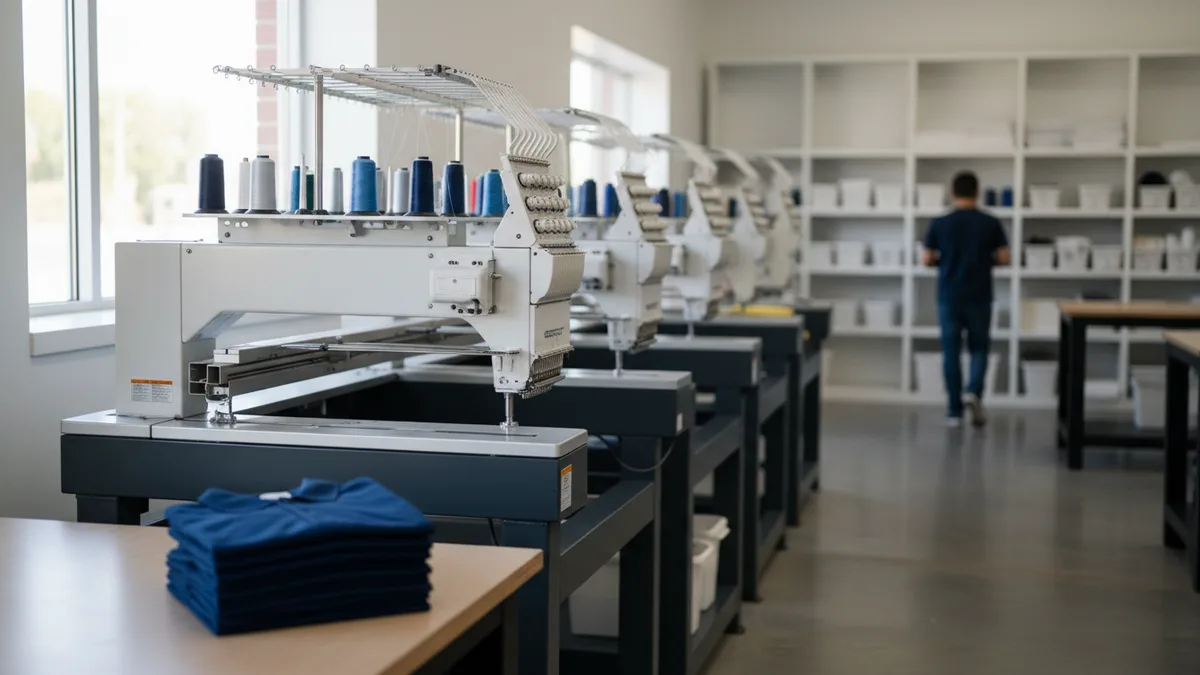
Embroidery machine financing pays for a commercial single-head or multi-head machine through a loan, equipment finance agreement or lease, and the lender reads the machine, its age and the setup costs around it together.
Embroidery looks small. Then the orders get big. One head stitches one garment at a time, and a multi-head stitches the same design on several at once, which is where a commercial machine stops being a bench tool and becomes a major purchase.
This page sits inside our guide to commercial equipment financing and stays with the embroidery machine itself. Presses, dryers and DTF printers belong on our screen printing equipment financing page, and the mechanics behind loans and leases live in how equipment financing works.
How embroidery machine financing reads a single-head and a multi-head
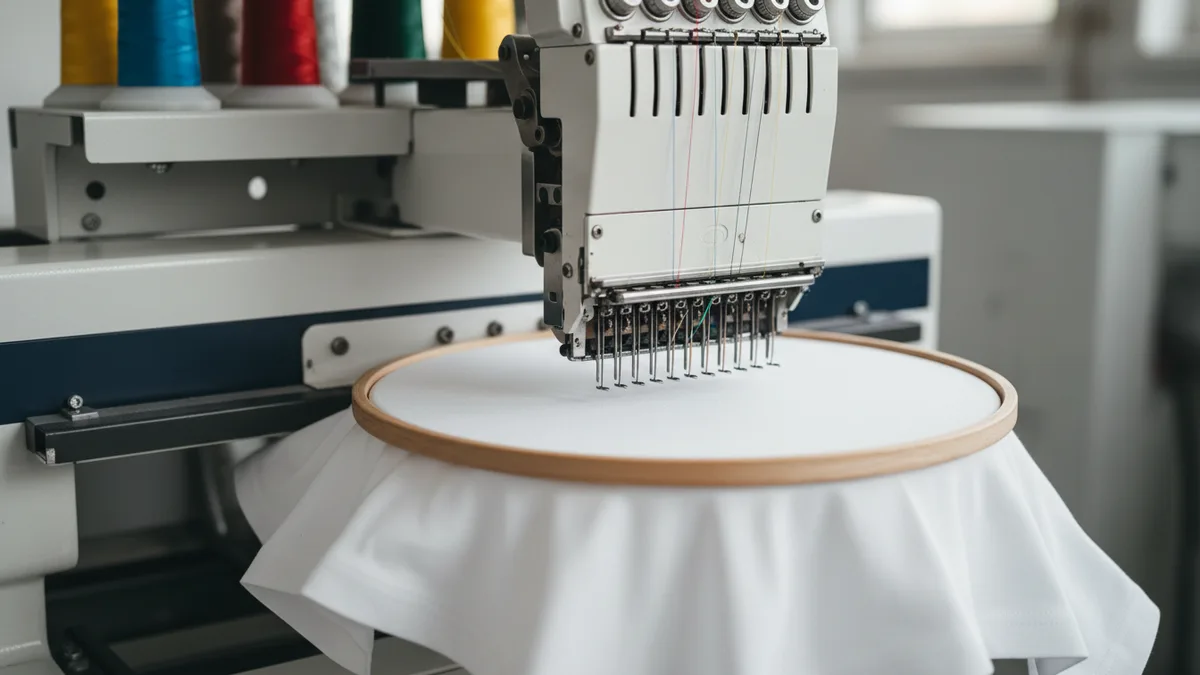
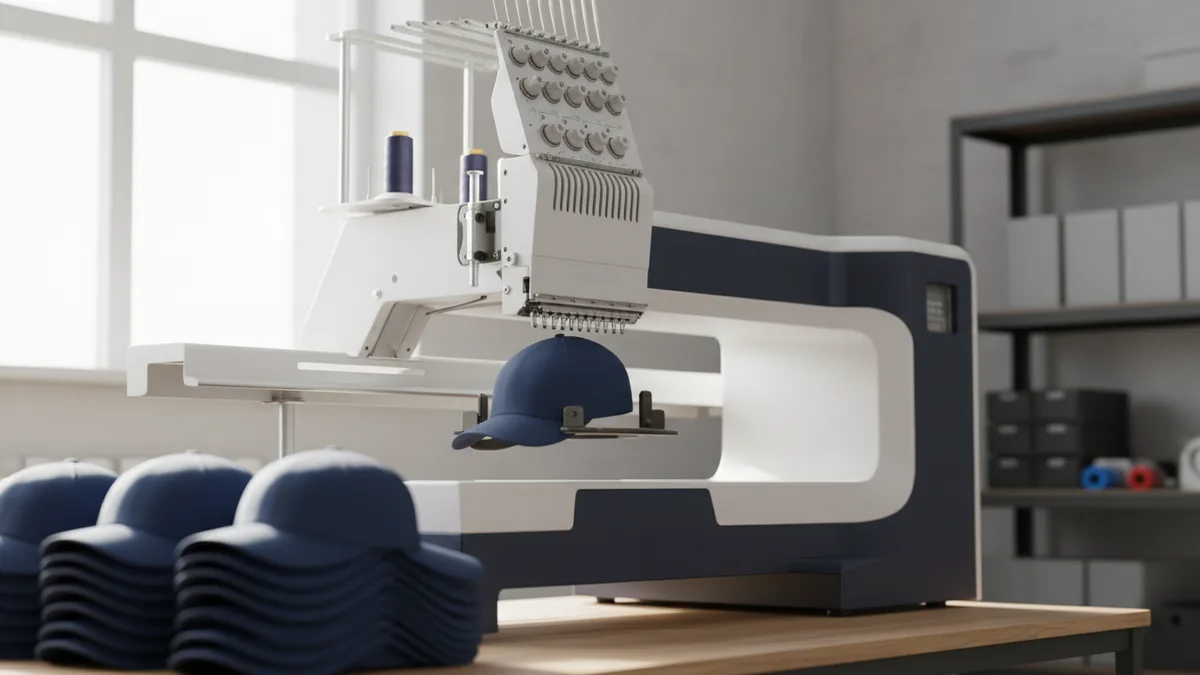
Embroidery machine financing is a loan, equipment finance agreement or lease that pays for a commercial embroidery machine. With a loan or finance agreement, the machine itself secures the debt; with a lease, the lessor owns it for the term. A lender prices what’s installed in your shop, heads, hoops and software included, not just the headline price.
Makers matter to a lender. Tajima, Barudan, Melco and Ricoma are names that turn up often on dealer floors and used listings, and Tajima’s product lineup shows how a maker sorts machines by head count and type. A familiar name with a supported control is easier to place than a rare one with neither.
What to know before used embroidery machine financing starts
Used machines come from dealers and refurbishers, other shops that are upgrading or closing, auctions and private sellers, and each hands over a different file. A refurbisher may have run every head and replaced the wear parts, while a private seller may have a phone number and a photo. Photos aren’t proof. Lenders read a short list.
Ask for the log. Our page on used equipment financing shows how dealers and private sellers compare.
The machine is one line on the invoice
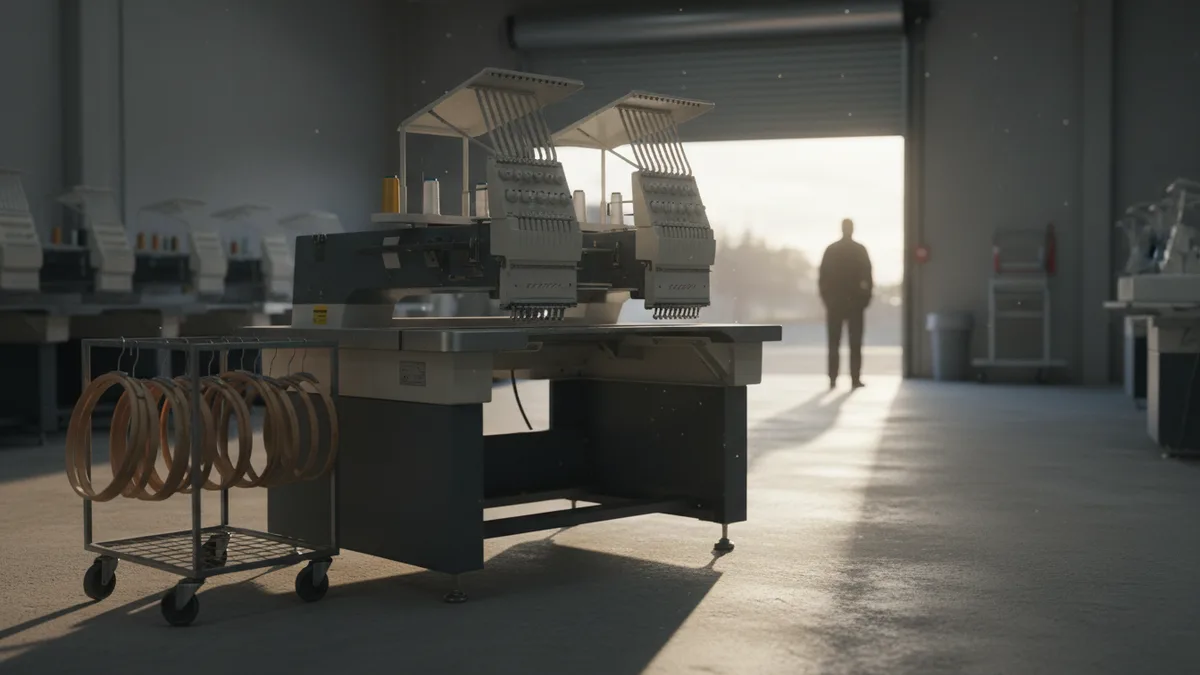
Plan the whole installation. Not only the machine. Here’s what usually rides alongside it, and what a lender may ask to see for each line.
| Line | What it covers | What a lender may ask to see |
|---|---|---|
| The machine | The base price with the heads and the control that come with it | A dealer’s quote or invoice naming the model and serial number |
| Hoops, frames and cap drivers | The hoops and frames for each garment size you run, plus a cap frame if caps are in the mix | An itemized accessory list from the dealer |
| Digitizing and design software | The software that turns artwork into stitch files, and a digitizer’s time if you outsource it | The software quote or its subscription terms |
| Training and setup | Operator training, threading, tension setup and a first test run | The dealer’s training and setup invoice |
| Freight, table and electrical | Crating and delivery, a stand or table, and any electrical work the maker’s specs call for | The carrier’s quote and the electrician’s quote |
Lenders differ on which lines they’ll include in the financed amount, and software and training are common examples of lines that get quoted apart. Ask before you sign the dealer’s quote, and get it in writing. A line the lender leaves out is paid from the shop’s cash. Our pages on equipment lease agreements and the top 5 mistakes companies make when buying equipment cover the terms and traps worth reading first.
Supplies are a different cost. Thread, backing and stabilizer all fall there, and our working capital page covers the cash that keeps a new machine busy.
Loan, finance agreement or lease when the technology keeps moving
A loan or an equipment finance agreement makes the shop the owner, with the lender holding a lien. A lease doesn’t. The lessor keeps title for the term. A fair market value lease sets the buyout at what the machine is worth then, and a $1 buyout lease is built so the shop keeps it.
Here’s a rule of thumb. One six-head machine kept for most of a decade points toward owning, while adding heads or moving to a newer control within a few years can point toward a fair market value lease. A loan also means a UCC-1 financing statement, as UCC section 9-310 sets out, and our page on UCC filings explains it.
Three IRS figures to check before you sign for a machine
These figures come from IRS Publication 946. A business elects Section 179 on Form 4562, the machine has to be placed in service in the tax year, and you should consult your tax advisor about what applies to you. The numbers move every year.
$2,560,000
Maximum Section 179 deduction for tax years beginning in 2026
Source: IRS Publication 946, What’s New for 2026 (checked November 2026)
$4,090,000
Cost of equipment placed in service before the limit starts to shrink dollar for dollar
Source: IRS Publication 946, What’s New for 2026 (checked November 2026)
100%
Special depreciation allowance for qualified property acquired and placed in service after January 19, 2025
Source: IRS Publication 946, What’s New for 2025 (checked November 2026)
Who buys commercial embroidery machines, and what each asks of one
Equipment financing pages that sit next to this one
Embroidery machine financing questions decorators ask first
So how does embroidery machine financing actually work?
A lender or lessor pays the dealer for the machine, and the shop pays it back over an agreed term. A loan or an equipment finance agreement puts a lien on the machine, recorded in a UCC-1 financing statement, and a lease leaves title with the lessor until the term ends. Ask each lender for the total paid over the whole term, not only the monthly figure. Fine print matters.
Can you finance a used embroidery machine?
Short answer: lenders do review used commercial embroidery machines, and they read the model year, the stitch count on the control, the condition of the needle bars and hooks, and whether the maker still supports that control. Age cutoffs vary by lender. A power-on test, the service log and a serial number that matches the bill of sale all go in the file.
Is it better to lease an embroidery machine or finance it?
The better question is how many years the same machine will run the same kind of order. A ten-year plan for one six-head machine points toward ownership, through a loan or a $1 buyout lease. A plan to add heads or move to a newer control in three or four years can point toward a fair market value lease, and our leasing vs buying equipment page walks through the choice. Consult your tax advisor, because how a lease is treated for tax depends on its terms.
Can hoops, software and training be financed with the machine?
Three things decide it: whether the accessories, the software and the training are quoted with the machine, and whether the lender will include them in the financed amount. Dealers often quote hoops and frames with the machine and price digitizing software and training apart. Ask line by line before you sign, and get it in writing. A line the lender leaves out is paid from the shop’s cash.
Does an embroidery machine qualify for Section 179?
For tax years beginning in 2026, the Section 179 limit is $2,560,000, and the machine has to be placed in service in the tax year to count. A commercial embroidery machine is tangible business equipment, the kind of property the election covers. The election is made on Form 4562, IRS Publication 946 defines which property qualifies, and a lease can change who is entitled to claim it. Consult your tax advisor.
What if the shop is new and the machine is the business?
With one year of business tax returns or none to read, a lender leans on the machine’s resale market and the owner’s years in decorating. Signed purchase orders help. A lease on the shop space and a written plan for the first months of work belong in the file too. Our startup equipment financing page goes through that review.
Should a shop start with a single-head or a multi-head machine?
A single-head suits one-off names and short runs, and a multi-head suits repeat orders of one design, like team and club wear, where every head stitches that design at once. Space and power differ too. The maker’s published specs list both, and they belong in your review of the quote.
Ready to talk through your next embroidery machine?
Tell us the machine, the seller and the equipment your shop already runs, and a Paramount Financial specialist will pick it up from there. You can also open the credit application directly.