
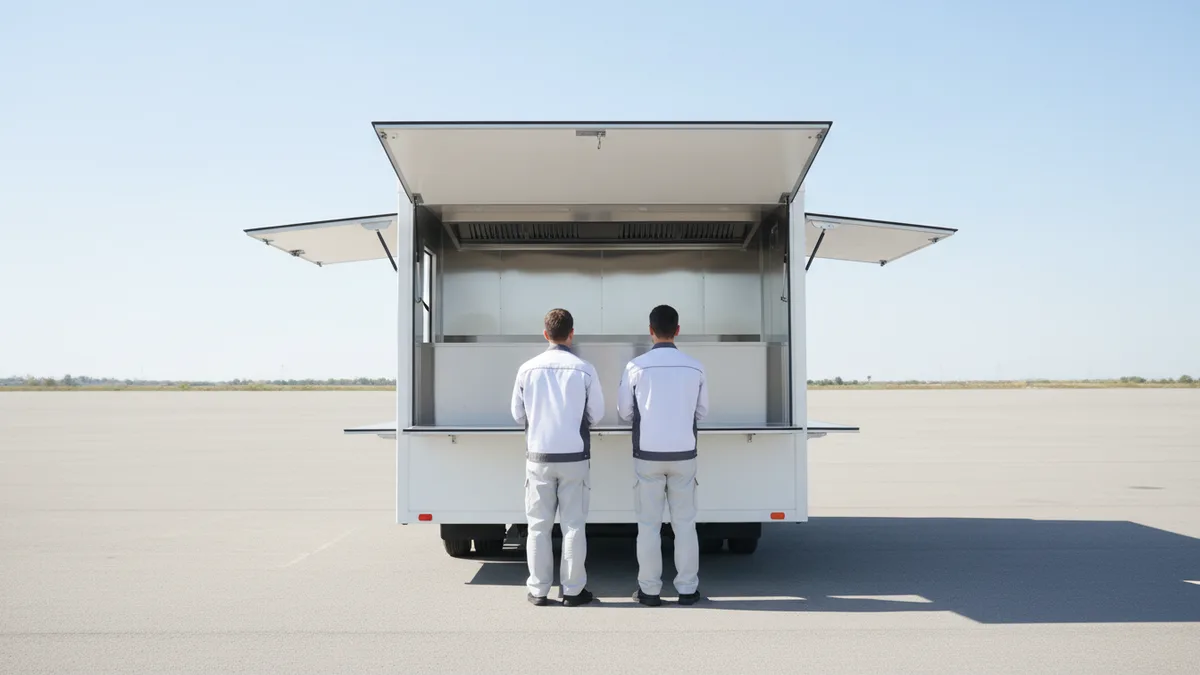
How to Buy a Food Truck: New, Used or Custom Build

Key takeaways
How to buy a food truck: pick the route where the most can be checked before money moves, then check the title, the lien, the weight rating, and your county’s plan review before any deposit.
- On a custom build you pay before there’s a truck to inspect, so get the plans approved first.
- A lien on the truck itself usually sits on the title. A UCC search finds the equipment lender, not that one.
- Read the weight rating before you fall for the layout.
- In one county we read, a used truck gets reviewed as a new one when its last inspection wasn’t clean.
Nobody buys a food truck. They buy a title, a weight rating, a health department’s approval, and a kitchen that happens to be bolted to a chassis. That’s why how to buy a food truck is a paperwork question first and a price question second.
We left the prices to our guide on what a food truck costs. This one is about order. When you reach the paying part, food truck financing lays out the options. We finance equipment, so we have a stake in how this goes.
Three Ways to Buy a Food Truck
Buying a food truck means choosing one of three routes: a used truck as built, a new truck from a builder’s inventory, or a custom build made to your plans. The routes differ less in price than in what you can inspect before you pay, and in how a health department is likely to treat the unit.
| Used, as built | New, off the lot | Custom build | |
|---|---|---|---|
| What you can inspect before paying | The actual truck | The actual truck | Drawings and past work |
| How a county may treat it | Change of ownership or reciprocity | A new unit | A new unit, plans first |
| Main risk | Hidden wear and undocumented changes | A layout you didn’t choose | Paying before there’s anything to see |
Here’s the rule we’d use. Pick the route where the most can be checked before money moves. A used truck you can drive, run, and hand to a mechanic wins that test. A custom build loses it by design, because the thing you’re paying for doesn’t exist yet.
$525 vs. $1,155
Snohomish County, Washington’s plan review fee for a mobile food unit changing owners, against a new unit, as posted on its 2026 mobile food units page.
Source: Snohomish County Health Department, Mobile Food Units, read November 7, 2026
That’s one county, so treat it as an example. It shows a used truck priced as a smaller job than a new one, and it shows the catch. A truck already permitted in another county can come in by reciprocity at no plan review fee, but only if its most recent routine inspection report shows zero cited violations. Miss that and, in the county’s words, you “must apply as a new mobile food unit.”
Buying a Used Food Truck From a Private Seller
Start with the title, before you drive anything. Ask the seller to show it and match the name on it to their ID. If the two differ, the sale waits until someone explains why. No clean title, no deal.
Then find the lender. A lien on the truck itself usually shows on its title, because under UCC 9-311 a security interest in goods covered by a certificate-of-title statute is perfected through that statute, not through a filing office. A UCC search on the seller won’t find it.
It can still turn up a different claim, because a lender that financed the kitchen equipment on its own may have filed against that equipment. Run both searches. Then ask for a written lien release on whatever either one shows.
The NMVTIS consumer site, run by the Justice Department, says its reports cover five key indicators: title state and date, brand history, odometer reading, total loss history, and salvage history. Liens aren’t on that list. A clean report isn’t a lien check.
A bill of sale should name the truck by VIN and the big equipment by serial number: the fryer, the refrigeration, the generator. “Kitchen included” invites an argument later. Be specific.
One form surprises people. Federal rules have the seller disclose mileage in writing when a vehicle changes hands, but 49 CFR 580.17 exempts a vehicle with a gross vehicle weight rating (GVWR) over 16,000 pounds and a vehicle that isn’t self-propelled. So a trailer needs no odometer statement. A heavy step van may not either.
The Weight Rating and the License
Every road vehicle has a GVWR, the most it’s built to weigh fully loaded. Find it on the manufacturer’s label. Write it down. Two rules hang on it.
26,001 lbs.
The GVWR at which a single vehicle becomes a Group B heavy straight vehicle under the federal commercial driver’s license rules.
That’s where the commercial license question starts. Below it, your state’s rules apply, and the DMV can say which. The other rule is the odometer one above.
The rating doesn’t move when the kitchen goes in, but the load does. Snohomish County’s plan review guide requires a wastewater tank at least 15% larger than the fresh water tank, so its own example pairs a 35-gallon fresh tank with a 42-gallon wastewater tank. Weigh the equipped truck.
Your County Has the Last Word
Health departments set their own rules for mobile units. Snohomish County’s are a useful example.
| The truck is | Snohomish County treats it as |
|---|---|
| Changing owners in the county | A change-of-ownership plan review |
| Permitted in another county, with the papers below | Reciprocity |
| Anything else | A new unit, starting with plan review |
Its reciprocity route, per the 2026 fee page, asks for these:
- A current annual operating permit from the county that permits the truck now.
- The approved plan review from that county.
- The latest routine inspection report, which must show zero cited violations.
- A commissary agreement, if one applies.
Washington adds a state layer. Its Department of Labor and Industries approves the electrical, structural, and mechanical work on an occupied truck. Our guide to starting a food truck business covers the permit and commissary order. Order matters.
Buying a New or Custom Food Truck
Snohomish County reviews a new truck as a new unit, whether it comes off a builder’s lot or is built to your plans. Its plan review guide has four stages: plan submission, an approval letter, a pre-operational inspection, and the permit. Its caution comes with the approval step: “do not purchase equipment or begin construction until you have Snohomish County Health Department written approval.” Plans first, metal second.
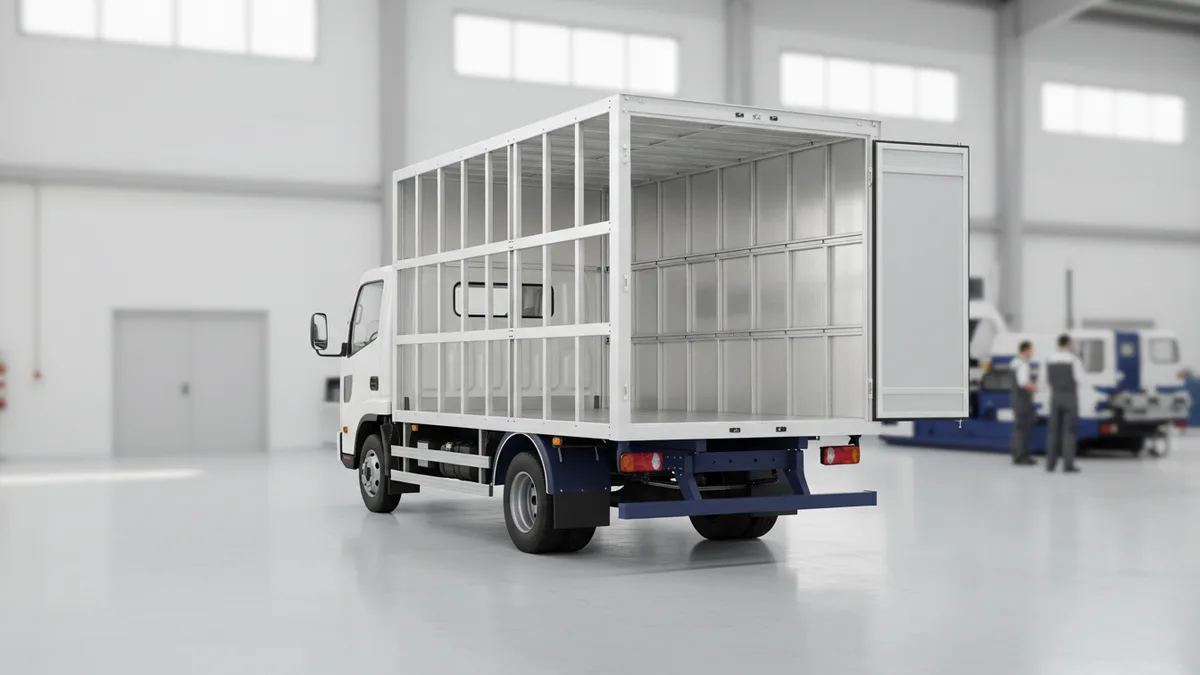
Payment stages worth writing into the build contract:
- The chassis delivered.
- The box mounted.
- Equipment installed, with serial numbers listed.
- The county’s pre-operational inspection passed, before the last payment goes out.
Paying for the Truck
A private sale changes the paperwork a lender asks for. Lenders commonly want:
- The bill of sale.
- The VIN and the title details.
- Proof that the seller’s lien is cleared.
Each lender sets its own rules on private-party deals, and cash or a credit line you already have is another route. Ask first. Our page on used equipment financing covers what generally gets reviewed on an older asset.
Questions Buyers Ask Before the Deposit
Do you need a commercial license to drive a food truck?
The federal definition of a Group B heavy straight vehicle, in 49 CFR 383.91, starts at a gross vehicle weight rating of 26,001 pounds. Below that, your state’s licensing rules apply. Check the vehicle’s rating, then ask your DMV.
The seller says the truck is paid off. What should the title show?
Then the title shouldn’t name a lienholder, or the seller should hold a signed release from the lender that did. A lien notation stays until that lender releases it, whatever the seller says. Paper beats promises.
Can used equipment from a private seller be financed?
Some lenders finance private sales and some deal only with dealers, so ask each one before a deposit moves. Without a dealer, the bill of sale, the VIN, the title, and any lien release carry the file. Our page on financing a food truck covers new, used, and private-sale purchases in general terms.
Does a trailer need an odometer statement?
Not under federal rules. 49 CFR 580.17 exempts a vehicle that isn’t self-propelled. A truck is different: only one over 16,000 pounds GVWR is exempt on weight, and the age exemption starts after 10 years for model year 2010 and older, or 20 years for 2011 and newer.
Is a food truck built in another state a bad buy?
A truck permitted somewhere else is the one to show your health department first. Snohomish’s reciprocity route wants a zero-violation inspection report, and a truck that can’t meet its list is reviewed as a new unit. Ask early.
Is a custom build slower than buying a used truck?
Usually. A used truck that already passes has had its design, plan approval, and build done, and a custom build does all three in order. The builder lead times we read named no source, so ask for a written schedule.
Next Steps
Pick one truck. Then ask its county health department the change-of-ownership question, in writing, before anything else moves. With a real quote on paper, read about financing options for a new or used truck, or start an application.