
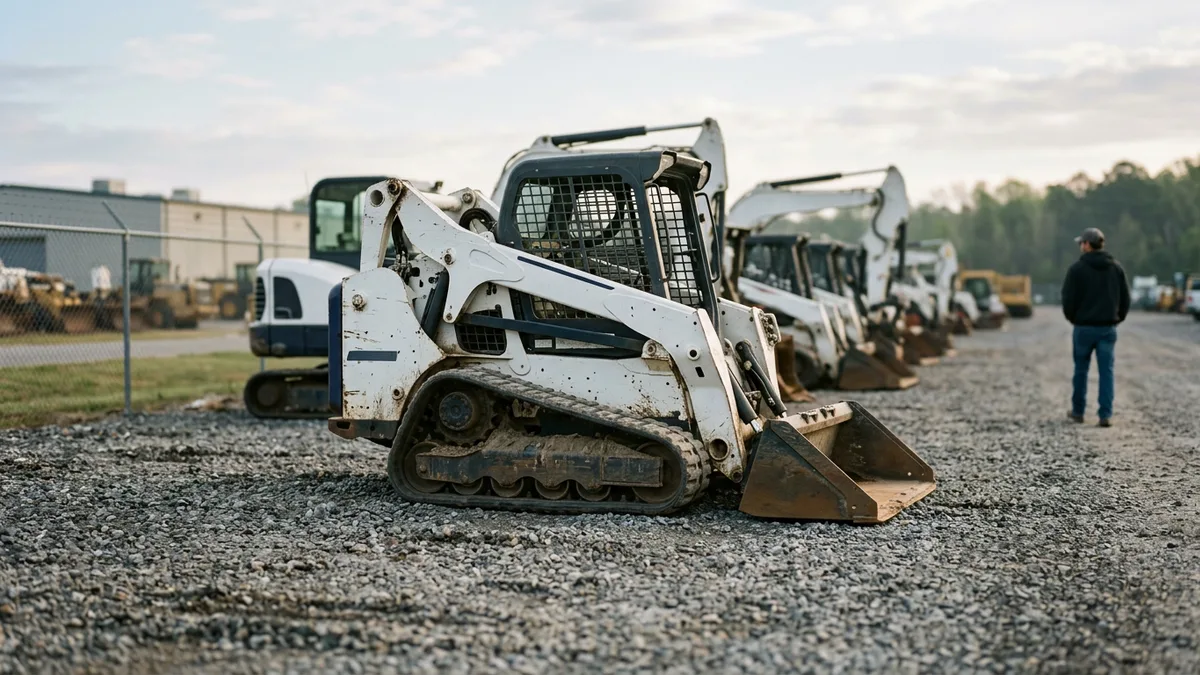
Equipment Financing Requirements: What an Application Review Covers

Key takeaways
Equipment financing requirements are a lender’s own policy, so they vary: a review weighs credit, time in business, sales and debt, and the equipment itself, and no single item usually decides it.
- There’s no universal checklist. Two lenders can read one file and price it differently.
- Credit, debt, sales, time in business, and the machine get weighed together.
- Most reviews start from a quote naming the make, model, year, and serial number.
- After a decision, you can ask the lender what drove it.
Of the five pages we read on November 7th about equipment financing requirements, four gave credit-score, revenue, or time-in-business figures with no source and no as-of date, which makes each number one lender’s rule of thumb and not a standard anyone can check.
Here’s the review itself, in the order a lender reads it. Opening a new business? The equipment financing requirements for a first-year file lean on different things, so that guide comes first.
What Equipment Financing Requirements Really Are
Equipment financing requirements are the facts a lender checks before it funds a machine: the owner’s and the business’s credit, how long the business has operated, its sales and existing debt, and the equipment that will secure the deal. Each lender sets its own limits.
Lenders that fund deals with borrowed money sort each file into a risk tier and price it on a sliding scale. The review sets a range. No pass mark. We finance equipment, so weigh that with our interest in mind. The path from quote to last payment is in how equipment financing works.
Credit, Debt, and Sales
Credit gets read in two layers, the owner’s personal report and the business’s own history if it has one, and in both a lender sees payment history, balances against limits, and public records. A score is one line in the file. Not the file. If the report is the worry, our page on equipment financing with imperfect credit goes further.
Debt and sales matter just as much. The lender wants three facts: what the business owes today, what leaves the account each month, and what comes in. Bank statements show all three. Time in business adds context, because a short history gets read through the owner’s trade experience and the machine, while a long one gets read through its returns.
37%
of applicants not approved for at least some of the financing they sought named too much debt already. A low credit score drew 30%, insufficient collateral 29%, and weak sales 29%. Applicants could name several reasons, and the survey covers all business credit, not equipment alone.
Source: Federal Reserve Banks, 2026 Report on Employer Firms (2025 Small Business Credit Survey), page 14
Debt, credit, collateral, sales. A review reads those same four things, whatever the lender calls them.
The Equipment and What Secures It
The machine is the purchase and the security. A lender wants its make, model, year, hours or mileage, seller, and price, plus a view on what it will be worth when the term ends. A 20-ton excavator and a dental imaging unit get read differently, because their resale markets and useful lives differ. Buying used equipment? The review covers the same ground.
Then comes the filing. A lender announces its claim with a UCC-1 financing statement. Under UCC 9-108, a collateral description works if it “reasonably identifies” the collateral, and one machine listed by serial number does.
A financing statement can also say “all assets,” which UCC 9-504 allows, and that reaches well past the machine into the business’s other equipment and accounts. Ask which one your lender files. Our guide to UCC filings reads a description line by line.
Some lenders also ask the owner for a personal guaranty, which puts the owner’s own assets behind the business’s promise, so ask early whether one applies, and when it ends, before anything gets signed.
Equipment Financing Requirements, Piece by Piece
Where a lender looks tells you what to gather.
| Piece | Where a lender finds it | What it answers |
|---|---|---|
| Credit | Credit reports | How the owner and the business pay their bills |
| Debt | Bank statements, a debt list | What’s owed, and what leaves each month |
| Sales | Bank statements, tax returns | What comes in |
| Time in business | State records, tax returns | How long the business has run |
| The equipment | A seller’s quote | What it is, and what it’s worth |
| Collateral | Security agreement, UCC-1 | What backs the deal |
Before the first call, gather:
- The seller’s quote, naming the make, model, year, and serial number.
- Recent business bank statements.
- Tax returns or financial statements, since some lenders ask for them.
- A list of what the business owes today, with balances.
- Your own credit report, pulled before a lender pulls it.
Nothing exotic. Send every lender the same quote and the same folder. Then the answers compare.
After the Decision
Regulation B carries out the Equal Credit Opportunity Act, and it covers business credit. For a business with gross revenues of $1 million or less in its last fiscal year, 12 CFR 1002.9 has the lender tell you its decision within 30 days of a complete application, and you then have 60 days from that notice to ask for the specific reasons.
A no with a reason is something to work on. A no without one is a guess. Ask.
Questions Owners Ask Before Applying
How much does the credit score count, really?
That’s each lender’s call. A score gets read alongside time in business, sales, existing debt, and the equipment, and the balance shifts from one lender to the next. Ask how a lender weighs it, and what it reads next.
Does a used machine change the review?
A used machine changes the paperwork, not the question. The lender still wants the seller identified, the equipment described down to its serial number, and some way to judge its condition and value.
Will a lender pull my credit just to give me an answer?
Ask first. Some credit inquiries show on your credit report and others don’t, and lenders differ on which kind they run and when. Get the answer in writing before you authorize anything.
Does a lease skip the review?
Lessors read files too. The lessor owns the machine for the term, yet it still weighs the same credit, debt, sales, and equipment questions before it signs.
Who asks for a personal guaranty, and why?
Lenders that ask for one want the owner’s own assets standing behind the business’s repayment. Whether you’ll be asked is each lender’s policy, so ask early, then read the guaranty for its limits and for when it ends.
Do equipment financing requirements change with the kind of equipment?
Not quite. The same pieces get read, but the weight on the equipment shifts, because a skid steer and a dental imaging unit have different resale markets and useful lives. Say which one you’re buying when you ask a lender what it needs.
Next Steps
Paying cash, or sitting on a credit line whose cost you already know? Run that number first. Otherwise, see how Paramount Financial finances equipment, or start an application and talk to our team. A newer business can also read the startup equipment financing guide for how its review differs.