
Last updated: November 8, 2026
Laundromat Equipment Financing for Washers and Dryers
Loans and leases compared for washers, stack dryers, payment systems and the hot water behind them.
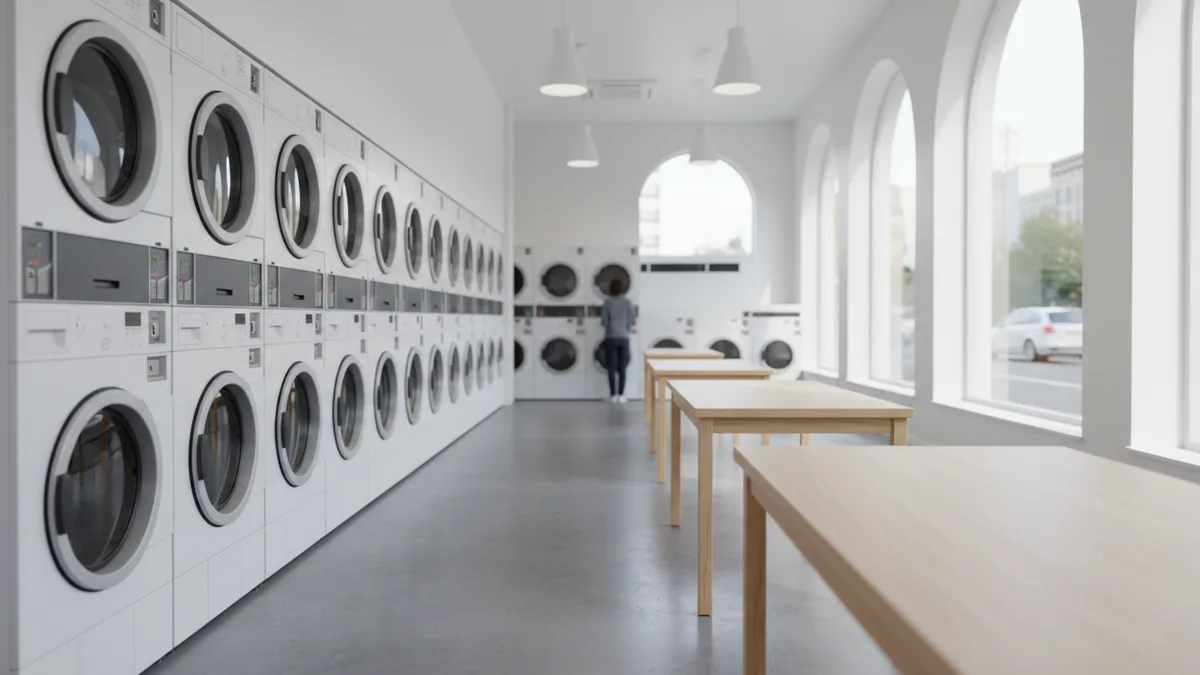
Laundromat equipment financing spreads the cost of commercial washers, dryers and payment systems over a set term, through a loan, an equipment finance agreement or a lease, so a store doesn’t pay for every machine up front.
Laundromats rarely buy all their machines in one go. Owners replace a worn bank of 40-pound washers, buyers inherit dryers that should have retired years ago, and new stores fit out an empty unit from bare slab, each pricing a different mix of machines. Three lists. Three clocks.
Where does a laundromat sit? Our guide to equipment financing by industry covers the full list of trades, and vending machine financing covers the other business that earns its money from unattended machines. Still choosing a site? Start with how to start a laundromat.
What goes on a laundromat’s equipment list
Walk the store from the front door to the back wall. A lender or lessor will want the equipment itemized in roughly that order, since washers, dryers and the systems behind them don’t hold their value the same way.
- Hardmount washers, also called rigid-mount, bolted to a reinforced concrete base
- Softmount washers, whose suspension lets them spin harder on an ordinary slab and hand the dryers a lighter load
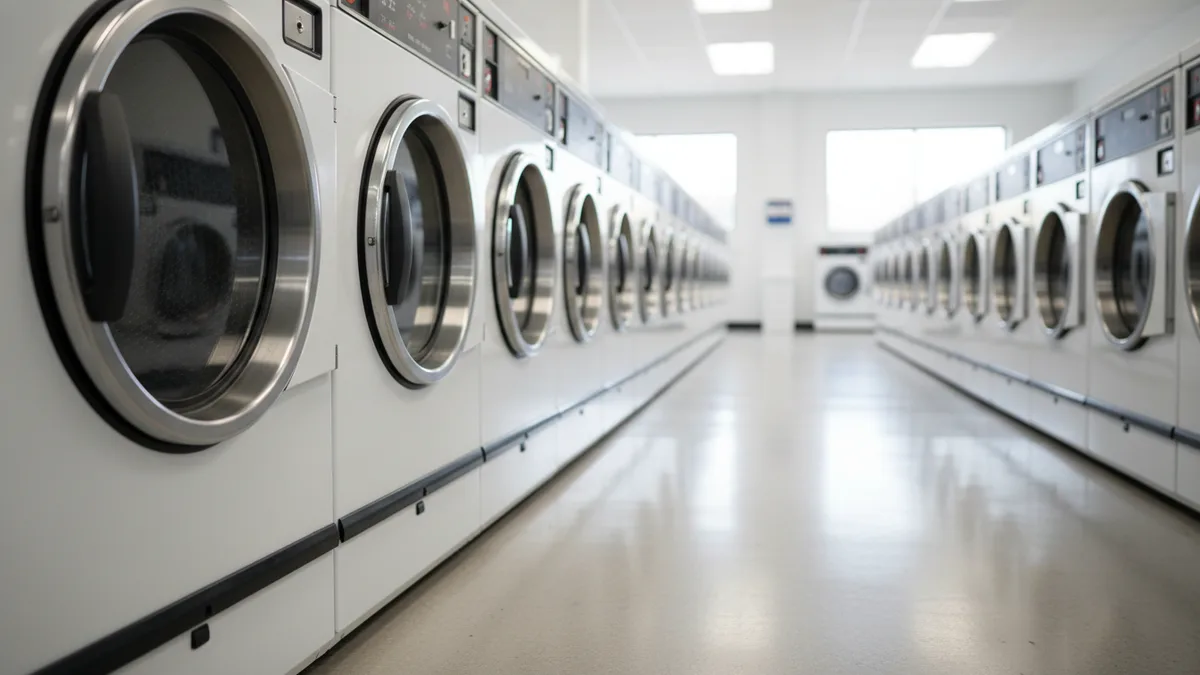
- Stack dryers with two pockets in one footprint, plus big single-pocket dryers for comforters and bulk wash-and-fold
- The payment system: card readers or coin boxes on each machine, a kiosk or app, and the software that runs it
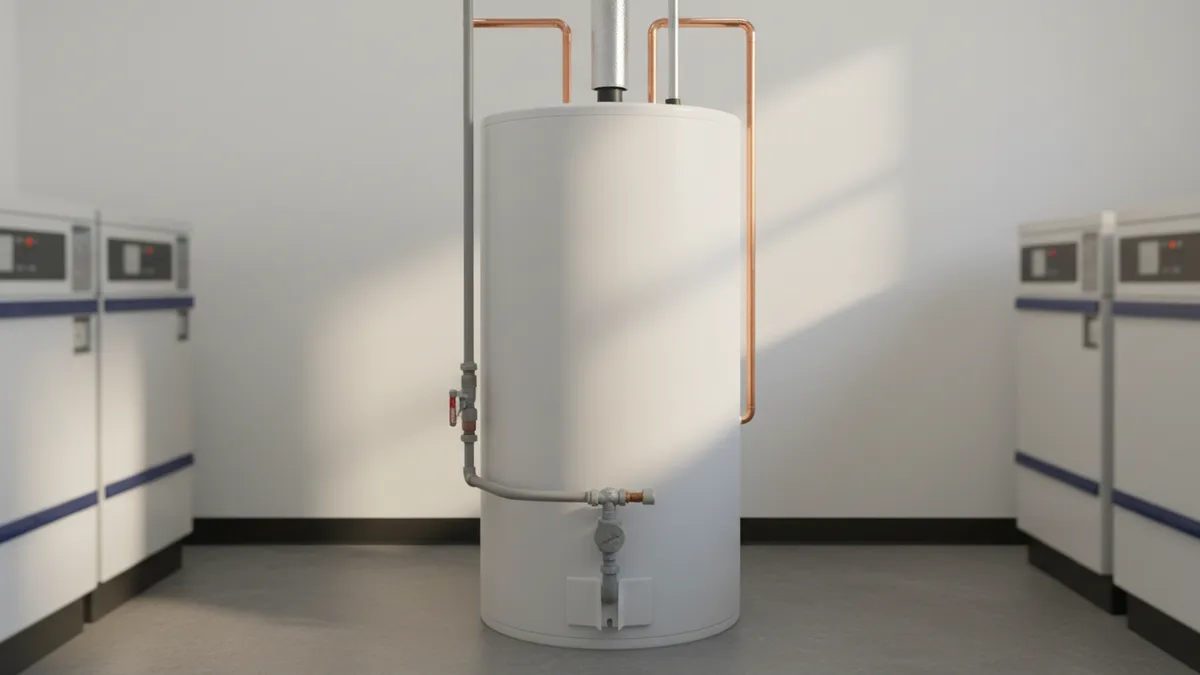
- Hot water, which in a busy store means a commercial water heater or a boiler, with its own venting
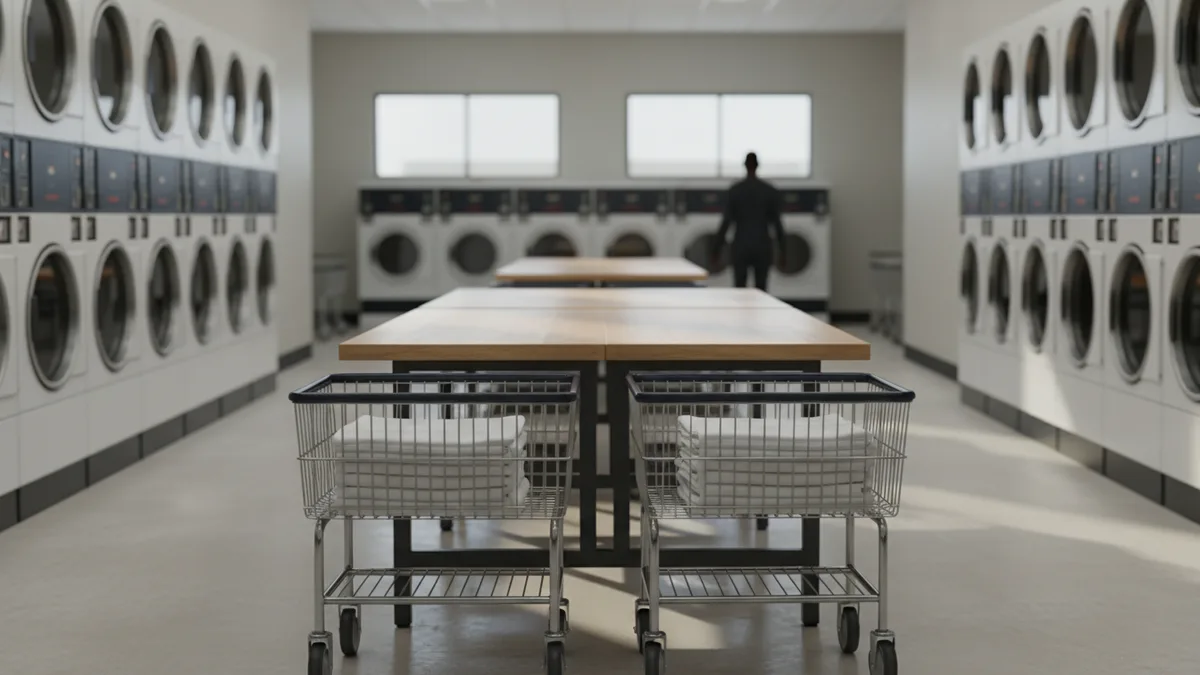
- Carts, folding tables and seating. Small items. They add up on a full fit-out.
The business model changes the mix. A self-service store sells turns, so it wants enough small and mid-size washers that nobody waits on a Saturday. A wash-and-fold or commercial-accounts operation leans on large washer-extractors and a lot of folding space.
Laundromat equipment financing, machine by machine
Start with ownership. With a loan or an equipment finance agreement, the store owns its washers from day one and the lender holds a security interest until the balance is paid, usually recorded as a UCC-1 filing. With a lease, the lessor owns them for the whole term.
At the end of a fair market value lease, the store buys the machines at what they’re worth then, renews, or sends them back. A $1 buyout lease is built so the store keeps them. Our equipment leasing overview explains how a true lease differs from a loan.
| Equipment | What sets its life | What usually fits |
|---|---|---|
| Hardmount washers | Bearings and seals; the frame and the concrete base it’s bolted to last longer | A loan or equipment finance agreement for machines you plan to keep |
| Softmount washers | Suspension, bearings and seals, which take the stress of the high-speed spin | A loan, or a $1 buyout lease if you want to own them at the end |
| Stack and single-pocket dryers | Drums, belts and burners; the cabinets usually outlast them | A loan or equipment finance agreement, often bought with the washers |
| Card or app payment system | Software support and readers that date faster than the machines | A shorter lease, or a term no longer than the vendor’s support |
| Water heater or boiler | The tank, burner and heat exchanger, worn by hours run and water quality | A loan, folded in with the plumbing and gas work where a lender allows it |
A lender also reads the store’s lease on its space. Its end date should fall after the equipment term ends, since a hardmount washer bolted into a landlord’s slab can’t follow the business if the space is lost. Dates first.
Mixed structures are normal: buy the washers and dryers, lease the payment system. Ask a tax advisor how each one is treated before you choose.
What the washer quote leaves out
A machine quote prices machines. The building work that lets them run is a separate bill, and on a new store it can rival the equipment.
- Concrete: a reinforced pad and anchor bolts for hardmount washers, sometimes a cut-and-repour of the old slab
- Drains, usually a trough along the washer line, sized for every machine dumping water at the same moment
- Dryer venting and makeup air. Dryers have to breathe.
- Gas lines and electrical service sized for the whole dryer bank, not just the first few pockets
- A water heater or boiler that keeps up at the busiest hour of the week
Water is the running cost a laundromat lives with every day. ENERGY STAR says certified commercial clothes washers are on average 9% more efficient and use about 45% less water than standard models, so it’s worth asking whether the models in your quote carry the label and whether your water and gas utilities offer rebates on them. Then ask the installer to price the building work on its own line. You’ll know what the equipment financing covers, and what doesn’t fit inside it.
Used machines and buying an existing laundromat
Buying the whole store
Plenty of laundromats change hands with the machines still running. The purchase of the business, with its lease, its customers and its equipment, is usually financed as an acquisition, and the SBA 7(a) program lists changes of ownership among its uses.
If half the washers are near the end of their life, price their replacement before you agree on the store’s price. That’s a second deal. Sometimes it’s the bigger one.
Buying used machines
Used washers and dryers come from stores that re-tool, distributors that take trade-ins, and closings. Some lenders and lessors finance them. Most want proof of what they’re looking at first.
- The data plate on each machine: model, serial number and date of manufacture
- Every washer run through a full spin, listening for bearings and watching the door seal
- Each dryer fired up and run hot, with the drum, belt and burner checked
- Whether the maker still supplies parts for that model
- A bill of sale with the seller’s legal name and address
Our guide to used equipment financing walks through dealer and private-party purchases.
Three figures worth knowing before you buy
About 45%
less water than standard washers, on average, for ENERGY STAR certified commercial models
Source: ENERGY STAR, 2026
$5 million
maximum SBA 7(a) loan, a program whose uses include buying and installing equipment
Ways to structure a laundromat equipment deal
More for self-service and route businesses
What laundromat owners ask before they finance
How much does it cost to equip a laundromat?
Four line items set a laundromat’s equipment total: washer capacity in pounds, hardmount or softmount construction, the dryer configuration, and the payment system. Hardmount washers also need a reinforced concrete pad, which a softmount model skips. Quotes first. Ask the installer to list plumbing, venting and electrical work on separate lines.
Should a laundromat lease or buy its washers and dryers?
Machine life usually decides it. Washers and dryers that will run out most of their service life in your store suit a loan or an equipment finance agreement. Card readers and kiosks age with the vendor’s software, so a shorter lease often fits them better. Run both numbers.
Can I finance new machines when I’m buying an existing laundromat?
Short answer: usually two separate deals, one for the business and one for any machines you add or replace.
The SBA lists changes of ownership as an eligible 7(a) use, so a store purchase often runs through that program, while replacement washers and dryers are financed or leased on their own. Our guide to equipment financing with an SBA loan covers how SBA programs treat equipment.
Can a brand-new laundromat get equipment financing?
Without sales history, a lender reviewing a new laundromat leans on the equipment, the site and the owner’s operating experience. So the file leans on paper: a signed lease on the space, utility capacity the landlord has confirmed in writing, and an itemized quote for every machine. Paper helps. Our startup equipment financing guide covers the usual file.
Can used commercial washers and dryers be financed?
Some lenders and lessors finance used commercial washers and dryers once they have each machine’s serial number, date of manufacture and a bill of sale. An independent technician’s inspection, with every washer run through a full extract cycle, documents condition before you sign. Not just a fill.
Does Section 179 apply to laundromat equipment?
The 2026 Section 179 limit is $2,560,000, reduced dollar for dollar once a business places more than $4,090,000 of qualifying property in service, per IRS Publication 946. Washers and dryers bought with a loan or an equipment finance agreement and placed in service in 2026 can generally qualify, while a true lease generally doesn’t, because the lessor keeps ownership. Our Section 179 deduction guide has the detail. Consult your tax advisor before counting on a deduction.
What do lenders ask for on a laundromat equipment application?
Three documents come up on most laundromat files: the equipment quote with model numbers, the store’s lease on its space, and business tax returns or recent bank statements. Lenders compare the lease’s end date with the financing term. Our equipment financing requirements guide lists the rest.
Replacing washers or planning a new store?
Send the machine list. Model numbers help.