
Last updated: November 8, 2026
Car Wash Equipment Financing for Tunnel, In-Bay and Self-Serve Washes
Compare loans and leases for tunnel conveyors, in-bay rollovers, self-serve bays and the equipment room behind them.
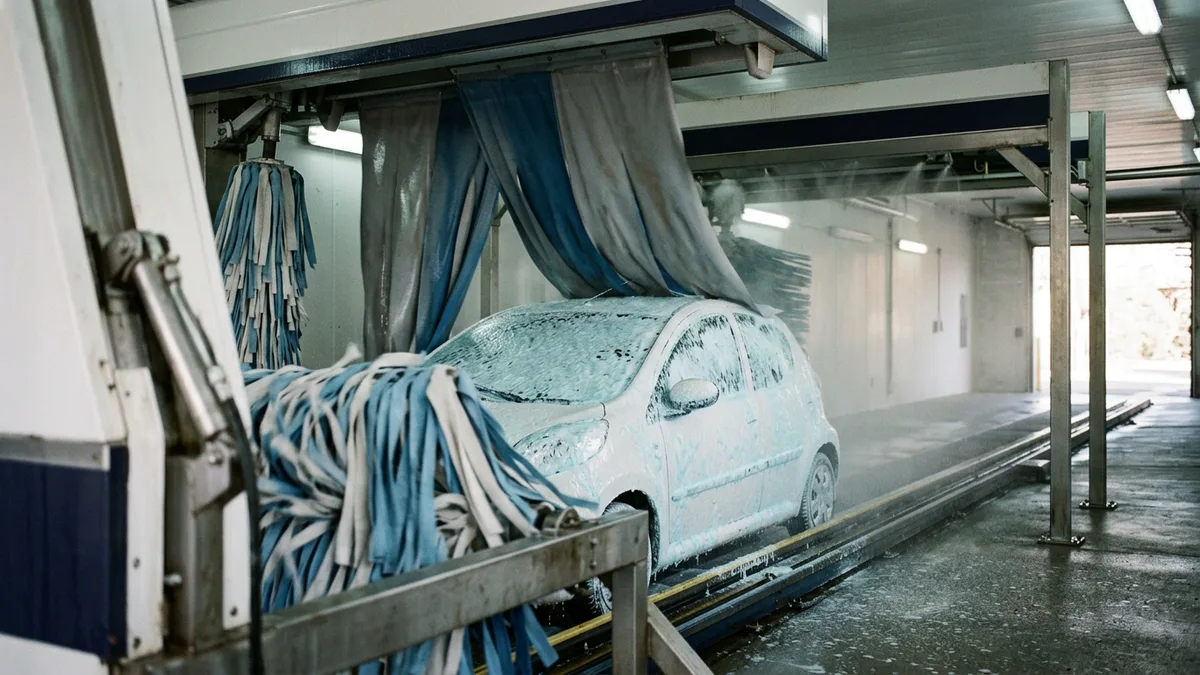
Car wash equipment financing spreads the cost of a tunnel conveyor, an in-bay automatic or self-serve bay equipment over a set term through a loan, an equipment finance agreement or a lease, instead of paying cash up front.
A car wash isn’t one machine. Out front there’s a conveyor or a gantry, and behind the wall there’s a room of pumps, tanks and filters the customer never sees. Price both halves.
Running a wash beside a fuel island or a quick-lube bay? Our guide to equipment financing by industry covers the neighboring trades, and vending machine financing walks through another unattended business that runs on card readers.
Tunnel, in-bay or self-serve: three different equipment lists
The EPA’s WaterSense program sorts commercial washes into the same three formats the industry uses: conveyor (the tunnel), in-bay automatic and self-service. Each one buys a different kit. Start with yours.
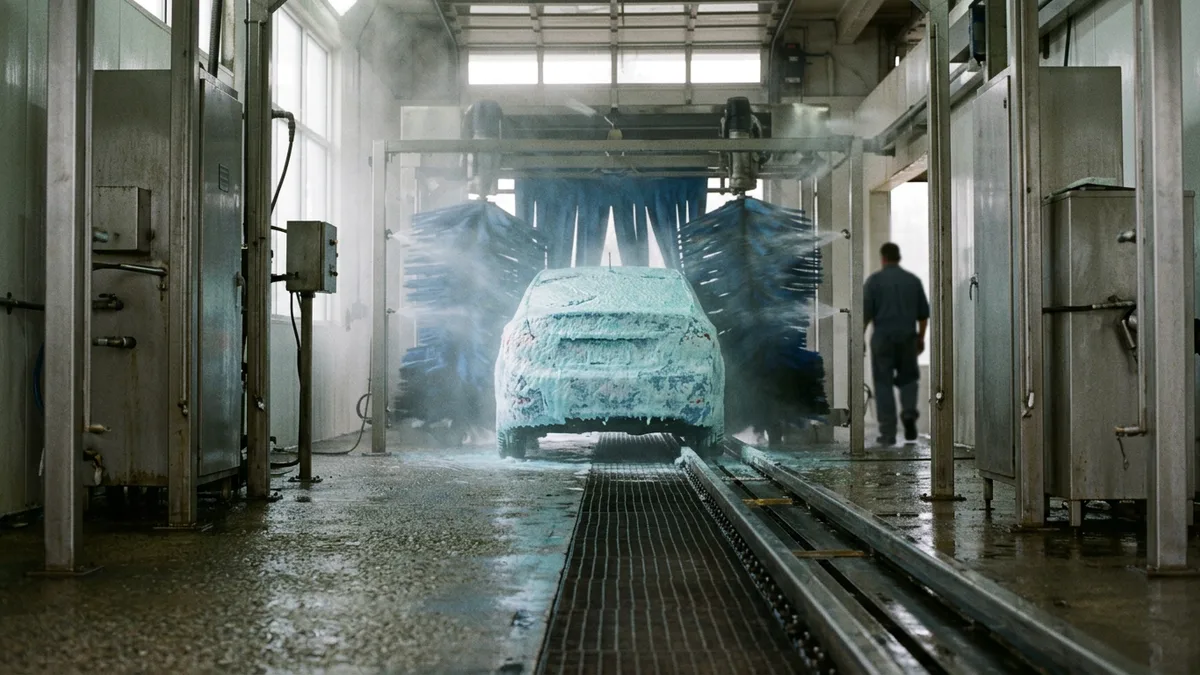
- Tunnel: a chain-and-roller or belt conveyor, a correlator that lines up the tire, wrap-around brushes, mitter curtains, a top brush, high-pressure arches, tire shiners and a bank of dryers at the exit
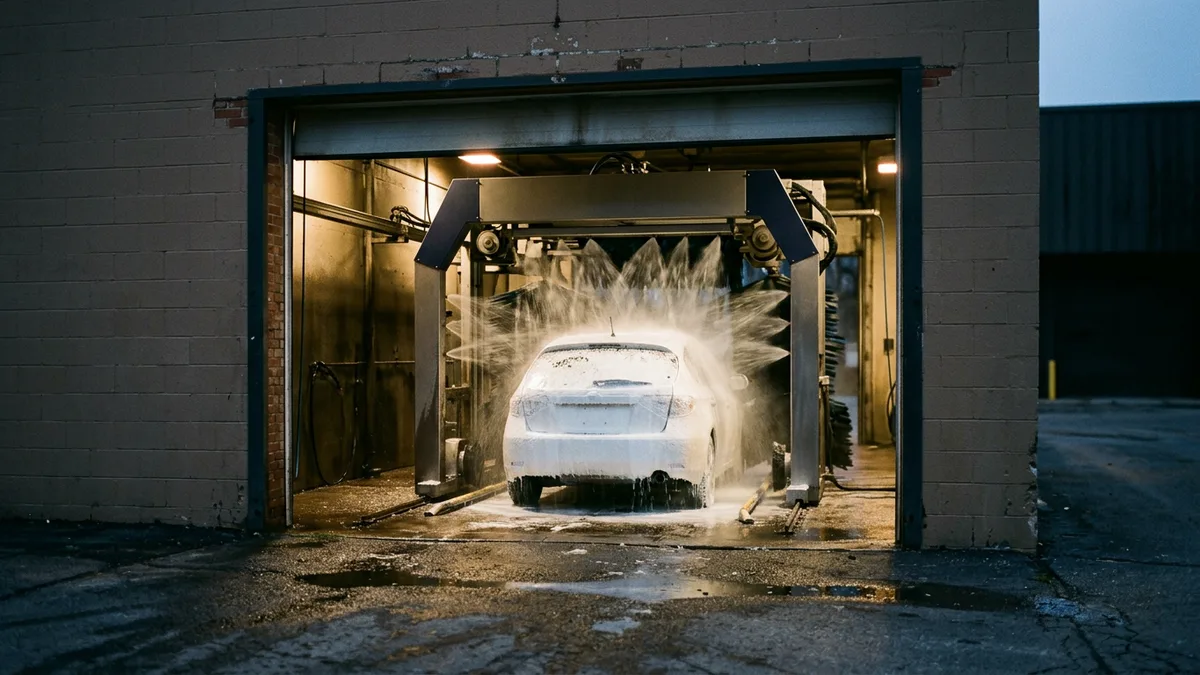
- An in-bay automatic is one gantry riding floor rails over a parked car, touchless or soft-touch, plus bay doors, controls and a pay station out front
- Self-serve bays run on a pump stand per bay, ceiling booms, wands and foam brushes, with vacuums and a pay system shared across the lot
Plenty of sites mix formats. A fuel-and-convenience store often adds one in-bay automatic, and tunnel operators keep a self-serve bay or two for trucks and trailers that won’t fit the conveyor. Each format gets its own line on the quote.
The equipment room is where the money hides
Behind every arch sits a room that feeds it. Quotes for the tunnel itself sometimes leave part of that room out. Read the line items twice.
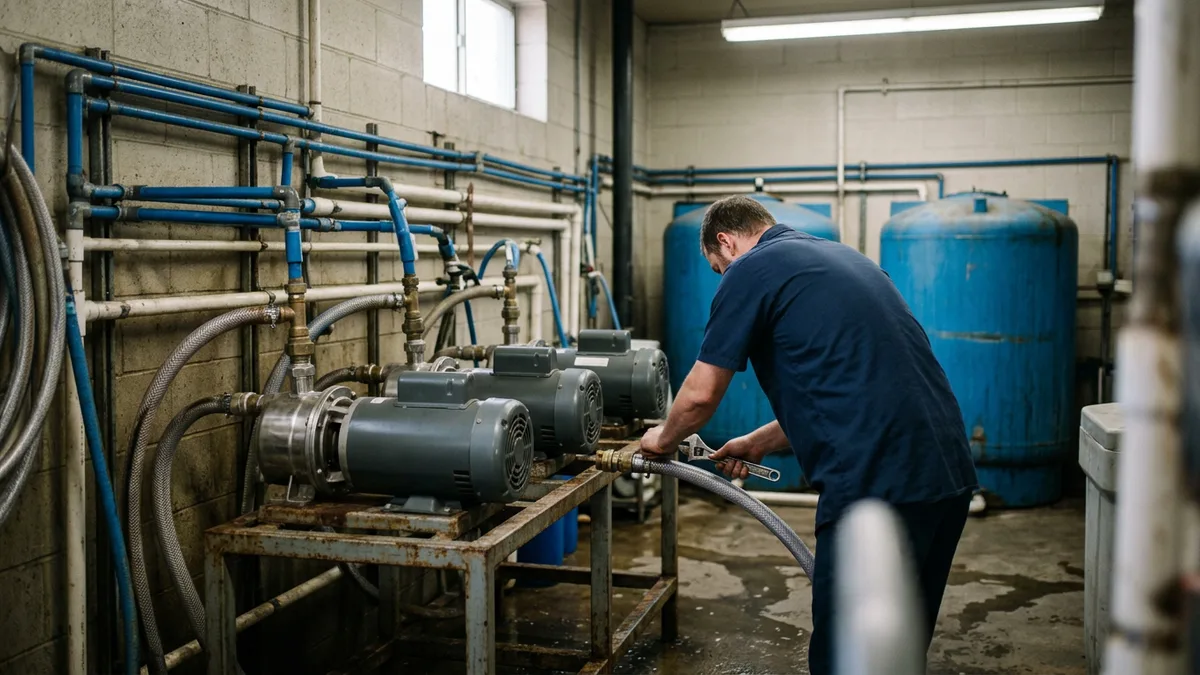
- High-pressure pump stations, sized to the arches and bays they feed
- Water heating, softening and a reverse osmosis unit for the spot-free final rinse
- Reclaim tanks and separators that pull grit, oil and grease out of used wash water
- Chemical dosing, an air compressor, and the controller that sequences every cycle
Reclaim matters most at a tunnel. The EPA’s WaterSense at Work guide to vehicle washes (November 2023) calls conveyor sites good candidates for it because they’re usually staffed and have a larger equipment room, while reclaim is often not feasible at self-serve bays, where debris and dumped oil foul the filters.
Some water agencies reward the effort. Georgia’s car wash certification, created under SB 466 in 2008, keeps a certified permanent wash from being treated as an outdoor water user during watering restrictions, and the San Antonio Water System gives inspected, certified washes a discount on the monthly sewer bill. Call your utility first.
Car wash equipment financing, format by format
Car wash equipment financing is any arrangement that spreads the cost of wash equipment over a term: a loan or an equipment finance agreement, where the wash owns the equipment and the lender holds a lien, or a lease, where the lessor owns it until the term ends.
Brush cloth wears out long before a tunnel’s steel frame does. Card readers age faster than both. Match the structure to that clock. Mostly.
| Equipment | What wears first | What usually fits |
|---|---|---|
| Tunnel conveyor and arches | Conveyor chain, rollers and brush cloth; the steel frame keeps going | A loan or equipment finance agreement, since a tunnel stays put for years |
| In-bay automatic gantry | Drive wheels, hoses, nozzles and, on soft-touch units, the brushes | A loan, or a $1 buyout lease for a gantry you plan to keep |
| Self-serve bay equipment | Pump seals, swivels, hoses and wands, one bay at a time | A loan, often written together with the rest of the site’s equipment |
| Equipment room: pumps, reclaim, reverse osmosis | Seals, membranes and filter media on a maintenance schedule | Usually the same agreement as the format it serves |
| Pay stations, vacuums and gate controls | Card readers and software, which date fastest | A fair market value lease, so an upgrade at the end of the term stays open |
The site is its own question. Under the SBA’s 504 loan program, a Certified Development Company and a senior lender can fund the purchase, construction or renovation of buildings or land. Say an operator buys a closed gas station lot and builds an express tunnel on it: the lot and the building fit a 504 loan, and the conveyor, arches and dryers usually sit on a separate equipment agreement.
Our guide to equipment financing with an SBA loan sets those two routes side by side. On the equipment side, ownership during the term is the real difference between an equipment finance agreement and a lease, and leasing vs buying equipment walks through it.
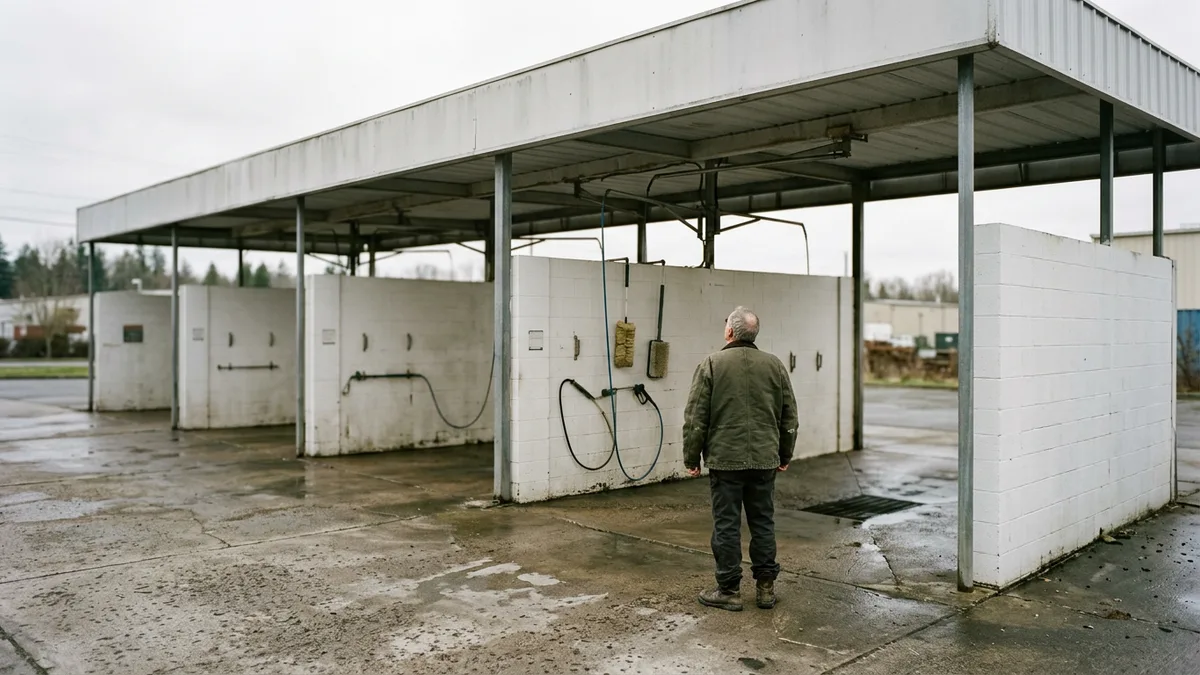
Buying a used wash or used wash equipment
Picture a closed in-bay site listed for sale with its original gantry still on the rails. The price may look right. A worn drive, cracked hose carriers or a reclaim tank packed with sludge can eat the savings in one season, so watch it run before you make an offer.
- Run the conveyor with cars on it and listen for chain and roller noise
- Ride the gantry through its full travel, then check the rails, drive wheels and hose carriers
- Pull the pump maintenance records, and look at seals and fittings for leaks
- Open the reclaim tanks and ask when the sludge was last removed
- Read the controller’s cycle counts, if it keeps them
Paperwork next. Get a bill of sale or purchase agreement listing every piece by serial number, and ask the city whether the water and sewer permits transfer to a new owner. The used equipment financing guide covers dealer and private-party purchases.
How much water each wash format uses
30
gallons of fresh water per car at tunnels, in a 2018 study
Source: EPA, WaterSense at Work (2023)
15.0
gallons per car at self-service bays, the lowest of the three
Source: EPA, WaterSense at Work (2023)
1.9 to 4.9
gallons of reclaimed water reused for every gallon of fresh at tunnels
Source: EPA, WaterSense at Work (2023)
Four ways to pay for the wash and the site
Related reading for wash owners
What owners ask about car wash equipment financing
What does car wash equipment cost?
Format sets the range first. An express tunnel line, one in-bay gantry and a block of four self-serve pump stands sit in different price leagues, and inside a tunnel every added arch, brush, dryer or equipment-room component puts its own line on the quote. Ask for it itemized. Plumbing, electrical and concrete usually bill separately.
Should a tunnel conveyor be leased or bought?
Ownership is the deciding question. If the building is yours and the tunnel will run there for the long haul, a loan or an equipment finance agreement usually fits the conveyor and arches better than a lease. Pay stations and controllers flip that, since a remodel or a new card-payment standard can retire them early. Price both over the whole term, buyout included.
Can a new car wash get equipment financing?
Underwriters reading a wash with no sales history lean harder on three things: the site, the equipment and whether the owner has run a wash before. Bring a signed land contract or ground lease, traffic counts from the state transportation department, itemized equipment quotes and a business plan. Experience helps. The startup equipment financing guide covers the rest.
Can used car wash equipment be financed?
Often, yes, with more paperwork: a serial number for each piece, a bill of sale and proof the equipment runs. A gantry idle since last winter should get a technician’s inspection before anyone signs. Pump logs help.
Can one loan cover the land, the building and the equipment?
The SBA’s 504 program is the usual route when one loan covers all three, since it can fund buildings, land and long-term machinery in the same project. Plenty of owners split it anyway: a 504 loan or commercial mortgage on the site, an equipment agreement on the wash. Separate terms. Separate collateral.
Does Section 179 apply to car wash equipment?
For the 2026 tax year, the Section 179 limit is $2,560,000, and it shrinks dollar for dollar once a business places more than $4,090,000 of qualifying property in service. A conveyor or gantry bought with a loan or an equipment finance agreement and placed in service in 2026 can generally qualify, while a true lease usually can’t, because the lessor owns the equipment. Those figures come from IRS Publication 946, and the Section 179 deduction guide has more. Consult your tax advisor before counting on a deduction.
What sets the term on car wash equipment financing?
Three things, mostly: the equipment itself, how long it’s expected to stay in service, and how the lender or lessor reads the business behind it. Card readers and a tunnel conveyor almost never share a term. Ask how each quote was set. Then compare total cost, not the payment.
Planning a tunnel, in-bay or self-serve project?
The form below is five short fields. Start there.