
Last updated: November 8, 2026
Veterinary Equipment Financing for Animal Hospitals and Clinics
How loan and lease structures fit digital X-ray, ultrasound, anesthesia and in-house lab equipment for veterinary practices.
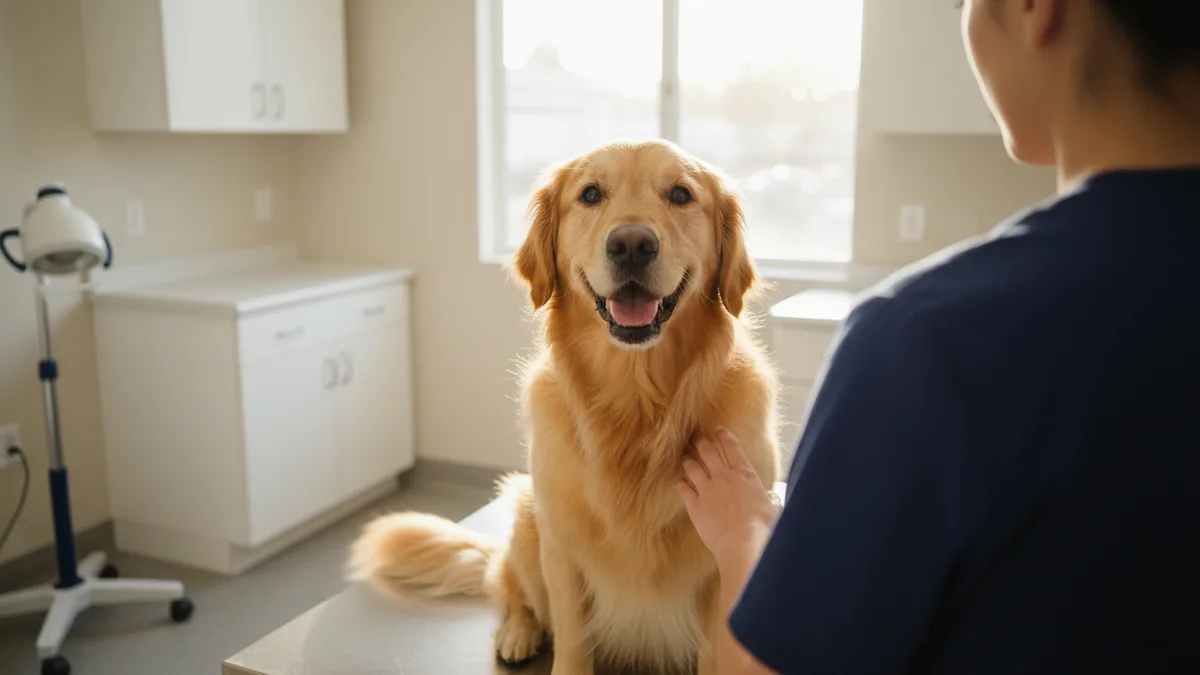
Veterinary equipment financing is a loan, an equipment finance agreement or a lease that spreads the cost of imaging, surgical, dental and lab equipment for an animal hospital or clinic over a fixed term.
Few practices buy one machine at a time. A build-out or a new imaging room usually arrives as a single distributor quote listing a DR system, an anesthesia machine, monitors and a lab analyzer, and each of those wears out on its own clock.
This page sits under our guide to equipment financing by industry. Equipping a practice for people instead? See medical equipment financing or dental equipment financing.
What an animal hospital finances, area by area
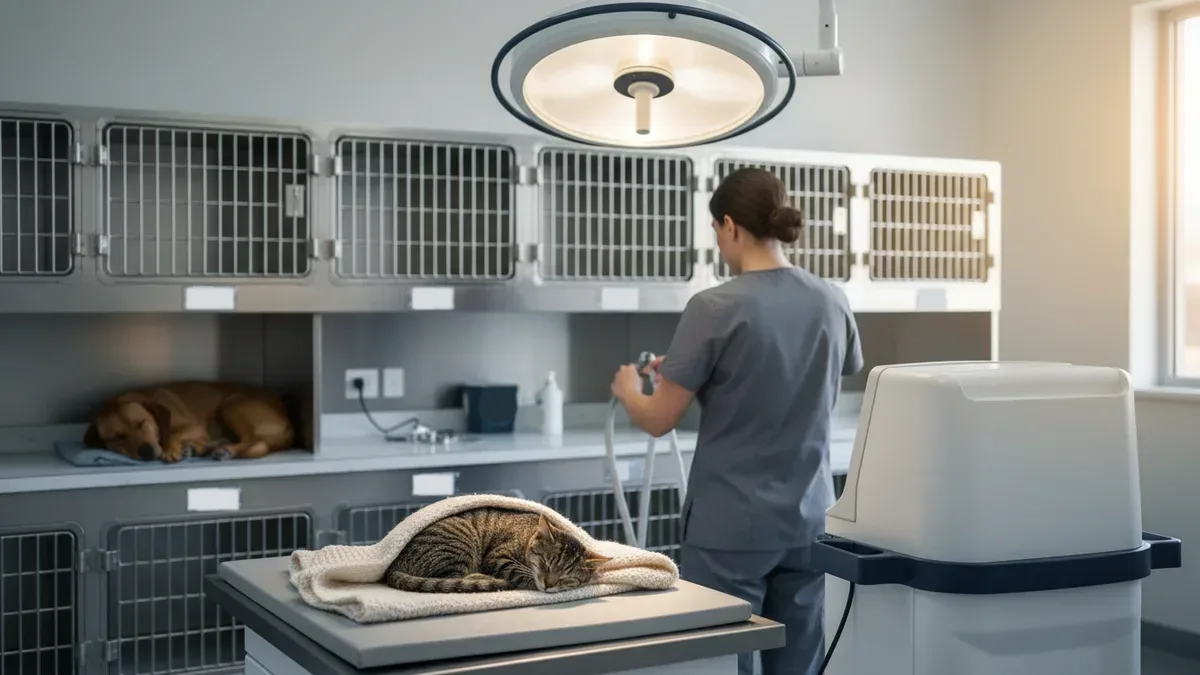
Walk a small-animal hospital from the front desk to the kennels. The list gets long.
- Exam and treatment: exam tables, floor scales, a treatment table with a tub, and the lighting over it
- Imaging, the biggest line on most quotes: digital radiography, a dental X-ray unit, ultrasound and, in referral hospitals, a CT scanner
- Who keeps the patient under? The anesthesia machine, its vaporizer, multiparameter monitors and the oxygen supply in the surgery suite
- The in-house lab, with chemistry and hematology analyzers, a centrifuge and a microscope
- Kennels, runs and the autoclave that sterilizes surgical packs
The lab deserves a second look. Analyzer makers often place their machines through a reagent rental agreement, which folds the analyzer’s cost into a multi-year commitment to buy that maker’s test supplies. That’s financing. Price it like financing.
Small animal, mixed animal and mobile practices finance differently
The American Veterinary Medical Association sorts the work of its estimated 133,475 U.S. veterinarians, counted as of December 31, 2025, into companion animal, mixed animal, equine and food animal practice. The equipment follows the patients.
- Companion animal hospitals install radiography behind shielded walls and keep it there, so terms can track the building lease.
- Mixed and equine practices carry a portable DR generator and plate, plus a portable ultrasound, down gravel roads every day.
- Mobile clinics and house-call practices put most of the budget into the van or the truck-mounted utility body itself.
Gear that rides in a truck takes heat, dust and vibration a hospital room never sees, and it tends to wear out sooner. A shorter term may fit. The vehicle is a separate purchase with its own title, and our commercial vehicle financing page covers how that side usually works.

Matching veterinary equipment financing to the machine
Veterinary equipment financing comes in two families. With a loan or an equipment finance agreement, the practice owns the equipment from day one and the lender records a security interest, usually with a UCC-1 filing. With a lease, the lessor owns the equipment for the whole term, and the practice returns it, renews or buys it at the end.
| Equipment | What dates it | What usually fits |
|---|---|---|
| Digital radiography (DR) | Detector panels and acquisition software | A fair market value lease, or a loan with a plan for the next upgrade |
| Ultrasound, cart or portable | Transducers and software; portable units also take knocks on the road | A lease for units that travel, a loan for a cart that stays in one room |
| Anesthesia machine and monitors | Vaporizer servicing; monitor software ages faster than the machine | A loan or equipment finance agreement, with a shorter horizon for the monitors |
| In-house lab analyzers | Test menus and software, often under a reagent rental agreement | Compare the reagent commitment’s total cost with buying the analyzer outright |
| Dental X-ray and dental station | Sensors and handpieces wear; the station itself lasts | A loan, or a $1 buyout lease built to be kept |
| Surgical tables, lights, kennels, autoclaves | Very little beyond seals, gaskets and bulbs | A loan or equipment finance agreement, kept for the long haul |
| CT scanner (referral hospitals) | Tube life, detector and software, plus the service contract | A fair market value lease timed to the service contract |
Software ages fast. Steel doesn’t. Our fair market value lease guide explains how that buyout is priced, and leasing vs buying equipment walks through the trade-off; ask a tax advisor how each structure is treated before you sign.
Refurbished imaging and used veterinary equipment
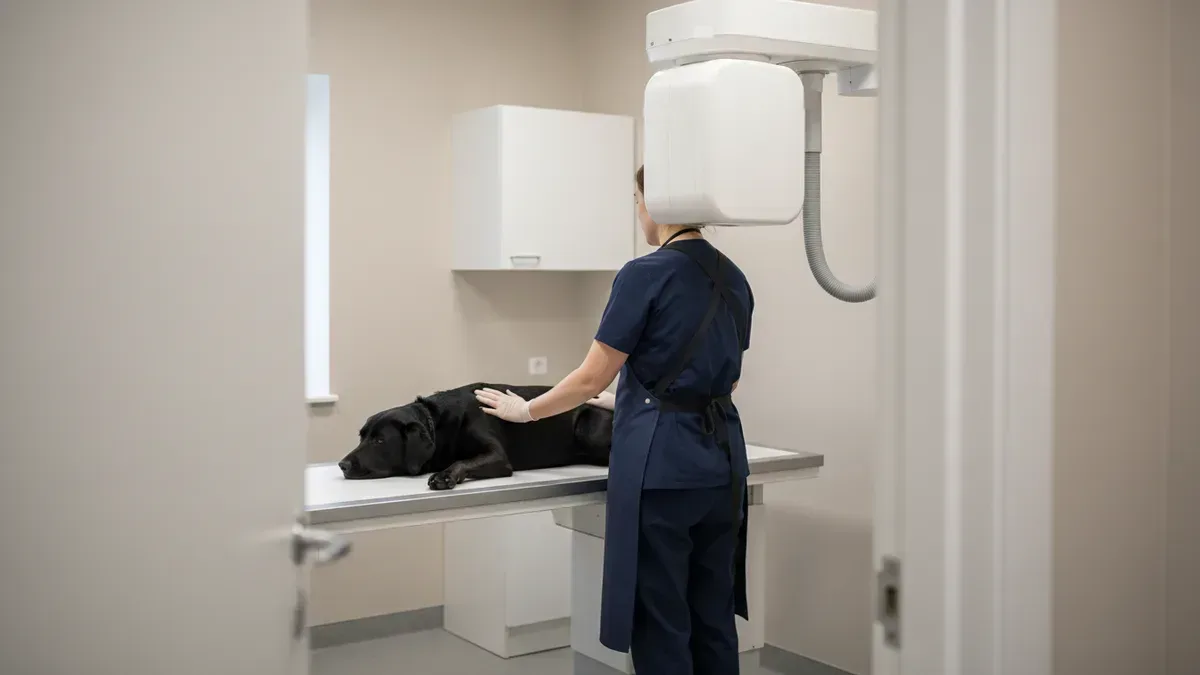
Refurbished units are a common route into digital radiography and ultrasound, especially for a practice buying its first system. Our guide to what an X-ray machine costs sets new and refurbished units side by side for medical, dental and veterinary buyers. Check these first:
- How many exposures the detector has taken, and whether it was ever dropped or repaired
- Tube hours on the X-ray generator and the date of its last calibration
- Every ultrasound transducer you need, tested, since probes are costly to replace
- Whether the acquisition software license transfers to a new owner
- Who services the unit now, and whether its maker still supports that model
- Registration with your state radiation control program, where the state requires it for the unit
Then the paperwork. Expect a lender to ask for the bill of sale, the serial numbers of the generator, the detector and each probe, and the seller’s legal name. Dealer and private-party sales are covered on our used equipment financing page.
Veterinary medicine, by the numbers
133,475
estimated U.S. veterinarians at the end of 2025
9%
projected growth in veterinarian jobs, 2025 to 2035
Source: U.S. Bureau of Labor Statistics, Occupational Outlook Handbook
$41.0 billion
U.S. vet care and product sales in 2024
Before you apply for veterinary equipment financing
What practice owners ask about veterinary equipment financing
Can a new veterinary practice finance its equipment?
A startup clinic can finance equipment, but with no tax returns from the practice yet, lenders lean on the veterinarian’s career since the DVM, the business plan and the equipment itself. Resale value helps. A signed building lease also counts, and our startup equipment financing guide covers the documents newer businesses usually bring.
Do I need a down payment for veterinary equipment financing?
Short answer: it depends on the lender, the structure and the equipment, so no single figure applies to every practice. Leases sometimes collect one or more payments up front, and a loan on used or specialized gear may ask for money down. Get it in writing.
Is it better to lease or buy veterinary imaging equipment?
The better question is how soon the software will feel old. Digital radiography, ultrasound and CT age with their detectors and software, so a fair market value lease lets a practice upgrade on a schedule. A surgical table or an autoclave can run for decades. Own those.
Can refurbished or used veterinary equipment be financed?
Paperwork decides most of it, because a lender wants to know what the unit is, where it came from and what shape it’s in. Serial numbers, a bill of sale, service records and a recent calibration report carry real weight on refurbished imaging. Some lenders limit how old a unit can be. Ask first.
Does Section 179 apply to veterinary equipment?
For the 2026 tax year, the IRS caps the Section 179 deduction at $2,560,000, reduced once qualifying equipment placed in service tops $4,090,000. Equipment bought with a loan or an equipment finance agreement and placed in service that year can generally qualify, while a true lease generally can’t, because the practice doesn’t own the equipment. The figures are in IRS Publication 946, and our Section 179 deduction guide explains the rest. Consult your tax advisor before counting on any deduction.
Is distributor or manufacturer financing a better deal?
Sometimes it is, and the only way to know is to set the distributor’s offer beside an outside quote, line by line. Veterinary distributors and equipment makers often arrange financing through a partner lender at checkout. Compare the total cost, what happens at the end of the term and any supply commitment bundled in. Bundles hide costs.
Can an SBA loan pay for veterinary equipment?
SBA 7(a) loan proceeds can pay to buy and install machinery and equipment, and the program’s maximum loan amount is $5 million. It also covers real estate, working capital and buying a practice, with its own application and paperwork. A practice buying a building and its equipment together might weigh both. Details sit on the SBA’s 7(a) loan page.
Planning a new imaging room or surgical suite?
Send the details of your quote through the form below, and a Paramount Financial specialist will follow up.