
Last updated: November 10, 2026
Dump Trailer Financing for Contractors, Landscapers and Haulers: New and Used Trailers
See what lenders read on a dump trailer, from the weight rating to the hoist, before you buy.
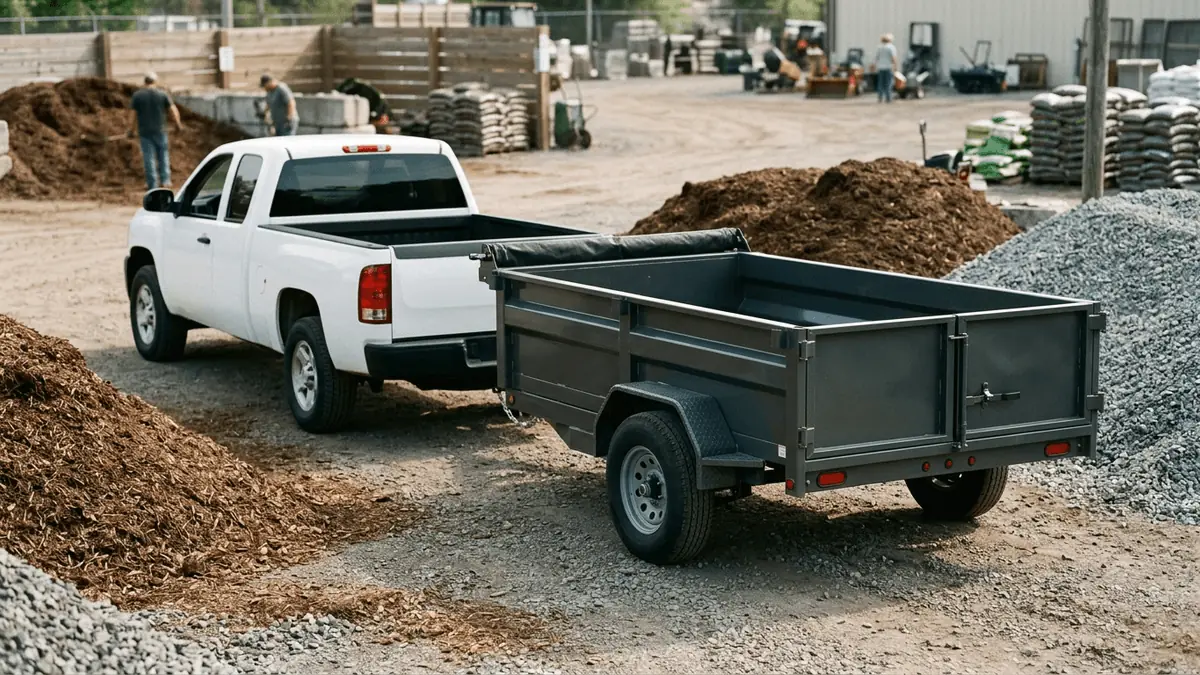
Dump trailer financing pays for a new or used dump trailer through a loan, equipment finance agreement or lease, and the lender reads the trailer’s weight rating, hoist, title or serial number and the work it will do.
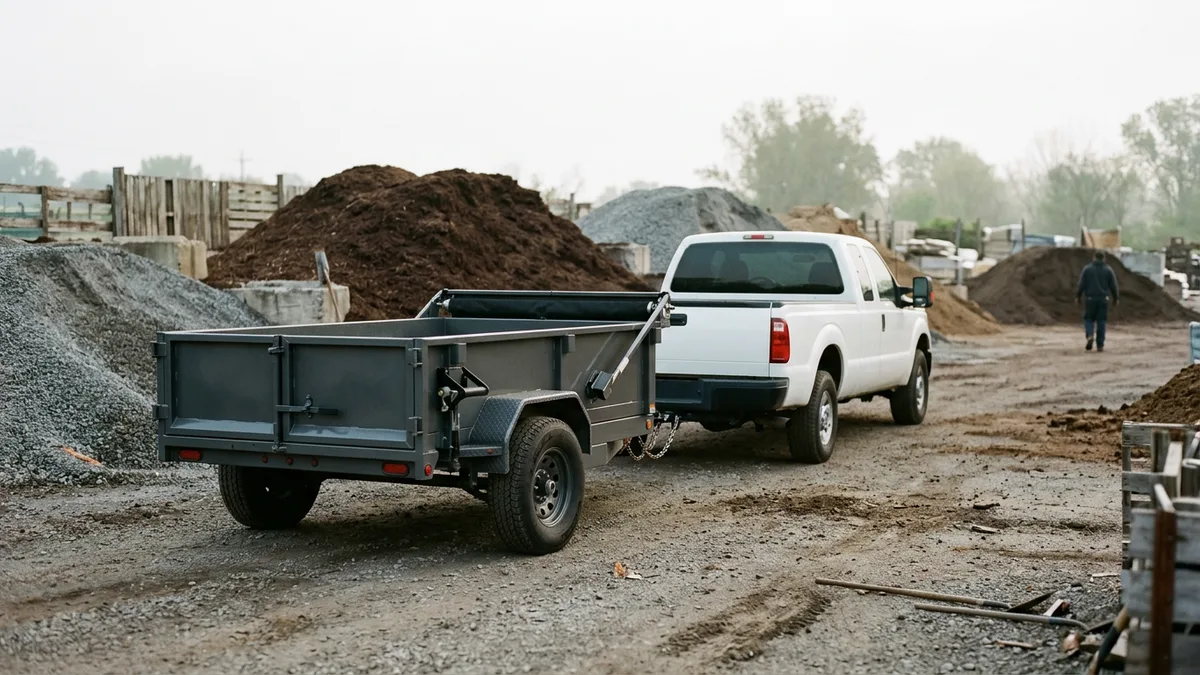
A landscaper hauls mulch and crushed stone. A roofer hauls shingle tear-off and plywood. A junk-removal crew hauls whatever the morning’s calls add up to. All three end up pricing the same piece of equipment, a trailer whose bed tips on a hydraulic hoist, new or used.
This page sits under our business trailer financing guide and stays with the dump trailer itself. The truck that pulls it has its own page, dump truck financing, with its own title and weight rules. Different paperwork, too.
Dump trailer financing starts with the type of trailer
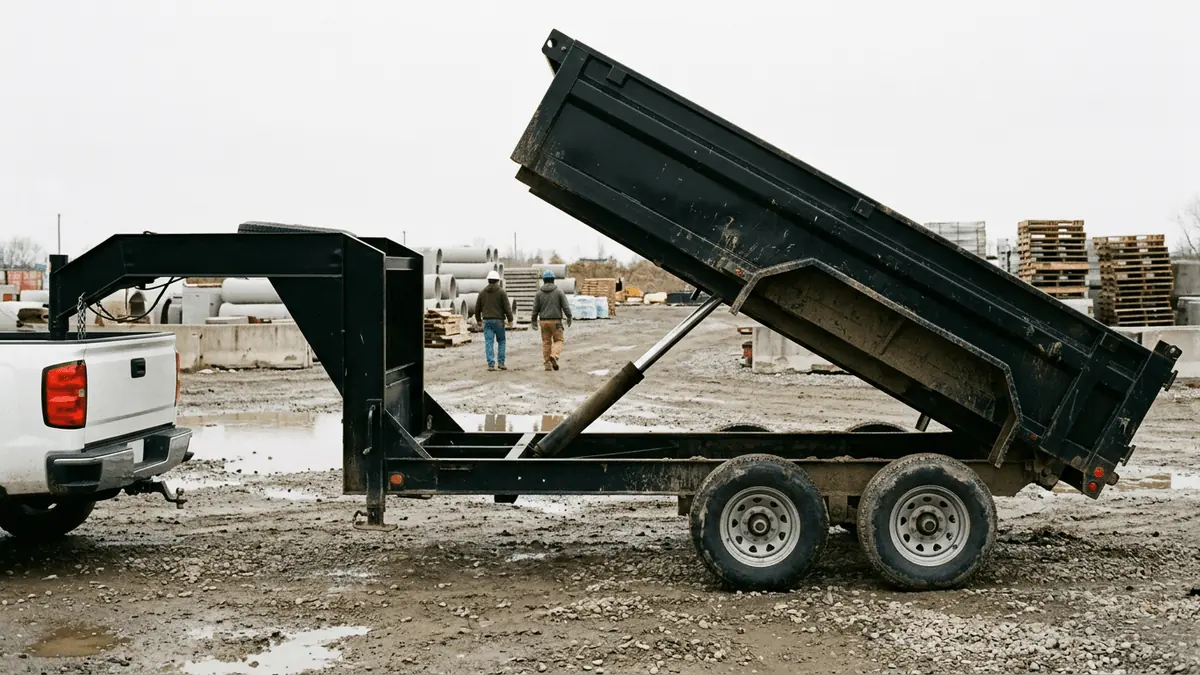
A dump trailer is a towed trailer whose bed tips on a hydraulic hoist to unload loose material at the back or the side. Lenders read them by weight rating and build, because a 7,000-pound landscape trailer and a 24,000-pound gooseneck are two very different things to finance. Size matters here.
Then the hoist. A scissor hoist lifts the bed from a wider frame, while a telescopic hoist is one multi-stage cylinder that tips steeper. In its March 2026 buyer’s guide, Diamond C says five of its seven dump models come with telescopic cylinders in place of the scissor lift, and it credits them with a full 45-degree tilt. Those are a maker’s claims, not test results.
What to look at before used dump trailer financing
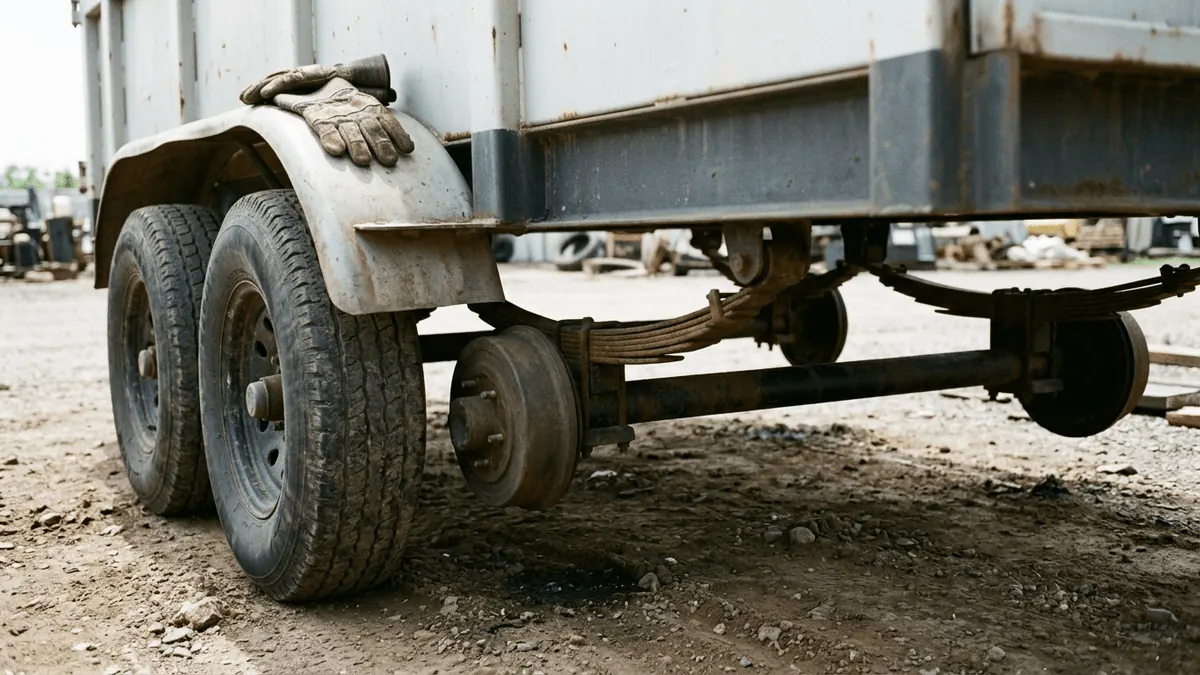
A dump trailer wears out in places a flatbed never does. Start at the bed floor and the corners, where hauling rock thins the steel and welds crack near the hoist mount. Raise the bed if the seller allows, then watch for a weeping cylinder or a bed that drifts back down. Take your time.
Then underneath, and then the label
Lenders weigh age, condition and resale, and each draws its own lines, so a trailer one lender passes on can suit another. Records help. Picture a ten-year-old trailer with a thick service file next to a four-year-old one with none: the file shows a lender what the floor can’t, who ran it, what it hauled and what broke.
Where the trailer comes from changes the paperwork
Every lender writes its own document list, so read this as a starting point. Ask first. Before any deposit.
| Where the trailer comes from | What you can usually get | What to confirm |
|---|---|---|
| A dealer, new | A manufacturer’s certificate of origin and an invoice | The serial number on the certificate matches the trailer’s certification label |
| A dealer, used | A certificate of title, or in some states a bill of sale and a registration receipt | Which of the two your state asks for at that trailer’s weight |
| A private seller | A signed title where one exists, plus a bill of sale | The seller’s name matches the title, any old lien is released and the serial number matches the trailer |
| Your own dealer loan | A payoff letter, the loan agreement and a copy of the title | The date the payoff figure is good through, and any prepayment terms |
The weight line matters here. The Texas Department of Motor Vehicles says a manufactured trailer must be titled once its gross weight exceeds 4,000 pounds, and it lets a used trailer at or under that weight go with a bill of sale and a registration receipt. Other states draw the line somewhere else. Check yours.
A refinance has no seller. The old lender has to release its lien before a new one goes on, so you need a payoff letter with a good-through date. Our equipment refinancing page walks through it, and used equipment financing covers dealers and private sellers across other machines.
Dump trailer loans, leases and who holds the title
A loan and a lease split on one question: who owns the trailer along the way. Seasonal work changes the math, because a roofing crew’s busy months and a landscaper’s rarely line up with a flat monthly year, so ask any lender how it treats an off-season.
Own the trailer for a decade of jobs and owning tends to fit. Rotate units every few years and a lease can. Three structures cover it.
On a titled trailer, the lien goes on the certificate of title under UCC section 9-311. On one with no title, a lender usually files a UCC-1 financing statement against the serial number. Same trailer, two different files. Our equipment leasing page lays out the wider set of structures.
Four weight lines a dump trailer meets
Weight decides what a trailer needs, how it’s titled and who can tow it. These lines come from federal rules and one state’s titling rule. Your state sets its own brake, title and license rules, so read them before you buy.
3,000
Pounds of gross weight at or below which a trailer can skip brakes, if its axle weights also pass the rule’s ratio test
Source: Brakes on all wheels, 49 CFR 393.42 (checked November 2026)
4,000
Pounds of gross weight above which Texas titles a manufactured trailer
Source: Texas Department of Motor Vehicles, Trailers (checked November 2026)
10,001
Pounds of GVWR or combined weight where a vehicle used in interstate commerce becomes a commercial motor vehicle
Source: Commercial motor vehicle definition, 49 CFR 390.5 (checked November 2026)
26,001
Combined rating that calls for a Group A CDL once the towed trailer is rated over 10,000 pounds
Source: Commercial driver’s license groups, 49 CFR 383.91 (checked November 2026)
Ratings set these lines. Not what’s in the bed. Read the door label on the truck and the certification label on the trailer before you buy.
Who runs a dump trailer
More equipment from the same jobs
What contractors and haulers ask about dump trailers
Can you finance a used dump trailer?
Short answer: lenders decide a used dump trailer one trailer at a time, mostly on its title, its serial number and the shape of its hoist and floor. Say a landscaper finds a six-year-old tandem-axle trailer at a dealer. A clean title that matches the serial number reads better than a low price on a trailer with a lien nobody released. Ask before the deposit.
Do I need a CDL to pull a dump trailer?
Federally, a Group A CDL starts when the combined rating reaches 26,001 pounds and the trailer is rated over 10,000 pounds, under 49 CFR 383.91. Say a pickup is rated at 10,000 pounds and the dump trailer at 14,000: that’s 24,000 on paper, under the line. Swap in a heavy-duty truck rated at 14,000 and the pair reaches 28,000, which crosses it. States add rules of their own.
Is it better to lease or buy a dump trailer?
The choice turns on how long the trailer stays in your rotation: a decade of your own jobs points toward owning, and a swap every few years points toward a lease. With a loan or equipment finance agreement you own the trailer and the lender holds a lien. With a lease the lessor owns it during the term. Tax treatment differs, so consult your tax advisor before choosing on that basis.
What size dump trailer do I need?
A dump trailer’s size comes down to payload, which is its GVWR minus its own weight, so start from the heaviest material you haul. Say you move wet topsoil: it weighs far more a yard than mulch, so the rating matters more than the bed length. Then confirm your truck’s tow rating clears the trailer’s GVWR with room to spare. The door label has it.
Does a dump trailer have a title?
Whether a dump trailer has a title depends on your state and its weight, and Texas shows how: its DMV titles a manufactured trailer above 4,000 pounds of gross weight. A new trailer arrives with a manufacturer’s certificate of origin, and a lighter used one can go with a bill of sale and a registration receipt. Other states set other lines. With no title, a lender usually files a UCC-1 financing statement against the serial number.
Scissor or telescopic: which hoist should I look for?
Both work, and the choice comes down to how the bed lifts: a scissor hoist works from a wider frame, while a telescopic hoist is one multi-stage cylinder that tips steeper. Diamond C’s March 2026 guide says five of its seven dump models use telescopic cylinders, which is a maker’s claim, not a test. Raise the bed on either type. Watch for weeping fluid.
What slows a dump trailer financing request down?
Mismatched paperwork slows a dump trailer financing request more than anything else: a serial number that differs between the quote, the title and the trailer, or an old lien nobody has released. Say the seller’s name on the title isn’t the name on the bill of sale. The lender stops and asks. Lay the quote, the title copy and the serial number side by side before you apply.
Got a dump trailer picked out?
Send the trailer, the seller and the work it’ll do, and a Paramount Financial specialist will pick it up from there. Prefer the application? Start the credit application.