
Last updated: November 9, 2026
Wheel Loader Financing: New and Used Loaders for Contractors and Yards
How loader size, hours and a private sale shape a loan or lease, and what to gather first.
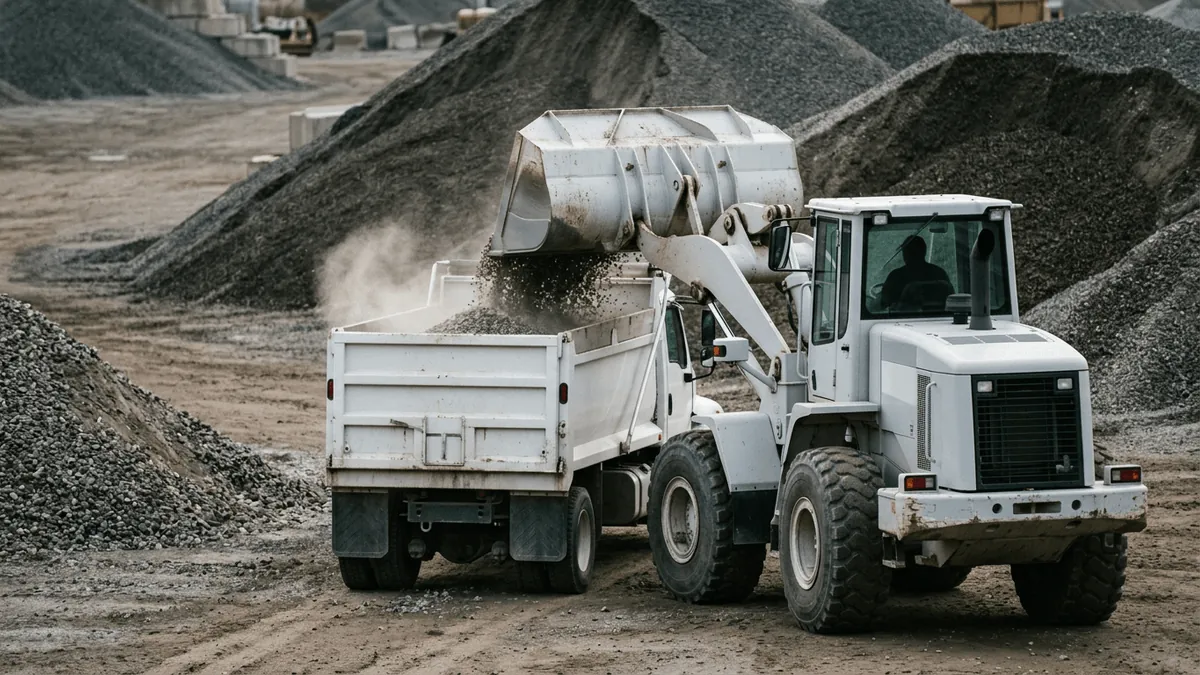
Wheel loader financing lets a business pay for a new or used loader over a set term, through a loan, an equipment finance agreement or a lease, with the machine itself usually securing the deal.
Most buyers don’t start here. They start with a skid steer or a mini excavator, run it hard for a few seasons, and then the stockpile outgrows it, the trucks start lining up and the bucket can’t keep pace. A wheel loader feeds trucks, hoppers and spreaders at landscape yards, paving crews, sawmills and farms. And it carries the load a long way.
This page sits under Paramount Financial’s heavy equipment financing overview and stays on the loader. Four topics: how size class changes the paperwork, what to check on a used one, what to have on hand when you call, and how a loan compares with a lease.
How wheel loader financing works
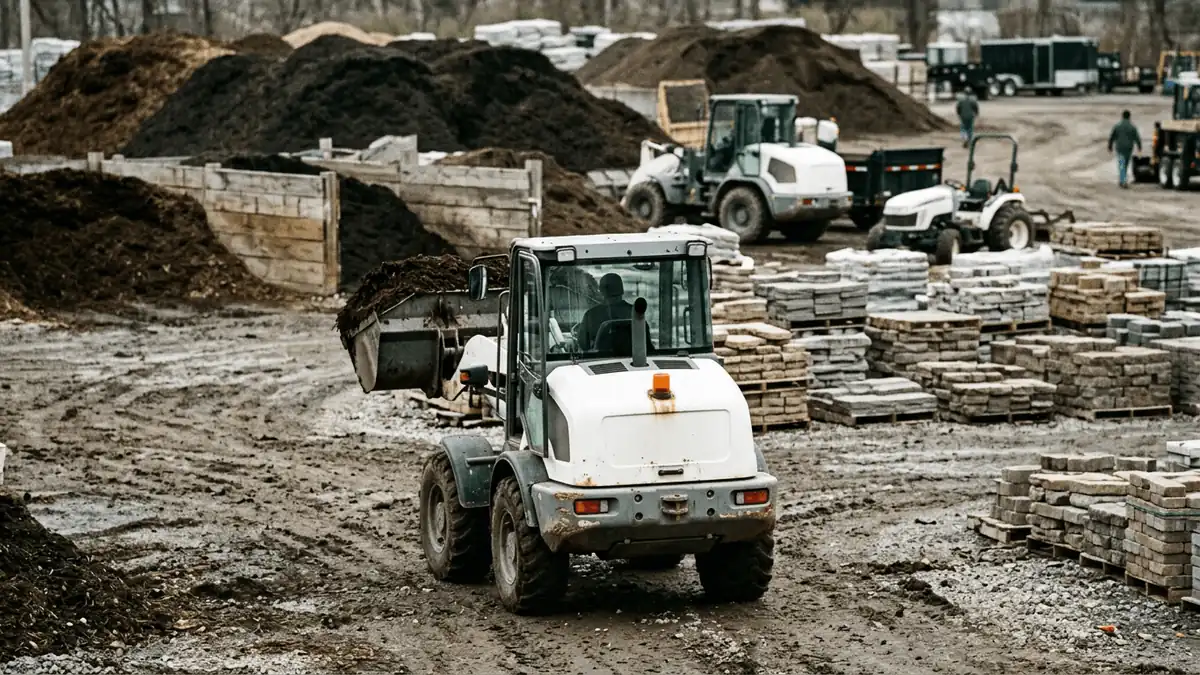
Wheel loader financing is an agreement where a lender or lessor pays the seller and your business pays over a set term. With a loan or an equipment finance agreement, you own the loader and the lender holds a security interest in it. With a lease, the lessor owns it until the term ends. Ownership is the whole difference.
Wheel loaders generally don’t carry a certificate of title, so a lender usually files a UCC-1 financing statement instead. That public notice can name one machine by serial number or reach every asset the company owns, which is why the wording gets read twice. Our guide to what a UCC filing is explains the difference.
Which wheel loader size class are you financing?
Deere’s P-Tier line spans the class: the 324 is a compact loader, the 544 a mid-size machine and the 644 a quarry and stone-yard loader, with brochure operating weights of 14,110, 31,433 and 41,246 pounds. The buyer, the trailer and the tires change with that weight. So do a lender’s questions.
| Compact | Mid-size | Large | |
|---|---|---|---|
| Bucket range, Deere example | 1.0 to 2.1 cu yd (324 P-Tier) | 2.5 to 5.25 cu yd (544 P-Tier) | 4.0 to 4.75 cu yd (644 P-Tier) |
| Typical work | Landscape yards, nurseries, small farms, parking lots in snow | Paving and site contractors, stone and mulch yards | Quarries, aggregate and recycling yards, big sawmill decks |
| Getting to the job | A heavy-duty trailer and a truck rated to pull it | A lowboy trailer, which has its own cost | Moves rarely, by lowboy, with whatever permits the route needs |
| What lenders tend to ask about | Hours, tires and who the seller is | Hours, the center pivot and the bucket end | Hours, the service file and the resale market |
Bucket ranges come from Deere’s brochures for the 324 P-Tier, 544 P-Tier and 644 P-Tier. Other makers size their classes differently. Read the three columns as a ladder, not a rulebook.
Already running a mini excavator or a skid steer? The compact column is probably where you’re headed. Our page on skid steer financing covers the machine you’d keep.
Skid steer, compact loader or both?
Bobcat’s buyer’s guide sorts these machines by work pattern, not by size. A compact wheel loader suits loading and carrying over a defined route. A skid steer wins where the space is tight and the work is attachment-led.
One line from that guide is worth taking to the dealer: bucket volume is not a safe payload figure. Material density, attachment weight and the machine’s configuration all change what the loader can lift. Ask for the load chart. Attachments need the same care, because the exact model, coupler, hydraulics and controls decide which tools a given loader can run safely.
Some sites need both machines. That means two agreements and two terms, so ask a lender whether it will look at them together or one at a time. Digging as well as loading? Read our backhoe financing page next.
Used wheel loader financing starts at the pivot
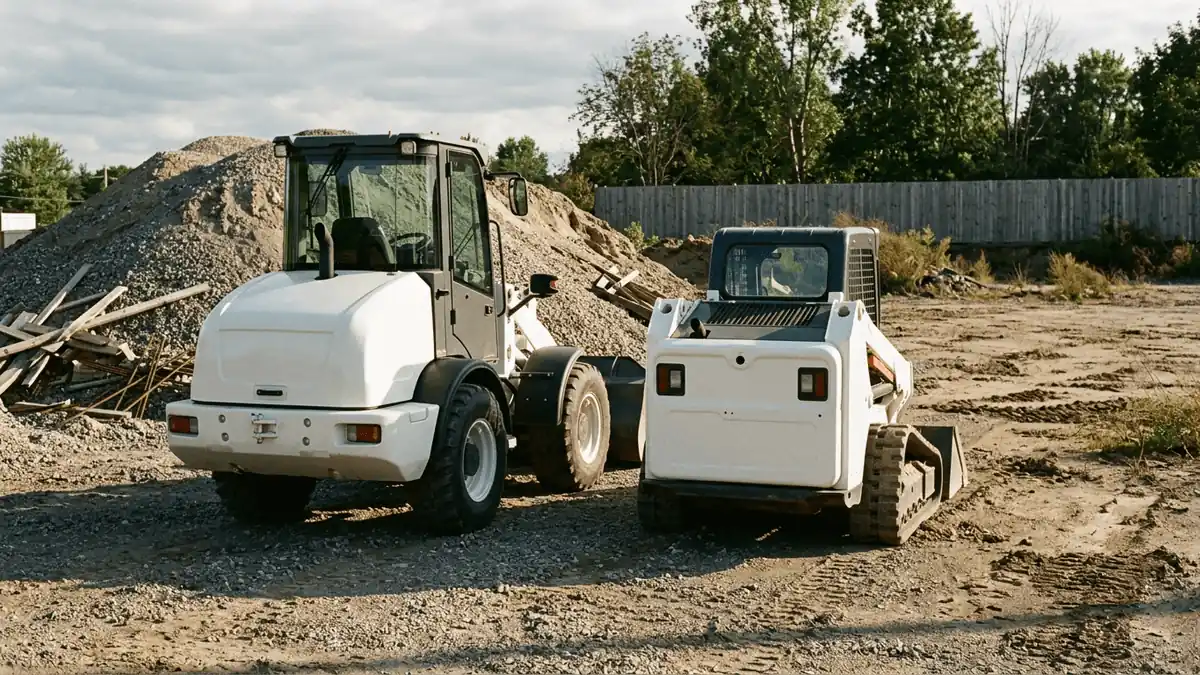
The hour meter tells only part of the story. My Equipment’s inspection guide starts in the cab, where a worn seat, pedals and joystick usually mean the rest of the machine got the same treatment. Mico Equipment’s guide goes straight to the center pivot and the linkage pins.
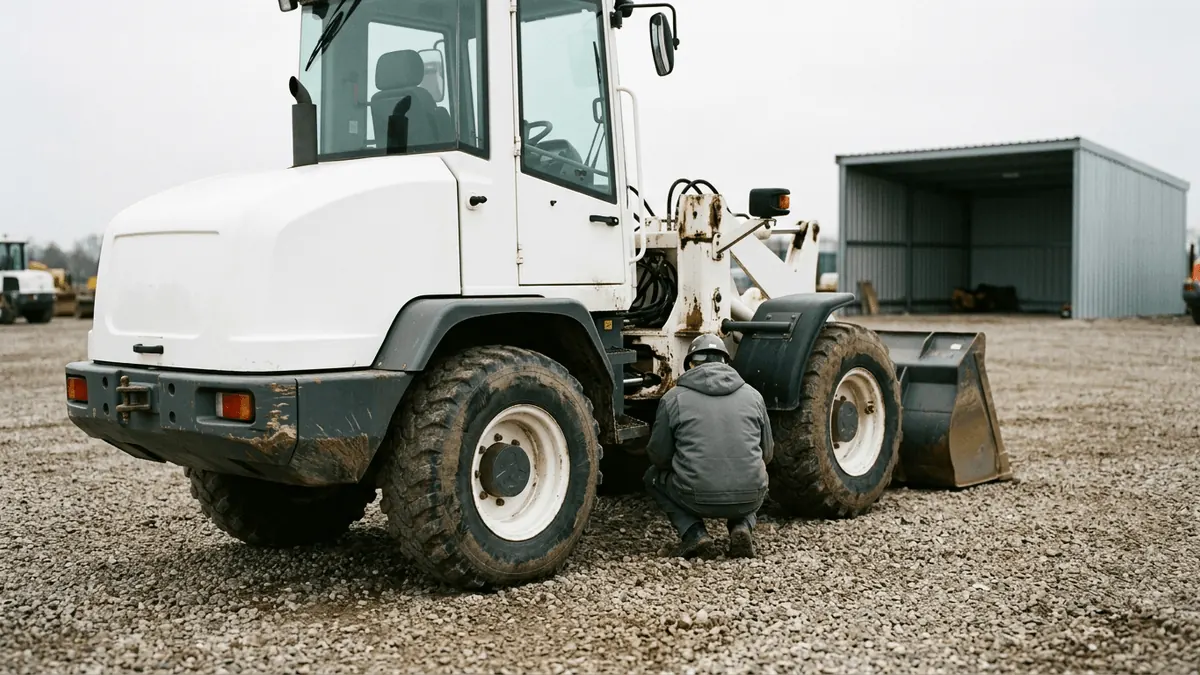
The bucket end
The middle
Wheels and cab
OSHA’s earthmoving equipment rule lists loaders and requires seat belts, so a missing belt is a safety problem before it’s a price point. Check the belt. For anything you can’t judge yourself, pay for a written inspection, since a lender may ask for the serial number, the hour reading and photos anyway.
Who sold it decides what you’ll need to prove
Four kinds of seller hand over four kinds of paper.
Private sales are where an old lien bites. Section 9-315 of the Uniform Commercial Code generally keeps a security interest attached to collateral after a sale unless the secured party authorized the sale free of it, so a retiring contractor’s unpaid loan can follow the loader into your yard. Run a UCC search with the state filing office where the seller is based. If a balance turns up, get a payoff letter before anybody gets paid.
Lenders don’t treat all four alike. Ask early. Our page on used equipment financing goes further on dealer versus private sales.
What to have on hand
Lenders ask different questions, but a handful turn up on almost every wheel loader file, and answers written down before you call save a round of back and forth.
Short on one? Say so. A gap you explain early reads better than one a lender finds later.
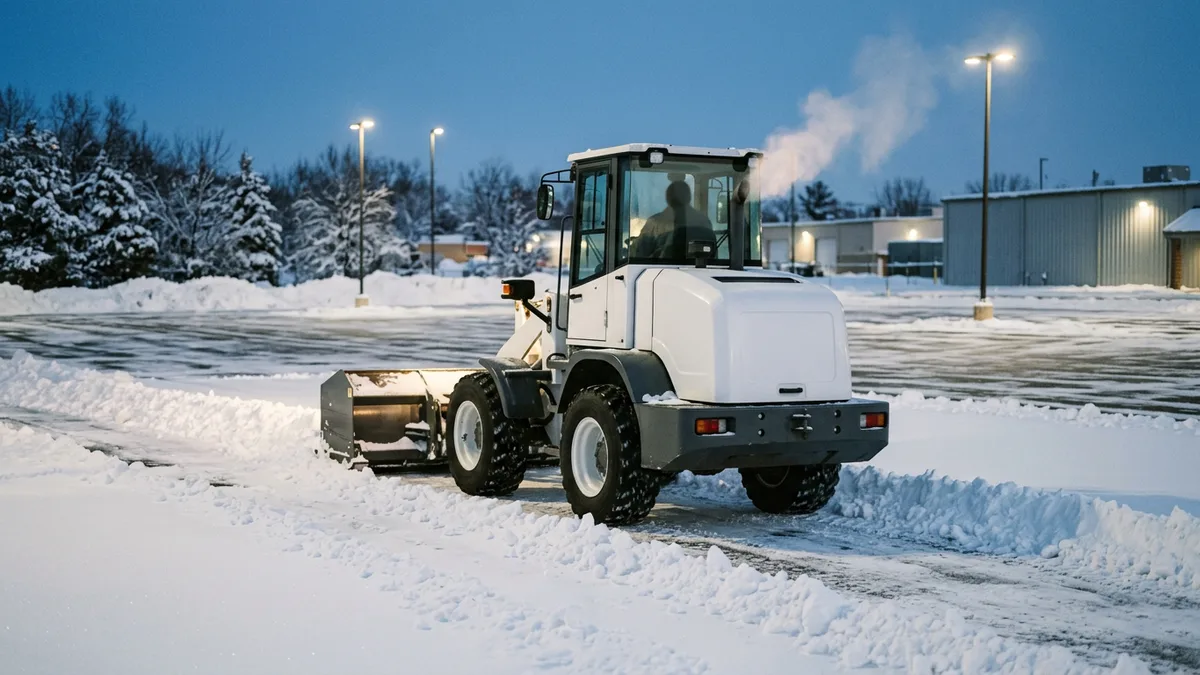
Financing or leasing a wheel loader for seasonal work
A snow contract runs from November to March. The payment runs all year. Plan around that. A loader you’ll keep for ten winters after the contract closes leans toward owning, with a loan or a $1 buyout lease.
One big contract might fit a fair market value lease, as long as you read the return conditions on hours and wear. Our page on construction equipment leasing compares the structures.
Ask whether those can share one agreement with the loader. Taxes are a separate talk. IRS Publication 946 sets the Section 179 limit at $2,560,000 for tax years beginning in 2026, claimed on Form 4562, and a loan and a lease can be treated differently. Consult your tax advisor first, then read our Section 179 deduction guide.
One maker, three loader classes
14,110 lb
Deere 324 P-Tier operating weight with a 1.4 cu yd general-purpose bucket
Source: Deere, 324 P-Tier brochure
31,433 lb
Deere 544 P-Tier operating weight, Z-bar loader with a 3.0 cu yd bucket
Source: Deere, 544 P-Tier brochure
41,246 lb
Deere 644 P-Tier operating weight, Z-bar loader with a 4.25 cu yd bucket
Source: Deere, 644 P-Tier brochure
Weight decides the trailer, the pad it sits on and sometimes the permit. Attachments add pounds. Deere lists buckets, couplers and forks apart from the base machine in each brochure, so ask the seller for the exact configuration, not just the model, and get that configuration in writing.
Who keeps a wheel loader working
Other machines, and how the financing side works
What buyers ask before financing a wheel loader
How does financing a wheel loader actually work?
A lender pays the seller and the loader itself secures the deal while your business repays over an agreed term. Under a lease the lessor holds title instead, and at the end you return, renew or buy the loader, whichever that lease allows. Read that clause first.
Can you finance a used wheel loader?
Used loaders do get financed. Lenders look harder at hours, the seller and the condition of the machine than they do on a new one, and no single age or hour cutoff applies everywhere. Ask first.
How many hours is too many on a used wheel loader?
No hour count settles it. My Equipment’s inspection guide treats the meter as one clue beside the cab, the bucket pins and any hydraulic leaks, and Mico Equipment says the same of the center pivot. A lender may keep its own limit, so get that answer before you make an offer.
Should I buy a compact wheel loader or a skid steer?
Start with the work pattern. Bobcat’s buyer’s guide points a compact wheel loader at repeated loading and carrying over a route, and a skid steer at confined spaces and attachment work. Some sites need both machines, which means two agreements.
Can forks, a grapple or a snow pusher go on the same agreement?
Attachments bought with the loader often ride on the same agreement, but that’s the lender’s call, so ask before you place the order. Itemize each one on the seller’s invoice: bucket, forks, pusher, grapple and coupler. A lender can then see what it’s paying for.
Does a wheel loader qualify for Section 179?
Three things decide it: how the loader is acquired, how the business uses it and how much equipment the business puts in service that year. IRS Publication 946 sets the limit at $2,560,000 for tax years beginning in 2026. Don’t budget around it yet. Talk to your tax advisor.
What changes when the loader comes from a private seller?
Mostly the paperwork, because there’s no dealer to supply it, so you’ll want a bill of sale, the serial number, the hour reading and a lien search in the seller’s state. Any old loan on the machine has to be paid off or released before the sale. Sort it out early.
Got a wheel loader picked out?
You can start your application now, or leave your contact details below and a member of our team will follow up.