
Last updated: November 9, 2026
Automotive Repair Equipment Financing and Leasing for Shops
Compare loans and true leases for lifts, alignment racks, tire machines and scan tools before adding a bay.
Automotive repair equipment financing lets a shop pay for lifts, alignment machines and scan tools over time. With a loan the shop owns them from day one; with a true lease the lessor owns them until the term ends.
A repair shop doesn’t buy one kind of thing. It buys a lift, then a tire machine, then a scan tool and the software to run it, and each one ages differently. Same bay, different paper. This page sits under our guide to equipment financing by industry and goes deeper on repair, service and tire shops.
Paramount Financial offers true equipment leases, including operating leases, not only loans. Rather talk it through first? Talk to Paramount Financial’s team.
Automotive repair equipment financing starts with the bay
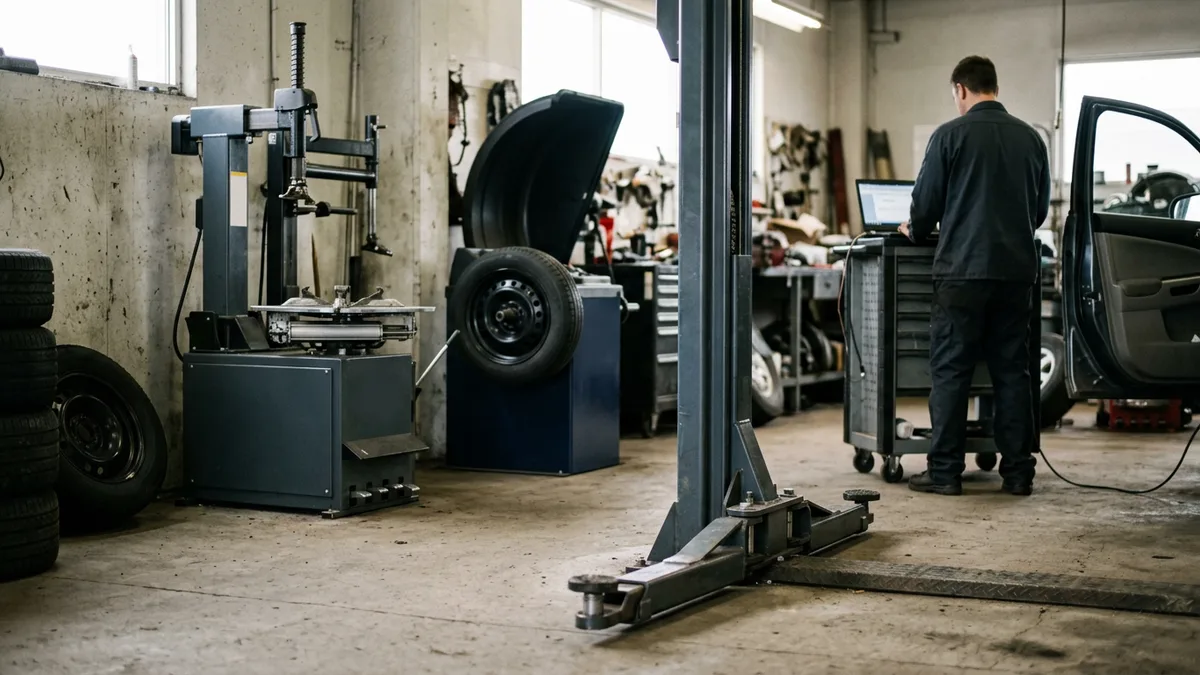
Walk one bay. A two-post lift is anchored to the slab. A tire changer and a balancer stand against the wall. A cart holds a laptop and a scan tool.
Lenders and lessors tend to sort those three the same way, by how the equipment is secured and how quickly it dates, and the sort decides which paper is worth pricing first. So start there too.
Bolted to the floor
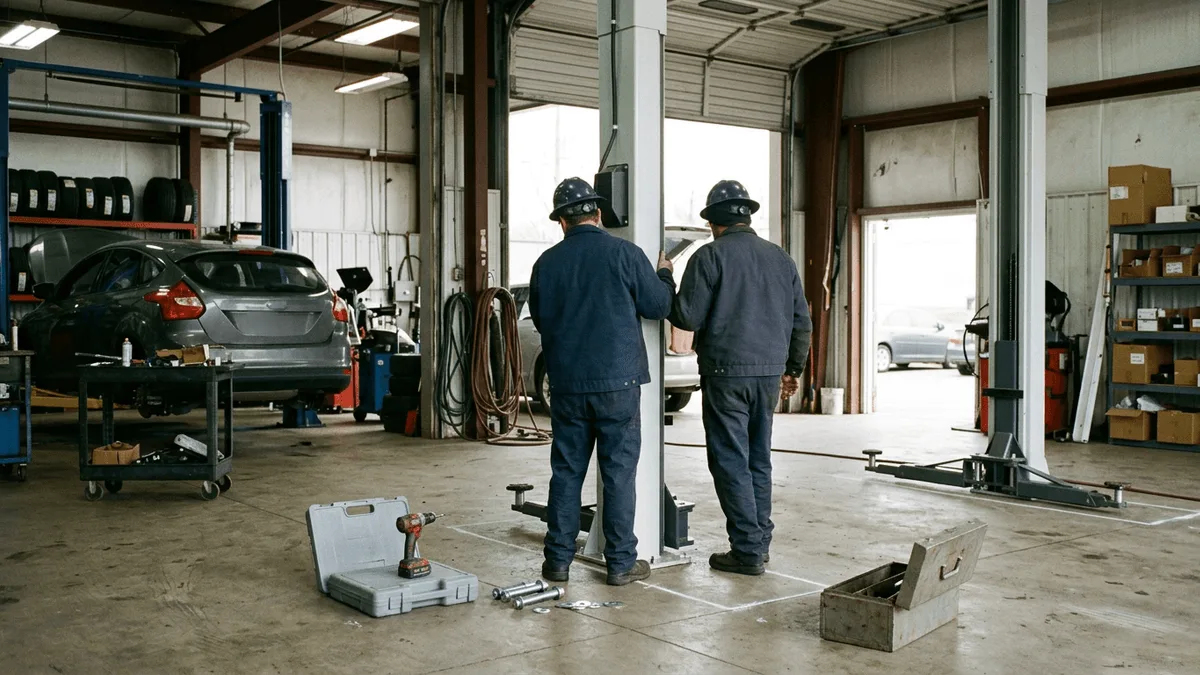
Lifts, alignment racks and shop compressors are anchored into the concrete, which can make them fixtures. Under UCC 9-334, a lender’s claim on a fixture generally ranks behind the building owner’s, so a lender may ask a landlord to consent in writing. Ask early.
Stands on its own
Tire changers, wheel balancers, brake lathes and A/C machines can be moved without touching the floor. One rule covers A/C machines. Under EPA’s Section 609, technicians must use refrigerant handling equipment that EPA or an approved lab has certified.
Lives on a screen
Scan tools, calibration software and shop-management subscriptions date fastest. Hardware can outlast the license. Ask what happens to updates and saved data if you return a unit.
Lifts and alignment systems: lease, loan or lease to own?
Lift financing spreads the price of a vehicle lift over time, using a loan, an equipment finance agreement or a lease. Under a loan or an agreement, the shop owns the lift and the lender holds a security interest in it. Under a true lease, the lessor owns it through the term, and the shop returns, renews or buys it. Ownership is the difference.
Alignment splits in two
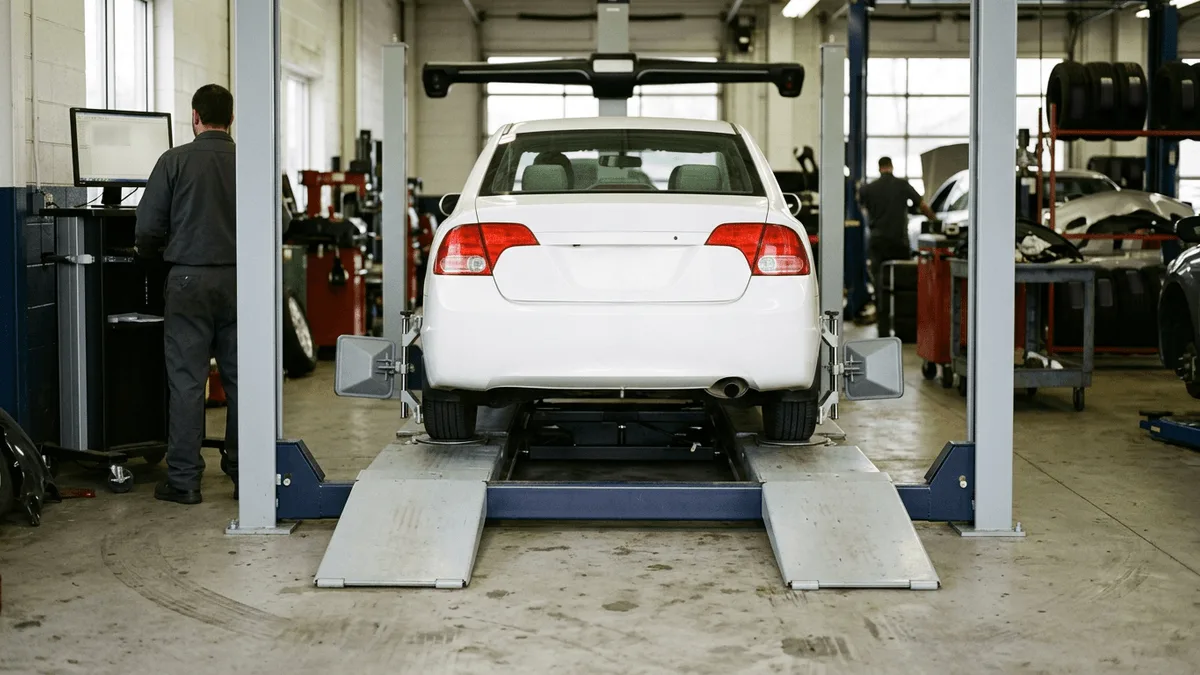
The rack can serve a shop for a long time, but the cameras, targets and software that read it date quickly, and a frame for calibrating driver-assistance systems is one more piece. Price them on separate lines. On a fair market value lease the buyout equals what the equipment is worth when the term ends, so it fits an alignment system you expect to replace, and on a $1 buyout lease the shop pays a dollar and keeps the unit, so it fits a lift you expect to keep.
Questions for the lessor
The structures are explained in our guides to the fair market value lease and to operating versus finance leases. Read both.
Automotive repair equipment financing, item by item
| Equipment | What ages it | Structure worth pricing first |
|---|---|---|
| Two-post, four-post and scissor lifts | Cables, locks and hydraulics wear, and the model’s certification matters | A loan, or a $1 buyout lease for a lift you’ll keep; mind the landlord |
| Alignment rack and calibration frames | The cameras, targets and software, more than the rack | A fair market value lease if you’d upgrade; the rack can sit on its own line |
| Tire changer and wheel balancer | Clamps, bead breakers and sensors wear | A loan or an equipment finance agreement, often one line on a bigger quote |
| Scan tools and OEM software | Updates and licenses move faster than the hardware | A short true lease, or one line on a larger quote |
| A/C refrigerant machine | Refrigerant standards, and the unit’s certification | A loan or an agreement; confirm it’s certified for the refrigerants you service |
| Brake lathe, compressor and hand tools | Everyday wear | Often cash, or one line on a bigger quote |
Lifts have one fixed point. According to ALI’s September 2018 announcement, the 2017 edition of ANSI/ALI ALCTV, the lift safety standard, took effect on July 24, 2018, and its directory lists every lift certified to it. Alignment cameras follow their vendor’s software releases instead, so one lift and one alignment system call for two quotes. Our guide to leasing versus buying equipment shows how to compare them.
Used lifts and shop equipment: what to check first
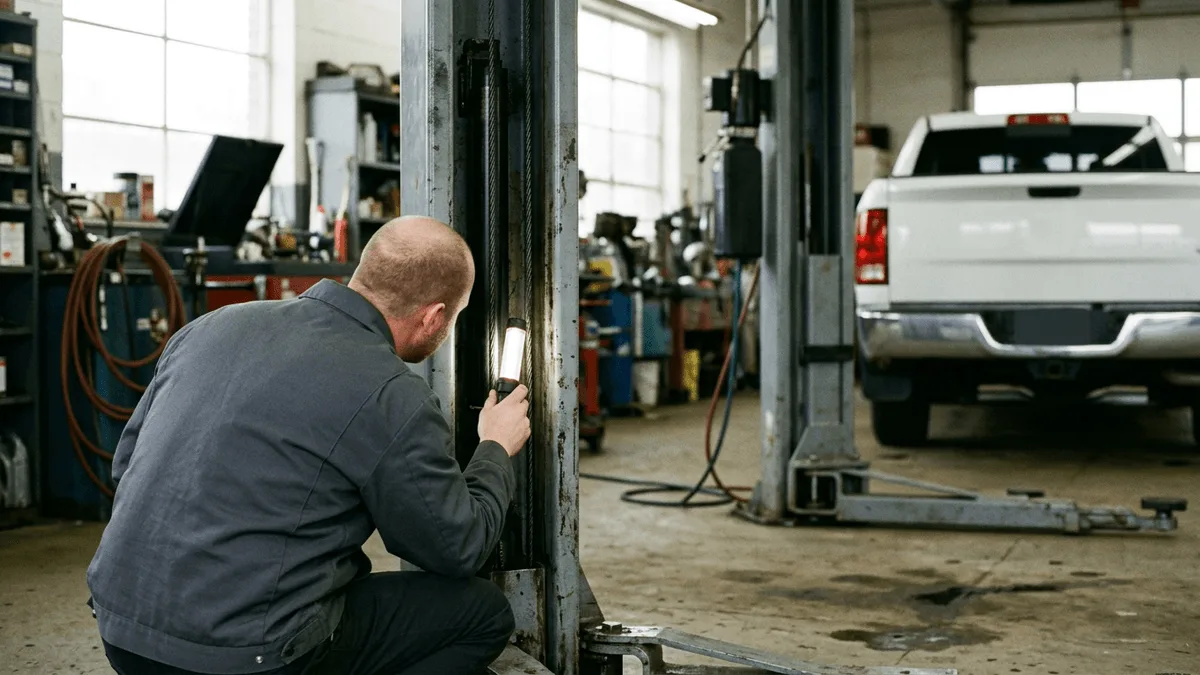
When a shop closes or upgrades, its lifts, balancers and alignment racks go to dealers, auction houses and other shops. Look hardest at the lift. It holds a car overhead.
Raise it and lower it. Our guide to used equipment financing covers older units in more detail.
Automotive repair equipment financing when you add a bay
Ask whether any of it can ride in one request. Get the quote itemized.
Banks and the SBA are worth a look too. Our guide to equipment financing with an SBA loan explains what the program covers and what it asks of you.
What the labor figures say about repair work
825,800
automotive service technicians and mechanics employed in 2025
Source: Bureau of Labor Statistics, Occupational Outlook Handbook
5%
projected employment growth from 2025 to 2035, which the agency calls faster than average
Source: Bureau of Labor Statistics, 2025 to 2035 projections
About 66,200
openings projected each year, on average, over the decade
Source: Bureau of Labor Statistics, page updated September 2026
Four questions for the quote
Related guides
Questions repair shop owners ask about equipment financing
Can you finance a lift and its installation together?
It depends on how the quote is written. A lift, its anchors, the electrical run and the air line can arrive as one invoice or three, and a lender prices what the paperwork shows. Ask the seller for an itemized quote with installation on its own line, then ask the lender whether it can all ride in one request.
Is it better to lease or buy a vehicle lift?
The better question is how long you’ll keep the bay set up the same way. A lift can outlast the plan it was bought for, which tends to favor a loan or an equipment finance agreement, while scan tools and calibration gear date faster and often suit a shorter lease. Plenty of shops do both. Our guide to leasing versus buying equipment goes through the trade-offs.
Does a lift bolted to the floor count as a fixture?
A bolted lift can be a fixture, and that matters most when you rent the building. Under UCC Section 9-334, a lender’s claim on a fixture generally ranks behind the building owner’s unless the owner consents in writing or the lender records a fixture filing in time. Whether a particular lift counts turns on state law and the facts, so ask your attorney before you sign a lease on a bolted unit.
What should you check before buying a used lift?
Short answer: confirm it’s certified, then confirm it’s been inspected. The Automotive Lift Institute says a model missing from its directory of certified lifts isn’t certified, and it also says every lift installed in the United States and Canada must be inspected at least annually. After that, look at the cables, locks and hydraulics in person.
What happens to scan tool software when a lease ends?
The license decides it. The hardware goes back to the lessor, while the license, the updates and any saved vehicle data may or may not stay with you, so read both documents before you sign.
What do you need to apply for auto repair equipment financing?
An itemized quote from the seller comes first, listing each unit by model and serial number. Say the order is a two-post lift and an alignment system: expect a short profile of the business, bank statements on a larger request, and a copy of the shop’s lease if the lift will be bolted in. Details vary by lender.
Does Section 179 apply to repair shop equipment?
It can, and the limits are set by tax year. Under the 2025 edition of IRS Publication 946, the 2026 maximum is $2,560,000, and it phases down once qualifying purchases pass $4,090,000. Our Section 179 deduction guide covers the rules, and a lease may change who claims the deduction. Consult your tax advisor before choosing a structure for tax reasons.
Pricing a new bay? Bring the quote.
Fill in the short form and the team will follow up about the equipment you’re pricing, or start your application online instead.