
Last updated: November 9, 2026
Mining Equipment Financing for Quarries and Mine Operators
Compare loans and true leases for the haul trucks, loaders and crushers your pit runs on.
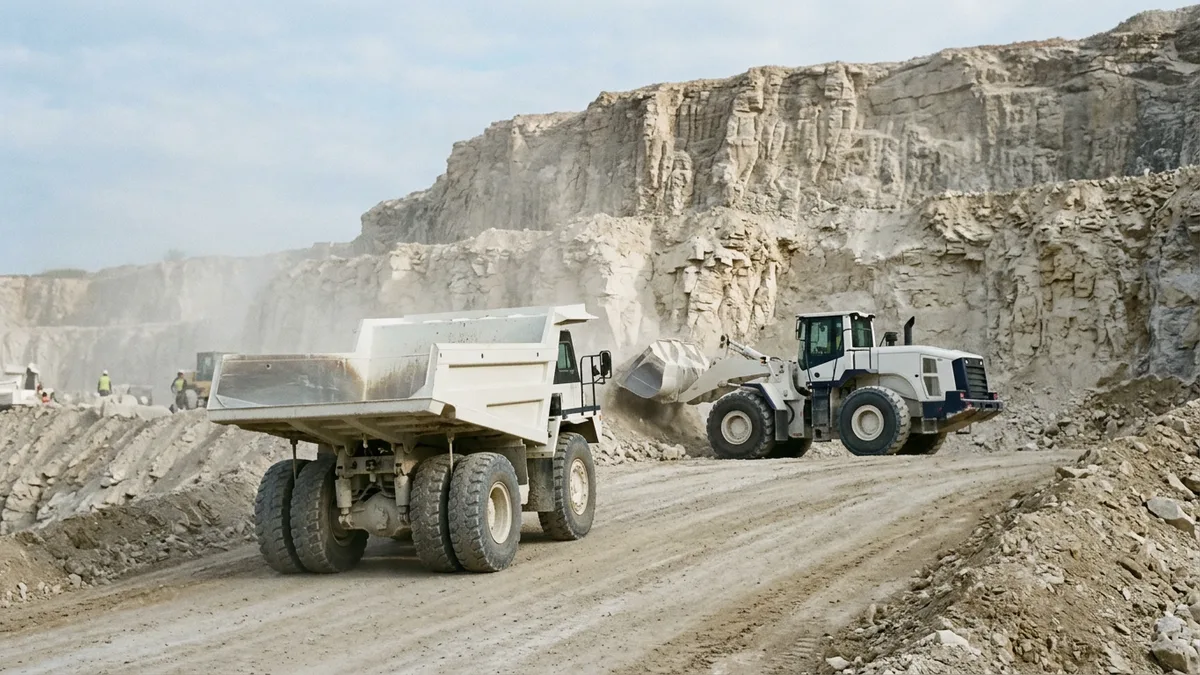
Mining equipment financing is a loan, an equipment finance agreement or a lease that spreads the cost of haul trucks, loaders, crushers and drills over a set term, so a quarry or mine keeps cash for fuel and payroll.
A limestone quarry in Tennessee and a sand and gravel pit outside Phoenix have little in common. Except this. The machines run long shifts, the hours stack up fast, and the ground has an end date.
This page sits under our guide to equipment financing by industry, and it’s written for aggregate producers, small mine operators and the contractors who drill, haul, crush and screen for them. Plenty of them buy used.
What quarries and mine operators finance
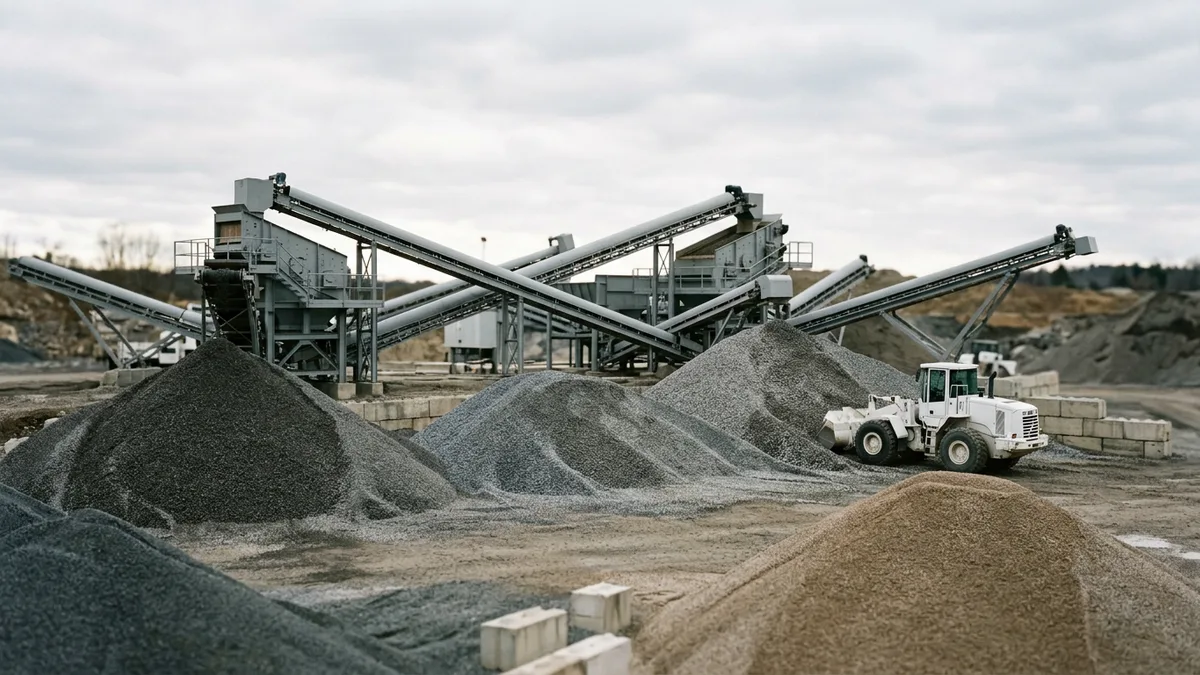
Rock goes from the face to a stockpile in five steps. Which of them you own depends on the business.
- Drilling and blasting: rotary and down-the-hole drill rigs, with the air compressors that feed them
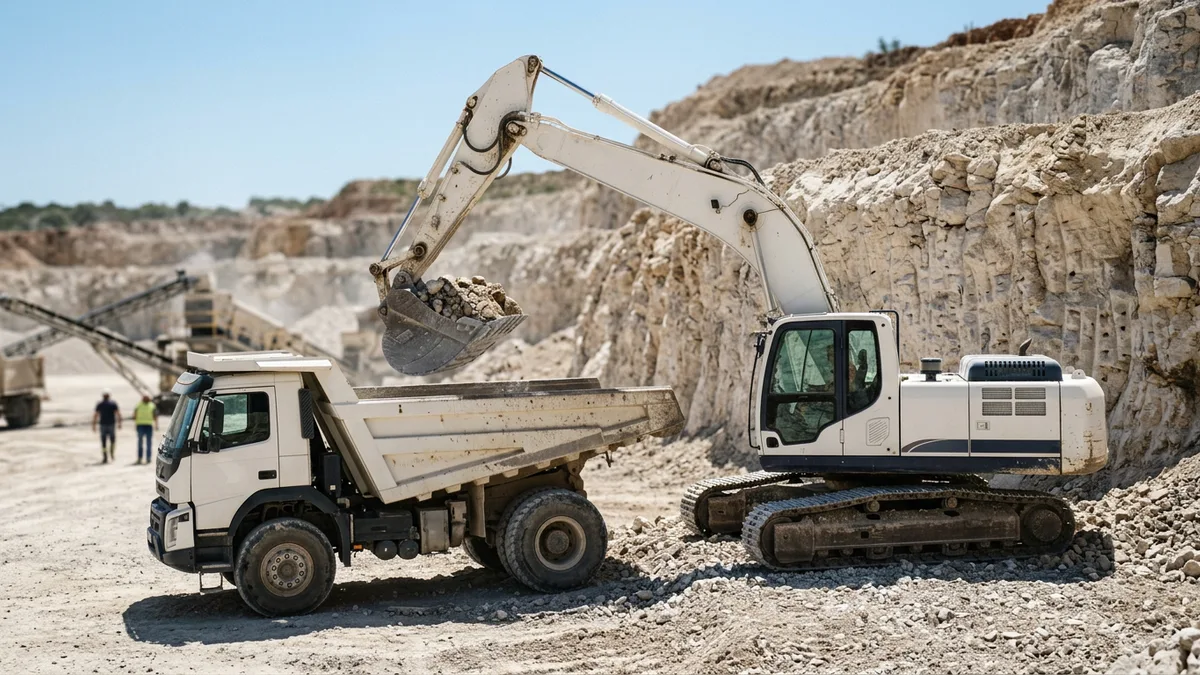
- Loading: hydraulic excavators and wheel loaders, sized to the trucks they fill
- Hauling: rigid and articulated haul trucks inside the pit, then highway dump trucks and trailers out to the customer
- Crushing: jaw crushers for the first pass, cone and impact crushers behind them, fixed or portable
- Screening and conveying: vibrating screens, stackers and the belts between them
- Around all of it: dozers on the haul road, water trucks for dust, graders, light towers and the pickups
Underground mines add load-haul-dump loaders and roof bolters. The diggers and dozers have their own guides, excavator financing, bulldozer financing and heavy equipment financing, and the trucks have theirs in dump truck financing.
Does it follow the face, stay on the site or wear out?
Sort the yard three ways before you pick a term.
Follows the face
- Wheel loaders and excavators
- Rigid and articulated haul trucks
- Drill rigs and their compressors
- Portable crushing and screening plants
These move with the face. They can be sold or shifted to another pit. Each has a serial number a lender can record against it.
Stays on the site
- The primary crusher and its feeder
- Stationary screens and conveyors
- A wash plant and its pumps
- The scale and the scalehouse
Bolted down. On ground you may only lease. Settle what happens to it when the site lease ends, before you sign for it.
Wears out
- Jaw plates, cone liners and blow bars
- Screen cloth and conveyor belts
- Bucket teeth and cutting edges
- Tires on haul trucks and loaders
Measured in hours of work. Used up well before the machine is. They usually belong in the operating budget, not in a loan.
One rule holds across the yard: match the term to the shorter of two clocks, the reserve and permit left on the site or the hours left in the machine. Mobile gear can outlive a single pit, so a longer term can work for it. Plant that stays shouldn’t be financed past the site lease.
Mining equipment financing: loan, lease or TRAC lease?
An equipment finance agreement makes the operator the owner of the loader or truck from day one, while the lender holds a security interest, usually recorded as a UCC-1 financing statement, until the last payment. A lease works the other way. The lessor owns the equipment all term.
Titled highway trucks often go on a TRAC lease, a form of equipment leasing named for its terminal rental adjustment clause. Trucks only. The rules for them sit in commercial truck financing.
- A fair market value lease for drills and portable plants you may hand back when the pit moves
- A $1 buyout lease for loaders and excavators you plan to run until they’re worn out
- A TRAC lease for the highway dump trucks and trailers that carry product to the customer
- An equipment finance agreement when ownership from the start matters
Which structure fits which part of the pit
A first pass. Not a quote.
| Equipment | What wears first | What usually fits |
|---|---|---|
| Wheel loaders and excavators | Buckets, cutting edges and undercarriage | A loan or a $1 buyout lease, since they work every shift |
| Rigid and articulated haul trucks | Tires, bodies and hoist cylinders | A loan for a truck you’ll run to the end, a fair market value lease for one you’ll rotate out |
| Highway dump trucks and trailers | Brakes, tires and body liners | A loan, or a TRAC lease on a titled truck |
| Drill rigs | Bits, hammers and the compressor | A fair market value lease, since drilling follows the blast schedule |
| Jaw crushers | Jaw plates and bearings | A loan, if the site lease runs past the term |
| Cone and impact crushers | Liners, mantles and blow bars | A loan or a lease, with the liners kept in the operating budget |
| Portable crushing and screening plants | Liners, screen cloth and track pads | A fair market value lease, or a loan if the plant will work several pits |
| Conveyors and stackers | Belts, idlers and rollers | A loan matched to the site lease |
| Dozers and water trucks | Undercarriage and tires | A loan, since every pit needs them |
Plenty of yards run a mix. Ask your tax advisor how each piece is treated before you sign.
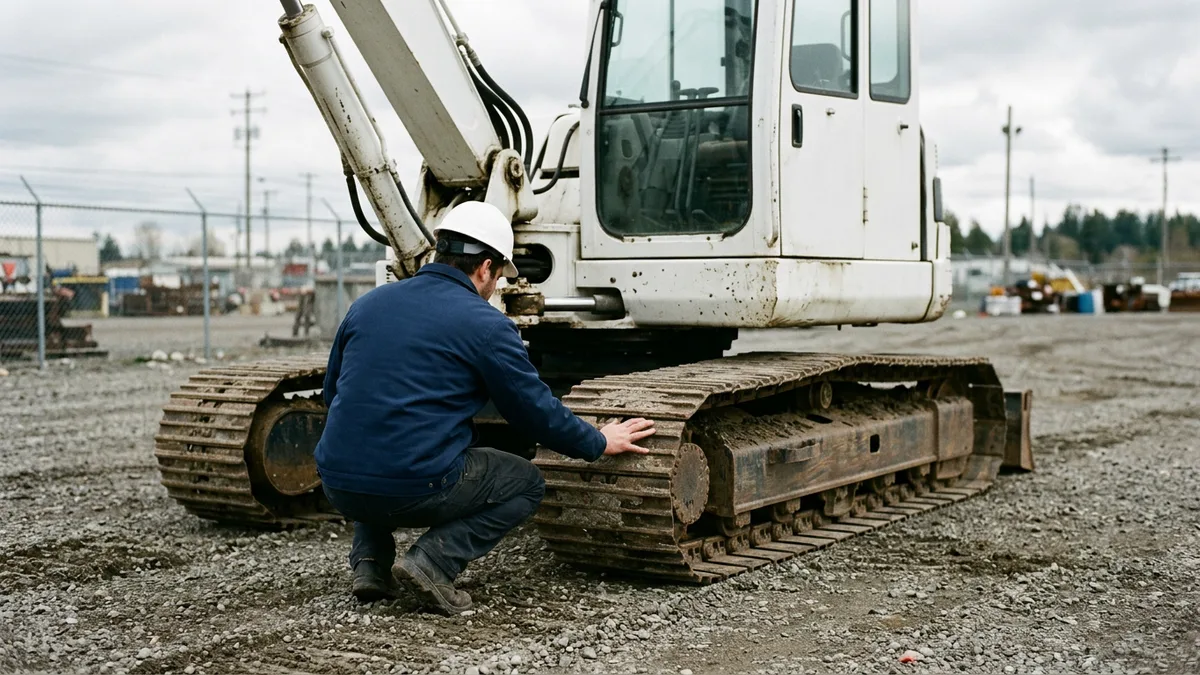
Buying used mining equipment: what to check first
Hours tell most of the story. They come in two kinds.
- Where it came from: a dealer, an auction yard or another quarry that upgraded or closed, since each leaves a different paper trail
- Machine hours, and on a crusher the hours on the current liners or jaw plates, because the engine meter says little about the wear
- The undercarriage on a dozer or excavator and the tires on a loader or haul truck, two wear items that get expensive
- Frame cracks, repaired welds and the hoist cylinders on a haul truck
- Oil sample reports, if the owner kept them
- Serial numbers on the machine plate and the major components, matched to the bill of sale and to any rebuild invoices
- Old liens: on a titled truck they sit on the certificate of title, and on a loader or crusher they turn up in the state’s UCC filings
- Dealer, auction and private-party paperwork, covered in the guide to used equipment financing
Three public figures behind a quarry purchase
Four ways to structure mining equipment financing
More for quarries and heavy-equipment fleets
What quarry and mine owners ask before they finance
Can used mining and quarry equipment be financed?
Often, yes, when the paperwork is clean: a bill of sale, the serial numbers on the machine and its major components, the hour meter reading and a recent inspection. A 2014 wheel loader with every service record in a folder can be an easier file than a newer one with none. Records first.
Is it better to lease or buy a crusher or a haul truck?
The better question is how long the machine will keep earning at your site. A haul truck that runs every shift to the end of its life suits a loan or a $1 buyout lease, while a portable plant that moves between pits may suit a fair market value lease you can hand back. Mix them if the yard needs it.
Can a new quarry or mining company finance its equipment?
It’s harder, not closed. Lenders reviewing a newer business tend to look harder at the equipment itself, the owner’s time in the industry and any signed work, so a hauling agreement, a purchase order for stone and clean credit all help. The startup equipment financing guide lists the rest.
Does Section 179 apply to mining and quarry equipment?
The 2026 Section 179 limit is $2,560,000, reduced dollar for dollar once a business places more than $4,090,000 of qualifying property in service that year. Equipment bought with a loan or an equipment finance agreement generally counts; equipment on a true lease generally doesn’t, because the lessor owns it. Both figures are in IRS Publication 946, the Section 179 deduction guide has the rest, and you should consult your tax advisor before counting on a deduction.
Can equipment financing cover the land or the quarry itself?
No, equipment financing pays for equipment, not the ground it sits on. A site purchase, a mineral lease and permits are real estate and reserve questions for a bank, a commercial real estate loan or the seller. Equipment financing picks up at the loaders, trucks and plant that work the site.
What happens to the payments if the pit runs out of reserve?
The payments continue, because a loan or a lease is owed whether or not the reserve lasts. The equipment is the collateral, so the term should fit the permitted reserve left and whether the machines can move to another site. Plan that before you sign.
What slows down a mining equipment application?
Paperwork, mostly: a seller who can’t produce the component serial numbers, an hour meter that doesn’t match the service records, or an inspection at a site hours from town. Have the quote, the serial numbers and the seller’s details ready before you apply.
Adding a loader, a truck or a crusher to the pit?
Leave your name, business, phone and email in the form below, and a Paramount Financial specialist will call to talk through the machine you have in mind.