
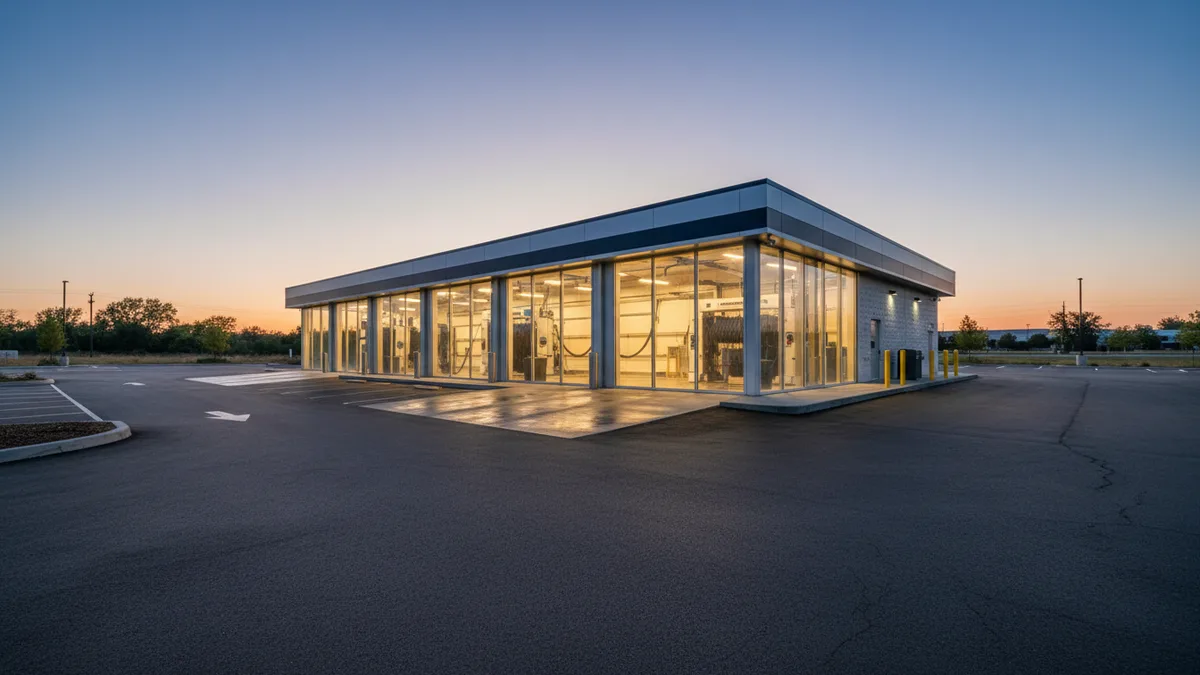
How to Start a Car Wash: Equipment Types and Startup Costs

Key takeaways
How to start a car wash comes down to five decisions, in order: the wash format, where the wash water will go, a site whose water, sewer, and power fit that format, the equipment, and then the budget and permits.
- Self-service, in-bay automatic, and tunnel washes need different buildings, crews, and water plans.
- EPA puts self-service at about 15 gallons of fresh water a car. In-bay automatics run near 45.
- Your sewer authority or state permit can decide whether you install a reclaim system.
- Published startup totals disagree by a factor of twenty. Price yours from quotes.
- Plenty of wash equipment changes hands used, so inspect it like part of the building.
Water first. In EPA’s November 2023 numbers, an in-bay automatic uses roughly three times the fresh water per car that a self-service wand bay does. Where all of it drains decides who signs off on your site. That sets the equipment list. So this guide on how to start a car wash runs in that order, with car wash equipment financing covered once, near the end.
Five Decisions Before You Start a Car Wash
- Pick a format: self-service bays, an in-bay automatic, a tunnel, or a mix on one lot.
- Find out where the wash water is allowed to go, and what the local sewer authority or your state requires before it accepts it.
- Choose a site whose water service, sewer connection, power, and traffic fit that format.
- Price the equipment for that format, with installation, from at least two sellers.
- Build the budget, form the business, and file for the building, zoning, and discharge permits.
ZenBusiness’s January 2026 guide opens with market research; Shopify’s August 2025 plan opens the same way. Fine. You’ll need both. Step two still comes before the plan’s numbers, because sewer conditions can add a reclaim system to the cost side.
Self-Service, In-Bay Automatic, or Tunnel
A car wash format is the way the car and the equipment meet. EPA’s WaterSense program sorts commercial washes into three kinds: conveyor systems that pull a car under fixed arches, in-bay automatics where a gantry moves over a parked car, and self-service bays where the customer holds the wand.
Three formats. Three businesses.
| Self-service bay | In-bay automatic | Tunnel (conveyor) | |
|---|---|---|---|
| Who washes | The customer, with a wand | A gantry over a parked car | Arches over a moving car |
| Staff on site | Often none for hours | Light | A crew every shift |
| Fresh water per car (EPA) | 15.0 gallons | 43.3 to 44.8 gallons | 30 to 34 gallons |
| Reclaim system | Rarely practical | A good candidate | A good candidate |
Those water figures come from EPA’s WaterSense at Work guide for vehicle washes, published November 2023, which draws on International Carwash Association studies from 2002 and 2018. In the 2018 study, conveyor washes used 1.9 to 4.9 gallons of reclaimed water for every gallon of fresh. Reuse on that scale is part of the tunnel’s number.
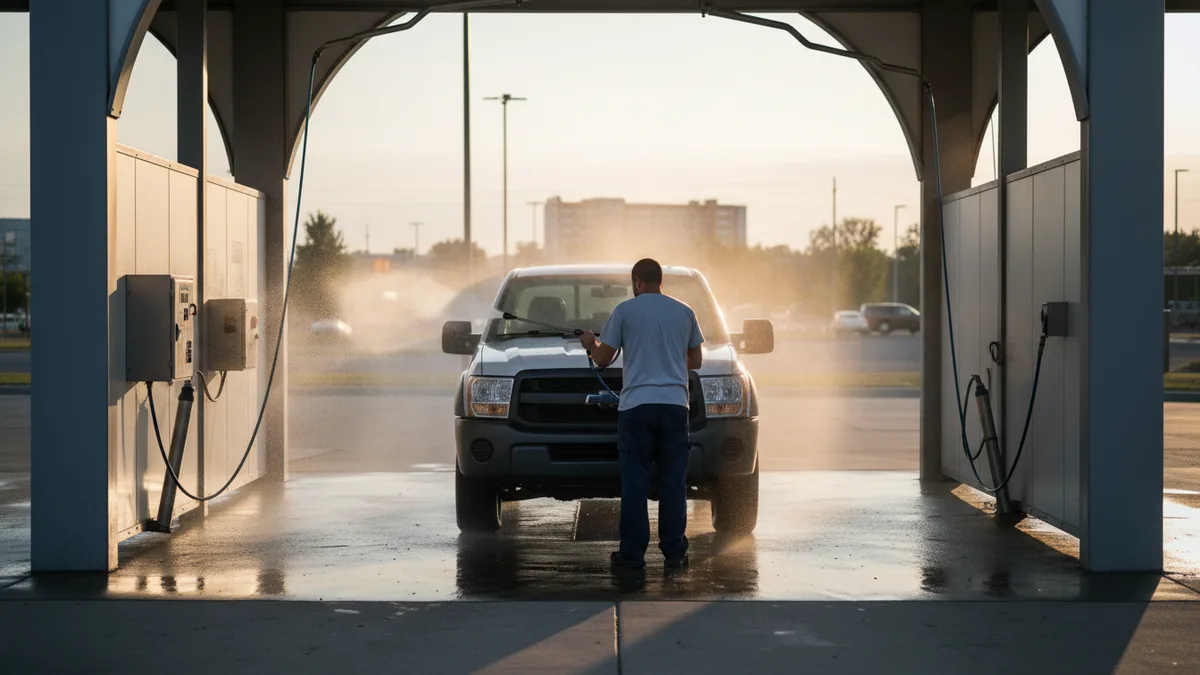
Now the wand bay. EPA calls reclaim systems often not feasible there: customers dump debris and sometimes change oil in the stall, and the filters foul. Fresh water in. Sewer out.
Where the Wash Water Goes
Sewer, reuse, or a state permit. Those are the usual three. The lot and its rules pick for you.
Start federal. EPA’s NPDES permit basics page says anyone discharging pollutants from a point source into waters of the United States needs an NPDES permit, while a business discharging into a municipal sanitary sewer doesn’t need one but “should ask the municipality about their permit requirements.” Ask early. That municipal answer can set limits on what’s in your water, require grit and oil separation before it leaves, or charge by volume.
States go further. Florida’s general permit for car wash systems, Rule 62-660.803 of the Florida Administrative Code, says wand and rollover car washes using that permit “shall install and use a total recycle system that recycles both wash water and rinse water with no discharge of wastewater to waters of the state.” Same rule for any facility that adds wax, drying agents, or water softening. That’s a whole equipment line item, written into a state rule.
Florida isn’t your state, maybe. Doesn’t matter. The point is that a rule like it can exist where you are, and it changes the equipment list before you’ve priced a single pump.
Money follows the water, too. EPA notes that sewer discharge fees are often calculated as a fraction of metered water consumption, which is one of the reasons operators install reclaim systems at all. Fresh water in, sewer fee out. Often, that’s one gallon billed twice.
50 to 83 percent
How much a water reclamation system can cut a car wash’s fresh water use, per International Carwash Association data summarized by EPA in November 2023.
Source: EPA, WaterSense at Work, Section 5.4 Vehicle Washes, 2023
Our rule, then. No lease, and no land contract, until you have the sewer authority’s conditions in writing for the format you picked. A site that can’t take your wash water isn’t a car wash site, however good the traffic count looks.
The Car Wash Equipment List by Format
Short lists, on purpose. Each item below changes the building: a drain, a wall, an electrical panel.
Self-Service Bays
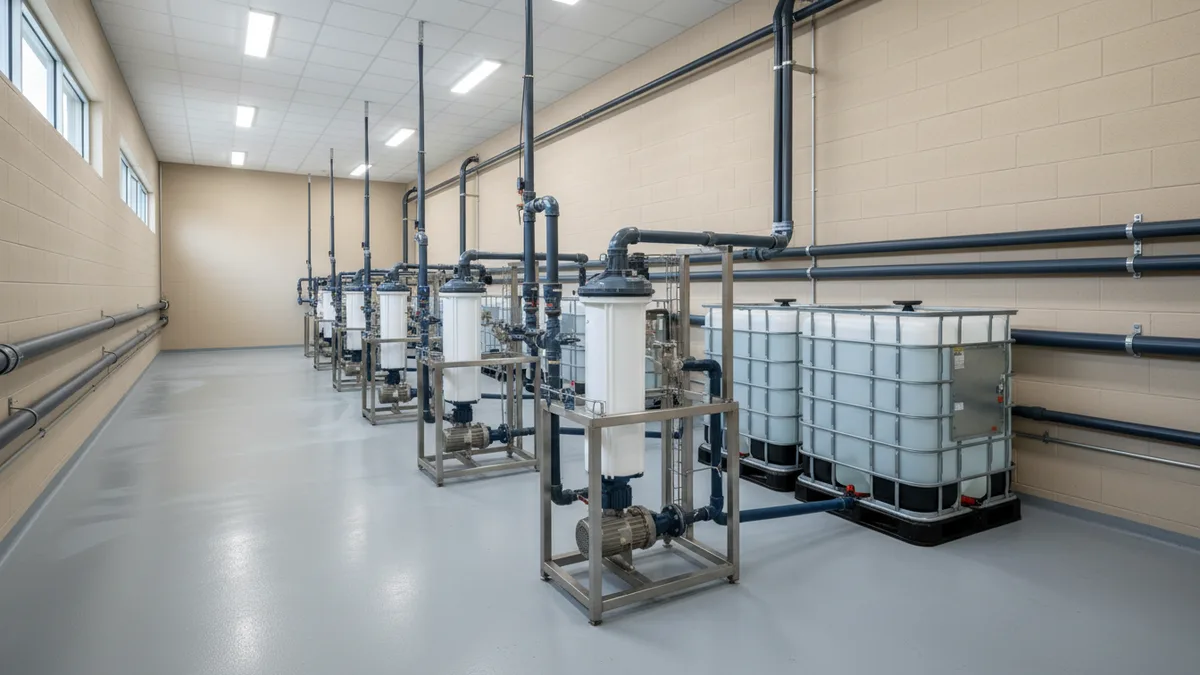
- A high-pressure pump stand, usually one unit serving several bays from the equipment room.
- Wands, foam brushes, booms, and hoses in each bay.
- Low-pressure presoak and specialty soap delivery.
- Reverse osmosis, if you’ll sell a spot-free final rinse.
- Pay stations, bill changers, and vacuums outside.
- In cold climates, ask about floor heat. Frozen bays don’t earn anything.
Plan the power with the spec sheets in hand. Some multi-bay pump stands want three-phase service, and a lot that only has single phase means a utility upgrade, a converter, or a different stand. Your electrician should see the spec sheet before you sign.
In-Bay Automatic
One machine does most of the work: a gantry that rolls over the parked car, either touch-free with high-pressure spray or friction with cloth. Around it you need the chemical delivery, a dryer, an entry system, and the controls. EPA notes most in-bay automatics can use sensors that read the car’s length, and it suggests capping the rocker panel and undercarriage cycle at 12 gallons when you retrofit. Small details. They show up on the water bill.
Tunnel
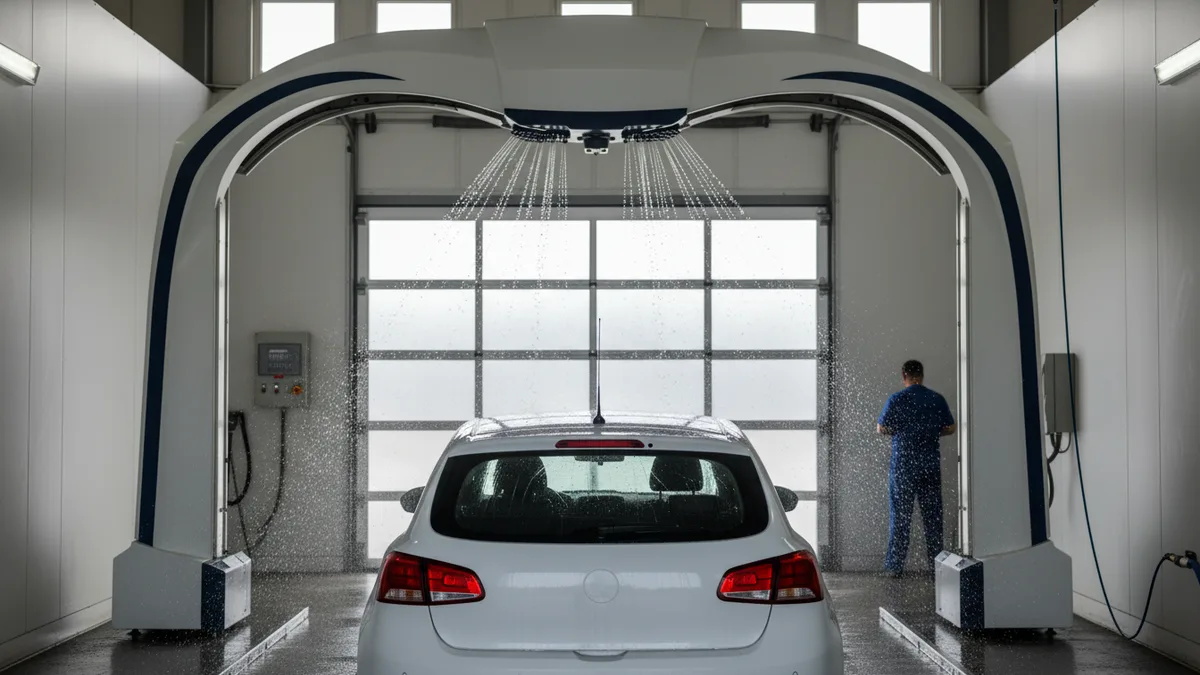
The conveyor, wash arches, cloth or brush equipment, high-pressure arches, chemical applicators, the dryer and blower line, the equipment room behind all of it, and usually a reclaim system with a collection basin, a separation tank, and filtration. Then the pay lanes and vacuums. EPA’s guide notes some states make drivers and passengers wait outside the car during a conveyor wash, so somebody has to run the line. Staffed hours. Every one of them.
What Car Wash Startup Costs Look Like
Published numbers don’t agree, and they barely try to.
$50,000 to $300,000
Growthink’s range for car wash equipment, covering wash bays, conveyor systems, water treatment, and vacuums, as quoted on SBDCNet’s car wash page, last updated May 10, 2020.
ZenBusiness, which sells business formation services, gives an initial investment of $50,000 to over $1 million in a guide last updated January 15, 2026, and it names no source. The two ranges measure different things. One is equipment only, from a 2020 page. The other is everything, and it’s anyone’s guess what everything includes. Neither one is a budget.
Format explains most of the spread. Four wand bays on a quarter acre aren’t a tunnel on an acre. Land alone can outweigh the pumps. Your number comes from a site, a civil engineer’s drawing, the sewer authority’s conditions, and two written equipment quotes with installation on them.
Split the budget in two before you add anything up.
- One time: land or lease deposits, site work and paving, the building, trench drains and separators, the equipment and its installation, utility upgrades, permit and plan review fees, opening chemical stock.
- Every month: water and sewer, power, chemicals, insurance, payroll if you run a crew, card processing, and the service calls that come with machines that spray water all day.
You can rough out the water line now with EPA’s own equation: gallons per car, times cars a day, times days open. An in-bay automatic at 44.8 gallons washing 100 cars a day for 360 days uses about 1.6 million gallons of fresh water a year. Call your water utility with that number and ask what it costs, sewer charge included. Then run it again with a reclaim system in the plan.
Buying Used Wash Equipment
Gantries and pump stands come up for sale when a wash remodels or shuts down. Worth a look. Treat the inspection like the plumbing inspection on a building purchase.
- Get a bill of sale with serial numbers, whoever the seller is.
- Will a local technician service this make? Call before you buy, not after.
- Do its voltage and phase match your site?
- Pumps, motors, and seals wear. Ask for service records.
- Who pulls it out, ships it, and reinstalls it? Those three jobs can cost real money.
Paying for Car Wash Equipment
Disclosure: Paramount Financial finances equipment, and this section is about financing. Weigh it that way. A bill changer, two vacuums, and spare wands rarely need a loan of their own. Cash, or a credit line you already carry.
| Pay cash | Equipment loan | Equipment lease | |
|---|---|---|---|
| Who owns it during the term | You | You, with the lender’s lien | The lessor |
| At the end | Nothing to settle | Paid off, lien released | Return, renew, or buy |
| Read closely | The reserve left for a slow winter | Total cost, not the payment | How the purchase price is set |
Match the structure to the machine. Gantry models turn over; a pump stand runs for years. With a fair market value lease, the purchase option at the end is priced at the equipment’s value then, so returning a dated gantry stays on the table. Owning suits the pump stand.
A wash with no sales history gets reviewed differently from one with three years of statements: the owner’s credit and experience, the plan, the site, and the equipment carry more of the weight, and every lender weighs them its own way. Our startup equipment financing page covers that review. The documents are in our guide to what an application review covers, and secondhand purchases are under used equipment financing. One clause to read in any agreement: does the UCC-1 filing name the wash equipment, or every asset the business owns?
Questions Future Car Wash Owners Ask
What does it really cost to open a self-service car wash?
A self-service build costs whatever the land, site work, building, and bays cost where you are, and published figures don’t narrow it much: SBDCNet quotes $50,000 to $300,000 for car wash equipment alone, from a 2020 page. Get two written quotes for your bay count.
Which type of car wash is cheapest to start?
Short answer: usually a small self-service site, because it needs less building and few or no staff. But it also uses almost all fresh water, since EPA says reclaim systems rarely work in wand bays. Cheap to build isn’t always cheap to run.
How much water does one car wash use?
About 15 gallons of fresh water for a self-service wash, 43 to 45 for an in-bay automatic, and 30 to 34 for a tunnel, per EPA’s 2023 summary of International Carwash Association studies. Tunnels also reuse large amounts of reclaimed water on top of that.
Does a car wash need a permit to get rid of its wash water?
Almost always, in one form or another. Discharging to surface water takes an NPDES permit, and a sewer connection brings the municipality’s own requirements. Some states go further: Florida’s general permit requires total recycle systems for wand and rollover washes.
What trips up new car wash owners most often?
Wrong question, slightly. The common trouble starts before opening, with a site picked for traffic before anyone checked the sewer connection, the power service, or the stacking room for cars waiting in line. Those are expensive to fix once the slab is poured, so settle them first.
Can used car wash equipment be financed?
Used equipment can be financed in the equipment market generally. Lenders look at the machine’s age and condition, who’s selling it, and the business behind the application, and each weighs those differently, so ask before you commit to a seller. Get the serial numbers on the bill of sale either way.
Before You Sign a Lease
Call the sewer authority first and ask what it requires from a car wash. Then send the format and the bay count to an electrician and a civil engineer, and get two equipment quotes with installation included. When the plan is real, see how car wash financing works at Paramount Financial, or start an application if you’d like us to look at it. Weighing a different business? We walk through how to start a landscaping business and how to start a coffee shop the same way.