
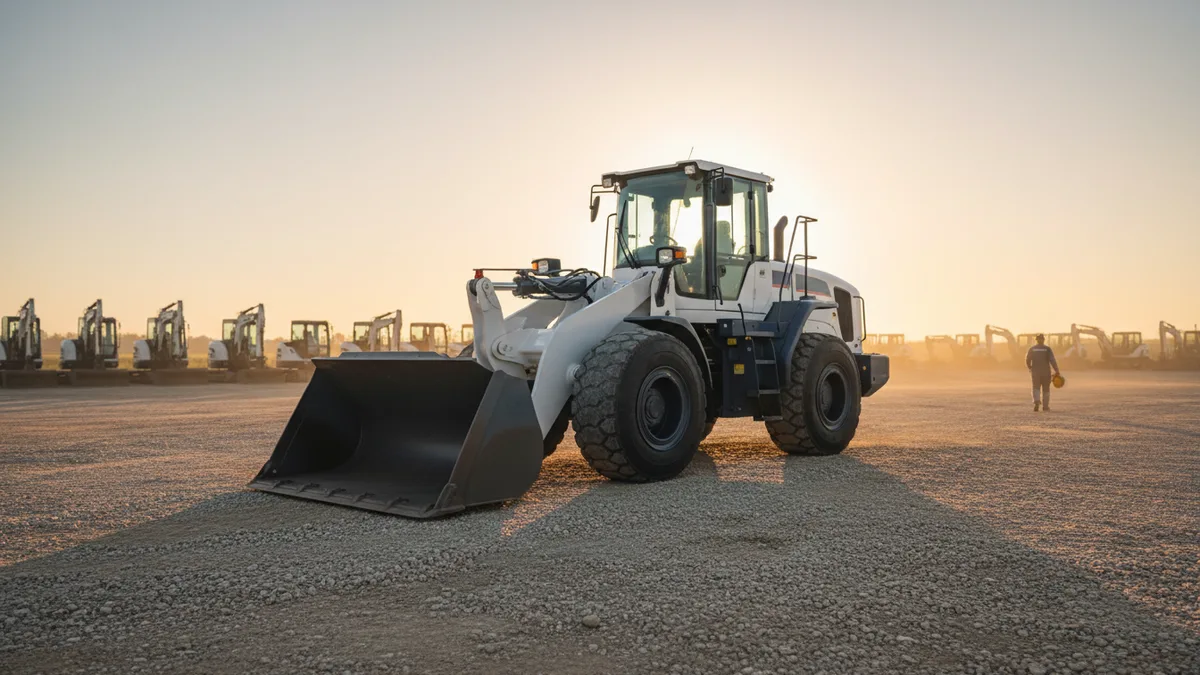
How to Get Equipment Financing: The Process Step by Step

Key takeaways
How to get equipment financing: get a written quote, apply, answer the lender’s review, read the approval’s conditions, sign the documents, insure the machine, accept it on delivery, and the lender pays the seller.
- The seller’s quote drives the whole file, so get one that names the serial number.
- An approval can come back smaller than the request, or with conditions.
- Don’t sign the delivery and acceptance form until the machine is on site and running.
- Paid off? Ask for the UCC-1 to be terminated.
Most business owners aren’t finance majors. No need. Eight steps cover how to get equipment financing, and two of them carry most of the risk: the approval’s conditions in step four and the acceptance form in step seven.
Paramount Financial finances equipment. Weigh this guide with that in mind. The contract types are compared in how equipment financing works, and our page on how to get equipment financing from Paramount Financial covers our own application path.
How to Get Equipment Financing in Eight Steps
The equipment financing process is the sequence a business follows to pay for a machine over time: a seller quotes it, a lender reviews the business and the equipment, both sides sign, the lender pays the seller, and the business repays under the contract. Lenders vary the details. Not the order.
- Get a written quote from the seller.
- Apply, with the quote and whatever documents the lender asks for.
- Answer the lender’s questions during its review.
- Read the approval: structure, amount, term, conditions, and expiry date.
- Sign the agreement and anything that comes with it.
- Send proof of insurance on the machine.
- Inspect the machine on delivery, then sign the acceptance.
- The lender pays the seller and files its UCC-1, and payments begin under the contract.
Before You Apply
Lenders write the deal off the seller’s quote. Hours without a serial number? That used compact track loader can’t go on a schedule yet. Paper first.
- The make, model, year, and serial number, plus hours or mileage on anything used.
- Who’s selling: a dealer, an auction house, or another business.
- Freight, installation, and training as separate lines, since some lenders treat these soft costs differently.
- Attachments. A bucket, a breaker, a grapple.
A private-party seller adds documents, typically proof of clear title or of a lien that will be released at payment. Financing used equipment covers the rest.
Soft inquiry or hard? Lenders pick different stages for each. Ask which. In writing. What the review weighs is in what an equipment financing review covers.
Where to get an equipment loan? Banks, credit unions, independent equipment finance companies, and manufacturers’ captive finance arms all write them, each with its own appetite for machine types and industries, so send every one the same quote and compare equipment financing companies line for line.
Reading an Equipment Financing Approval
An approval is a conditional offer. Five items sit in it: the structure, the amount, the term, the conditions before funding, and an expiry date. A personal guaranty, where required, appears here too.
Amounts get cut. The Federal Reserve Banks’ 2025 Small Business Credit Survey, published March 3rd, 2026, found that fewer than half of employer firms applying for financing received everything they sought.
42%
of small employer firms that applied for financing received the full amount they sought; 36% received some or most, and 22% received none. The survey covers all business credit, not equipment alone, from a convenience sample fielded in late 2025.
Source: Federal Reserve Banks, 2026 Report on Employer Firms (2025 Small Business Credit Survey)
Then the conditions. An updated invoice. A signed guaranty. An insurance certificate naming the lender. Let the approval lapse and the file usually goes back through review. Pricing has its own guide, what moves an equipment loan’s rate.
The Paperwork, Line by Line
| Document | What it does | What to look for |
|---|---|---|
| Loan, finance agreement, or lease | Sets ownership, payments, and the end of the term | Early payoff terms and the end-of-term option |
| Schedule | Lists the machine under a master agreement | A serial number that matches the machine |
| Personal guaranty | Puts the owner behind the business’s promise | Its limits, and when it ends |
| Certificate of insurance | Proves the machine is covered | The lender named as loss payee |
| Delivery and acceptance | Confirms you have the machine and it works | Its date: sign on arrival, not before |
| UCC-1 authorization | Lets the lender file a public notice | Which collateral it describes |
Several machines, several sellers? A master lease agreement can hold each machine on its own schedule, with its own term and payoff. Other lenders document each purchase as a separate deal. Ask which.
Delivery, Acceptance, and Paying the Seller
One page, two signatures, a date. The delivery and acceptance certificate looks like a freight receipt. It isn’t one.
Under the uniform text of UCC §2A-515, acceptance happens after the lessee has had “a reasonable opportunity to inspect the goods.” On a finance lease, UCC §2A-407 then makes the lessee’s promises “irrevocable and independent” once the goods are accepted, so the payments are owed even if a hydraulic pump fails the following week, and the repair becomes a matter between the business, the seller, and the warranty. Loans and finance agreements often reach the same result through a hell-or-high-water clause.
Hence one rule. Get it off the trailer. Start it, cycle the boom and the tracks, read the serial plate against the schedule. Then sign.
With the acceptance and the other conditions in hand, the lender pays the seller directly in most equipment deals. A custom build with a deposit or progress payments needs its own written arrangement first.
After Funding: The Filing and the Payoff
The lender files a UCC-1 financing statement with the secretary of state. Under UCC §9-515 it stays effective for five years from filing unless continued. Its collateral line can name one excavator by serial number or every piece of equipment the business owns, and how a UCC filing works shows both.
Payment one is set by the contract, often counted from the acceptance date or the funding date. Find the clause. Calendar it.
Last payment made, filing still up. That surprises owners. For business collateral, UCC §9-513 gives the secured party 20 days after it receives the debtor’s authenticated demand to file or send a termination statement.
Demand it in writing. Keep the copy.
What Owners Ask Between Quote and Delivery
Which kind of credit inquiry happens when you apply?
That varies by lender and by stage. Some run a soft inquiry for an early read and a hard inquiry only once the business goes ahead, while others run the hard inquiry at application.
Can financing be lined up before you’ve picked the exact machine?
Often, as a range. Some lenders review the business first and approve it up to an amount, which suits an auction, though the final documents still need the specific machine’s quote and serial number.
What if the machine shows up damaged or not as quoted?
Short answer: don’t sign the acceptance. Tell the seller and the lender in writing what’s wrong, then wait for the repair or the replacement.
Can several machines from different sellers go on one approval?
Wrong unit, slightly: think in schedules, not approvals. A master agreement can carry each machine on its own schedule, some lenders document each purchase separately, and every seller still needs its own quote.
After the last payment, how does the UCC-1 come off?
Twenty days. That’s how long UCC §9-513 gives a secured party to file or send a termination statement after receiving the debtor’s authenticated demand, once nothing more is owed on business collateral. Then search the secretary of state’s UCC records to confirm it.
Next Steps
Cash on hand, or a credit line with a known cost? Price that option first. Financing isn’t always needed.
If it is, see how Paramount Financial finances equipment for businesses, then start an application or talk it through with our team. Bring the quote.