
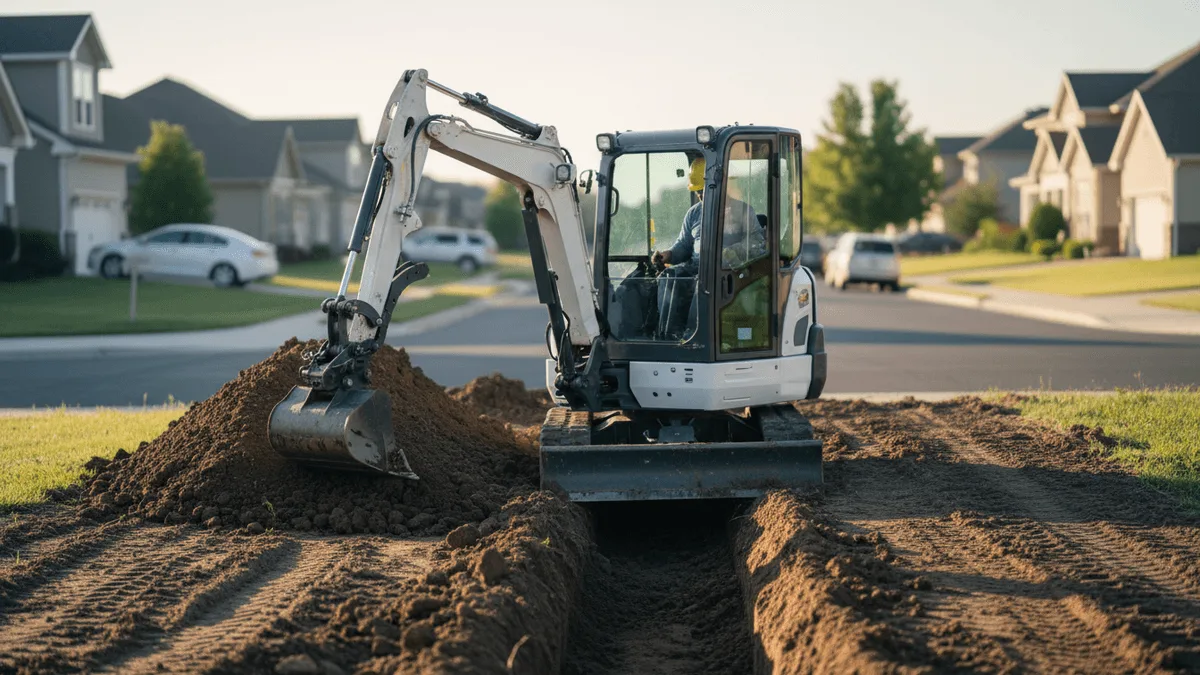
Benefits of Financing Construction Equipment: How Contractors Plan New and Used Fleet Purchases

Key takeaways
The benefits of financing construction equipment come down to timing: you pay for a machine across the months it earns, keep cash for payroll and materials, and choose new or used by the job.
- Cash you don’t spend on the machine is still there for payroll, fuel, and the next job’s materials.
- Set the term by how long you’ll keep the machine, not by the payment you want.
- A lien on one machine isn’t a lien on everything the business owns. Check which one you’re signing.
- Used machines and rental buyouts are worth asking each lender about.
- Paying cash is a fine answer when the cash would sit idle anyway.
On November 11, 2026, we read five guides to the benefits of financing construction equipment. All five cover cash flow. Four name the tax treatment. None mentions a rent-to-own buyout, and the oldest leans on equipment-finance survey figures from 2009.
This page covers the same ground, then the parts those guides skip. Paramount Financial finances equipment, so we have a stake in your answer. Where paying cash is the better call, we’ll say so.
What Financing Construction Equipment Means
Financing construction equipment means paying for an excavator, loader, or truck over a term instead of all at once. With a loan, the machine secures the deal, so the lender takes a lien on it. The paper can be a loan, an equipment finance agreement, or a lease, and each decides who owns the machine along the way.
57.7%
of the $2.3 trillion (nominal) that U.S. businesses invested in equipment and software in 2023 was financed, by the Foundation’s estimate. It’s a share of dollars, not of businesses, and it covers all equipment, not construction alone.
Source: Equipment Leasing & Finance Foundation, 2024 Horizon Report (2023 data)
Benefits of Financing Construction Equipment
Cash comes first. Buying a machine outright takes its whole price out of the account the day it arrives, while payroll, fuel, and insurance keep coming due on their usual schedule, and cash spent on iron can’t cover the weeks between a finished job and the invoice that pays for it.
Watch the term. A longer one lowers each payment but adds to the total you pay, and a term that runs past the year you plan to replace the machine leaves you paying on iron you’ve already sold, which is why the term should follow the machine’s service life and the work booked behind it. Not the payment.
Side by side.
| Pay cash | Lease it | Finance it | |
|---|---|---|---|
| Cash out on day one | The full price | Set by the lease | Set by the lender’s terms |
| Owner during the term | You | The lessor | You, with a lien on it |
| At the end | You own it | Return, renew, or buy, as written | You own it, lien released |
| Resale risk | Yours | Depends on the structure | Yours |
A fair market value lease prices the buyout at what the machine is worth when the term ends. A $1 buyout lease is built so you keep it. Our page on construction equipment leasing covers both.
Bonded work adds a reader. Before you sign for a machine, ask your surety agent how a new monthly payment will look next to your cash. That answer comes from the surety. Not a lender. Not us.
Financing New and Used Construction Equipment
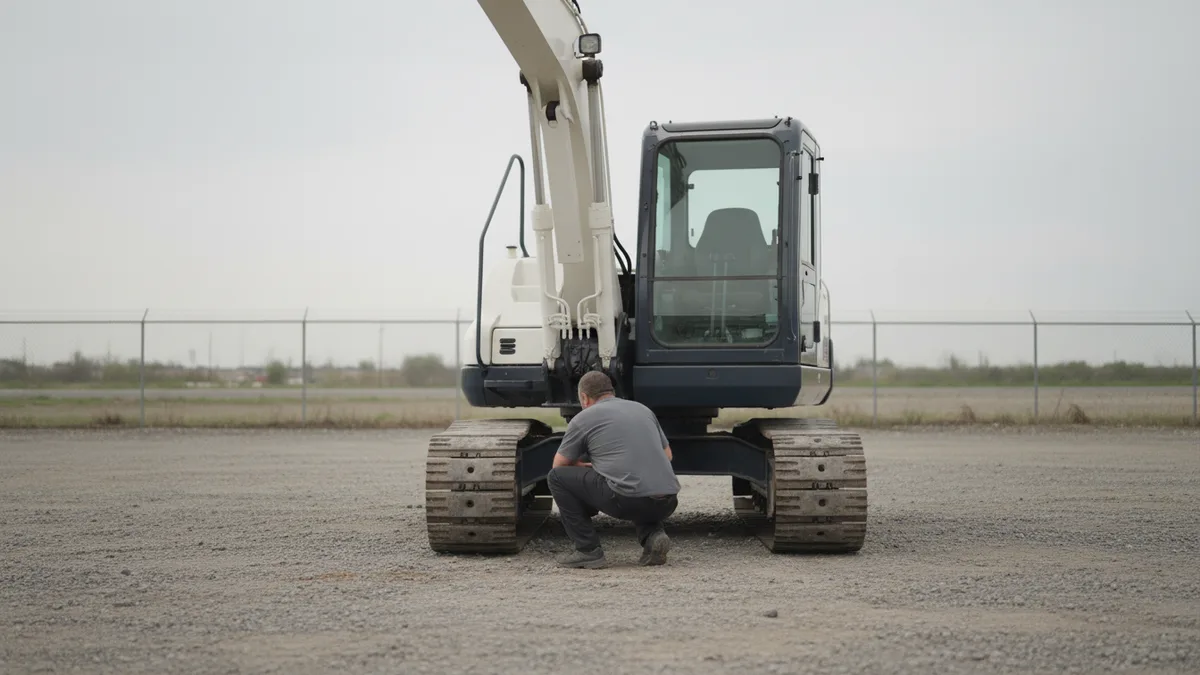
Used machines get financed, though a lender reads them differently. Condition counts. Many lenders size the term so payments end well before the machine’s useful life does, so expect questions about age, hour-meter reading, and condition, and sometimes an appraisal. Our page on used equipment financing goes through what a lender looks at.
A private seller? Same idea, different paper. Expect a bill of sale, the title if the machine has one, and the serial number that ties them together.
Renting first is its own plan. Some rental contracts let rent count toward a purchase, many don’t, and the terms live in the rental agreement. Read them before the first rental month, not the last. Decided to keep the machine? A lender may finance the buyout, so ask each one.
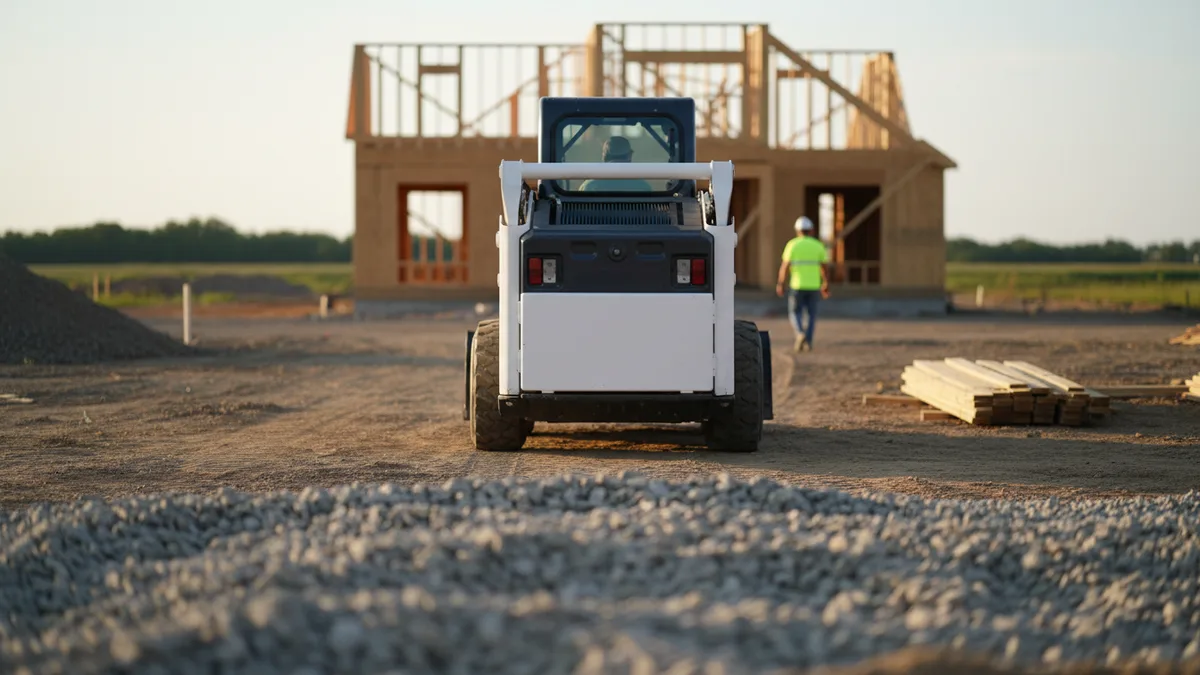
Then there are the compact machines: mini excavators, trenchers, and skid steer loaders. They tend to cost less than a full-size excavator, and each does a narrower job. Narrow is the catch, because a machine sitting between jobs earns nothing. Count the days of work you can give it before you count the payment.
Our guides to mini excavator financing and what a skid steer costs cover the small end, and what a crane costs and what a forklift costs cover the large end.
One Machine, One Lien
A lender secures an equipment deal with a lien, and the public notice of it is a UCC-1 financing statement. Under UCC §9-504, that filing can describe the collateral, such as one machine by its make, model, and serial number, or it can simply indicate that it covers all assets, and those are two very different claims on the business. The first touches one machine. The second reaches all of the business’s assets.
If a bank line or an SBA loan already covers all assets, check whether it reaches new equipment too. Read your loan documents for that clause before you add equipment debt, and ask any new lender what it files. Our guide to the four kinds of construction equipment financing companies covers what each tends to file.
Tax Year 2026 Questions for Your Advisor
$2,560,000
is the maximum Section 179 expense deduction for tax years beginning in 2026. The limit starts to shrink once the cost of Section 179 property placed in service in the year passes $4,090,000.
Source: IRS, Publication 946
Three points matter here. For Section 179, the property has to be acquired by purchase, which rules out gifts, inheritances, and deals with a related person, and the election is also limited by the taxable income from your business. On bonus depreciation, the IRS says qualified property acquired after January 19, 2025 can be new or certain used property.
Whether a given machine qualifies, and for how much, is not something a lender or this page can tell you. Don’t guess. Consult your tax advisor before the machine goes into service, and bring the bill of sale.
What Contractors Ask Before Financing a Machine
Does it ever make more sense to just pay cash?
Sometimes. When the cash would otherwise sit idle, paying for the machine outright can be the better call. Financing earns its place when that same cash is what covers payroll, fuel, and materials between invoices, so test it this way: if paying in full leaves nothing for the next few payrolls, the cash is already spoken for.
Can a used excavator or loader be financed?
Lenders do finance used machines, and they’ll ask for the age, the hour-meter reading, and the condition. A private-seller purchase adds a bill of sale, the title if there is one, and the serial number, and practices differ, so ask each lender how it handles a machine that didn’t come from a dealer.
Does a lender take a claim on everything I own?
Not necessarily. A UCC-1 can describe a single machine or say it covers all assets, and which one you get depends on the lender and the contract you sign. Read the collateral clause before you sign, and check your bank or SBA documents for an all-assets clause that came first.
Does rent ever count toward buying the machine?
Some do. Many don’t. It’s in the rental agreement, so read the purchase-option language before the first rental month. If you decide to keep the machine, ask a lender whether it will finance the buyout.
How does a new payment sit with a bonding company?
Ask your surety agent. Bring the quote and your current schedule of work, and ask how a new monthly payment will read next to your cash before you sign.
Does the machine’s size change how financing works?
The structure doesn’t change. A loan, an agreement, or a lease works the same way on a mini excavator as on a full-size one. What changes is the price scale and the job, because a mini excavator, trencher, or skid steer loader tends to cost less than a full-size excavator and works a narrower set of jobs, so the real question becomes how many days of work it will have.
Next Steps
For the full picture, see our heavy and construction equipment financing page. With a machine and a quote in hand, you can start an application.