
Last updated: November 11, 2026
Ultrasound Machine Financing for Clinics, Imaging and Surgery Centers
Compare loans and leases for cart, portable and handheld ultrasound systems before you accept a quote.
Ultrasound machine financing lets a clinic, imaging center or surgery center pay for a system and its probes over time with a loan or a lease. The right structure depends on how long you’ll keep the console.
The Bureau of Labor Statistics counted about 92,200 diagnostic medical sonographer jobs in 2025, hospitals held 58% of them, and the rest scan in physician offices, labs and outpatient care centers, where the buying call often sits with a practice owner or manager. This page sits under our guide to medical equipment financing and goes deeper on ultrasound.
Below: the three builds, what a quote can leave out, how lenders see a refurbished unit and how the structures compare. Questions? Talk to Paramount Financial’s team.
Ultrasound machine financing starts with the type of system
Ultrasound equipment comes in three builds. Each ages differently.
A cart-based system
The big one: a monitor on an arm, a full control panel and holders for several probes, all on a wheeled cart. It lives in one room. A unit that sits in one exam room through years of daily scans, with the same operators and the same probes, points toward owning it with a loan or an equipment finance agreement.
A portable system
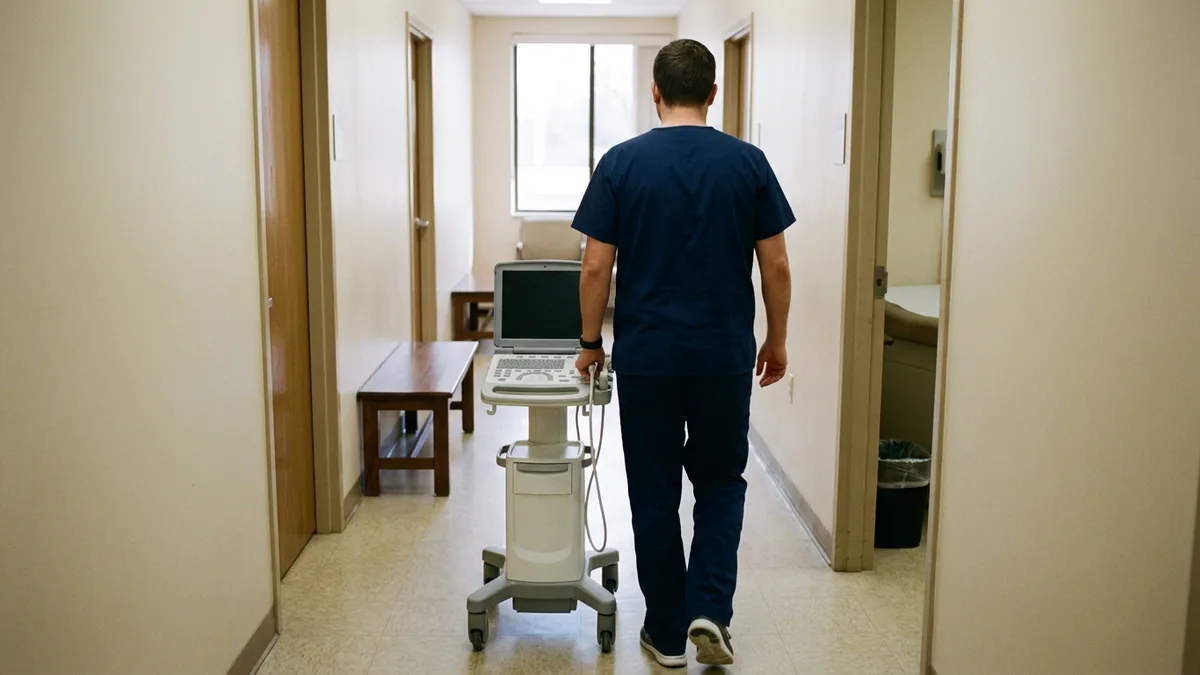
A laptop-style unit on a small stand that rolls between exam rooms, a procedure area and a pre-op bay. Moving it around is the point, and it’s also where the wear comes from.
Dropped cables. Bumped screens. A wheel that sticks. If you expect to replace one on a schedule rather than run it until it fails, a lease with an end-of-term choice to return, renew or buy tends to fit.
A handheld unit
A probe that connects to a phone or tablet and goes wherever the patient is. The opposite of a cart. Small, easy to carry, and dependent on the app and the device it runs on. When the software or the device moves on, the unit can feel dated before the hardware wears out, and a lease with a renew-or-return ending can suit a unit you expect to swap.
Probes, software and service: read the quote line by line
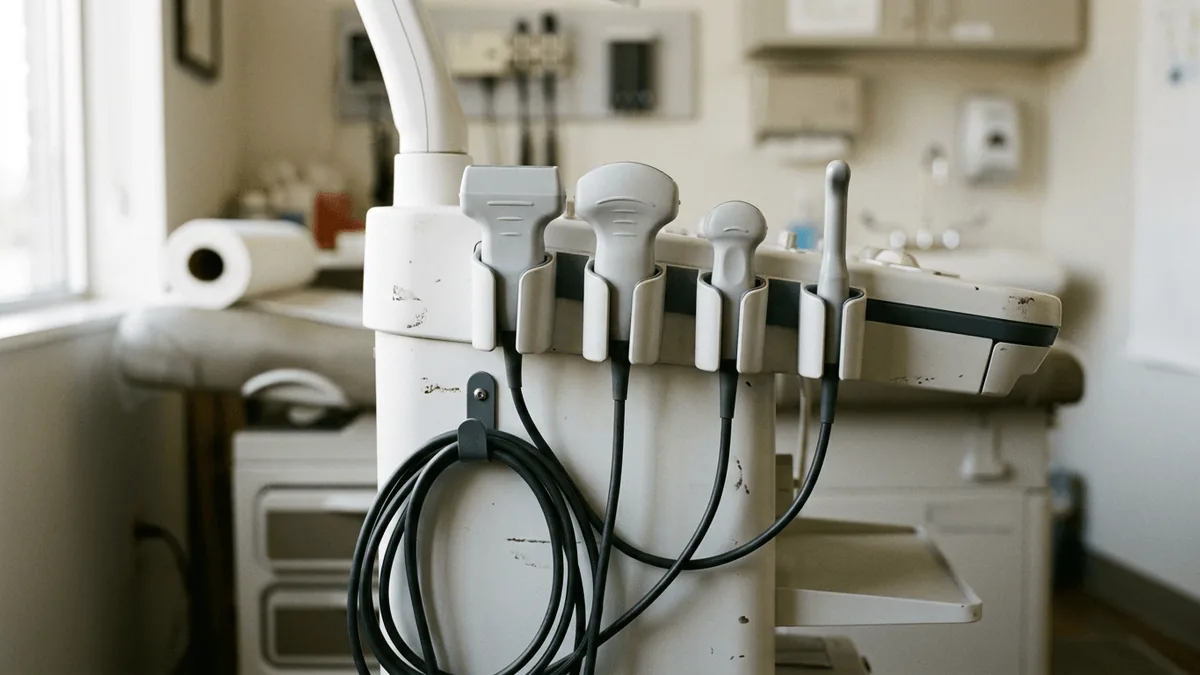
An ultrasound quote is never just a machine. The FDA describes the transducer, or probe, as the part placed on the skin or inside a body opening, and one system can carry several. A linear probe suits vessels and nerves near the surface, a curved one is the usual pick for abdominal and obstetric scans, and a small phased array fits between ribs for heart exams.
Questions to put to the vendor
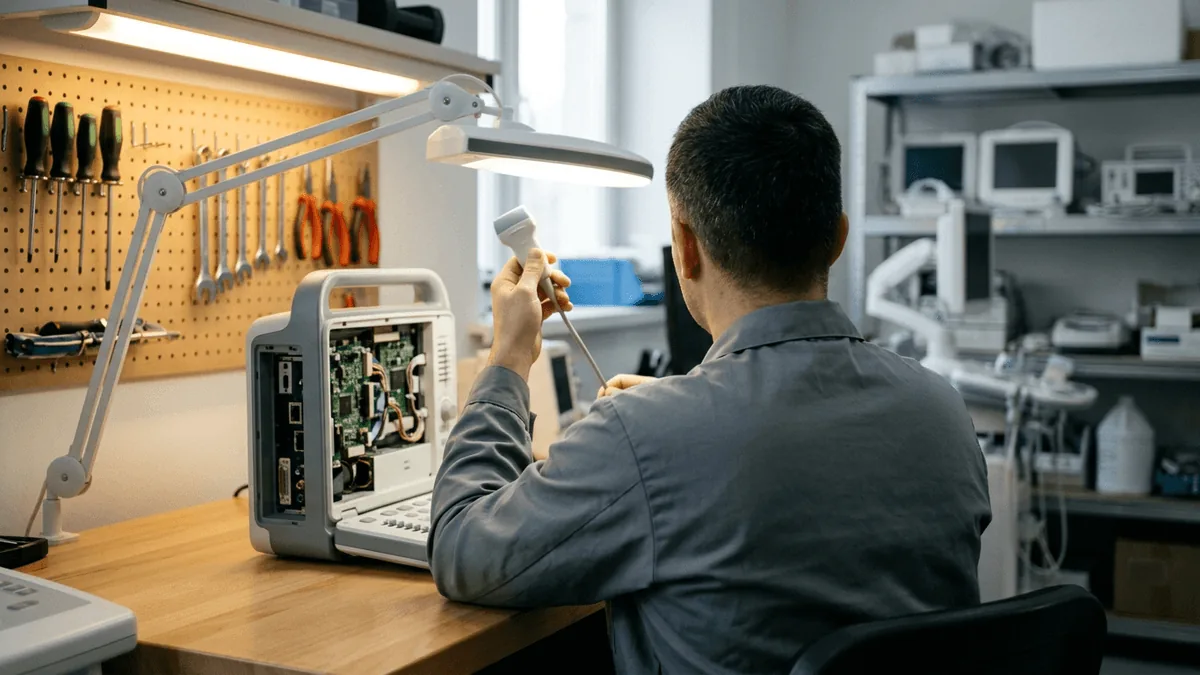
Refurbished ultrasound machine financing: how lenders see an older unit
The FDA’s definitions are specific: servicing is repair or routine maintenance that returns a device to its maker’s specifications, and remanufacturing is work that significantly changes its performance, safety specifications or intended use. Ask the seller which one the unit went through. Records count.
What to have ready
Who buys ultrasound systems, and for which exams
A cardiology group needs a phased array probe, an obstetrics office a curved one and a vascular lab a linear one, so the same budget buys three different systems. The FDA notes that individual states regulate diagnostic ultrasound through recommendations and requirements for personnel qualifications, which makes who will run the system part of the purchase.
A clinic buying its first system
A new clinic buys the system alongside a build-out, a lease and furniture. The total matters more than any one quote line. See startup equipment financing and how to start a medical practice for the planning.
A surgery center adding a unit
Anesthesia teams use ultrasound to guide nerve blocks, and a portable unit shared by several pre-op bays needs a different plan from one console in one room. Count the rooms first.
An imaging center replacing a cart
Hours matter. An imaging center that runs a cart from open to close puts far more hours on it than a clinic that scans twice a week, so the lease term or the loan schedule should reflect the hours before anyone signs.
A multi-location urgent care group
Probes aren’t interchangeable. A group that standardizes on one model can move a spare probe between sites, while ten models mean ten sets of spares and ten service contracts. Ask vendors what a multi-unit quote includes.
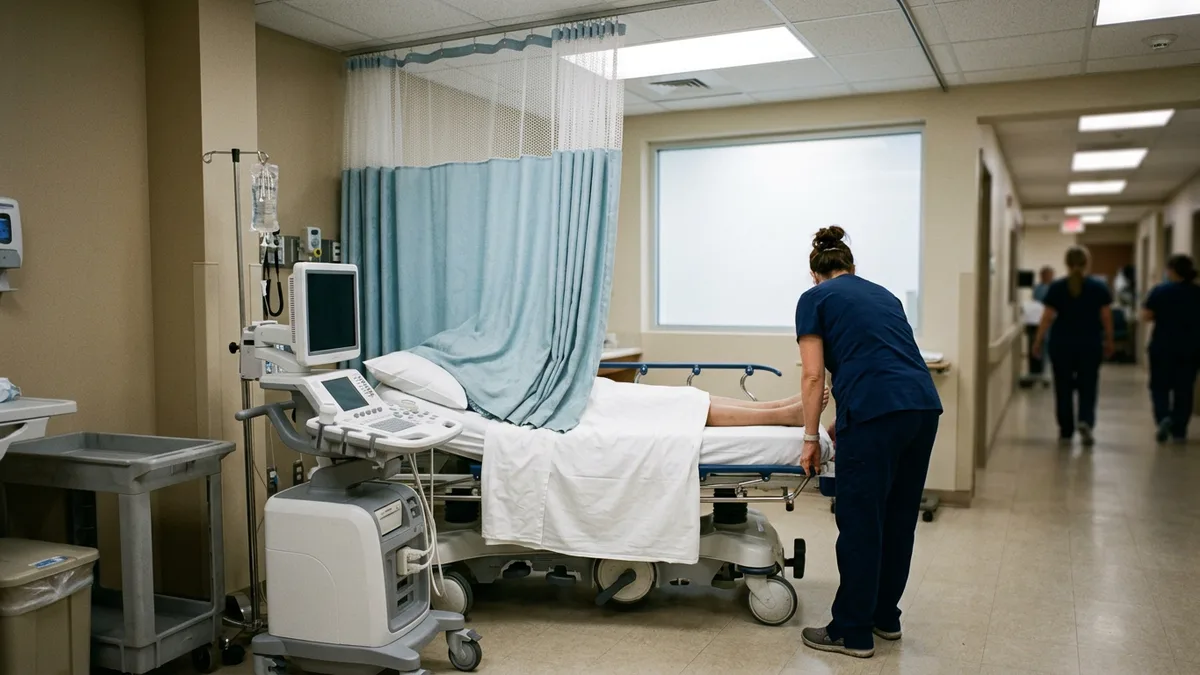
Ultrasound machine financing structures compared
Ultrasound machine financing comes in two families. A loan or an equipment finance agreement makes the clinic the owner from day one, with the lender holding a security interest until the balance is repaid. A lease works the other way: the lessor owns the system during the term, and the ending depends on the lease type.
| System | What dates it | Structure that tends to fit | Worth asking |
|---|---|---|---|
| Cart-based system | Wear, and how long the maker supports the model | Loan or equipment finance agreement; a $1 buyout lease for a unit you’ll keep | Whether probes and software sit in the same agreement |
| Portable system | Wear from moving between rooms, plus software | Either path; a fair market value lease for one you’ll replace on a schedule | Who covers a damaged cable or screen |
| Handheld unit | Updates to the app and the device it runs on | A fair market value lease with a renew-or-return ending | What happens to the software license when the term ends |
| Probes and software packages | New probe types and package updates | Bundled with the system, or a short lease for a later add-on | Whether adding one later means a new agreement |
Say the term ends on a cart that’s worth less than anyone planned. A fair market value lease prices the buyout at that day’s value. A $1 buyout lease is built the other way, so the clinic keeps the unit for a nominal payment. A loan or equipment finance agreement usually adds a UCC-1 financing statement, so ask whether it names this system or every asset the business owns.
Ultrasound equipment, in numbers
92,200
diagnostic medical sonographer jobs in the United States in 2025
Source: U.S. Bureau of Labor Statistics, Occupational Outlook Handbook, Diagnostic Medical Sonographers
87%
of end-users who acquired equipment or software in 2025 used at least one form of financing
Source: Equipment Leasing & Finance Association, Industry Horizon Report 2026-2027, reported by MMH
$2,560,000
maximum Section 179 expense deduction for tax years beginning in 2026, before the phase-out. Consult your tax advisor.
Source: IRS Publication 946 (2025 edition), What’s New for 2026
Four things to pin down before you apply
Pages to read next
Questions clinics ask before they finance an ultrasound machine
So should a clinic lease or buy an ultrasound machine?
Short answer: buy a system you expect to keep for years, lease one you expect to replace.
- One cart in one exam room for years of daily scans: a loan or an equipment finance agreement.
- A handheld unit swapped when the app changes: a fair market value lease.
- A portable unit that rolls between rooms: either path, depending on how long you’ll run it.
Price the probes first.
What can an ultrasound machine quote leave out?
A quote can price the console and one probe, then leave the rest for later.
- Every other probe, by type and model
- Cardiac, vascular and OB/GYN software packages
- A PACS or records link
- Installation and staff training
Ask your lender which of those lines can sit inside the financing request.
How do lenders look at a refurbished ultrasound machine?
They look harder at the unit itself, because an older system has no current price list to check against.
- Serial numbers for the console and each probe
- A written warranty and a service log
- Proof that software licenses transfer
The FDA separates routine servicing from remanufacturing, so ask which one the unit went through.
What decides the rate on an ultrasound financing offer?
A rate depends on the structure, the term and the business’s credit profile, so two quotes only compare when all three match.
- Structure: a loan, an equipment finance agreement or a lease
- Term: how long you’ll make payments
- Credit profile: the business and its owners
An advertised rate is not an offer, so compare written quotes by total cost over the term, fees included.
Can a clinic deduct a financed or leased ultrasound machine?
It can, depending on the structure: for tax years beginning in 2026, IRS Publication 946 (2025) lists a maximum Section 179 expense deduction of $2,560,000, reduced once qualifying property placed in service passes $4,090,000. Who counts as the tax owner of a leased unit is a question for your tax advisor. Form 4562 is where depreciation and Section 179 claims go, and the limits change every year.
What if the nearest service technician is far away?
Then the service contract matters as much as the price, because response time decides how many scan days a repair costs.
- Where the nearest technician is
- How repairs get scheduled
- Whether the vendor lends a probe while yours is out
Distance costs.
Have an ultrasound quote in hand?
A rough quote and an install date are enough to start, or you can start your application online.