
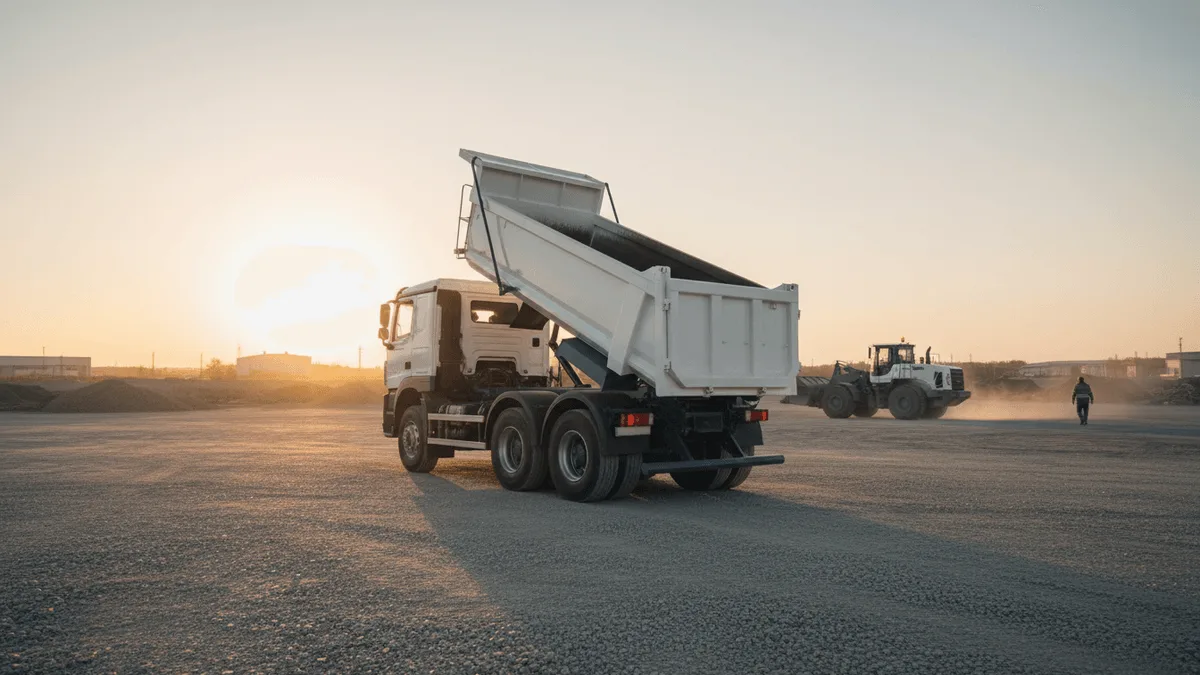
How to Start a Dump Truck Business: Trucks, Contracts and Costs

Key takeaways
Contracts first, truck second: how to start a dump truck business means finding the hauling work, then buying the truck that fits its weight, license, and insurance rules.
- A single truck rated 26,001 pounds or more is a Group B vehicle under federal rules, so every driver needs a commercial driver’s license (CDL).
- Start-up guides keep sending new haulers to contractors first. Ask yours what paperwork it wants before the first load.
- Used heavy dump trucks listed from $37,900 to $244,900 on dealer sites in October 2026. Miles explain most of the spread.
- Weight rating drives the license and the federal use tax. Crossing state lines changes registration.
- Financing is one way to pay for the truck, not step one. Cash is an option too.
A dump truck earns money only on the days someone hires it. So this guide on how to start a dump truck business runs from the work to the truck, then on to the license, the insurance, and the up-front costs, in the order a new owner has to decide them. Paying for the truck gets one section near the end, and our page on dump truck financing goes further.
Start a Dump Truck Business With the Work
Wexford Insurance’s start-up guide, posted June 10 under a 2026 headline, puts “Build Your Customer Base Before You Buy the Truck” as its fourth step, ahead of the purchase. Same order here.
A hauling contract, for a truck owner, is an agreement to move material at an agreed price by the hour, the load, or the ton. It names who loads the truck, who pays dump fees and tolls, and when the invoice is paid.
The buyers of that service are contractors: excavation and site-work firms, road builders, landscape suppliers, and the quarries and aggregate yards that sell stone. Those are your customers.
The same Wexford page says clients often pay on 30-day terms. It gives no source, which makes that a warning, not a statistic. At 30 days, a first contractor’s invoice leaves you carrying a month of fuel, insurance, and truck payments. Name two customers before you buy. Not one.
Before you sign anything, get answers to these:
- How is the work priced: by the hour, the load, or the ton?
- Who pays dump fees and tolls?
- When does an invoice get paid?
- Does the contractor want proof of insurance before the truck goes on site, and at what limits?
- A job that ends in six weeks calls for a different truck decision than one that runs a whole season.
Pick the Truck the Work Needs
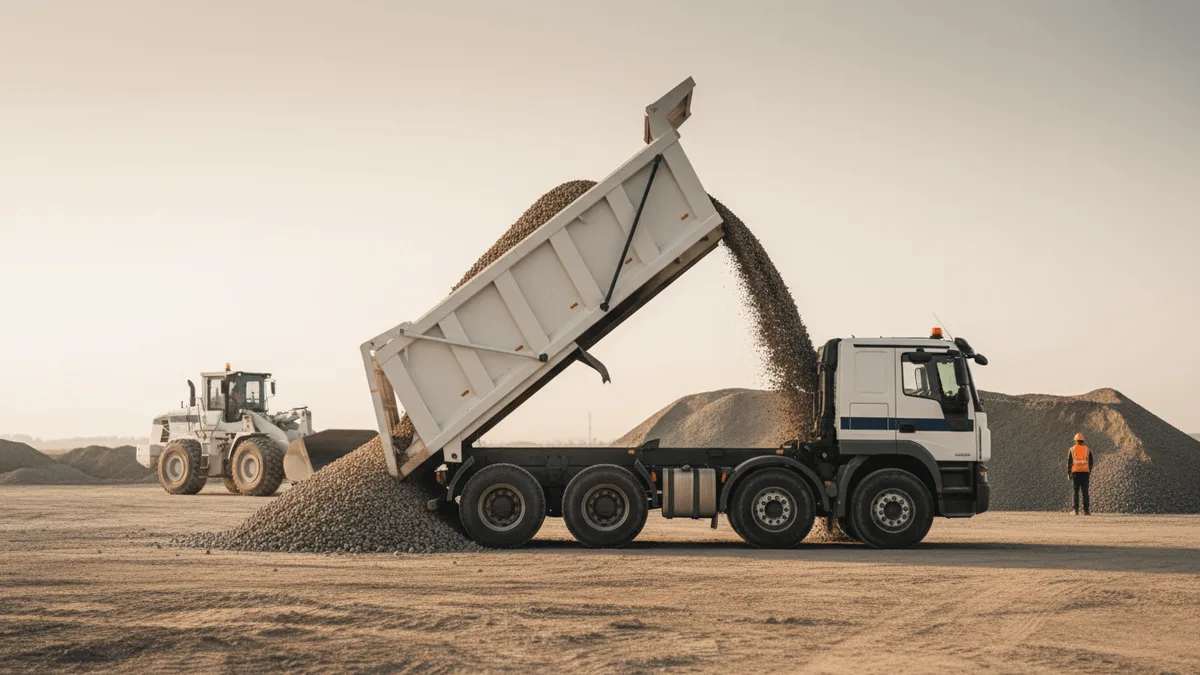
A dump truck is a truck chassis with a hydraulic dump body bolted to its frame. Its gross vehicle weight rating, or GVWR, is the loaded weight the maker rates it for, and that one number shapes what the truck can legally haul, which license its driver needs, and roughly where its price starts.
The Department of Energy’s weight class chart, which uses the Federal Highway Administration’s classes, draws the lines in this table.
| Weight class | Typical work | CDL line |
|---|---|---|
| Class 3 to 5 (10,001 to 19,500 lb) | Mulch, soil, small site jobs | Below the federal line |
| Class 6 (19,501 to 26,000 lb) | Gravel, fill, mid-size jobs | Below it, barely |
| Class 7 and 8 (26,001 lb and up) | Road base, asphalt, excavation haul | Group B CDL |
Typical work is a guide, not a rule. Same class, different loads. Axles and body change what a truck can carry.
26,001 lb
the gross vehicle weight rating at which a single truck becomes a Group B commercial motor vehicle for federal CDL purposes
Source: 49 CFR § 383.91, Commercial motor vehicle groups (Cornell Legal Information Institute copy)
Look at where that line falls. A Class 6 truck sits one pound under it. For a contractor who would rather not hire only CDL holders, that can settle the purchase.
Now the price. We read dealer listings on October 31, 2026, for our dump truck price guide. The 11 priced used medium trucks asked $44,000 to $94,950. The 97 priced used heavy trucks with an odometer reading asked $37,900 to $244,900, sorted mostly by miles. An insurance agency’s start-up guide, the same Wexford page, puts a used single-axle truck at $30,000 to $80,000 and a newer or tri-axle truck at $100,000 to $200,000 or more. Neither is wrong. They’re pricing different trucks.
GVWR first, model second. Then buy the smallest truck that does the work in front of you, because a larger truck is a larger payment on the days nobody is hauling.
A first truck is often a used one, and used dump trucks hide wear where an odometer can’t see it. The inspection list, from cycling the bed to reading the frame rails, is in our dump truck cost guide.
License, Registration, and Insurance
The license follows the driver. Under 49 CFR 383.91, a single vehicle with a GVWR of 26,001 pounds or more falls in Group B, which many states call a Class B license. Wexford’s guide lists a Class B as the minimum for most single-axle trucks and a Class A for combination vehicles. Own the truck, hire the driver, and the driver still needs it.
Registration varies. Federal registration, a USDOT number included, depends on whether your trucks cross state lines, and guidance from the Federal Motor Carrier Safety Administration (FMCSA) sends intrastate operators to their state agency, because some states ask for a USDOT number even when every job stays inside the state. Call that agency. Get the answer in writing.
Insurance gets priced per truck. Commercial truck policies split into liability, which pays for damage to someone else, and physical damage, which pays to repair or replace the truck itself. Wexford says a lender will require physical damage coverage on a financed truck. Some contractors also ask for a certificate of insurance before a truck is allowed on site, so ask each one early. Don’t wait for the first site visit.
Last, where the truck parks. The SBA’s guide to licenses and permits, read November 10, 2026, says zoning laws are typically controlled at the local level and that zoning ordinances can still apply to home-based businesses. A driveway can be fine in one town and refused in the next.
What a Dump Truck Business Costs Up Front
Skip the single total. Guides that print one are adding up different trucks, and most of their line items cite no source. The table below names where each number has to come from.
| Line | What sets it | Number comes from |
|---|---|---|
| The truck | Class, miles, body | Dealer listings |
| Insurance | Truck, driver, state | An insurance agent |
| Registration | State, state lines | Your state agency |
| Use tax | 55,000 lb or more | IRS Form 2290 |
| Fuel, dump fees | Miles, material | Your route math |
| Cash cushion | Days to get paid | The contract |
Six lines, six sources. The use tax row needs the most care. The IRS’s instructions for Form 2290, revised in July 2026, say highway motor vehicles with a taxable gross weight of 55,000 pounds or more are taxable, for the tax period running July 1, 2026, to June 30, 2027. Light and medium trucks sit well below that weight, and some heavy ones may sit above it. Consult your tax advisor about which side yours lands on, and when the return is due.
The cash cushion is the line most often cut. An invoice isn’t money until it’s paid, so size the cushion to the contract’s payment terms. Don’t guess it.
Paying for the First Truck
Disclosure first: Paramount Financial sells equipment financing, so check this section against your own numbers and a second opinion. Cash is an option. So is a credit line you already hold, if its terms suit a truck you’ll run for years.
| Equipment loan | Equipment lease | |
|---|---|---|
| Who owns the truck | You, from day one | The lessor, until the term ends |
| When the term ends | Nothing left to decide | Return, renew, or buy |
| Ask about | Paying it off early | The buyout |
Lenders differ on what they ask of a business with no hauling history, and a few of their usual questions are the contract you’ve lined up, your personal credit, and your experience with trucks or equipment. Terms vary. Ask each lender for its list before you apply.
On a used truck from a private seller, the paperwork is yours: a clean title, a lien search, and a check for a UCC-1 financing statement on file, which our page on UCC-1 filings explains. A lender will also want the truck’s age and condition. Keep the inspection report.
Two questions fit a contract-first purchase, whichever lender you ask. Can the equipment be financed as separate agreements instead of one bundle? Can the loan be paid off early, and what does that cost? Both matter when a contractor’s invoices land before the term ends.
For the general picture, see our pages on used equipment financing and startup equipment financing, and on what an application review covers.
What New Dump Truck Owners Ask
Can you own a dump truck and never hold a CDL yourself?
A CDL attaches to whoever drives. Under 49 CFR 383.91, any single vehicle with a GVWR of 26,001 pounds or more is Group B, and Wexford Insurance’s guide lists a Class B as the minimum for most single-axle trucks. Hired drivers need it too.
Realistically, who hires a new dump truck owner?
Wexford Insurance’s June 10 guide says to build the customer base before buying the truck. In practice that means excavation and site-work firms, road builders, landscape suppliers, and quarries and aggregate yards. Start with whoever already moves material near you.
Does it make sense to start with one used truck?
Short answer: the work decides. Our October 31, 2026 listing read had used medium trucks asking $44,000 to $94,950. Repairs are yours. Match the truck to a job that will keep it busy.
How much cash does a first truck really tie up?
Enough to carry the truck and its running costs until the first invoice is paid. Wexford’s guide says clients often pay on 30-day terms and cites no source, so confirm the terms in your own contract. The purchase price comes on top of that.
What if the first truck comes from a private seller instead of a dealer?
Then title and liens are yours to check. Get a clean title, run a lien search, and look for a UCC-1 financing statement on file before you hand over money. Whether a lender will finance a private-party truck is that lender’s call, so ask first.
When does a truck owe the federal heavy vehicle use tax?
Form 2290 is the return. The IRS’s Instructions for Form 2290 (07/2026) say highway motor vehicles with a taxable gross weight of 55,000 pounds or more are taxable for the tax period July 1, 2026, to June 30, 2027. Many dump trucks fall below that weight. Consult your tax advisor about yours.
Do you need a USDOT number if every job is in one state?
Not always, but the state decides. FMCSA’s guidance ties federal registration to interstate trips and sends intrastate operators to their state agency, and some states ask for a USDOT number anyway. Check both first.
Next Steps
Contract in hand? Truck picked? Then the question left is how to pay for it. Read how Paramount Financial finances dump trucks, or start an application. Still planning the company around the truck? Our guide to how to start a construction company covers the contractor side. Hauling with a tipping trailer instead of a truck? That purchase has its own page on dump trailer financing.