
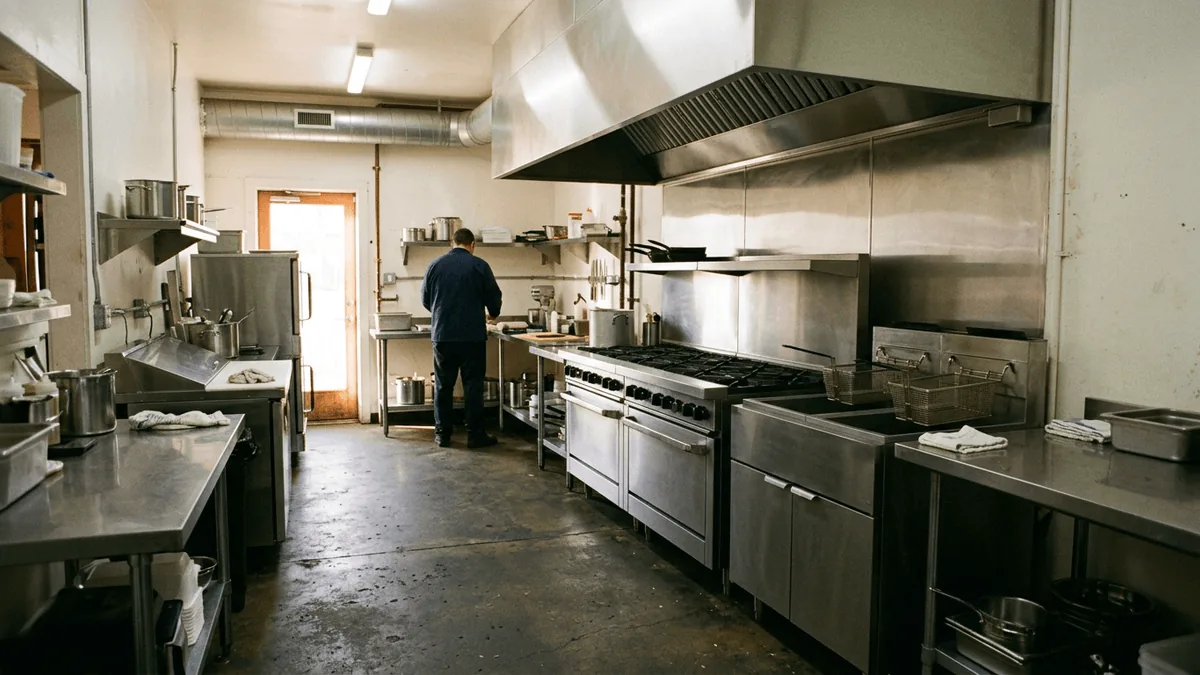
Last updated: November 11, 2026
Restaurant Equipment Leasing for Startups: Preparing a First Kitchen Application
How a lessor reads a restaurant with no sales history, and what to have ready for the kitchen.
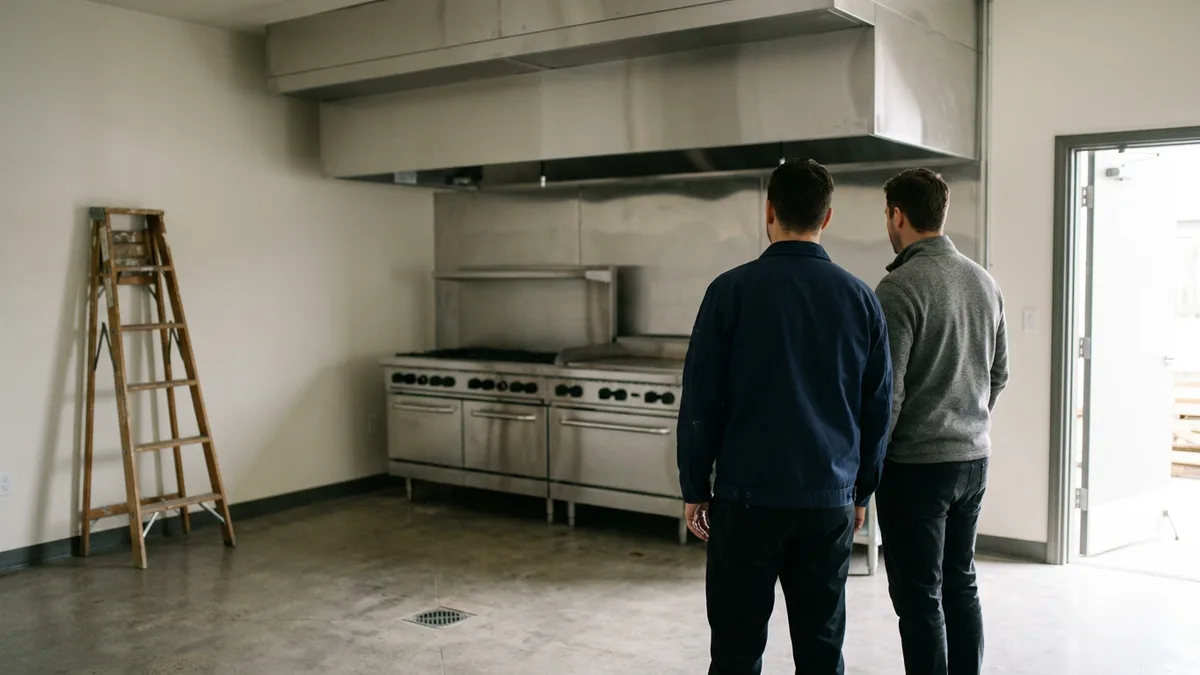
Restaurant equipment leasing for startups rests on the kitchen and the owner, since there are no sales to review. A lessor checks the equipment quote, the signed space and what the owner has run before.
A first restaurant brings no tax returns and no sales history, so a lessor reads what it can check on its own, and the startup equipment financing guide covers that wider review for any new business. This page covers the kitchen.
The sections below follow the order a kitchen opens in: the quote, the space, the plans, the equipment, then the packet a lessor will read once the quote and the space are settled. Start with the quote.
How restaurant equipment leasing for startups gets reviewed
A restaurant equipment lease for a first location is an agreement in which a lessor buys the kitchen equipment the owner picks and lets the business use it for a set term, for scheduled payments. At the end of the term, the business returns the equipment, renews, or buys it, depending on how the lease is written.
The definition is easy. No sales to read? Then a lessor reads what’s on the table: a quote, a signed space, a résumé, a menu.
Four things that carry a first-kitchen file
True lease or lease to own for a first kitchen
Put a six-burner range on either structure and the kitchen looks the same. The difference shows up on the last day of the term.
| In a first kitchen | True lease (fair market value) | Lease to own ($1 buyout) |
|---|---|---|
| Owner during the term | The lessor holds title. | The business pays toward owning it, and title usually passes at the end. |
| At the end | Return it, renew, or buy it at fair market value. | Buy it for a nominal price, often $1. |
| Units that fit | Gear you’ll replace or outgrow: point-of-sale terminals, a dish machine, a convection oven. | Gear the kitchen is built around: the range line, walk-in cooler, prep tables. |
| Ask before signing | Who sets fair market value, and when? | Is the buyout a stated dollar amount, and when does title pass? |
Think in units. A range line you’ll run for a decade points toward a buyout. A point-of-sale terminal you’ll swap in a few years points toward a true lease. Nothing says the whole kitchen goes on one.
Paramount Financial offers true leases, including operating leases, not only loans, so the structure can follow the equipment. The detail on each sits in the fair market value lease and $1 buyout lease guides, and the full set is in the equipment leasing overview.
The law and the tax return both read the paper
Under UCC 1-203, a lease the business can’t cancel, with an option to buy for a nominal price, counts as a sale with a lien. The label doesn’t decide it. For tax year 2026, check the Section 179 rules in IRS Publication 946 and the Section 179 deduction guide, then consult your tax advisor about the lease in front of you.
The space comes first: landlord, plans and hookups
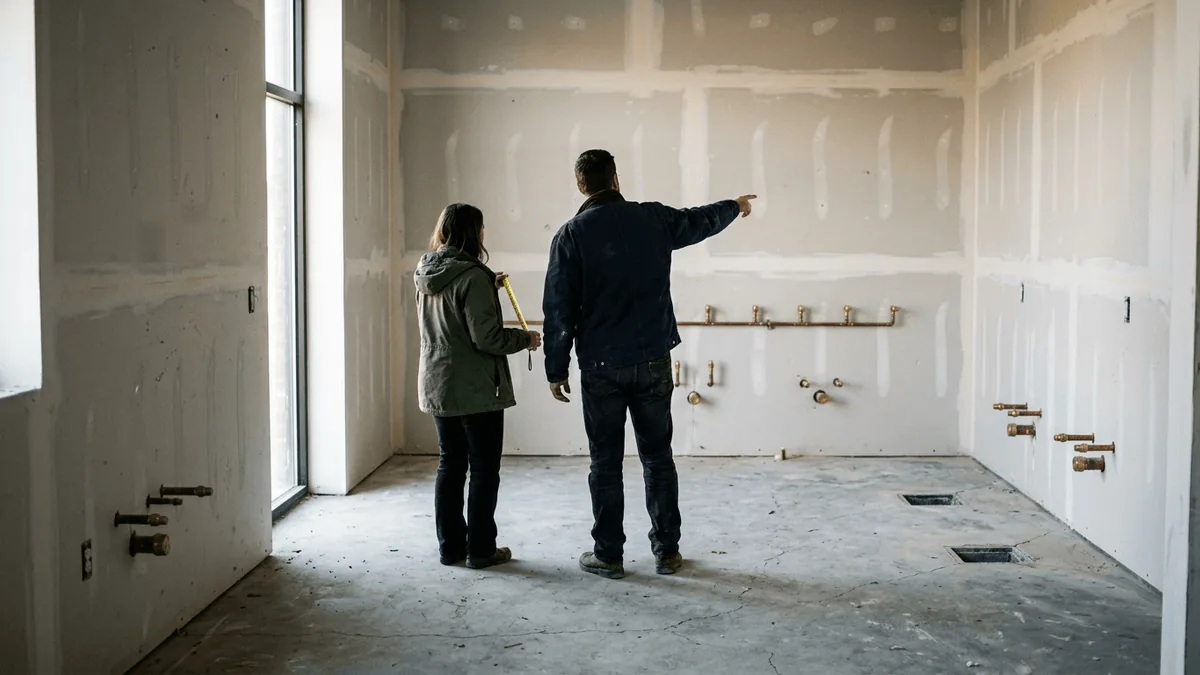
Kitchens get built in layers. A reach-in cooler rolls off a truck. A hood bolts to the ceiling and ties into ductwork. Anything that becomes part of the building is a fixture, and then the landlord and the lessor can both claim an interest in it.
UCC 2A-309 sorts out who comes first. A lessor’s claim on fixtures holds against the real estate owner when that owner has consented in writing or disclaimed an interest in the goods. That’s why lessors often ask for a landlord waiver. In writing.
Plan review is part of it
So does the health department. Under the FDA Food Code, a food establishment’s plans go to the regulator for review before it’s built, converted or remodeled, and the regulator can require those plans to list each piece of equipment by type, manufacturer and model number. So the equipment quote and the plans have to match.
Three questions to ask early
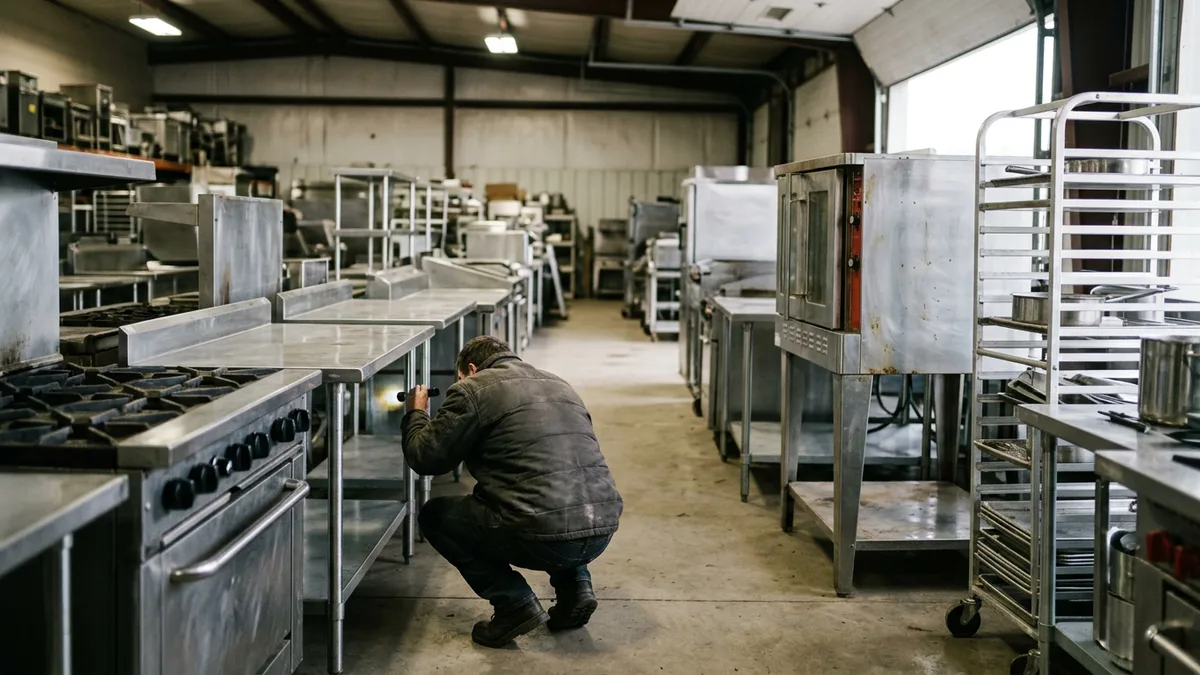
Used kitchen equipment in a first lease
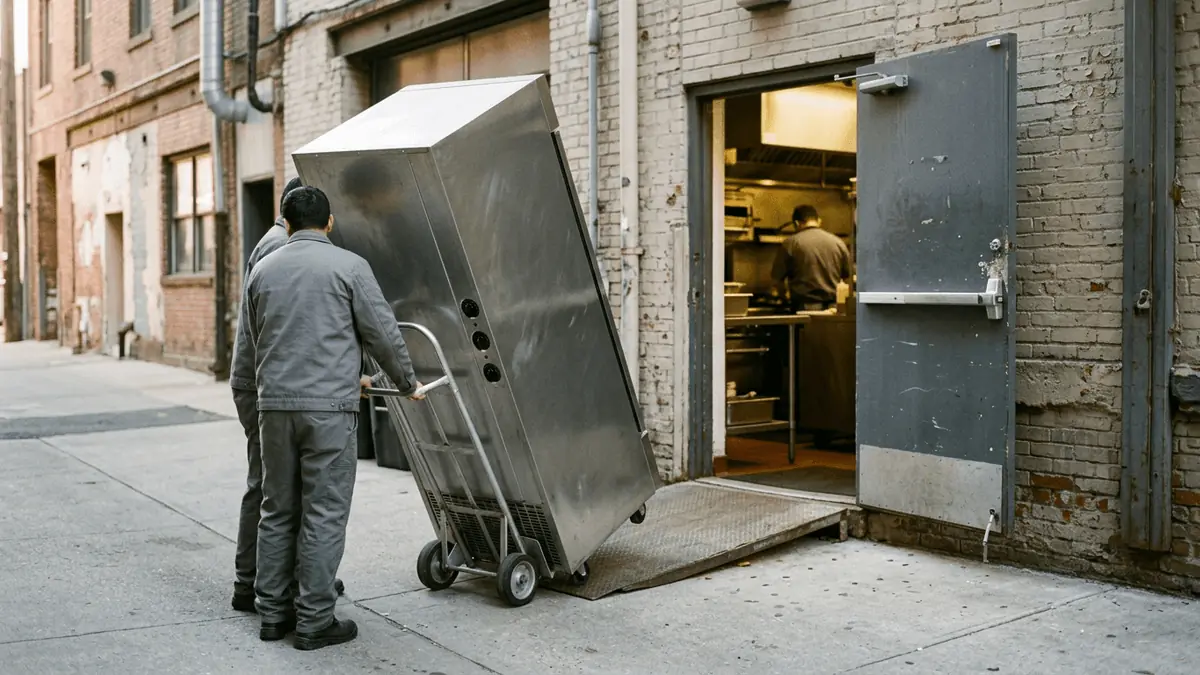
Plenty of first kitchens open with used equipment. A restaurant closes, the line goes to a dealer or an auction, and a new owner buys it for less. It can work. It can also come with somebody else’s problem.
A lessor looking at a used unit wants what a careful buyer wants. The used equipment financing guide covers how lenders read an older machine.
What to have for each used unit
That last one bites. Under the Food Code’s equipment rule, food equipment certified to a recognized American National Standard is deemed to meet its design and construction parts. A unit built before its model was certified may not carry a listing. Call the health department before you buy, not after delivery.
Three rules a first kitchen runs into
Certified
Equipment built to an American National Standard
Your restaurant equipment leasing packet, by who supplies each paper
Lessors don’t want a stack. They want a short set of papers that agrees with itself, with the same legal name and address on every one.
From the equipment seller
From the space
From you
Something missing? Say so. “Quote pending” tells a lessor more than a blank does. The equipment financing documents guide has the longer list, and what an equipment financing review covers shows how the pieces get read together.
Four things to settle before you sign
Keep reading on restaurants and new businesses
Questions first-time restaurant owners ask about leasing
So can a startup restaurant lease its first kitchen?
Some lessors will look at a restaurant with no operating history, and the file rests on the kitchen, the space, the owner and the plan instead of on sales. Others won’t. It comes down to the lessor and to how complete the equipment quote, the space lease and the owner’s background are. Ask before you order anything.
What restaurant equipment can go on a lease?
Ranges, fryers, ovens, reach-in and walk-in coolers, ice machines, dish machines and point-of-sale hardware make up the usual list, though each lessor draws its own line on what it will cover. Hoods and ductwork that become part of the building are different, because a landlord and a contractor are involved. Ask the lessor which pieces it treats as equipment and which as build-out.
Is it better to lease or buy restaurant equipment for a new restaurant?
The better question is what you want to own at the end. A range line you’ll run for a decade points toward a buyout lease or a purchase, and a point-of-sale terminal you’ll replace in a few years points toward a true lease. Many kitchens use both. See leasing vs buying equipment for the general decision.
What’s the difference between a true lease and lease to own?
Short answer: in a true lease the lessor owns the equipment during the term, and in lease to own the business ends up owning it once the last payment and the buyout are made. A true lease usually ends with a return, a renewal or a purchase at fair market value. Lease to own ends with a buyout, often $1. The contract language is in the guides to a fair market value lease and a $1 buyout lease.
Can you lease used restaurant equipment?
Three details decide whether a lessor will look at a used unit: its age and condition, how clearly it can be identified from the data plate, and who is selling it and what they can show. Have the make, model and serial number from the data plate, a bill of sale and a lien check on the seller. Check the sanitation listing too.
What slows an equipment lease down for a new restaurant?
Gaps in the packet are the usual cause: a quote missing the model number, a space lease that isn’t signed, a landlord waiver nobody has asked for yet, or a hood and a fryer that don’t match the plans. Names and addresses that don’t match from paper to paper cost time too. Plan review that hasn’t cleared can hold up delivery even after the lease is signed.
Bring the kitchen list and the quote
Tell us what the kitchen needs and when you open, or start a kitchen equipment application if you have a quote in hand. Questions first? Talk to a Paramount Financial specialist.