
Last updated: November 10, 2026
Optometry Equipment Financing for Eye Care Practices
Compare loan and lease paths for exam lanes, OCT and dispensary equipment before you sign a vendor quote.
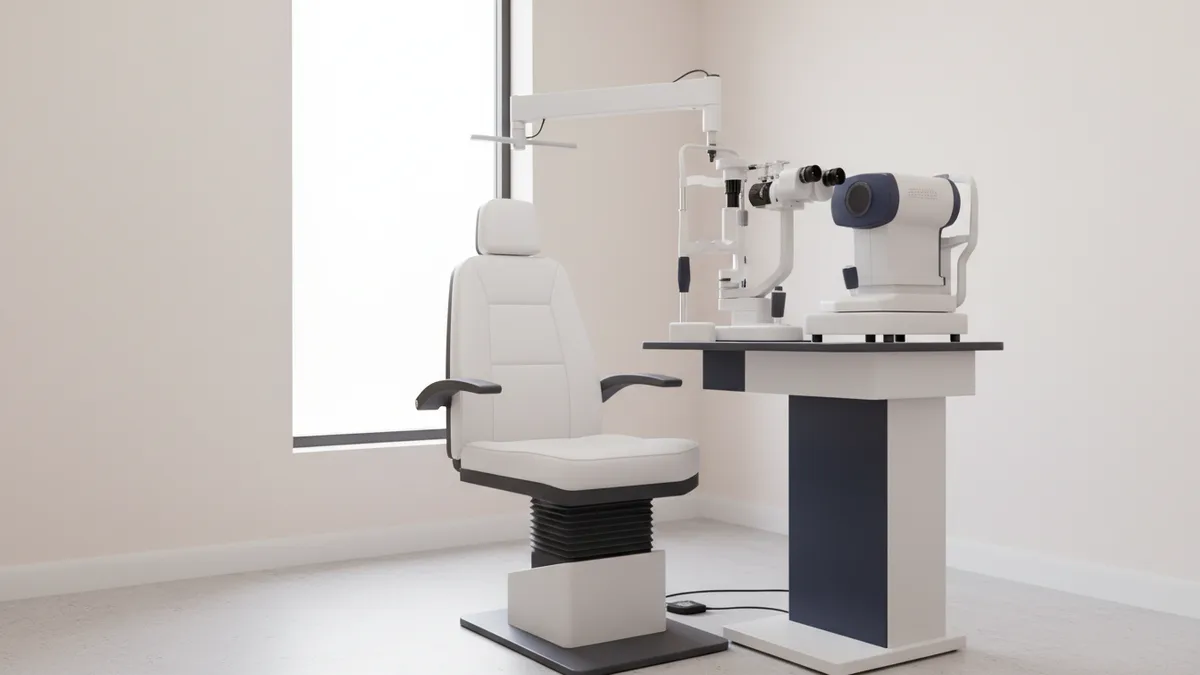
Optometry equipment financing lets an eye care practice pay for exam lanes, imaging and optical lab equipment over time with a loan or a lease. The right structure depends on how fast each machine ages.
The U.S. Bureau of Labor Statistics counted about 45,100 optometrist jobs in 2025, and offices of optometrists employed 61% of them. Each office buys a slit lamp, an OCT or a lens edger on its own schedule. This page sits under our guide to equipment financing by industry and goes deeper on the eye care side.
Below: the route a patient takes through the office, what an OCT quote can leave out, what to have ready for an older unit and how the structures compare. Questions go to Paramount Financial’s team.
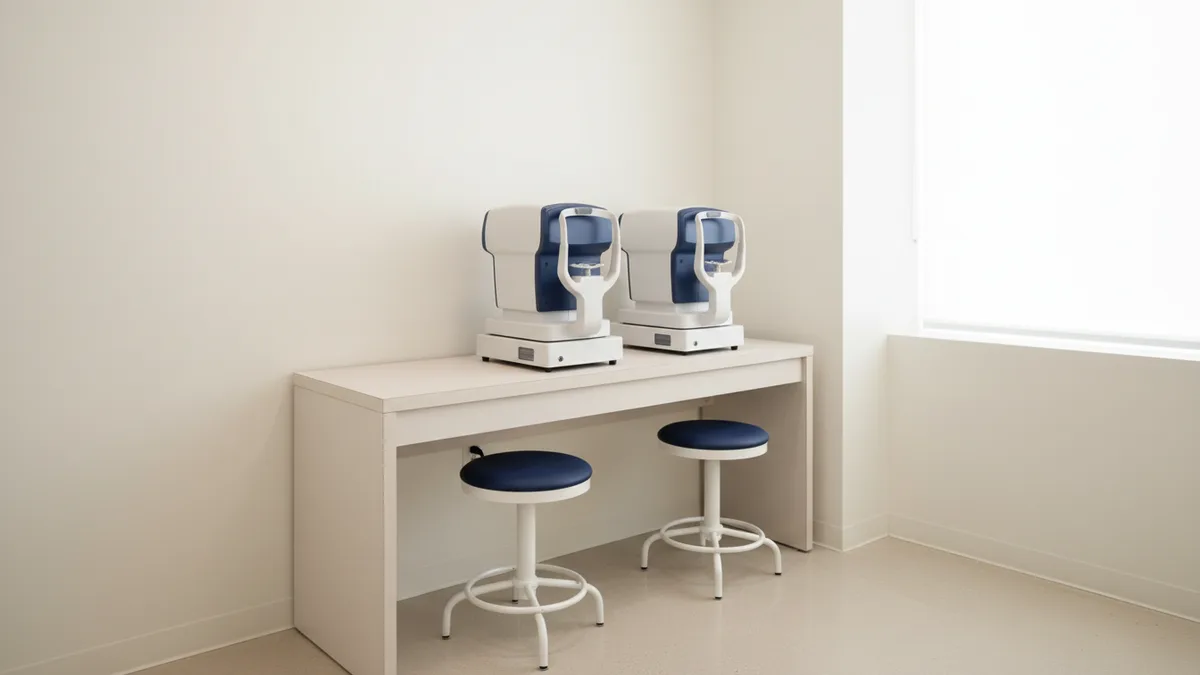
Optometry equipment financing, from check-in to the frame board
Start at check-in. Follow a patient through an eye exam and the equipment sorts itself by how long it stays current. Some of it barely changes. Some changes with every release.
Instruments that stay in service point toward owning them, with a loan or an equipment finance agreement. Anything on a software cycle makes a lease with an exit more attractive, and so does a plan to replace the unit on a schedule rather than run it until it fails. Price each stop separately.
OCT and imaging: the software is part of the price
An OCT is a scanner, a computer and a license. The Vision Council’s Focused inSights 2023 survey, fielded from August 21 to September 1, 2023 among 410 eye care providers, found that 63 percent of optometrists surveyed owned some kind of OCT. The real question is which model to buy and on what terms. Read it line by line.
Review of Optometry points out that software module licensing, especially for OCT devices, often leaves the base price understating the real spend. Annual service contracts can add substantially over five years. Both cost extra.
Read the quote for what it leaves out
Imaging is where a lease with an end-of-term choice tends to earn its keep, because the model you buy now may not be the one you’d pick at replacement time. Total first, structure second.
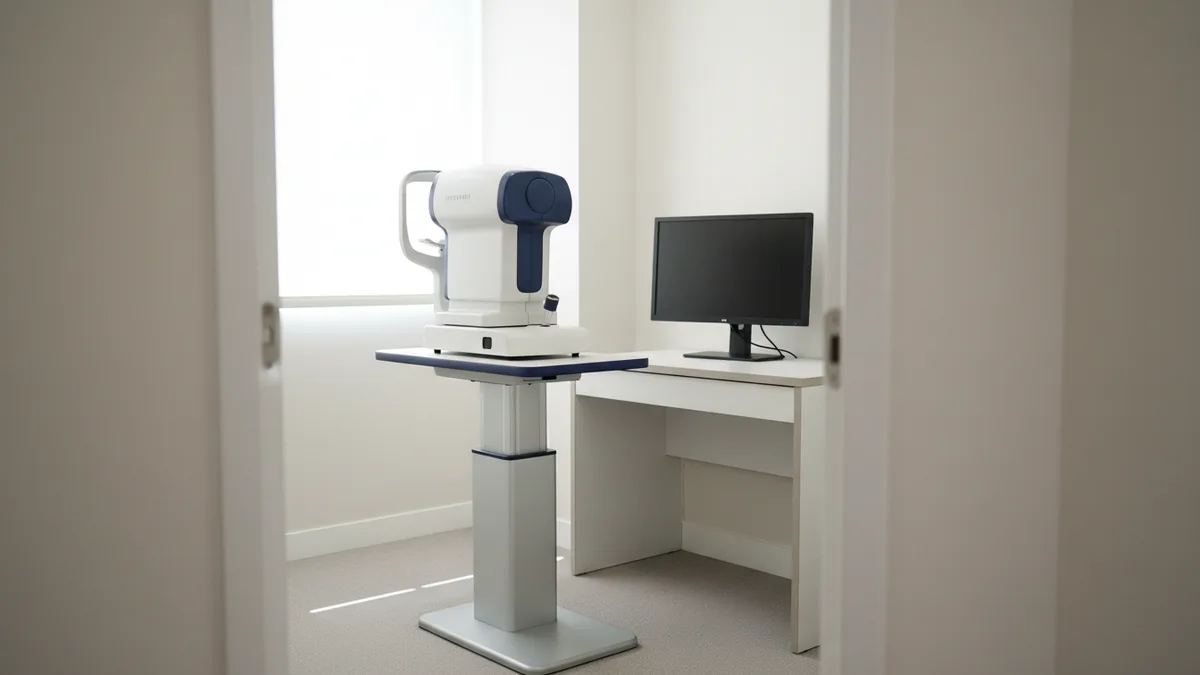
Used and refurbished eye care equipment
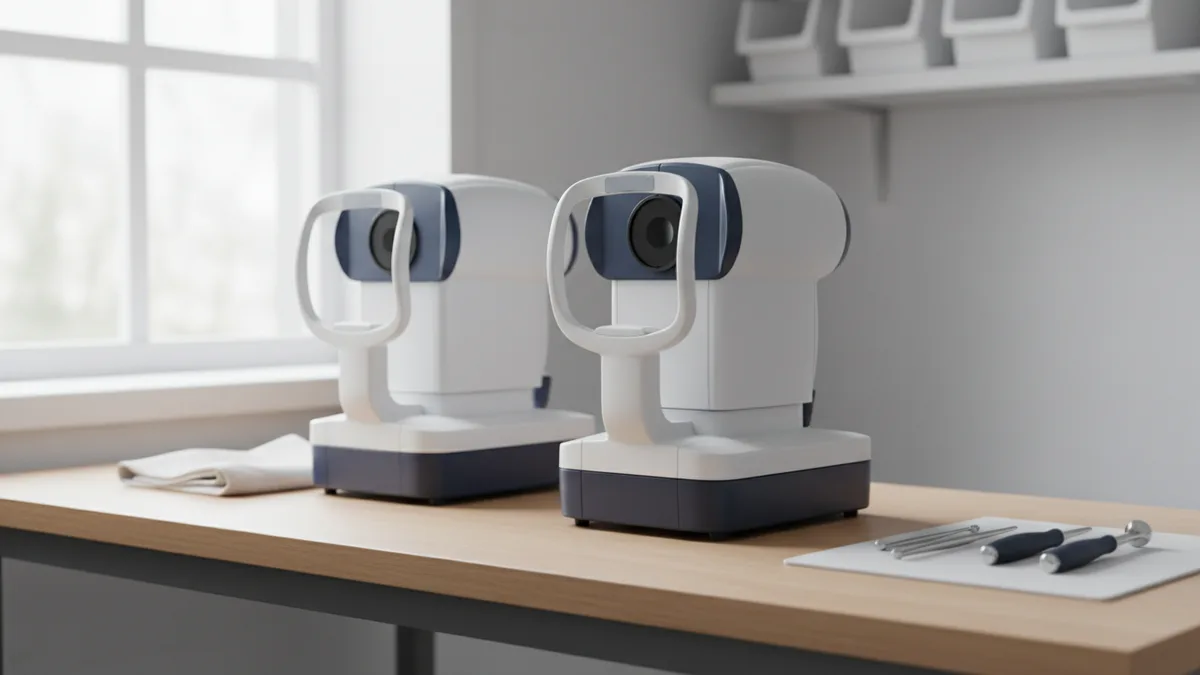
Review of Optometry’s October 2026 article on buying equipment says used and refurbished instruments can get a practice started on the cheap. They also change the paperwork. A lender has no current price list to measure an older unit against, so it looks harder at the brand, the condition, the service history and what the unit could sell for if the business stopped paying. Records count.
What to have ready
A model the maker still supports is easier to keep running than one it has retired. Ask for the support policy in writing, then compare the whole cost of owning the unit, service included, against the price on the quote and against what a newer model would cost to buy outright. Our guide to used equipment financing goes further on older units.
Who buys eye care equipment, and when
Buyers differ. The right structure often follows the buyer more than the machine.
A practice opening its doors
A first office has the longest list, and equipment is one line in a build-out budget that also holds a landlord. Our page on startup equipment financing covers what a newer business should line up, and how to start a medical practice covers the planning.
An associate buying in
The instruments usually come with the practice. The choice is what to replace first. Start with the oldest.
An office adding imaging or a lab
That’s a bet on a technology cycle, or on a retail line. Weigh an OCT or an edger by what it adds to the practice as well as what it costs. Do the math.
A solo practice in a small town
Here the machine matters less than who can fix it. Distance costs. A technician who has to come in from another city changes what a service contract is worth, so ask where the nearest one is and how a down unit is handled.
Optometry equipment financing structures compared
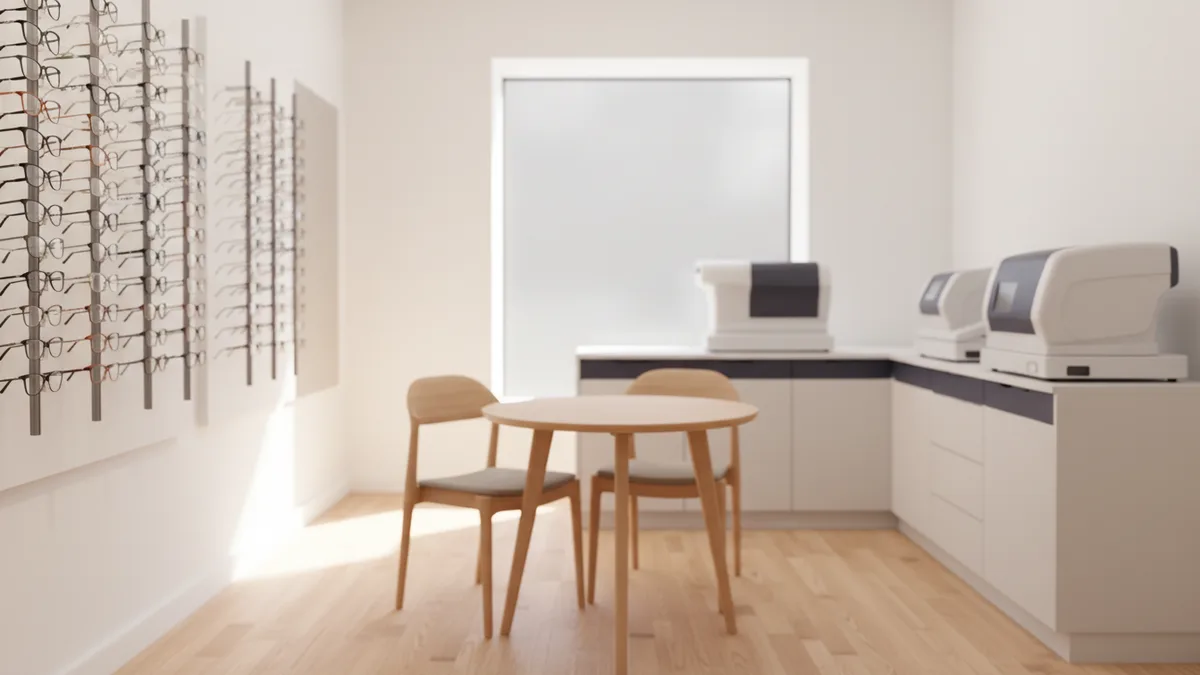
Financing equipment for an eye care practice comes in two families. In a loan or an equipment finance agreement, the practice owns the instruments from day one and the lender keeps a security interest until the balance is repaid. In a lease, the lessor owns them during the term, and the ending depends on the lease type.
| Equipment area | What dates it | Structure that tends to fit | Worth asking |
|---|---|---|---|
| Exam lane: chair, stand, phoropter, slit lamp | Wear, more than technology | Loan or equipment finance agreement; a $1 buyout lease for a unit you’ll keep | Whether the chair and stand are priced as one unit |
| Pre-test: autorefractor, keratometer, tonometer | Software and the link to your records system | Either path; a fair market value lease for gear you replace on a schedule | Whether the unit connects to your records system |
| Imaging: OCT, fundus camera, visual field analyzer, topographer | Software, sensor generations and the model’s support life | A fair market value lease with a renew-or-buy ending; a loan for a unit you’ll run until it wears out | What the module and service lines add |
| Dispensary: edger, blocker, frame display | Wear, plus the practice’s own plans for lens finishing | A loan or agreement for finishing gear you’ll keep; a lease for what you’ll replace | Whether in-house finishing fits your lens volume |
A fair market value lease sets the buyout at what the equipment is worth when the term ends, which is why it tends to suit imaging. A $1 buyout lease is built the other way, so the practice keeps the unit for a nominal payment. Under a loan or an equipment finance agreement, the lender usually files a UCC-1 financing statement, so ask whether it names one instrument or every business asset. Get the answer in writing.
Optometry equipment financing, in numbers
45,100
optometrist jobs in the United States in 2025
Source: U.S. Bureau of Labor Statistics, Occupational Outlook Handbook, Optometrists
63%
of optometrists surveyed owned some kind of OCT equipment in 2023
Source: The Vision Council, Focused inSights 2023, reported by Vision Monday
$2,560,000
maximum Section 179 expense deduction for tax years beginning in 2026, before the phase-out. Consult your tax advisor.
Source: IRS Publication 946 (2025 edition), What’s New for 2026
Before you send the quote to a lender
Pages to read next
Questions eye care practices ask before they finance equipment
Should an optometry practice lease or buy an OCT?
Short answer: buy it if you expect to keep it, lease it if you expect to replace it. An OCT ages on its software and its sensor generation, so a fair market value lease gives you a way out when the next model arrives, while a practice that plans to run the same unit until it wears out can reasonably buy. Neither is wrong. Price the software first.
What does an optometry equipment quote leave out?
The quote usually covers the instrument and leaves the rest for later. Review of Optometry notes that software module licensing, especially for OCT devices, often leaves the base price understating the real spend. Service contracts, installation, training and a link to the records system can come on top, and your lender can tell you which of those lines, if any, can sit inside the financing request. Ask for each in writing.
How do lenders look at used or refurbished optometry equipment?
Closer, mostly, because an older unit has no current price list to check against. Age matters. Brand, condition and service history carry more weight, and so does what the unit could resell for, which is why serial numbers, a written warranty and proof that the software license transfers all help. Private-party sales add paperwork.
What should a practice that’s just opening line up before it applies?
Three things come first: an itemized quote, the business entity’s documents and the lease for the space. Lenders reviewing a newer business tend to look harder at the equipment and at the owner’s experience, so a quote that names every instrument, its make and its model year gives them something solid to check. Licenses count too.
What happens when an optometry equipment lease ends?
The better question is what you want at the end, because the lease type decides what you get. A fair market value lease usually ends with three choices: return the unit, renew or buy it at what it’s worth that day. A $1 buyout lease is built so the practice keeps the equipment for a nominal payment, and both kinds of lease have an end clause that covers upgrades and early exits. Read it twice.
Can an eye care practice deduct financed or leased equipment?
Sometimes, and it depends on the structure and the tax year. IRS Publication 946 (2025), the edition for 2025 returns, explains how business property is depreciated and notes that you generally can’t depreciate property you lease from someone else. Form 4562 is the form for claiming depreciation and Section 179 deductions, and the limits change every tax year, so check the current figures on irs.gov and consult your tax advisor before you choose a structure for tax reasons.
Do small-town eye care practices finance equipment differently?
The paperwork looks the same, but the service side often doesn’t. A solo practice a long drive from the nearest technician pays for that distance in downtime, so ask where the closest one is and how a down unit is handled under the lease. Fewer practices nearby can also mean fewer used instruments to find locally, which sends more buyers to dealers and refurbishers. Ask who pays freight.
Have an optometry equipment quote in hand?
Even a rough quote helps. Send it with your install date, or start your application online.