

What Is a TRAC Lease? How Terminal Rental Adjustment Clause Leases Work for Trucks and Titled Vehicles

Key takeaways
A TRAC lease is a vehicle lease whose terminal rental adjustment clause sets the truck’s end value at signing, then adjusts the rent up or down to match what the lessor actually sells it for.
- The lessee carries the end-value gap, in both directions. That’s the trade.
- Federal tax law confines the clause to motor vehicles and trailers.
- Signing means certifying, in a separate statement, that you intend more than half the use to be in your business.
- Can’t say how the truck will be used? Settle that before you compare payments.
- Your tax advisor and accountant settle how the lease is treated, not its label.
TRAC stands for terminal rental adjustment clause, and it has sat in the Internal Revenue Code since the Tax Reform Act of 1986. One clause settles who gains or loses when a lessor sells a leased truck at the end of the term. Most of the top search results are lessors’ own pages. Paramount Financial finances equipment too, so we’re not a neutral party, and this guide sticks to the statute.
It’s one structure inside equipment leasing, and federal tax law gives it a rule of its own. The rule is narrow. It covers road vehicles, which is why this guide talks about dump trucks, box trucks, and trailers, not excavators.
What a TRAC Lease Is
A TRAC lease is a lease on a truck, van, or trailer that states an expected end value when you sign. At the end, the lessor sells the vehicle. The clause then adjusts the rent: a sale above the stated value brings a credit to the lessee, and a sale below it brings a charge.
Here’s the statute’s version. Subsection (h)(3) of 26 U.S.C. §7701 describes the clause as one that lets the rental price be adjusted “upward or downward by reference to the amount realized by the lessor” when the property is sold or otherwise disposed of. The whole structure hangs on that.

Under the statute, the settlement at the end of a TRAC lease is itself rent. The monthly payment is rent. So is the final bill, or the final credit. Odd, but intended.
Who Carries the Risk at the End
Every lease answers one question about the last day: who is left holding the truck’s value? A fair market value lease leaves it with the lessor, while a $1 buyout lease settles it the other way, since you end up owning the truck. A TRAC lease hands it to you, up or down.
| Fair market value lease | $1 buyout lease | TRAC lease | |
|---|---|---|---|
| Title during the term | Lessor | Lessor, on paper | Lessor |
| Who carries the end-value gap | Lessor | You, as owner | You, up or down |
| How the end price is set | Market, at the end | Fixed up front | Stated up front, sale settles it |
| What it can cover | Most equipment | Most equipment | Motor vehicles and trailers |
Say the lease states an end value, and the used-truck market softens before the term runs out. The sale lands below the stated figure. The clause turns that shortfall into a final bill, and nobody quotes the bill on page one because it sits in a clause near the back. Price it first, before the payment gets a second look.
Try this test. Ask what a shortfall on the last day would do to your year. If it would hurt, pick a structure where the lessor carries it. If you can predict the truck’s use and condition, and a gap in either direction is one you can absorb, a TRAC lease belongs on your list, provided the stated end value looks reasonable beside what similar trucks actually sell for.
In the usual arrangement, three cases cover it. Your lease may add caps.
| Sale price against the stated end value | What the adjustment does |
|---|---|
| Above it | Rent adjusts down, a credit to the lessee |
| Equal to it | No adjustment |
| Below it | Rent adjusts up, a charge to the lessee |
What the Tax Code Requires
Tax rules next, for tax year 2026 and the years around it. The TRAC rule is subsection (h) of 26 U.S.C. §7701, and that subsection is short enough to read in a few minutes. It lists conditions. Every one must be met.
- The agreement covers a motor vehicle, trailers included.
- Strip the clause out and the agreement must still read as a lease under the rest of the tax code.
- The lessee signs a separate statement, under penalty of perjury, that it intends more than 50 percent of the use to be in its own trade or business.
- That same statement says, clearly, that the lessee has been told it isn’t the owner for federal income tax purposes.
- The lessor stands behind what it borrowed to buy the truck, without counting the truck itself as that backing. It also can’t know the lessee’s certification is false.
More than 50%
of a TRAC-leased vehicle’s use that the lessee must certify, under penalty of perjury, it intends to put in its own trade or business.
Source: Cornell Legal Information Institute, 26 U.S.C. §7701(h)(2)(C)
Notice what’s missing. It doesn’t promise a tax result. It says the lessee isn’t treated as the owner while the agreement is in effect, and it says the agreement must still read as a lease on its other terms under the rest of the tax code.
That matters for Section 179. IRS Publication 946 lists “acquired by purchase” among the requirements, so an owner’s election and a lessee’s payments are different conversations. Our guide to Section 179 for vehicles covers the owner’s side for tax year 2026. For a TRAC lease, consult your tax advisor on how the payments and the end-of-term adjustment are treated for your business, and take the draft along so the advisor reads the actual clause, not a summary of it.
How the UCC and the Title See It
Tax law is one rulebook. Commercial law is another, and it asks a different question: is this a lease or a loan in disguise? UCC §1-203 answers it. The text never says TRAC.
It tests the rest of the agreement instead. A lease becomes a security interest when the payments can’t be cancelled for the term and one of these is also true:
- The term equals the truck’s remaining economic life.
- The lessee must renew for that remaining life, or must become the owner.
- The lessee can renew for that remaining life for no extra money or a nominal sum.
- The lessee can become the owner for no extra money or a nominal sum.
Carrying the risk of loss doesn’t flip it. Neither does paying for insurance and registration, or holding a purchase option priced at market. Whether your whole agreement passes is a question for your lawyer, not for a blog post.
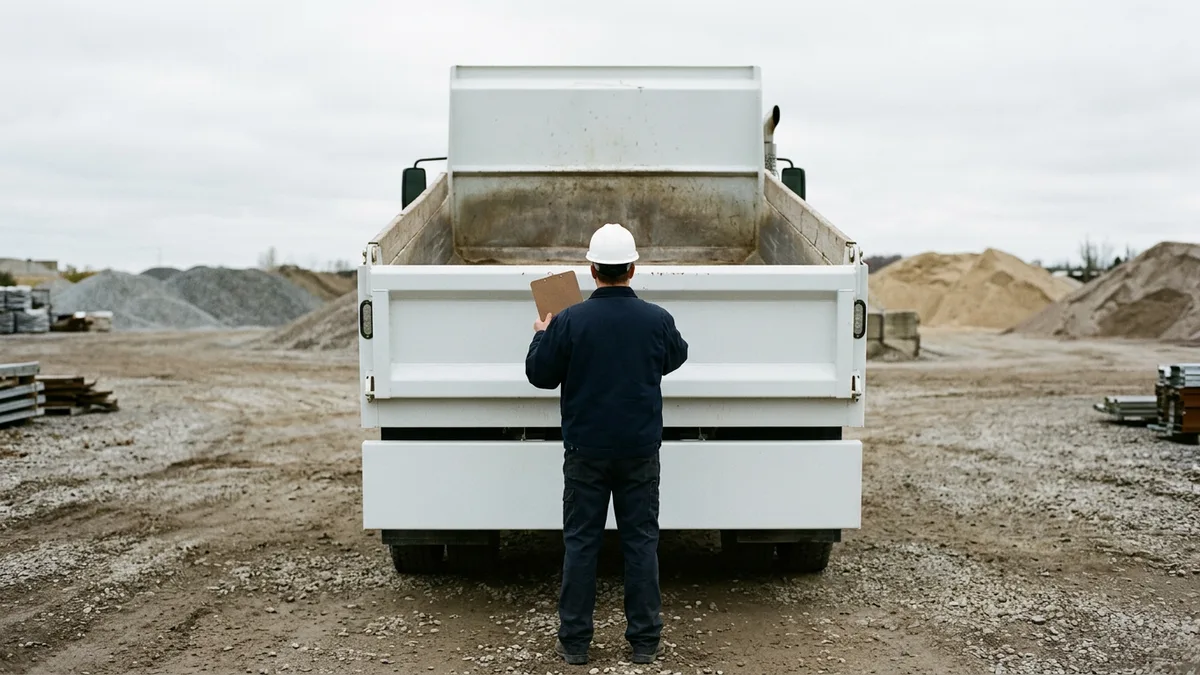
Titled vehicles add a wrinkle. Under UCC §9-311, a lender’s lien on a vehicle covered by a certificate of title is shown on the title instead of being filed as a UCC-1, which is how it’s usually recorded on a skid steer or an excavator. So ask whose name is on the title. In a true lease it’s usually the lessor’s.
Our guide to the key terms to review before you sign covers the rest of the paper.
Where a TRAC Lease Fits
Say a landscaping crew runs a box truck from March through November and parks it for the winter. The end-value estimate rests on the hours and miles the truck will log. The crew can predict that better than a stranger can. That’s the situation a TRAC lease is built around.
Dump trucks and flatbed trailers follow the same logic. Our pages on box truck financing, dump truck financing, and trailer financing describe those vehicles in more detail, and commercial vehicle financing covers the wider fleet of vocational trucks a contractor might run.
Where It Doesn’t
Three signals point away. Use you can’t predict. A shortfall you couldn’t absorb. A plan to own the truck for good.
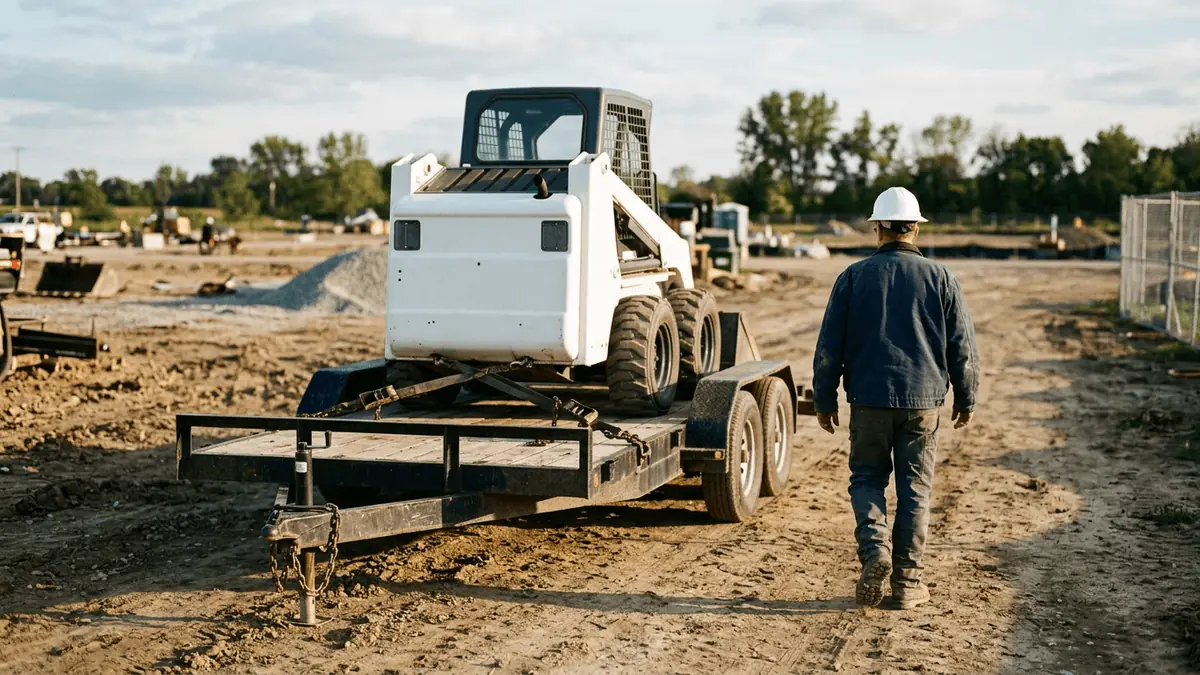
On that last one, compare an operating lease vs finance lease before you sign anything, and look at a loan too. Other equipment is different. The statute names motor vehicles and trailers, and nothing else. If a lessor offers a TRAC on a skid steer or an excavator, ask your tax advisor why it applies.
A Clause Checklist for Any TRAC Lease
Take these nine questions to any draft. They’re general, not anyone’s requirements, ours included.
- The stated end value, and how the lessor arrived at it.
- Who sells the truck, when, and by what method: an auction, a dealer, a buyer you find yourself.
- What gets subtracted from the sale proceeds before the adjustment is figured. Sale costs? Fees? Unpaid charges?
- Any cap or floor on the adjustment. Some leases share the gap, and the label for that is a split TRAC, so ask whether yours does.
- Wear and mileage terms, and what happens to the end value if you miss them.
- Early termination: does the stated end value still apply?
- The separate certification and the tax-owner notice. Are both there, and has your tax advisor seen them?
- Title, registration, and insurance: who handles each, and in whose name.
- If you want to keep the truck, is there a purchase option, and is its price the stated end value or the market on that day?
Get the answers in writing. Then give the draft to your accountant, who applies ASC 842 to the end-of-term obligation, and to your tax advisor. Neither should see a different version from the one you’ll be asked to sign.
TRAC Lease Questions, One at a Time
What does a TRAC adjust, exactly, when people say TRAC rent?
Rent, not a fee. The statute defines the clause as a provision that adjusts the rental price up or down by reference to what the lessor realizes when the vehicle is sold, so the settlement at the end is rent too, arriving as a credit or a bill depending on the sale.
How does a lessor land on the end value in the first place?
It’s an estimate. Say a lessor is pricing a three-year-old box truck for a crew that runs it from March through November: it weighs the type of vehicle, its age, and that expected use, then states a figure in the lease. Nothing promises the truck will sell for that figure, and that gap is the reason the clause exists.
Which vehicles can carry a TRAC at all?
Motor vehicles and trailers. That’s the wording of 26 U.S.C. §7701(h)(2)(A). Dump trucks, box trucks, vans, and flatbed trailers fit that text. A compact skid steer or an excavator isn’t named, so ask your tax advisor before accepting a TRAC on one.
If you want to keep the truck at the end, is that allowed?
Sometimes. A lease can include a purchase option, and leases word that option more than one way: the price might be the stated end value or the market price on that day. Read the clause and ask which one yours uses.
TRAC lease or equipment loan: which one leaves you holding less risk?
Neither, on its face. Say two contractors buy the same dump truck, one with a loan and one with a TRAC lease. The borrower owns the truck, and its resale value, from day one. The lessee never holds tax ownership, yet still carries the gap between the stated end value and the sale price, so compare title and tax treatment with your advisor.
Does the IRS treat a TRAC lease as a lease?
Section 7701(h) of the Internal Revenue Code treats a motor vehicle agreement with a TRAC as a lease if it meets the statute’s conditions and would be a lease without the clause. Whether yours meets them, and how the payments are handled for tax year 2026, is a question for your tax advisor. Consult your tax advisor before you sign, because a lease’s label doesn’t settle it.
Next Steps
Still weighing structures? Paramount Financial’s equipment leasing overview sets the others beside this one, equipment sale leaseback covers selling a machine you own and leasing it back, and if you’d like to talk a vehicle lease through, you can start an application or talk to our team.